Jump to Recipe
I’ll be honest: panna cotta intimidated me for years. It looked like something that required pastry school.
Turns out it’s just warm liquid, gelatin, and patience. That’s it.
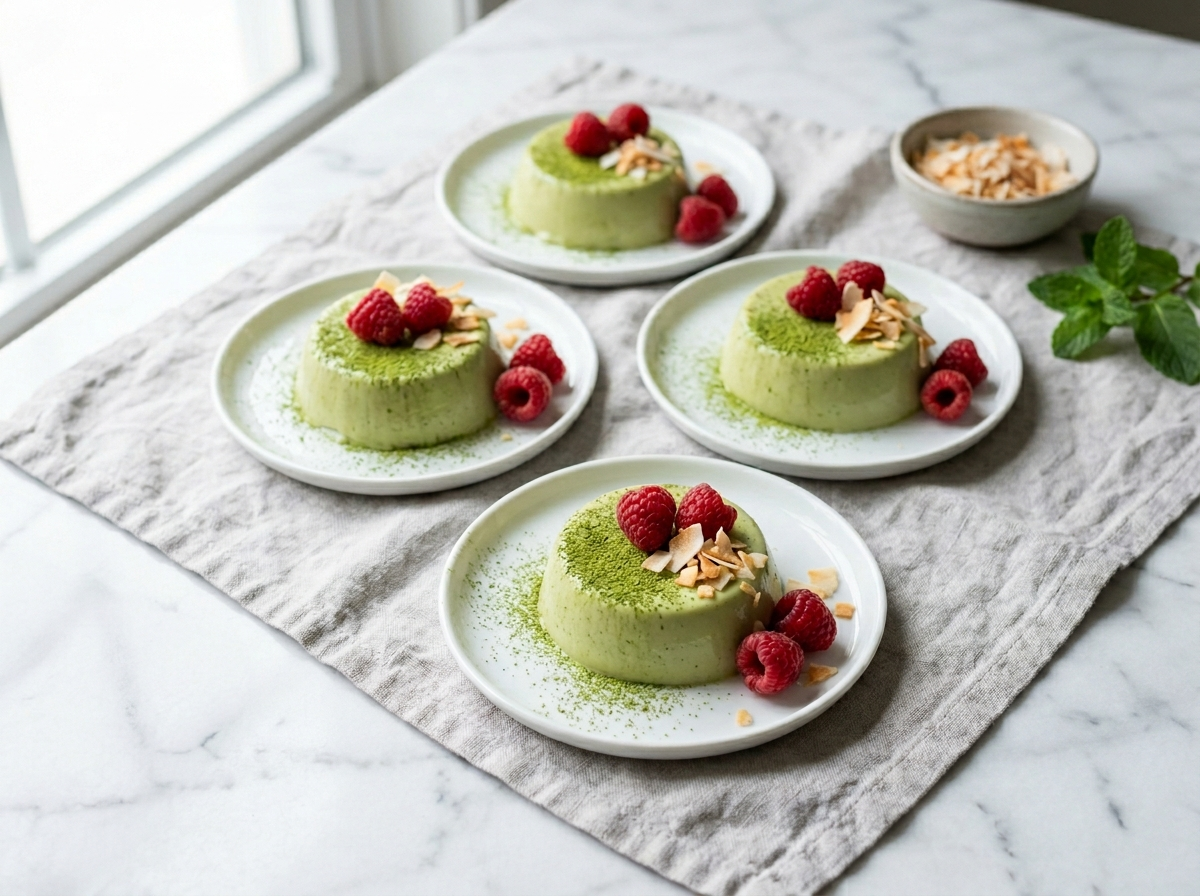
This version uses coconut milk instead of dairy cream, ceremonial matcha for a clean earthy note, and monk fruit sweetener to keep it completely sugar-free. It sets beautifully and slices clean.
It’s cool, lightly bitter, and subtly sweet. The kind of dessert that feels considered without any fuss.
Make it the night before. Unmold it at dinner. Done.
Why You’ll Love This Recipe
- No refined sugar, no compromise on creaminess
- Dairy-free and naturally gluten-free in every serving
- Make it the night before, zero day-of effort
- Only 6 ingredients, all easy to find
Ingredient Notes
- Full-fat coconut milk: Use canned, not carton. Carton coconut milk is too thin and the panna cotta won’t set firmly. Shake the can well before opening.
- Ceremonial-grade matcha: Ceremonial grade gives a smoother, less bitter result than culinary grade. If you only have culinary grade, reduce to 1.5 tsp and sift it well.
- Monk fruit sweetener: Use a 1:1 granulated blend (like Lakanto). Pure monk fruit extract is much more concentrated, so reduce to about 1/4 tsp if that’s what you have.
- Gelatin powder: Bloom it in cold water first, never hot. If you need a vegan option, use agar-agar powder at half the quantity, but note the texture will be firmer and slightly less silky.
- Vanilla extract: A small amount rounds out the matcha and coconut without competing with either. Skip if you don’t have it, the panna cotta still works.
- Warm water (for matcha paste): Mix the matcha with a small amount of water off the heat to form a paste before adding to the coconut milk. This prevents clumping and uneven color.
Sugar-Free Matcha Coconut Panna Cotta
Ingredients
Method
- Sprinkle gelatin powder over 3 tbsp cold water in a small bowl. Let it sit for 5 minutes until it becomes spongy and fully bloomed.
- Whisk the sifted matcha with 2 tbsp warm (not boiling) water in a small bowl until you get a smooth, lump-free paste.
- Pour coconut milk and coconut cream into a small saucepan. Add monk fruit sweetener and warm over medium-low heat, stirring, until the sweetener dissolves. Do not let it boil.
- When the coconut mixture reaches about 70 C / 160 F (steaming but not bubbling), remove from heat. Add the bloomed gelatin and whisk until completely dissolved.
- Whisk in the matcha paste and vanilla extract until the mixture is uniformly green with no streaks.
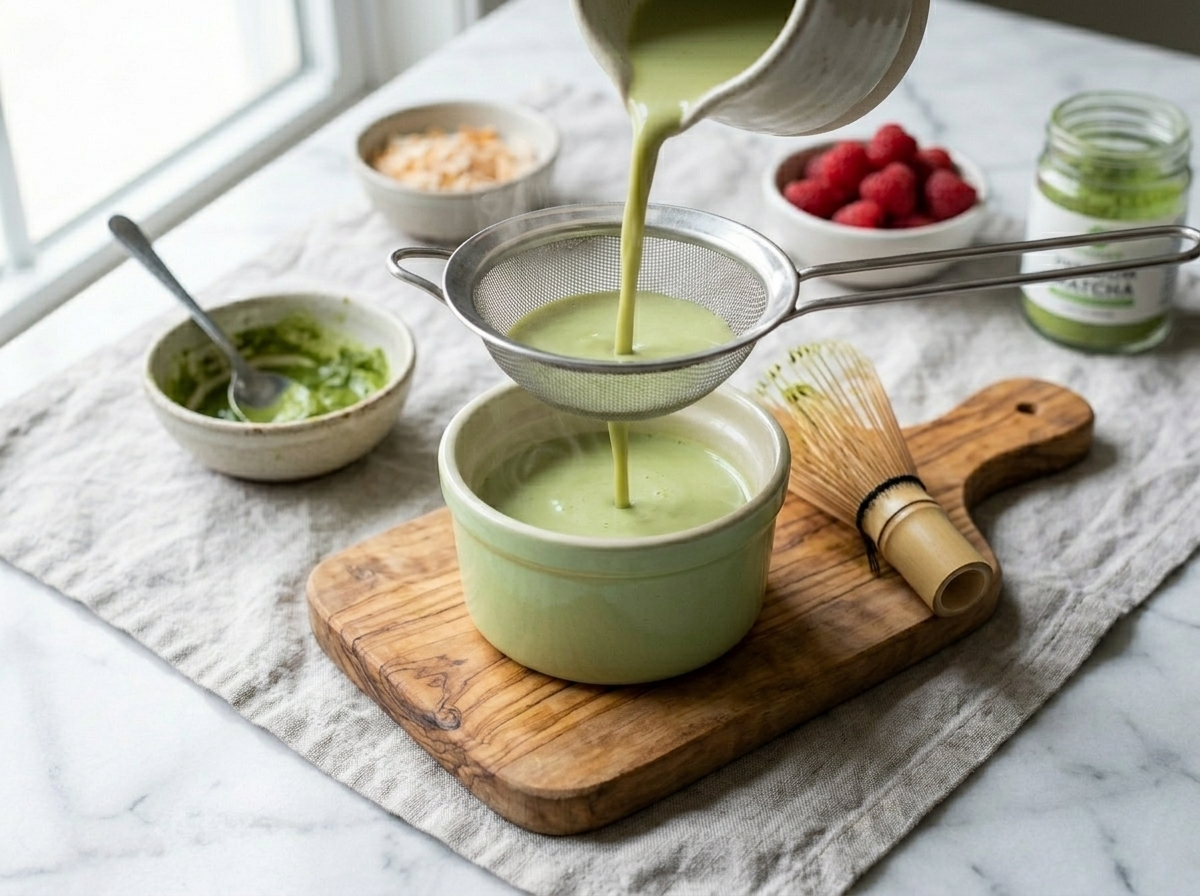
- Pour through a fine-mesh sieve into a spouted jug to remove any small lumps.
- Divide evenly between 4 ramekins or silicone molds. Let cool to room temperature for 15 minutes.
- Cover each mold loosely with plastic wrap and refrigerate for at least 4 hours, or overnight, until firmly set.
- To unmold, run a thin knife around the edge, place a plate on top, and flip in one clean motion. Serve immediately.
Notes
Tips for Success
- Bloom gelatin in cold water for at least 5 minutes before adding to warm liquid.
- Whisk matcha into a smooth paste with 2 tbsp warm water before combining with coconut milk.
- Heat coconut milk to just below a simmer, around 70 C / 160 F, so gelatin dissolves without boiling off.
- Strain the mixture through a fine-mesh sieve before pouring into molds to catch any lumps.
- Refrigerate for a minimum of 4 hours, but overnight gives a cleaner, firmer unmold.
Variations
- Add 1 tsp lime zest to the coconut milk for a sharper, more citrus-forward finish.
- Layer with a thin coconut jelly on top using agar-agar for a two-tone visual effect.
- Stir in 2 tbsp toasted sesame paste instead of vanilla for a nutty, earthy twist.
Storage and Reheating
Store covered panna cottas in the fridge for up to 4 days. Keep them in their molds until you’re ready to serve, or in airtight containers if already unmolded.
Don’t freeze panna cotta. Gelatin breaks down when frozen and thawed, leaving a grainy, weepy texture rather than a smooth set.
There’s no reheating needed. Serve straight from the fridge, unmolded onto a chilled plate.
Serving Suggestions
Run a thin knife around the edge of each mold, place a chilled plate on top, and flip with one confident motion. A small dusting of sifted matcha powder on the plate looks clean and signals the flavor.
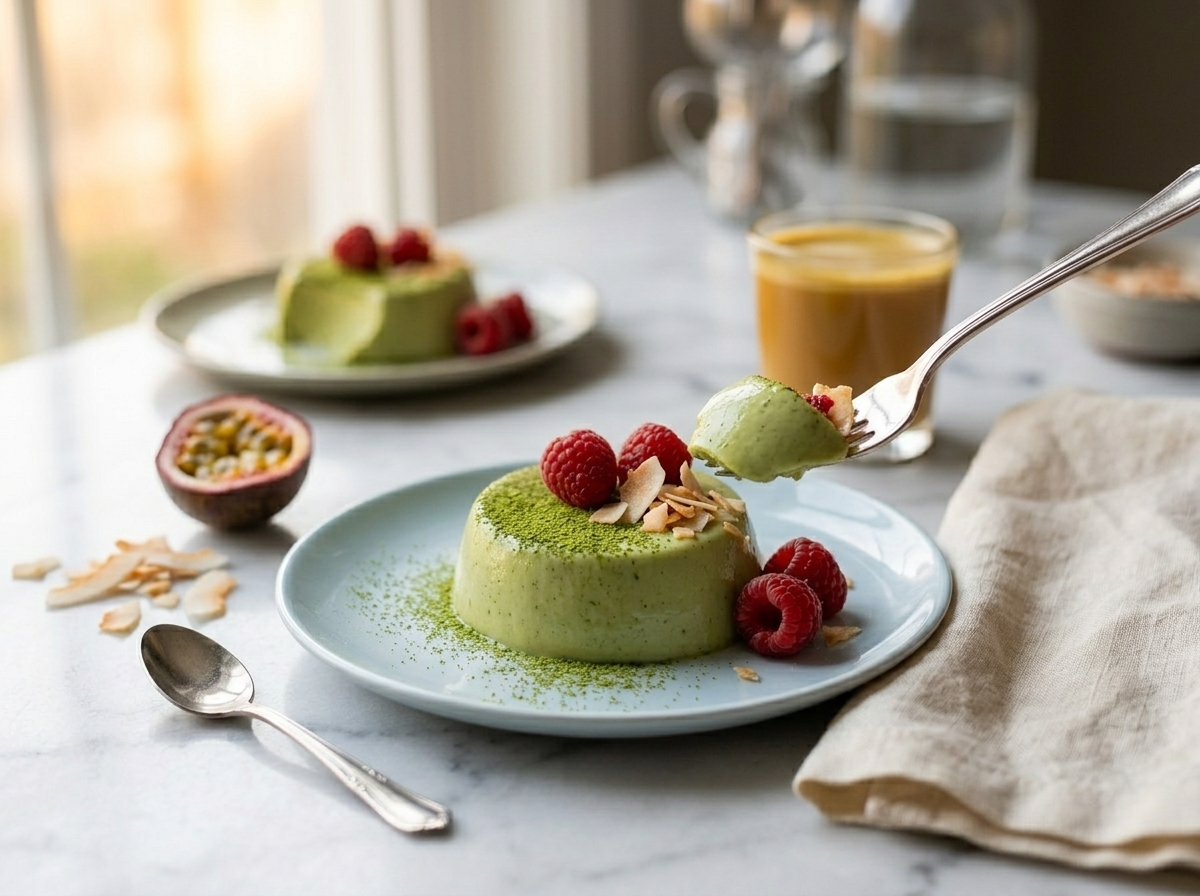
A spoonful of unsweetened berry coulis works well alongside, much like the coconut milk and berry pairing works in a lighter breakfast context. Raspberries or passion fruit cut through the richness with acidity. Keep the topping simple so the matcha stays the focus.
You can also serve these still in their glasses or ramekins for a more casual presentation. Top with a few toasted coconut flakes and a drizzle of monk fruit maple-style syrup.
FAQ
Why did my matcha coconut panna cotta not set properly?
The most common cause is either not enough gelatin or the gelatin was added to boiling liquid, which kills its setting power. Make sure you bloom it in cold water first and that your coconut milk never exceeds a gentle simmer before you add it.
Can I use agar-agar instead of gelatin in this panna cotta?
Yes, use about half the amount of gelatin listed, roughly 1 tsp agar-agar powder. Agar sets firmer and slightly more opaque than gelatin, and it must be boiled to activate, unlike gelatin.
How far ahead can I make this matcha panna cotta for a dinner party?
You can make them up to 2 days ahead and keep them covered in their molds in the fridge. Unmold them right before serving so the edges stay sharp and the surface stays smooth.
What toppings pair well with matcha coconut panna cotta without adding sugar?
Toasted coconut flakes, a few fresh raspberries, or a drizzle of monk fruit syrup all work without adding refined sugar, similar to the toppings on sugar-free no-bake cheesecake cups. A light dusting of ceremonial matcha powder also adds visual contrast and reinforces the flavor.
Is this panna cotta keto-friendly?
Yes. Full-fat coconut milk, monk fruit sweetener, gelatin, and matcha are all low-carb and keto-compatible, fitting the same framework as a keto-friendly no-sugar meal. One serving comes in at roughly 3 to 4 g net carbs depending on the exact coconut milk brand you use.
What is the difference between this coconut panna cotta and a traditional Italian panna cotta?
Traditional panna cotta uses heavy dairy cream and white sugar. This version swaps both for full-fat coconut milk and monk fruit, making it dairy-free and sugar-free while keeping the same silky set texture.