Jump to Recipe
I’ll be honest, I made this slaw by accident. I had half a head of cabbage, a sad carrot, and a bottle of sesame oil sitting on the counter. Twenty minutes later, I had a bowl I ended up eating three days in a row.
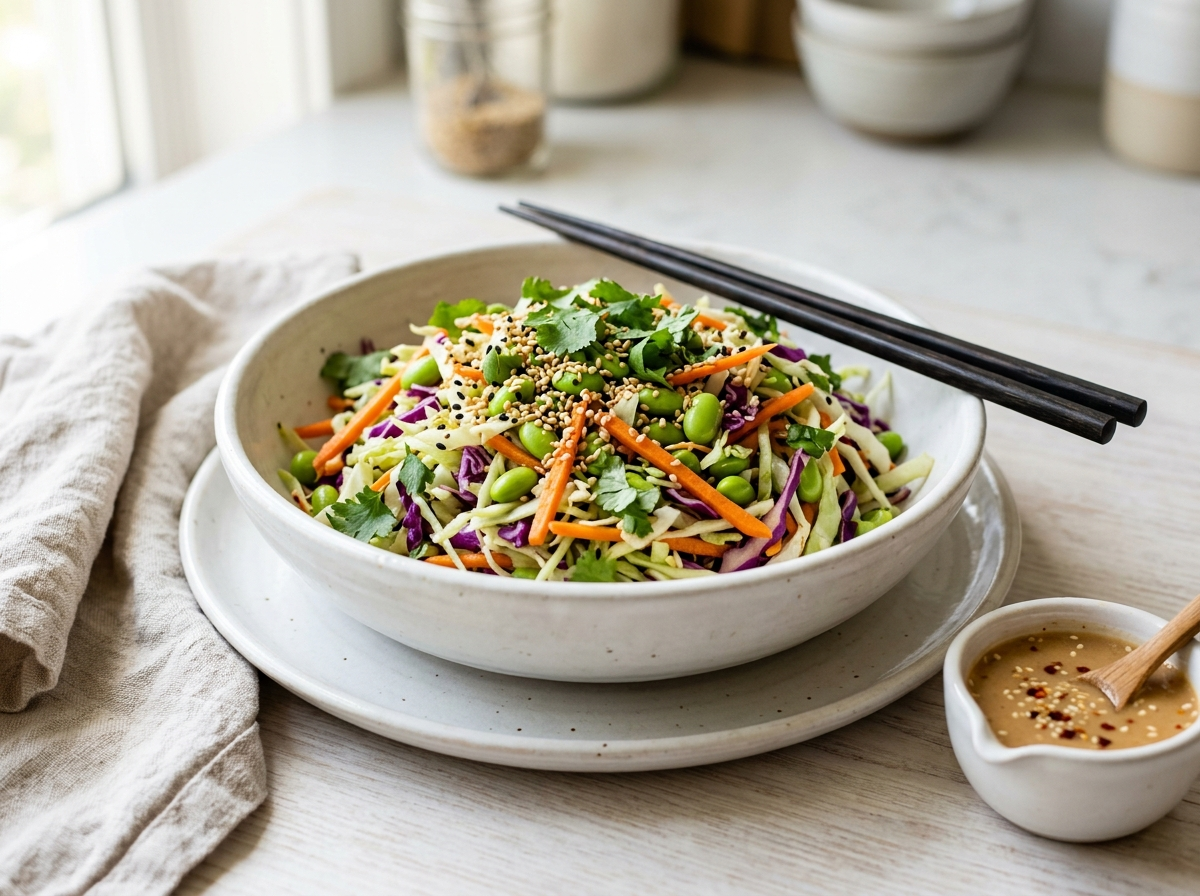
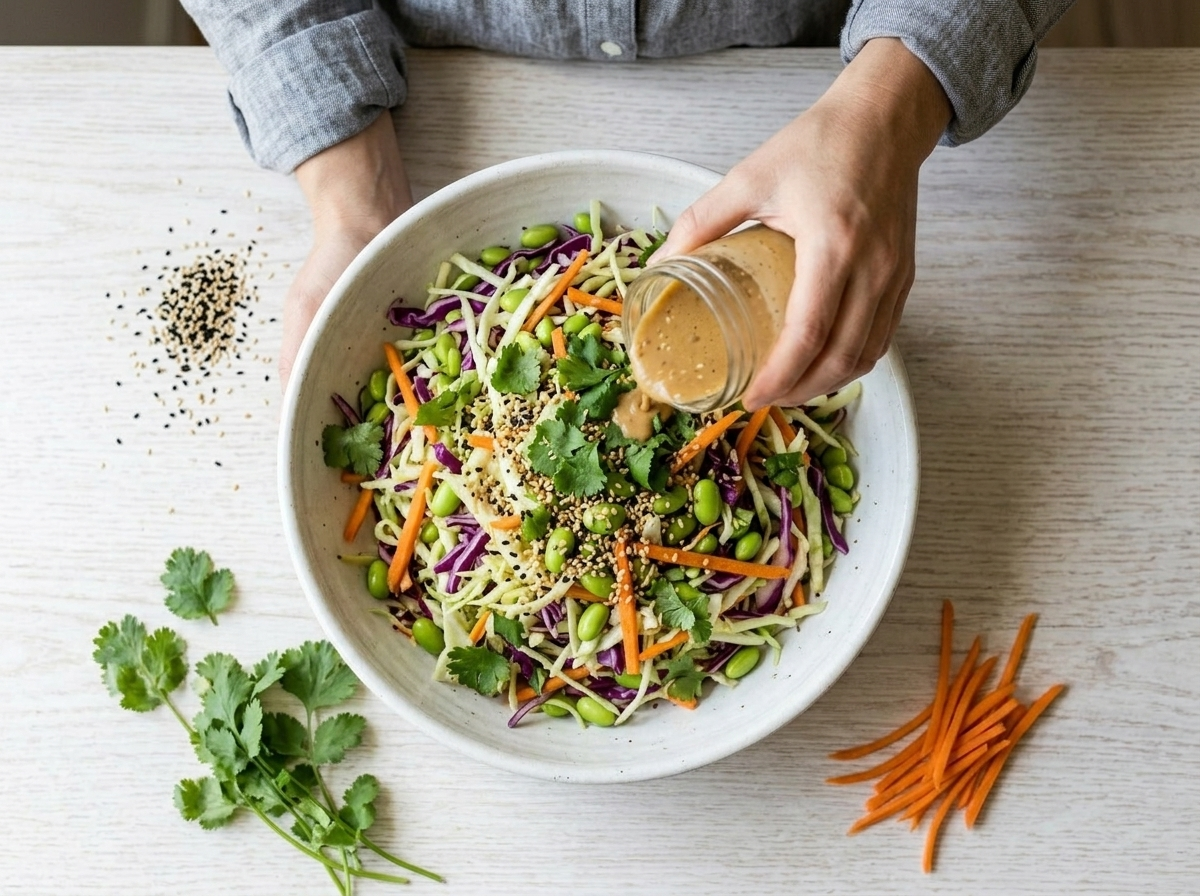
The dressing is the thing. Toasted sesame oil, rice vinegar, soy sauce, a little honey, fresh ginger. It’s sharp and nutty at the same time, and it clings to the shredded cabbage without making it limp.
No cooking. No wilting over a hot pan. Just a sharp knife, a big bowl, and a whisk.
It works as a side next to grilled chicken or salmon, piled onto fish tacos, or eaten straight from the container at lunch. Real food doing its thing.
Why You’ll Love This Recipe
- Ready in 15 minutes with zero cooking required
- Dressing doubles as a marinade for chicken or tofu
- Holds its crunch in the fridge for up to three days
- Naturally vegan, gluten-free adaptable, and dairy-free
Ingredient Notes
- green cabbage: Thinly shredded is key. A mandoline gets you even, paper-thin strips. Napa cabbage works too and is a little more tender.
- red cabbage: Adds color and a slightly peppery bite. You can skip it and use all green cabbage if that’s what you have.
- carrots: Cut into matchsticks or use a julienne peeler. Pre-shredded bagged carrots work fine and save time.
- edamame: Frozen shelled edamame, thawed. Adds protein and a pop of green. Chickpeas are a decent swap if edamame isn’t available.
- toasted sesame oil: Don’t substitute with plain sesame oil. The toasted version has a deep, nutty flavor that’s the backbone of this dressing.
- rice vinegar: Mild and slightly sweet. Apple cider vinegar works in a pinch but is a little sharper, so use slightly less.
- soy sauce: Use tamari for a gluten-free version. Coconut aminos work too and add a touch more sweetness.
- fresh ginger: Grate it fine so it blends into the dressing. Ground ginger is a backup but the flavor is much flatter.
- honey: Balances the vinegar. Maple syrup makes the dressing fully vegan without changing the flavor much.
- sesame seeds: Toast them in a dry pan for 2 minutes if your seeds aren’t already toasted. It matters more than you’d expect.
Light Asian Slaw with Sesame Dressing
Ingredients
Method
- Combine the sesame oil, rice vinegar, soy sauce, honey, grated ginger, grated garlic, lime juice, and red pepper flakes in a small bowl. Whisk until smooth and the honey is fully dissolved.
- Taste the dressing. It should be tangy with a clear sesame note. Adjust with a little more honey if too sharp, or more vinegar if too flat.
- Add the shredded green cabbage, red cabbage, and carrot matchsticks to a large mixing bowl.
- Add the thawed edamame and toss everything together so the vegetables are evenly mixed.
- Pour the dressing over the slaw and toss well until every strand is coated.
- Add the sliced green onions and cilantro leaves. Toss once more gently.
- Scatter the toasted sesame seeds over the top. Let the slaw rest for 10 minutes at room temperature before serving so the flavors settle and the cabbage softens slightly.
Notes
Tips for Success
- Shred cabbage as thin as you can, thicker strips stay stiff and don’t absorb the dressing evenly.
- Whisk the dressing in the bottom of your serving bowl, then pile the slaw on top to minimize dishes.
- Let the slaw rest for at least 10 minutes before serving so the cabbage softens slightly and absorbs flavor.
- Add sliced green onions and cilantro just before serving so they stay bright and don’t wilt.
- If making ahead, store the dressing separately and toss within 30 minutes of eating for the freshest crunch.
Variations
- Add shredded rotisserie chicken for a quick protein-packed lunch bowl version.
- Swap edamame for crispy baked tofu cubes to keep it fully plant-based and filling.
- Stir in 1 tbsp peanut butter with the dressing for a creamy peanut-sesame variation.
Storage and Reheating
Store the dressed slaw in an airtight container in the fridge for up to 3 days. It softens slightly but stays flavorful, and many people prefer it after a 24-hour rest.
If you want maximum crunch over multiple days, store the shredded vegetables and dressing in separate containers, then combine just before eating.
This slaw doesn’t freeze well. The cabbage turns watery and loses all texture once thawed, so make only what you’ll eat within the week.
Serving Suggestions
Pile this slaw onto fish tacos with sliced avocado and a squeeze of lime. It holds up better than lettuce and adds texture where soft tortillas need it.
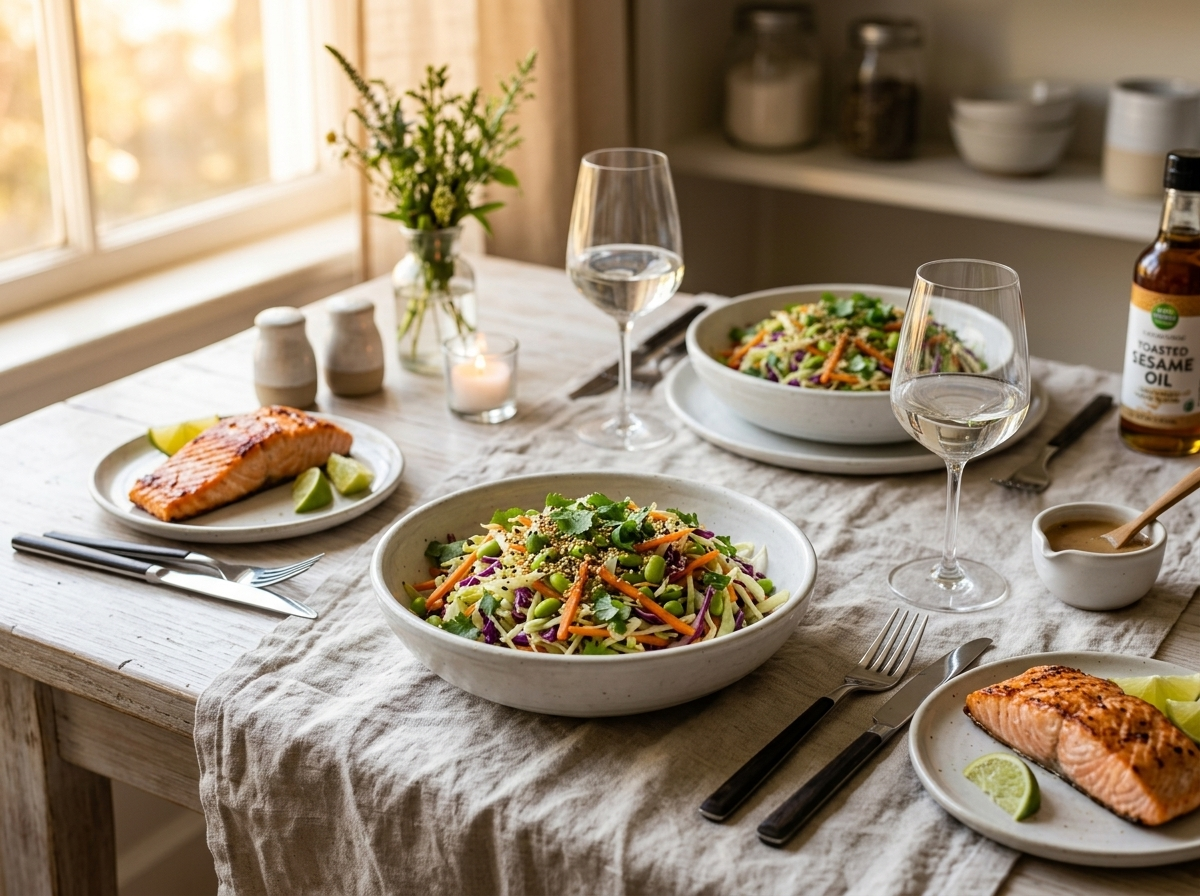
Serve it alongside grilled honey ginger salmon, teriyaki chicken thighs, or soy-glazed pork tenderloin. The acidity cuts through richer proteins cleanly.
For a lunch bowl, spoon the slaw over steamed jasmine rice or soba noodles, add a soft-boiled egg, and drizzle on a little extra sesame dressing.
FAQ
Why is my Asian slaw watery after sitting in the fridge?
Salt in the soy sauce draws moisture out of the cabbage over time, which is normal. To slow it down, store the dressing and vegetables separately and combine just before serving. If it’s already dressed and watery, drain the liquid and toss with a fresh drizzle of sesame oil before eating.
Can I use tahini instead of toasted sesame oil in the dressing?
Tahini changes the dressing from a light vinaigrette to a thick, creamy sauce, which is good but different. If you use it, thin with extra rice vinegar and a splash of water until pourable, the way a creamy tahini drizzle is finished before serving. Keep toasted sesame oil as written if you want the original light texture.
Can I make this Asian slaw the night before a party?
Yes, but store the dressing separately and combine no more than 1 hour before serving if you want crunch. If you don’t mind a softer texture, fully dressed slaw refrigerated overnight is still very good and arguably more flavorful.
What protein goes best on top of sesame slaw?
Roasted salmon with turmeric yogurt is a natural match because the sesame dressing complements the fish without overpowering it. Shredded rotisserie chicken and crispy tofu also work well. Keep the protein plain or lightly seasoned so the slaw dressing carries the flavor.
Is this sesame slaw gluten-free?
It’s gluten-free if you swap regular soy sauce for tamari or coconut aminos. All other ingredients in the recipe are naturally gluten-free. Check your sesame oil label too, as some brands share facilities with wheat products.
What’s the difference between this Asian slaw and a traditional coleslaw?
Traditional coleslaw uses a mayonnaise or vinegar-cream base, while this version uses a soy-sesame-rice vinegar dressing with no dairy or mayo. The flavor profile is lighter and more acidic, and the add-ins like edamame and ginger are specific to the Asian-inspired style.