Jump to Recipe
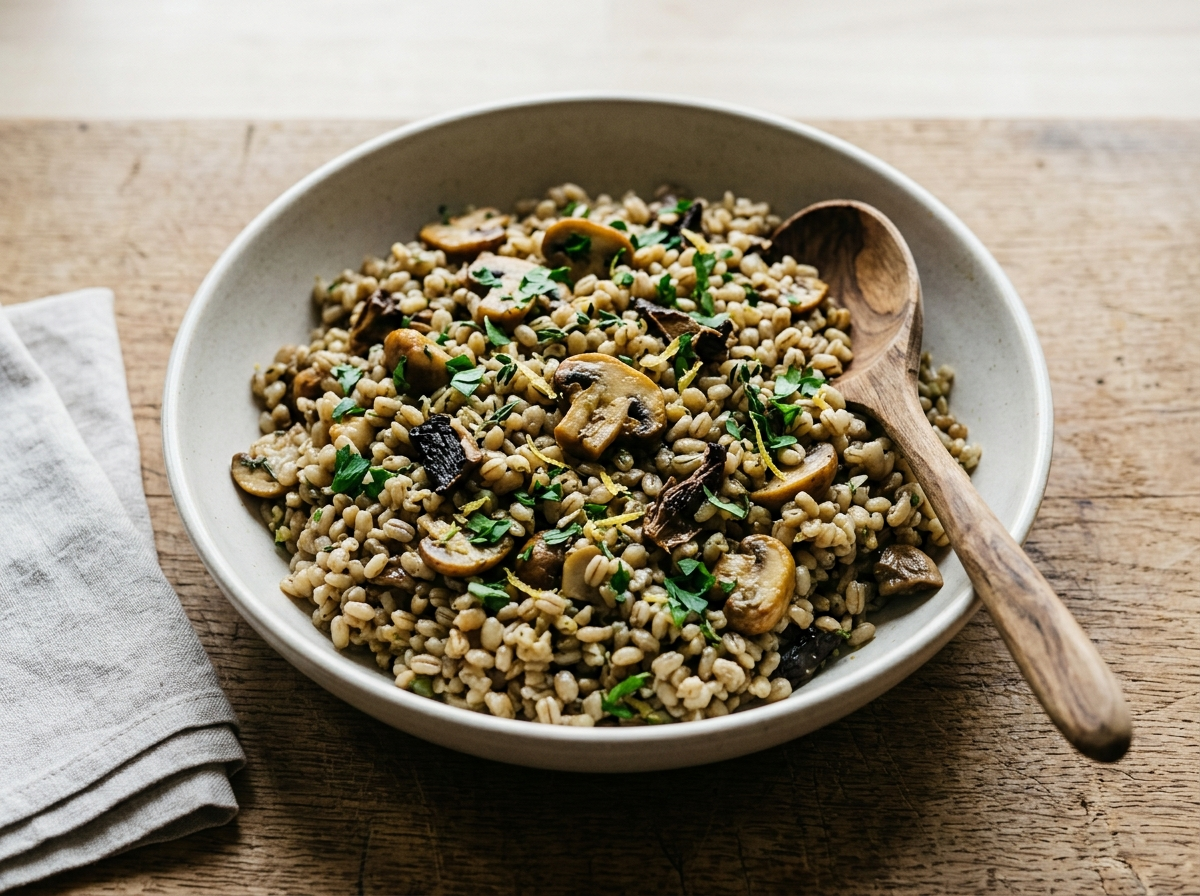
I’ll be honest – I made this by accident. I had half a bag of pearl barley, a handful of mixed mushrooms going soft, and no real plan.
What came out was a pilaf so good I’ve made it on purpose every week since. It’s chewy. A little nutty. Deeply savory from the mushroom stock.
Barley doesn’t get enough credit as a base grain. It holds up to bold flavors, doesn’t turn to mush, and keeps you full in a way that rice rarely does.
This one sits right in your weeknight rotation whether you serve it as a side or pile it into a bowl on its own.
Why You’ll Love This Recipe
- One pot, minimal cleanup, ready in 40 minutes.
- Pearl barley stays chewy, never mushy or gluey.
- Dried porcini add deep umami without extra effort.
- Works as a hearty side or a standalone vegetarian main.
Ingredient Notes
- Pearl barley: Pearl barley cooks faster than hulled barley and gives a creamier texture here. Hulled barley works but needs an extra 20-25 minutes and more liquid.
- Dried porcini mushrooms: These are the backbone of the flavor. Soak them in hot water first – that soaking liquid becomes your stock base, so don’t discard it.
- Cremini mushrooms: Fresh cremini add body and texture alongside the porcini. Baby portobello or shiitake work just as well if that’s what you have.
- Vegetable stock: Use a good-quality low-sodium stock so you can control the salt. Chicken stock works too if you’re not keeping this vegetarian.
- Fresh thyme: Strip the leaves right before adding – dried thyme is a reasonable substitute, but use only half the amount (about 1/2 tsp).
- Lemon zest: Added at the very end, it lifts the whole dish and cuts through the earthiness. Don’t skip it – it makes a real difference.
Barley and Wild Mushroom Pilaf
Ingredients
Method
- Soak the dried porcini in 250ml of hot (not boiling) water for 15 minutes. Lift the mushrooms out with a fork, squeeze gently, and chop roughly. Strain the soaking liquid through a fine-mesh sieve into a measuring jug and set aside.
- Warm the olive oil in a large heavy-bottomed saucepan over medium-high heat. Add the cremini mushrooms in a single layer and cook without stirring for 2-3 minutes until golden on the bottom. Stir and cook another 2 minutes, then transfer to a plate.
- Reduce the heat to medium. Add the diced onion to the same pan with a pinch of salt. Cook for 5-6 minutes, stirring occasionally, until soft and translucent. Add the minced garlic and thyme leaves and cook for 1 minute until fragrant.
- Add the rinsed pearl barley to the pan and stir to coat in the oil and onion mixture. Toast for 2 minutes, stirring frequently, until the barley smells slightly nutty.
- Add the chopped porcini, the strained porcini soaking liquid, and the vegetable stock to the pan. Drop in the bay leaf. Stir to combine, then season with 1 tsp salt and the black pepper.
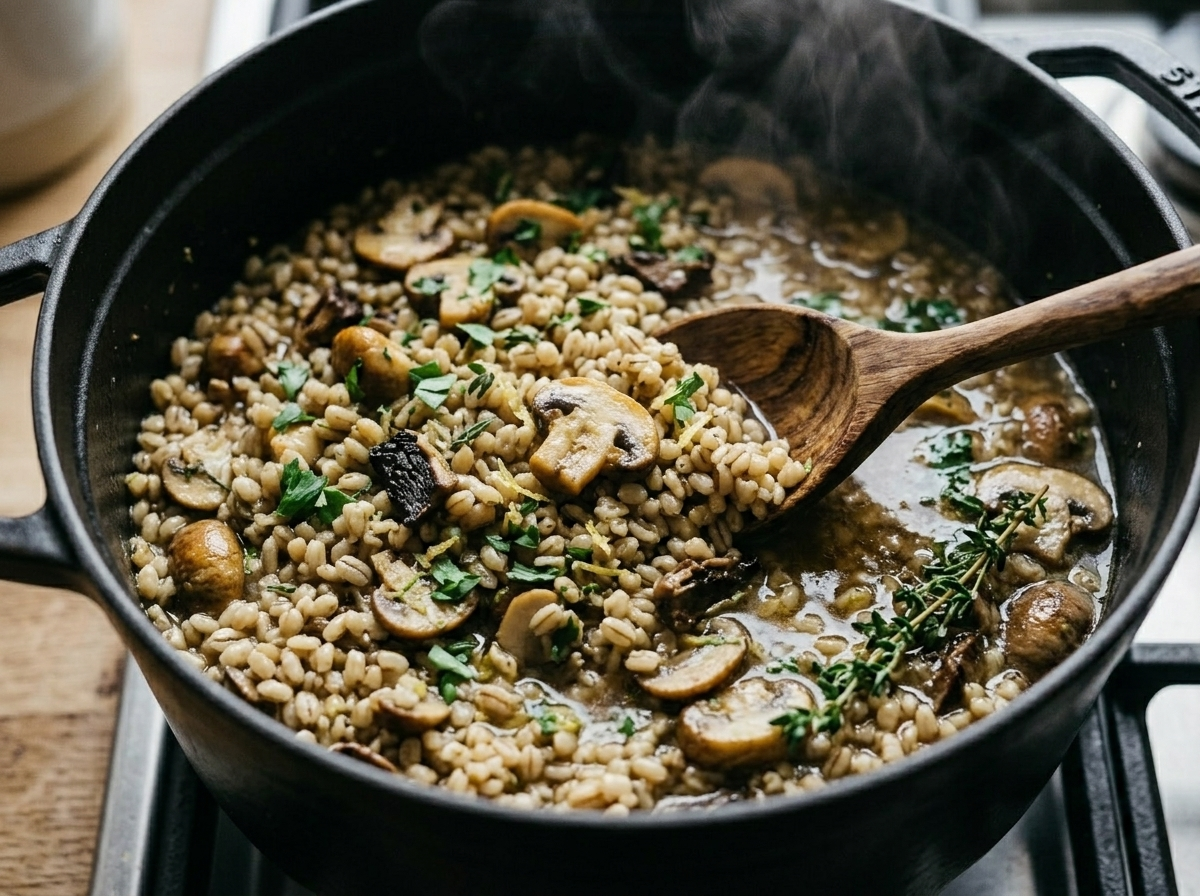
- Bring to a boil, then reduce the heat to low. Cover with a tight-fitting lid and simmer for 35-40 minutes, stirring once or twice, until the barley is tender and has absorbed most of the liquid. If it looks dry before the barley is done, add stock in 50ml increments.
- Stir the golden cremini mushrooms back into the pan. Cover and rest off the heat for 5 minutes.
- Remove the bay leaf. Stir in the lemon zest and chopped parsley. Taste for salt, adjust, and serve hot.
Notes
Tips for Success
- Rinse the pearl barley under cold water before cooking to remove surface starch and keep the grains separate.
- Strain the porcini soaking liquid through a fine-mesh sieve to remove any grit before adding it to the pot.
- Let the mushrooms cook without stirring for 2-3 minutes so they get golden edges rather than steaming and going grey.
- Taste for salt after adding stock – dried porcini and stock together can vary a lot in saltiness.
- Stir in lemon zest and fresh parsley only after the heat is off to keep their brightness.
Variations
- Add 1 cup of cooked white beans in the last 5 minutes for extra protein and creaminess.
- Stir in 40g of grated Parmesan just before serving for a risotto-style finish.
- Use half barley and half farro for a slightly nuttier, chewier texture throughout.
Storage and Reheating
Store leftover pilaf in an airtight container in the fridge for up to 4 days. The barley continues to absorb liquid as it sits, so it thickens overnight.
To reheat, add a splash of water or stock (about 2-3 tbsp per serving) and warm in a small saucepan over medium-low heat, stirring until loose and hot. Microwave works too – cover loosely and heat in 90-second bursts, stirring in between.
This pilaf freezes well. Portion into freezer bags, press flat, and freeze for up to 2 months. Thaw overnight in the fridge before reheating.
Serving Suggestions
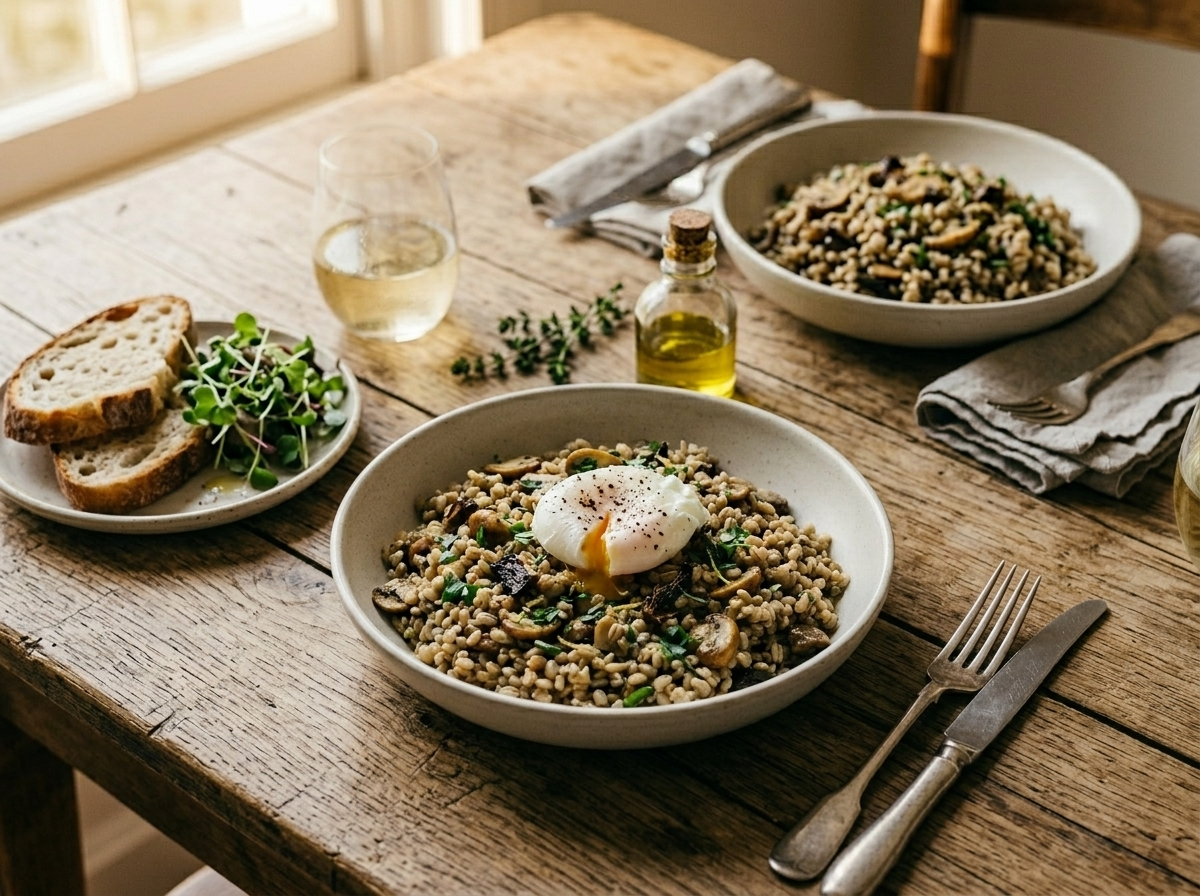
Serve this pilaf straight from the pot as a main with a simple green salad dressed in lemon and olive oil on the side. A fried or poached egg on top turns it into a complete meal with barely any extra effort.
As a side, it pairs well with roast chicken, grilled lamb chops, or a simple white fish fillet. The earthy mushroom flavor complements anything that has some char or caramelization on it.
For a more composed plate, spoon the pilaf into shallow bowls, add a dollop of plain yogurt, and scatter over some toasted pine nuts. That contrast of cool, creamy, and crunchy works really well against the chewy barley.
FAQ
Why does my barley and mushroom pilaf turn out sticky or clumped together?
The main cause is not rinsing the barley before cooking – surface starch makes it clump. Also, stirring too often while it simmers can break down the grains and make the whole thing gluey.
Can I use barley instead of arborio rice in a mushroom risotto-style dish?
Yes, and this pilaf is basically that. Barley doesn’t release starch the same way arborio does, so you won’t get the same glossy creaminess, but the chew and earthy flavor are excellent. Adding a little Parmesan at the end gets you closer to that risotto richness.
Can I freeze barley and wild mushroom pilaf and still have it hold its texture?
It freezes better than most grain dishes. Barley’s firm structure means it doesn’t turn to mush after thawing the way rice sometimes does. Add a splash of stock when reheating to bring back the right consistency.
What protein goes best alongside a wild mushroom and barley pilaf?
Roast chicken thighs are the most natural match – the juices soak into the barley beautifully. A fried egg or seared halloumi keeps it vegetarian and still adds enough protein to make it a full meal.
Is pearl barley gluten-free?
No – barley contains gluten, so this dish is not suitable for anyone with celiac disease or a gluten intolerance. If you need a gluten-free version, substitute cooked brown rice or buckwheat groats and adjust the liquid and cook time accordingly.
What’s the difference between a barley pilaf and barley porridge?
Pilaf uses a measured ratio of liquid to grain so each grain stays distinct and chewy – it’s a dry, fluffy-ish result. Porridge uses much more liquid and longer cooking until the barley breaks down into a thick, creamy consistency.