Jump to Recipe
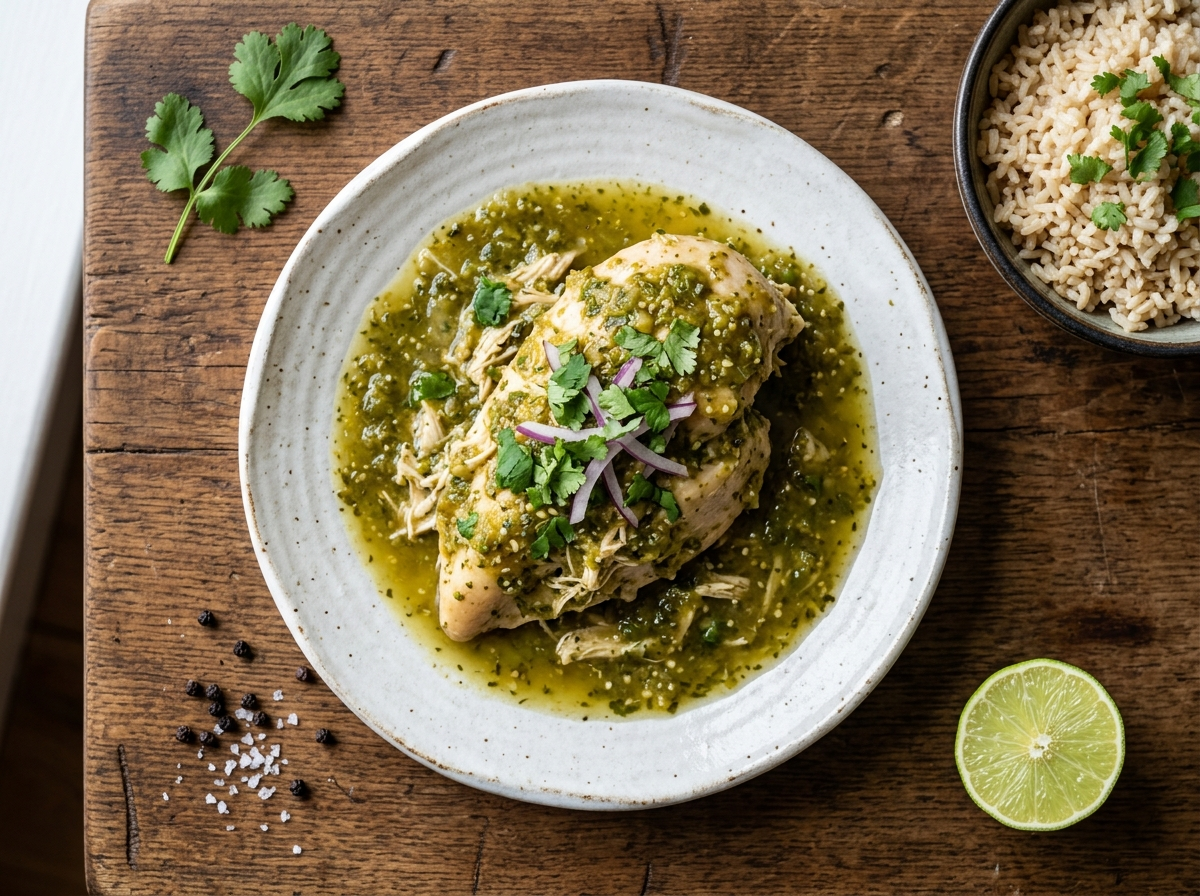
I’ll be honest – chicken breast has a reputation for going dry and bland. This recipe fixes both problems at once.
The trick is cooking the chicken in the salsa verde itself, not just spooning it on top at the end. The tomatillo sauce keeps everything moist while the lime, garlic, and chiles soak into the meat.
It lands somewhere around 280 calories per serving. Enough protein to actually keep you full. No cream, no butter, no flour.
It works on busy weeknights and it holds up well as meal prep. You get four solid servings from one pan.
Why You’ll Love This Recipe
- Under 300 calories with 38g of protein per serving
- One skillet, minimal cleanup, ready in 40 minutes
- Sauce doubles as a topping for rice or tacos
- Works fresh or meal-prepped for the week
Ingredient Notes
- chicken breast: Use boneless, skinless breasts around 170-200g each so they cook at the same rate. Pound thicker ends slightly if needed for even thickness.
- salsa verde: A good jarred salsa verde like Herdez works fine on a weeknight. Homemade from roasted tomatillos, garlic, and jalapeño gives more brightness if you have 10 extra minutes.
- chicken broth: Low-sodium broth keeps the sauce from getting too salty as it reduces. Plain water works in a pinch but the flavor is thinner.
- jalapeño: One jalapeño adds mild heat. Remove the seeds for less kick, or swap for serrano if you want more bite.
- ground cumin: Just half a teaspoon ties the spice profile together. Don’t skip it, but don’t double it either.
- fresh cilantro: Stirred in at the end for freshness. If you’re not a cilantro fan, flat-leaf parsley works as a neutral swap.
Skinny Salsa Verde Chicken Breast
Ingredients
Method
- Pat the chicken breasts dry with paper towels. Pound any thick ends to an even 2cm thickness using a meat mallet or rolling pin.
- Season both sides with salt, black pepper, cumin, and onion powder.
- Heat the olive oil in a 12-inch nonstick skillet over medium-high heat until shimmering.
- Add the chicken breasts and sear for 2 minutes per side until lightly golden. They don’t need to be cooked through yet. Transfer to a plate.
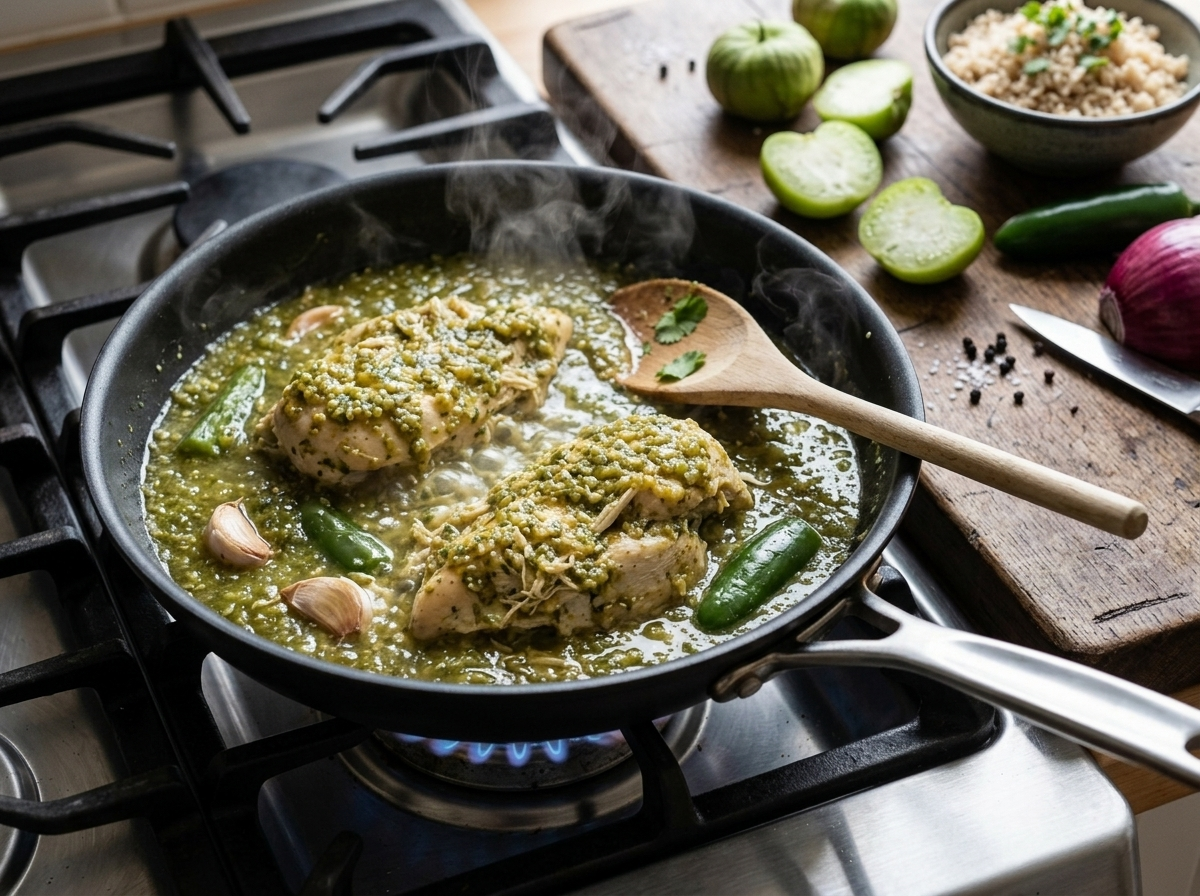
- Reduce heat to medium. Add the minced garlic and diced jalapeño to the same pan and cook for 60 seconds, stirring, until fragrant.
- Pour in the salsa verde and chicken broth. Stir to combine and scrape up any browned bits from the pan bottom.
- Return the chicken breasts to the skillet. Spoon some sauce over each piece.
- Reduce heat to medium-low, cover with a lid, and simmer for 15 to 18 minutes until the chicken registers 74C / 165F on an instant-read thermometer.
- Remove the pan from heat. Let the chicken rest in the sauce uncovered for 5 minutes.
- Scatter fresh cilantro over the top and serve with lime wedges on the side.
Notes
Tips for Success
- Pound chicken breasts to an even 2cm thickness before cooking so they finish at the same time.
- Sear the chicken 2 minutes per side before adding salsa verde to lock in color and add depth to the sauce.
- Simmer on medium-low with a lid on to keep the chicken moist and prevent the salsa from scorching.
- Use an instant-read thermometer and pull the chicken at exactly 74C / 165F for juicy results every time.
- Let the chicken rest 5 minutes in the sauce off the heat before slicing so the juices redistribute.
Variations
- Slow cooker version: add raw chicken and salsa verde to the pot, cook on low 4 hours, shred chicken directly in sauce.
- Spicy version: add one diced serrano and a pinch of chipotle powder along with the salsa verde.
- Creamy version: stir in 2 tbsp plain non-fat Greek yogurt off the heat for a lighter creamy sauce without added fat.
Storage and Reheating
Store cooled chicken and sauce together in an airtight container in the fridge for up to 4 days. Keep the sauce with the chicken so it stays moist.
To reheat, add a splash of chicken broth to the pan and warm over medium-low heat for 4-5 minutes. Microwave works too – cover loosely and heat in 90-second bursts, stirring between rounds.
For freezing, portion into freezer-safe containers with the sauce and freeze up to 2 months. Thaw overnight in the fridge before reheating.
Serving Suggestions
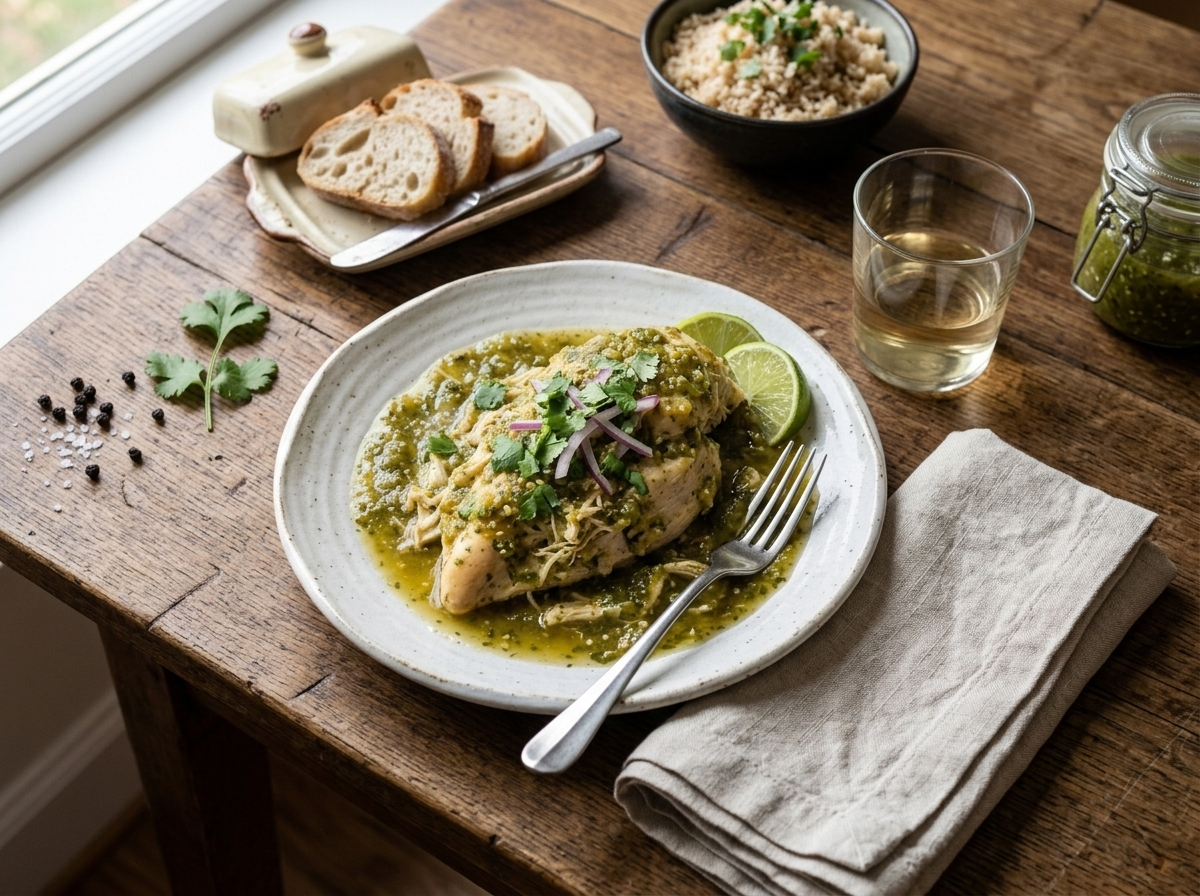
The most straightforward option is brown rice or cauliflower rice with the salsa verde spooned over everything. The sauce is thin enough to work as a built-in dressing.
Slice the chicken thin and tuck it into warm corn tortillas with shredded cabbage and a squeeze of lime for street-style tacos that come in well under 400 calories for two.
It also works over a bowl of black beans with diced avocado and pickled red onion on top. That combination holds up well for packed lunches.
FAQ
Why does my salsa verde chicken breast turn out dry?
The most common cause is overcooking. Pull the chicken at 74C / 165F internal temperature and let it rest in the sauce off the heat for 5 minutes. Simmering with the lid on also helps trap steam and keep the breast moist.
Can I use salsa verde from a jar instead of homemade?
Yes, jarred salsa verde is totally fine and what I use most weeknights. Look for one with tomatillo as the first ingredient and no more than 150mg sodium per 2 tbsp serving to keep the dish lean.
Can I freeze skinny salsa verde chicken breast after cooking?
Freeze it in portions with the sauce for up to 2 months. The tomatillo sauce actually freezes better than cream-based sauces and the chicken stays more tender when thawed with the liquid around it, much like the broth in a ginger turmeric chicken soup.
What sides pair well with salsa verde chicken without adding too many calories?
Cauliflower rice, steamed zucchini, or a simple black bean and corn salad all keep the meal under 400 calories total. Warmed corn tortillas are a low-calorie option if you want something starchy.
Is salsa verde chicken breast gluten-free?
This recipe is naturally gluten-free as written since there’s no flour or soy sauce involved. Just double-check the label on your jarred salsa verde, since a small number of brands add modified starch.
What is the difference between salsa verde chicken and green enchilada chicken?
Salsa verde is made from fresh or roasted tomatillos and is thinner and brighter in flavor. Green enchilada sauce typically has added flour or cornstarch to thicken it and is milder, making it higher in carbs than straight salsa verde.