Jump to Recipe
Gluten-Free Lemon Polenta Cake is a dense, moist cake made with fine polenta and ground almonds instead of wheat flour, soaked in a lemon syrup while it’s still warm.
I started making this one for a friend who can’t eat gluten and got tired of dry, crumbly substitutes. Polenta and almond flour hold moisture better than most gluten-free blends, so the crumb stays tender for days.
The texture is what sells it. A little grainy from the cornmeal, soft from the almond flour, and soaked through with lemon syrup that seeps into every crack on top.
This isn’t a fussy cake. One bowl for the batter, a quick syrup on the stove, and a 45 to 50 minute bake. It’s the kind of dessert that sits right in your weekend baking rotation without asking much of you.
Why You’ll Love This Recipe
- Naturally gluten-free with almond flour and polenta
- Stays moist for days thanks to the syrup soak
- One bowl batter, no mixer skills required
- Freezes well for make-ahead dessert planning
Ingredient Notes
- polenta: Use fine or medium polenta, not instant grits or coarse polenta. It gives the cake its slight grain without going gritty.
- almond flour: Blanched almond flour makes the smoothest crumb. Almond meal with skins works too but gives a denser, speckled result.
- butter: Softened butter creams up faster and holds air better. Light olive oil works as a swap but the crumb turns a bit denser.
- eggs: Room temperature eggs blend into the batter smoother and lower the risk of the batter curdling when they go in.
- lemon zest and juice: Use fresh lemons since you need the zest, not just the juice. Bottled juice is fine for the syrup in a pinch.
- baking powder: Check the label for a certified gluten-free brand if you’re baking for anyone with celiac disease.
- whole milk: Whole milk keeps the batter from drying out. Oat milk or almond milk works as a dairy-free swap.
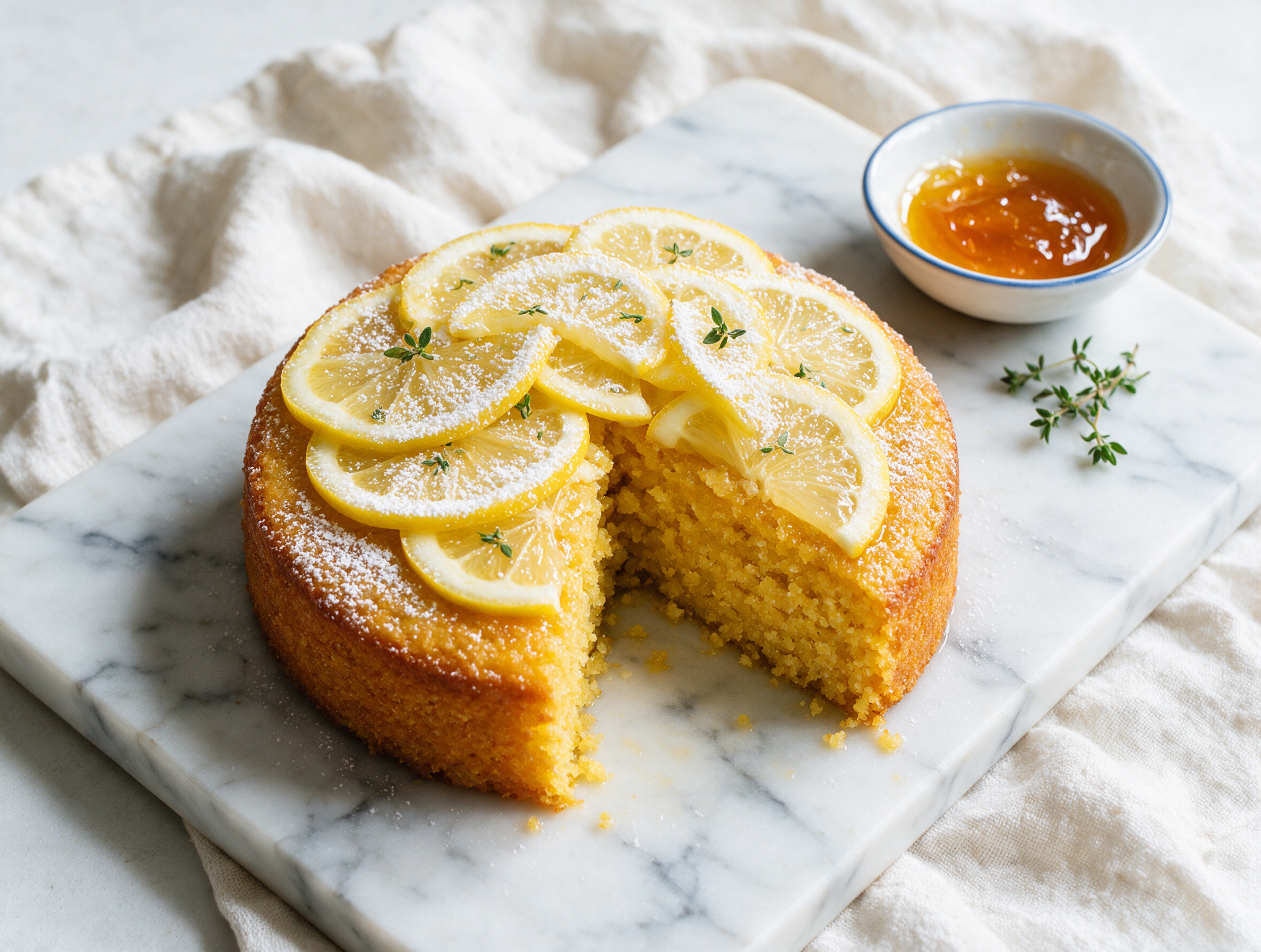
Zesty Gluten-Free Lemon Polenta Cake with Citrus Syrup
Ingredients
Method
- Heat the oven to 170 C / 340 F. Grease a 20 cm / 8-inch springform pan and line the base with parchment.
- Whisk the polenta, almond flour, baking powder, and salt together in a bowl. Set aside.
- Beat the softened butter and sugar with an electric hand mixer for 3 to 4 minutes until pale and fluffy.
- Add the eggs one at a time, beating well after each. Mix in the lemon zest.
- Fold in the dry ingredients alternately with the milk and 60 ml lemon juice, mixing just until combined. The batter will be thick.
- Scrape the batter into the pan and smooth the top. Bake for 45 to 50 minutes, until golden and a skewer inserted in the center comes out clean or with just a few moist crumbs.
- While the cake bakes, warm the 80 ml lemon juice and 80 g sugar in a 1-quart / 1 L saucepan over low heat, stirring until the sugar dissolves, about 2 to 3 minutes. Don’t let it boil.
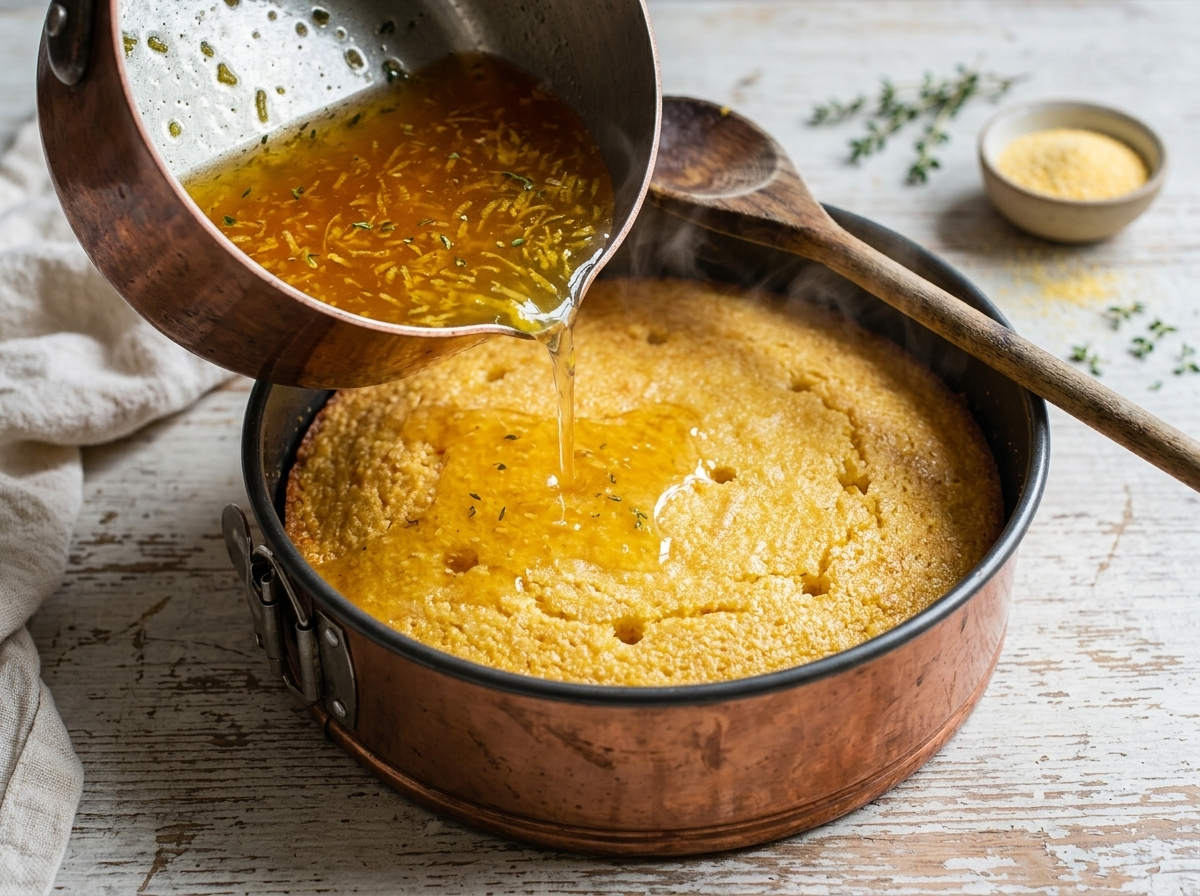
- When the cake comes out of the oven, poke it all over with a skewer while it’s still warm and in the pan.
- Pour the warm syrup slowly over the top, letting it soak into the holes rather than pooling on the surface.
- Cool the cake in the pan for 15 to 20 minutes, then release the springform sides and transfer to a wire rack to cool fully.
- Slice into 10 wedges and serve.
Notes
- Use a 20 cm / 8-inch springform pan for even baking and easy release.
- Poke holes in the warm cake before pouring syrup for full absorption.
- Do not overbake, dry polenta cake loses moisture fast once cooled.
- Bring eggs and butter to room temperature for a smoother batter.
Tips for Success
- Zest the lemons before juicing them, since a juiced lemon is nearly impossible to zest cleanly afterward.
- Poke the warm cake all over with a skewer before pouring the syrup so it soaks in evenly.
- Let the cake cool in the pan for 15 to 20 minutes before unclipping the springform sides.
- Weigh the polenta and almond flour instead of scooping by cup for a consistent crumb every time.
- Cover the cake loosely only once it’s fully cool, wrapping it warm traps steam and softens the top.
Variations
- Swap half the lemon juice for orange juice and add orange zest for a milder, sweeter citrus cake.
- Fold in 1 cup fresh blueberries or raspberries before baking for a fruitier, jammy version.
- Skip the syrup and dust with powdered sugar instead for a drier, snacking-cake texture.
Storage and Reheating
Gluten-Free Lemon Polenta Cake keeps at room temperature for 2 to 3 days if it’s covered tightly, since the lemon syrup keeps the crumb from drying out fast. In the fridge, wrapped well, it holds for up to 5 days.
To freeze, wrap individual slices in plastic and foil and freeze for up to 2 months. Thaw overnight in the fridge, then bring to room temperature before serving.
If you want it warm, microwave a slice for 10 to 15 seconds, or warm the whole cake at 150 C / 300 F for about 10 minutes covered loosely in foil.
Serving Suggestions
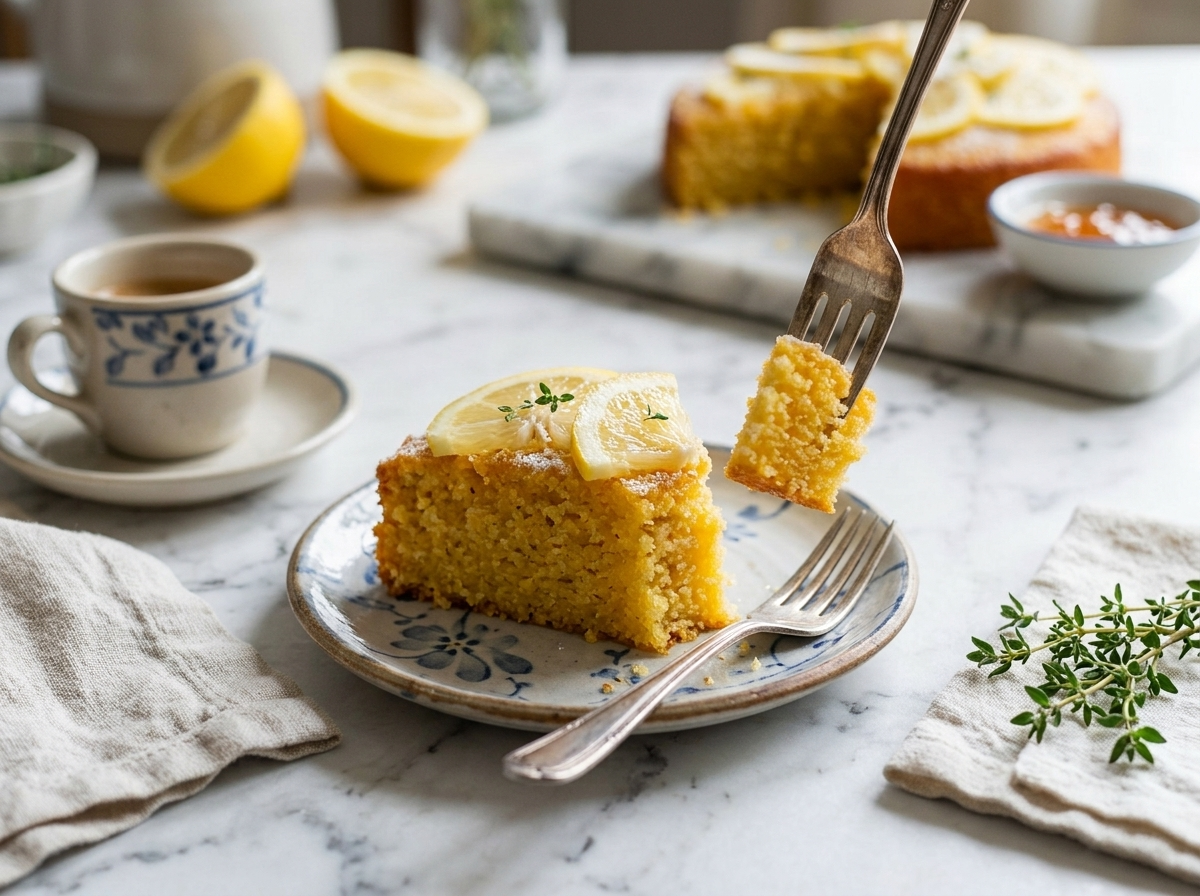
Serve Gluten-Free Lemon Polenta Cake at room temperature with a dusting of powdered sugar and a few thin lemon slices on top.
A spoonful of mascarpone or lightly whipped cream on the side rounds out the tartness. Fresh berries work too, especially raspberries or blackberries.
For coffee or afternoon tea, a plain slice next to a strong espresso does the job.
FAQ
Why is my lemon polenta cake gummy in the middle?
A gummy center usually means the cake came out of the oven before it finished baking, or the syrup went on while the crumb was still too hot and steamy. Check doneness with a skewer in the center, it should come out clean or with just a few moist crumbs. Bake in 5 minute increments past the 45 minute mark if the top browns too fast.
Can I use regular cornmeal instead of polenta in this cake?
Yes, fine or medium cornmeal works the same way polenta does here since polenta is just ground corn. Avoid coarse cornmeal or grits, they make the crumb noticeably gritty instead of tender. Stick to the same 150 g weight so the batter texture stays right.
Can I make this lemon polenta cake a day ahead?
Yes, and it’s actually better the next day once the syrup has fully soaked through the crumb. Bake it, syrup it, then cover it tightly once fully cooled and let it sit at room temperature overnight. Slice and serve straight from the counter.
What goes well with gluten-free lemon polenta cake besides mascarpone?
A dollop of lightly whipped cream or plain Greek yogurt works well against the tart syrup. Fresh raspberries or blackberries add color and acidity on the plate. A strong espresso or black tea on the side balances the sweetness.
Is this lemon polenta cake dairy-free?
Not as written, since it uses butter and whole milk in the batter. Swap the butter for the same amount of light olive oil and use a dairy-free milk like oat or almond milk instead, the texture stays close to the original. The syrup itself is dairy-free already.
What’s the difference between polenta cake and a regular lemon cake?
Polenta cake uses cornmeal and almond flour instead of wheat flour, giving it a coarser, slightly grainy crumb and a naturally gluten-free base. Regular lemon cake made with wheat flour is softer and more uniform in texture. Polenta cake also tends to stay moist longer because of the syrup soak.