Jump to Recipe
High-protein cottage cheese flatbread is a soft, sturdy flatbread made by blending cottage cheese and eggs into a batter, then baking it until the edges turn crisp and golden. One serving carries about 11 grams of protein, more than double what you’d get from regular flatbread or pita.
I started making this on Sunday afternoons when I wanted something to wrap lunch in without buying bread every week. The batter comes together in a blender in under five minutes.
It bakes flat and thin, so it crisps at the edges while staying a little chewy in the middle. No yeast, no proofing, no waiting around.
Use it as a wrap, a pizza base, or torn into wedges for dipping. It holds up well and doesn’t turn soggy under wet toppings the way some flatbreads do.
Why You’ll Love This Recipe
- Blends in a blender, ready in about 35 minutes
- Packs 11 grams of protein into every slice
- No yeast, no proofing, no waiting around
- Sturdy enough to fold, wrap, or top like pizza
Ingredient Notes
- cottage cheese: Use small-curd cottage cheese for the smoothest blend. Full-fat or 2% both work, low-fat versions are thinner and can make the batter runny.
- eggs: Large eggs bind the batter and add protein and structure. Room temperature eggs blend more evenly with the cottage cheese.
- all-purpose flour: Keeps the flatbread pliable and easy to fold. Whole wheat flour works too but makes the crumb denser and slightly nuttier.
- baking powder: Gives a little lift so the center bakes through instead of turning gummy.
- salt: Balances the tang of the cottage cheese. Don’t skip it, the batter tastes flat without it.
- garlic powder: Adds savory depth. Swap in onion powder or dried Italian herbs if that’s what you have on hand.
- olive oil: A light brushing before baking helps the edges crisp and turn golden instead of just drying out.
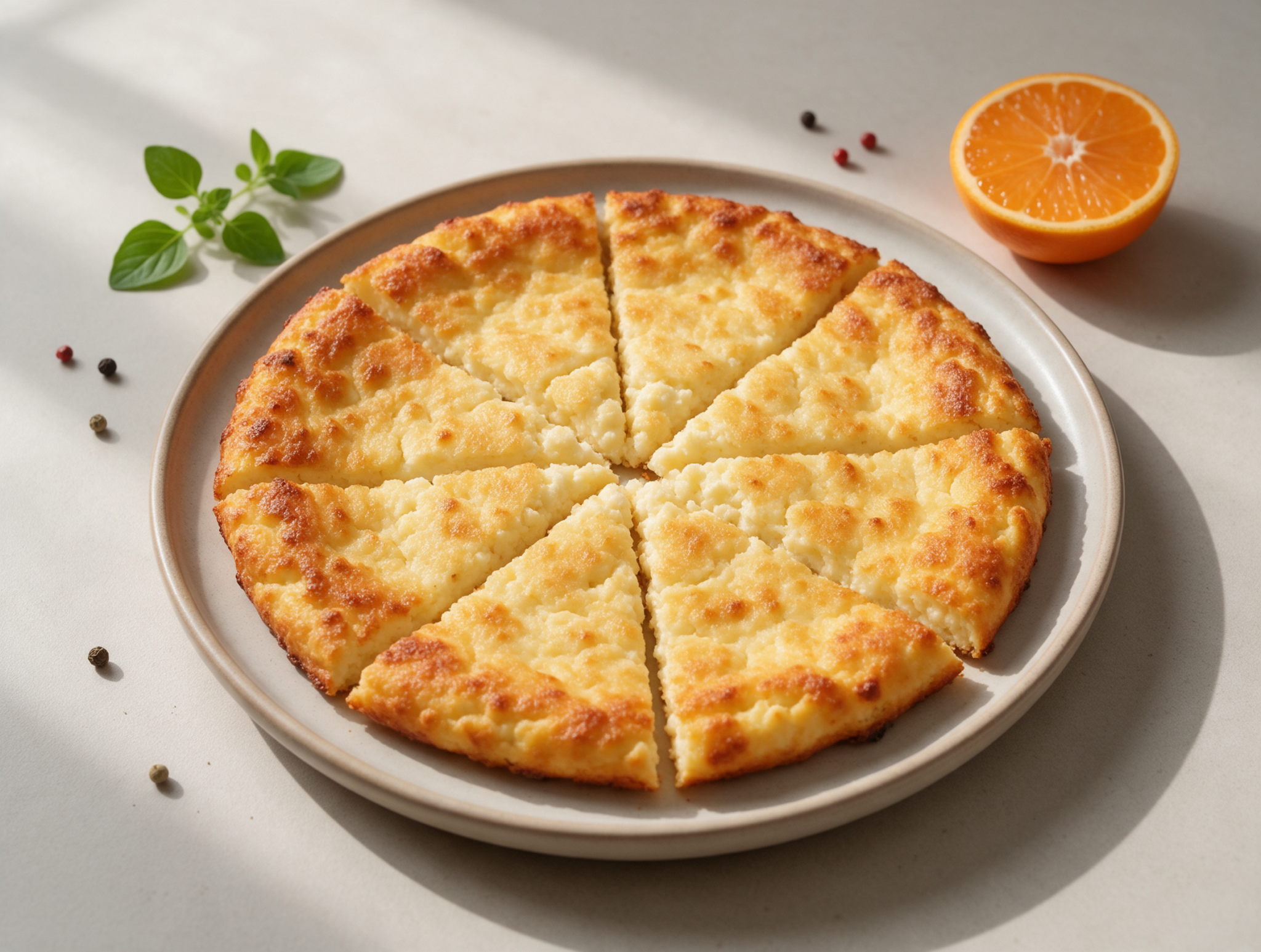
Crispy Baked Protein-Packed Cottage Cheese Flatbread
Ingredients
Method
- Heat the oven to 400 F / 200 C. Line a 23 x 33 cm / 9 x 13-inch sheet pan with parchment paper.
- Add the cottage cheese and eggs to a blender. Blend for 30 to 45 seconds until completely smooth with no visible curds.
- In a mixing bowl, whisk together the flour, baking powder, salt, and garlic powder.
- Pour the blended cottage cheese mixture into the dry ingredients. Stir with a spatula until just combined, a few small lumps are fine.
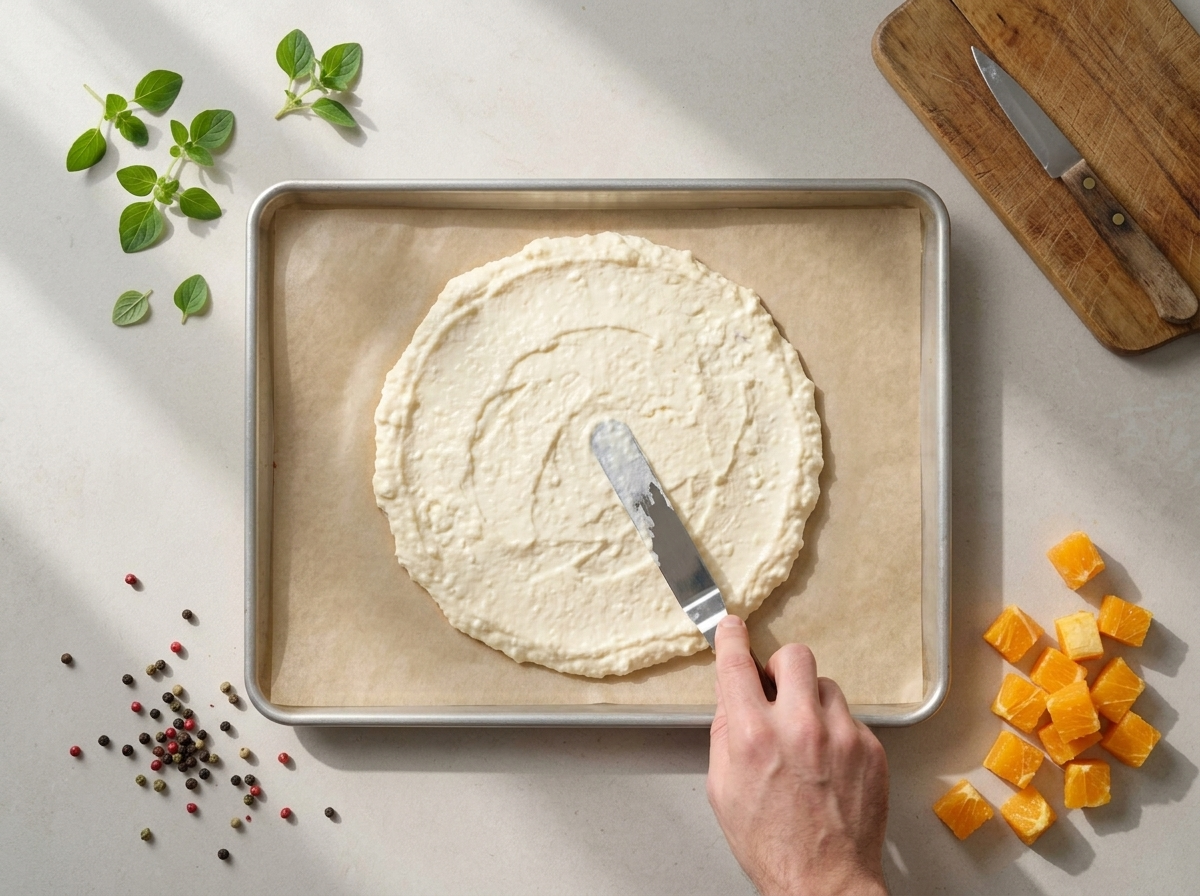
- Pour the batter onto the prepared pan. Spread it evenly with an offset spatula to about 1/4 inch (6 mm) thick, filling the pan without thin gaps.
- Brush the top lightly with the olive oil.
- Bake for 18 to 22 minutes, until the edges are deep golden brown and the center feels set and springs back when pressed.
- Turn on the broiler for 1 to 2 minutes if you want more color on top, watching closely so it doesn’t burn.
- Cool on the pan for 5 minutes, then lift out using the parchment and transfer to a cutting board.
- Slice into wedges and serve warm.
Notes
- Blend cottage cheese and eggs until fully smooth before adding dry ingredients.
- Spread batter evenly to 1/4 inch for consistent baking.
- Bake until edges are deep golden and center is set, about 20 minutes.
- Cool 5 minutes before slicing to help it firm up.
Tips for Success
- Blend the cottage cheese fully smooth before adding flour, lumps show up as dense spots in the baked flatbread.
- Spread the batter thin and even, about 1/4 inch, so the center cooks through without the edges burning.
- Check at 18 minutes and pull it when the edges are deep golden and the center feels set, not wet.
- Line the pan with parchment, the batter sticks to bare metal even when the pan is oiled.
- Let the flatbread cool for 5 minutes before slicing so it firms up and doesn’t tear.
Variations
- Stir 2 tbsp grated parmesan and chopped rosemary into the batter for a savory herb version.
- Add 1/2 tsp smoked paprika and swap garlic powder for cumin for a smoky, taco-style flatbread.
- Skip the garlic powder and add 1 tbsp honey for a slightly sweet base under fruit and yogurt.
Storage and Reheating
Store leftover flatbread in an airtight container in the fridge for 3 to 4 days. Layer parchment between pieces so they don’t stick together.
Reheat in a 350 F / 175 C oven for 5 to 6 minutes, or in a dry skillet over medium heat for 1 to 2 minutes per side, until warmed through and the edges crisp back up. The microwave works in a pinch but leaves it a bit rubbery.
Freeze baked, cooled flatbread wrapped tightly in foil for up to 2 months. Thaw in the fridge overnight, then reheat in the oven straight from cold.
Serving Suggestions
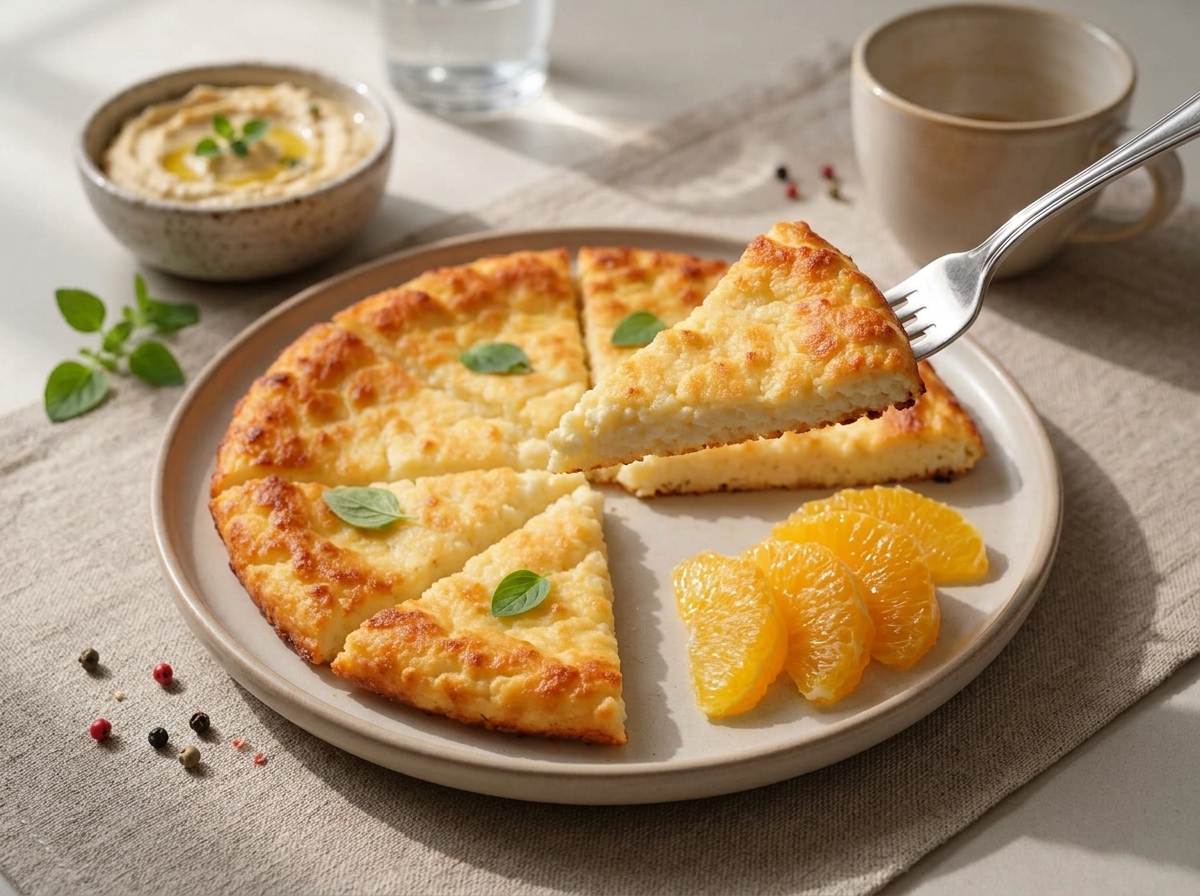
Serve this flatbread warm, cut into wedges, alongside hummus or tzatziki for dipping. It also holds up as a base for a quick flatbread pizza, just add sauce, cheese, and a short blast under the broiler.
For lunch, fold it around scrambled eggs, avocado, and hot sauce for a wrap that doesn’t fall apart halfway through. It’s sturdy enough to hold wet fillings without turning soggy.
Pair it with a simple cucumber salad or a bowl of soup for a light dinner that still feels like a full plate.
FAQ
Why is my cottage cheese flatbread soggy in the middle?
Your flatbread is soggy in the middle because it’s spread too thick or pulled from the oven too early. Spread the batter to about 1/4 inch thick and bake until the center feels set and springs back, not wet, usually around 20 minutes at 400 F / 200 C.
Can I use ricotta instead of cottage cheese in this flatbread?
Ricotta works, but the flatbread turns softer and less structured since ricotta has a smoother, wetter texture than cottage cheese. Blend it the same way and bake at the same 400 F / 200 C, but check for doneness closer to 16 to 18 minutes since it holds more moisture.
Can I freeze cottage cheese flatbread after baking?
Yes, baked and cooled flatbread freezes well for up to 2 months when wrapped tightly in foil. Thaw it in the fridge overnight and reheat straight from the oven at 350 F / 175 C for a few minutes to crisp the edges back up.
What goes well with cottage cheese flatbread?
Hummus, tzatziki, and soup pair well because the flatbread is sturdy enough to scoop or dip without breaking. It also works as a wrap base for eggs and avocado, or as a thin pizza crust topped with sauce and cheese.
Is cottage cheese flatbread gluten free?
Not as written, since it uses all-purpose flour, but you can swap in a 1:1 gluten-free flour blend with good results. The texture stays similar, just check the batter consistency since gluten-free blends absorb liquid differently.
Why do you blend the cottage cheese instead of just mixing it in?
Blending breaks down the curds so the batter turns smooth instead of lumpy, which gives the flatbread an even, bread-like texture once it bakes. Skipping this step leaves visible curds scattered through the crumb and a grainier, less uniform bite when you cut into it.