Jump to Recipe
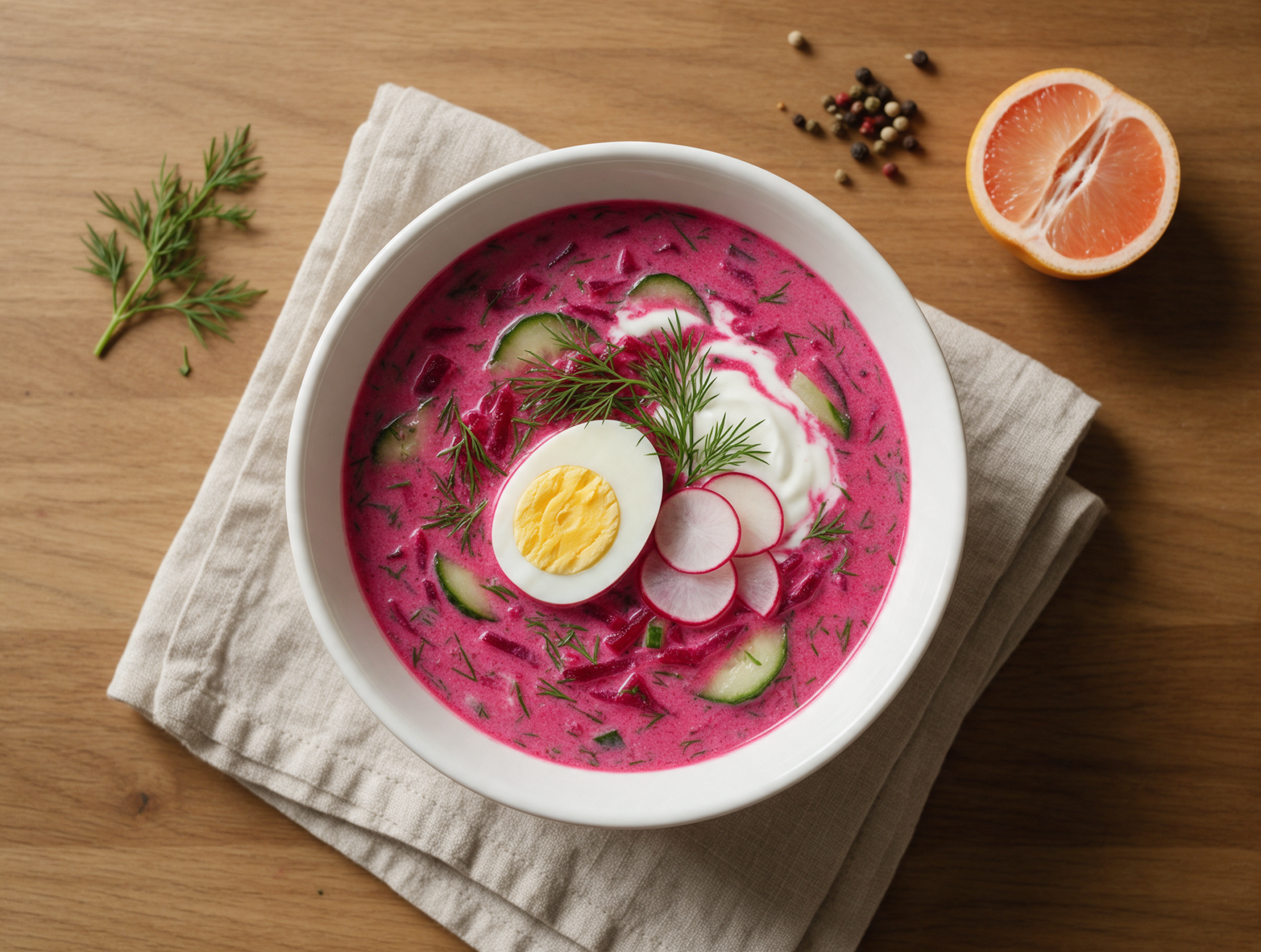
I used to think cold soup was a strange idea. Then I made this chilled beet borscht on a July afternoon with no AC and changed my mind fast.
This version is light. The broth is beet-and-vegetable based, not thickened with cream, and it gets its tang from buttermilk and a splash of vinegar. Bright pink, cool, a little sweet, a little sour.
It’s the kind of soup you make on a Sunday and eat all week. The flavor actually gets better after a day in the fridge, once the beets and buttermilk have had time to sit together.
Top bowls with chopped cucumber, a boiled egg, extra dill. That’s real food doing its thing, no fuss required.
Why You’ll Love This Recipe
- Ready ahead and tastes better the next day
- Just one pot and simple pantry staples
- Bright, tangy flavor without heavy cream
- Cools you down on hot summer days
Ingredient Notes
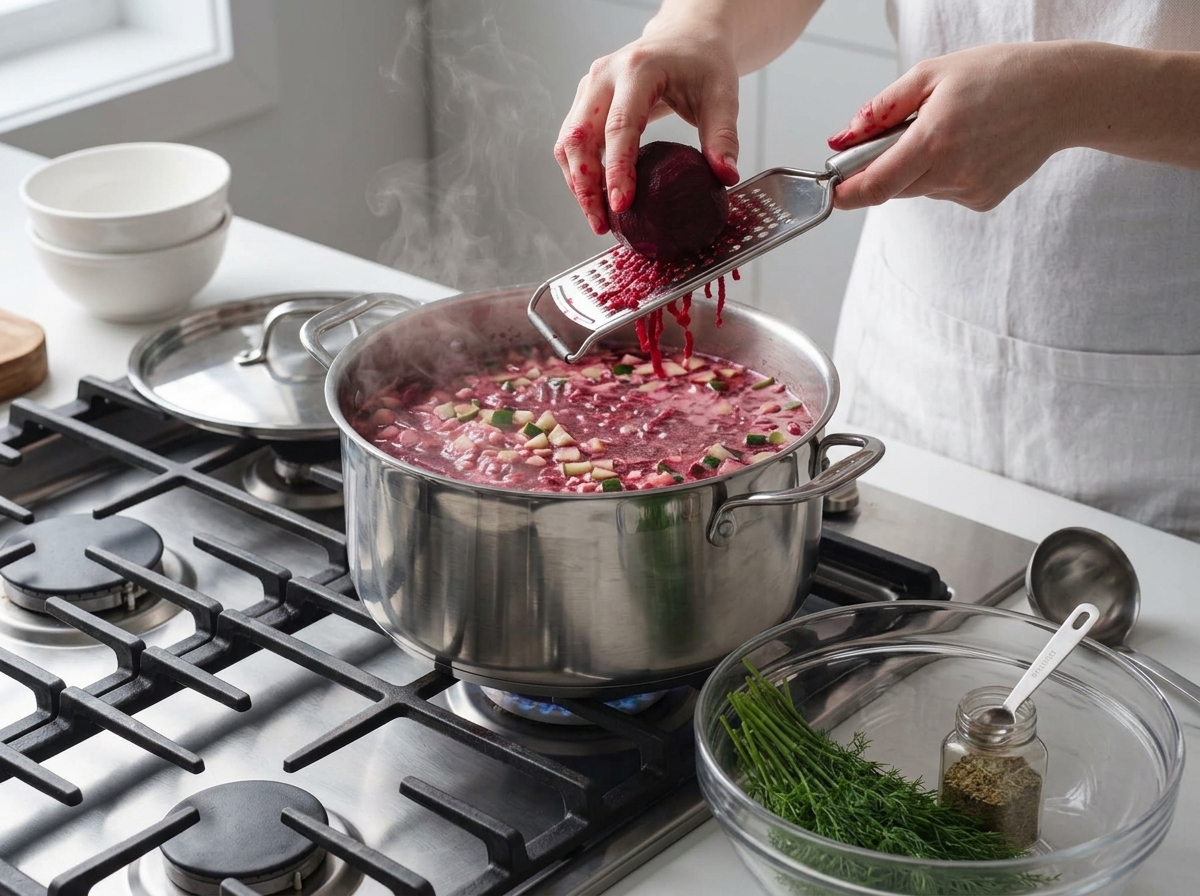
- beets: Look for firm, smooth beets without soft spots. Grating them cuts the simmer time almost in half compared to dicing.
- vegetable broth: Use a broth you’d actually drink on its own, since it’s most of the flavor here. Low-sodium lets you control the salt later.
- buttermilk: Adds the tang that makes this soup taste like borscht instead of plain beet stock. Kefir or thinned plain yogurt both work as substitutes.
- apple cider vinegar: Added while the beets are still hot, it helps the broth hold its pink color instead of turning dull.
- cucumber: Dice it small so it stays crisp in the cold broth instead of going soft and watery.
- hard boiled eggs: Boil these a day ahead so they’re already cold when you’re ready to serve.
- fresh dill: Use fresh, not dried, since the flavor is a big part of what makes this taste right. Chives work in a pinch.
Light Chilled Beet Borscht with Dill and Buttermilk
Ingredients
Method
- Peel the beets and grate them on the large holes of a box grater. Set aside.
- In a 4-quart / 3.8L saucepan, combine the grated beets and vegetable broth. Bring to a boil over medium-high heat, then reduce to a simmer.
- Simmer for 20 to 25 minutes, until the beets are fork tender.
- Stir in the vinegar, sugar, salt, and pepper while the broth is still warm, since the vinegar helps the color stay bright pink. Taste and adjust the salt.
- Remove from heat and cool at room temperature for 15 minutes, then transfer to the fridge. Chill completely, at least 2 hours or overnight.
- Once fully cold, whisk in the buttermilk and lemon juice until the broth turns bright pink and smooth.
- Stir in the diced cucumber, radishes, and green onions. Fold in most of the dill, saving some for garnish.
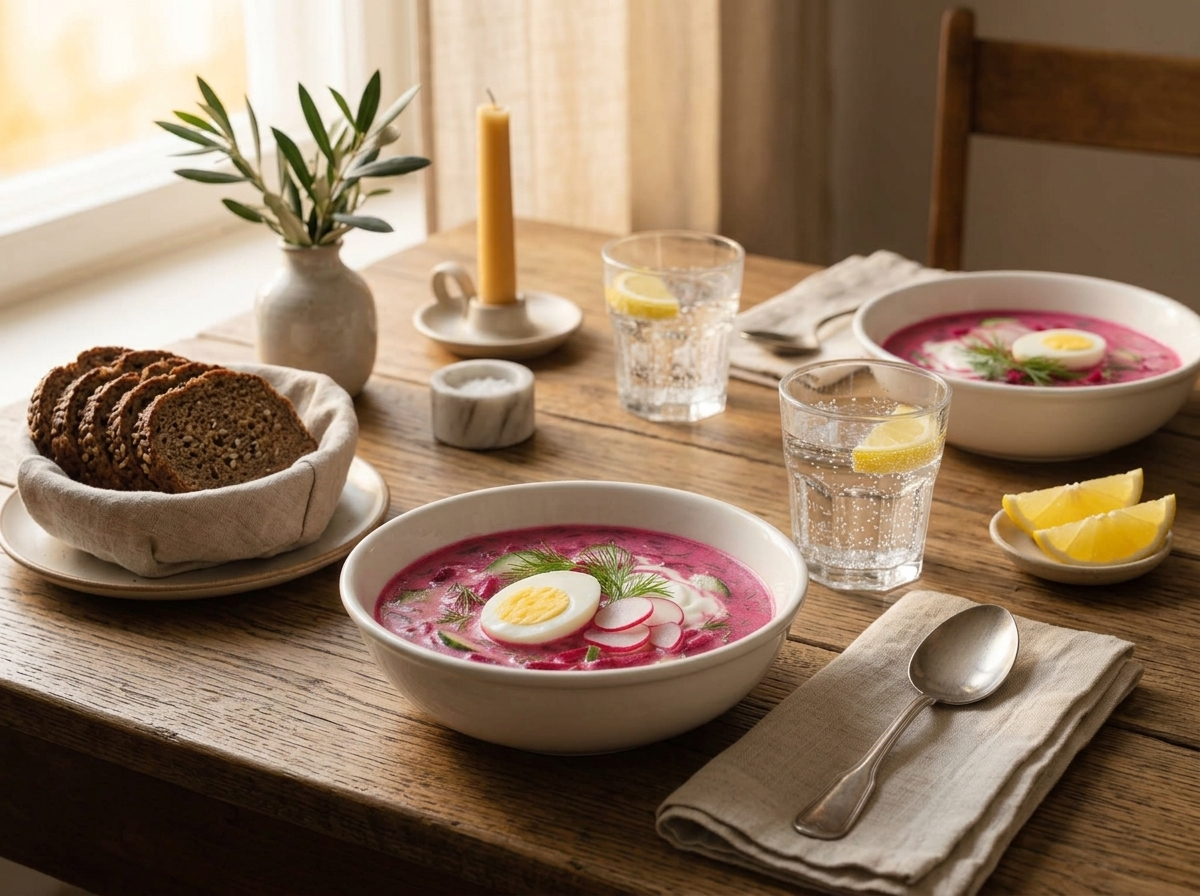
- Ladle into bowls. Top each with chopped hard boiled egg, a dollop of sour cream, and the reserved dill.
Notes
- Grate beets for faster, more even cooking
- Chill broth completely before adding buttermilk
- Taste again after chilling, cold mutes salt
- Add vinegar early to protect the pink color
Tips for Success
- Grate the beets instead of dicing them for faster, more even cooking.
- Chill the broth completely before adding buttermilk so it doesn’t curdle from residual heat.
- Taste again once fully chilled and add more lemon juice or salt, since cold mutes seasoning.
- Use whole or low-fat buttermilk, since thin 1% versions can make the soup watery.
- Boil the eggs a day ahead so they’re cold and ready when you assemble bowls.
Variations
- Swap buttermilk for plain kefir for a slightly funkier, thinner tang.
- Add cooked shredded chicken or white beans to turn this into a full meal.
- Blend half the soup smooth and leave half chunky for a two-texture bowl.
Storage and Reheating
Store the borscht in an airtight container in the fridge for up to 4 days. The flavor actually improves after a day, once the buttermilk and beets settle together.
This soup is meant to be served cold, so there’s no reheating step. If it separates a bit in storage, just give it a quick stir before ladling into bowls.
I don’t recommend freezing this one. Buttermilk breaks and turns grainy once thawed, and the cucumber garnish goes soft and watery.
Serving Suggestions
Serve with dark rye bread or a crusty baguette for something to mop up the last spoonfuls.
A hard boiled egg and a dollop of sour cream on top turns a light bowl into a fuller lunch. Add a few boiled new potatoes on the side if you want more staying power.
This soup works well as a starter before grilled fish or a simple sandwich, especially in the middle of summer when the stove stays off.
FAQ
Why is my chilled beet borscht turning brown instead of staying pink?
Overcooked beets or too much air exposure causes the color to dull. Add the vinegar while the beets are still simmering, since acid helps hold the pink, and pull them off the heat as soon as they’re fork tender. Stirring in cold buttermilk right after chilling also keeps the color bright instead of muddy.
Can I use kefir instead of buttermilk in this beet borscht?
Yes, kefir works well and gives a slightly tangier, thinner result than buttermilk. Use the same amount, 1 cup / 240 ml, and whisk it in once the broth is fully chilled. Plain yogurt thinned with a little milk is another option if you don’t have either on hand.
Can I make this beet borscht a day ahead of serving it?
Yes, and it actually tastes better that way. The beets and buttermilk need time to settle together, so a day in the fridge rounds out the tang and deepens the pink color. It keeps well for up to 4 days stored in an airtight container.
What goes well with chilled beet borscht besides sour cream?
Dark rye bread or a crusty baguette is the classic match, good for mopping up the last spoonfuls. Boiled new potatoes on the side turn it into a fuller meal, and a sprinkle of extra dill or chopped chives brightens each bowl.
Is this chilled beet borscht gluten free?
Yes, as long as you use a gluten-free vegetable broth, since the rest of the ingredients like beets, buttermilk, cucumber, and eggs are naturally gluten free. Always check the broth label if you’re cooking for someone with celiac disease or a gluten sensitivity.
What’s the difference between this chilled borscht and traditional Ukrainian borscht?
Traditional Ukrainian borscht is served hot, built on a meat broth with cabbage and potatoes. This chilled version skips the meat and cabbage, leaning closer to Lithuanian saltibarsciai, a cold summer soup made with buttermilk and fresh vegetables instead.