Jump to Recipe
I’ll be honest: most gluten-free flatbreads I’ve tried are either gummy in the middle or so dry they crumble when you pick them up. This one is neither.
It uses a blend of almond flour and tapioca starch to get that thin, slightly chewy center with crisp edges. Fresh rosemary goes in the dough and on top. The flavor is earthy and savory, and the whole thing comes together without a mixer or a stand-up routine.
No yeast. No rest time. No rolling it out twelve times hoping it holds together. You press it flat on a lined pan and bake it.
It fits into a weeknight without any drama. Good with soup, good with dip, good eaten warm off the pan while you’re still standing at the counter.
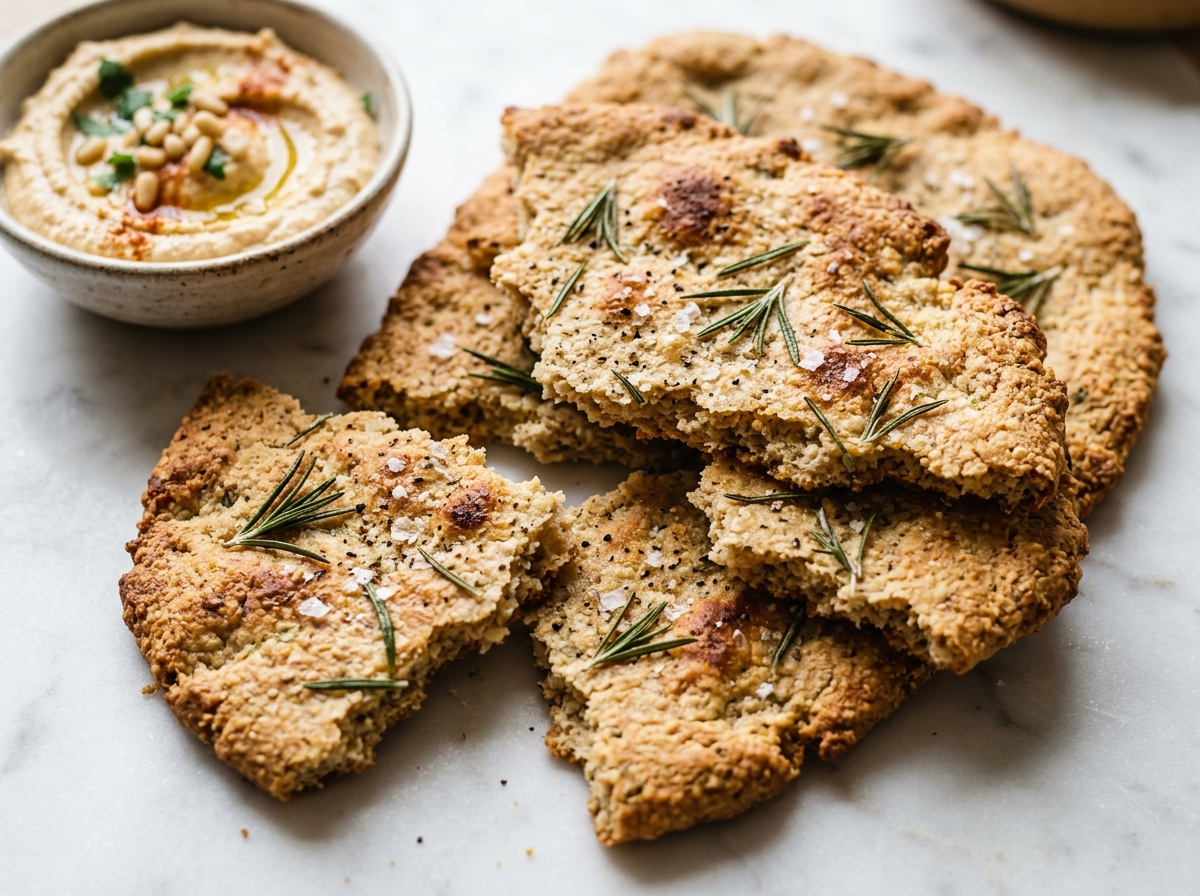
Why You’ll Love This Recipe
- No yeast or rise time needed, bakes fast
- Crisp edges with a slightly chewy center
- Naturally gluten-free and grain-free
- Fresh rosemary flavor works savory or plain
Ingredient Notes
- Almond flour: Use blanched almond flour, not almond meal. Almond meal is coarser and makes the flatbread dense and oily. Bob’s Red Mill or Anthony’s both work well.
- Tapioca starch: This is what gives the flatbread its chew and helps it hold together. Arrowroot starch works as a 1:1 substitute if that’s what you have.
- Fresh rosemary: Fresh rosemary gives a sharper, brighter flavor than dried. If you only have dried, use 1 teaspoon instead of 1 tablespoon and rub it between your fingers before adding.
- Egg: One large egg binds the dough. I haven’t tested a flax egg here, but a flax egg (1 tbsp ground flax plus 3 tbsp water, rested 5 minutes) should work if you need it dairy-free and egg-free.
- Olive oil: A good grassy olive oil adds flavor here, not just moisture. Avocado oil is a fine neutral swap but you’ll lose some of that savory depth.
- Garlic powder: Optional but I almost always add it. It rounds out the rosemary without tasting sharp. Fresh minced garlic can burn at this oven temperature, so powder is the right call.
Gluten-Free Rosemary Flatbread
Ingredients
Method
- Heat the oven to 200 C / 390 F. Line a large baking sheet with parchment paper.
- Combine the almond flour, tapioca starch, fine sea salt, garlic powder, and chopped rosemary in a medium bowl. Whisk until evenly mixed.
- Add the egg, olive oil, and water. Stir until a soft, slightly sticky dough forms. It should hold together when pressed without crumbling.
- Transfer the dough onto the prepared baking sheet. Place a second sheet of parchment on top and press or roll the dough into a rough rectangle or oval about 3 mm thick. Remove the top parchment.
- Brush the surface lightly with olive oil. Scatter small rosemary sprigs on top and press them gently into the dough. Sprinkle with flaky sea salt.
- Score the dough into pieces with a knife or pizza cutter, cutting almost but not all the way through.
- Bake for 22 to 25 minutes, until the edges are deep golden and the surface looks dry and set. The center will firm up as it cools.
- Transfer to a wire rack and cool for at least 10 minutes before breaking along the scored lines and serving.
Notes
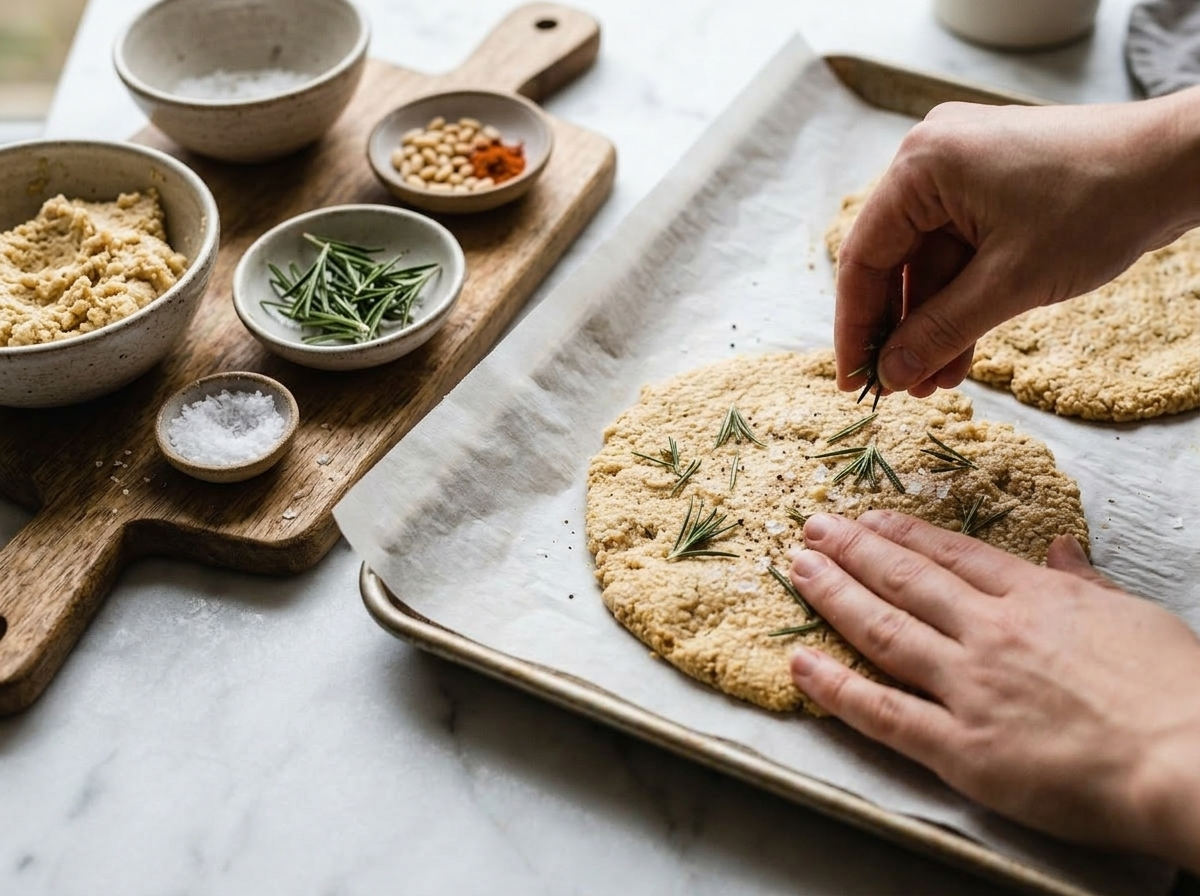
Tips for Success
- Press the dough as thin and even as you can, about 3 mm, so the edges crisp before the center overcooks.
- Line your baking sheet with parchment, not foil. Foil causes the bottom to brown too fast and stick.
- Brush the top with olive oil just before baking to get a golden, slightly glossy surface.
- Score the flatbread into pieces before baking so it breaks cleanly along those lines once cooled.
- Pull it from the oven when the edges are deep golden and the center looks dry, it crisps more as it cools.
Variations
- Swap rosemary for fresh thyme and add a pinch of lemon zest to the dough for a brighter herb flavor.
- Press sliced olives and sun-dried tomatoes into the surface before baking for a Mediterranean-style version.
- Sprinkle flaky sea salt and za’atar on top instead of rosemary for a Middle Eastern-inspired flatbread.
Storage and Reheating
Store cooled flatbread in an airtight container at room temperature for up to 2 days. Keep it away from any moisture or it will soften.
For longer storage, refrigerate for up to 5 days. The texture firms up in the fridge, which some people prefer.
To reheat, lay pieces directly on an oven rack at 180 C / 350 F for 4 to 5 minutes. This brings the crispness back much better than a microwave, which turns it chewy.
Serving Suggestions
Warm flatbread with a bowl of light creamy vegetable soup is the combination I keep coming back to. The crisp edges hold up to dipping without falling apart.
It also works as a base for toppings. Try hummus and sliced cucumber with a creamy dip, or ricotta with a drizzle of honey and extra rosemary. It’s sturdy enough to handle either.
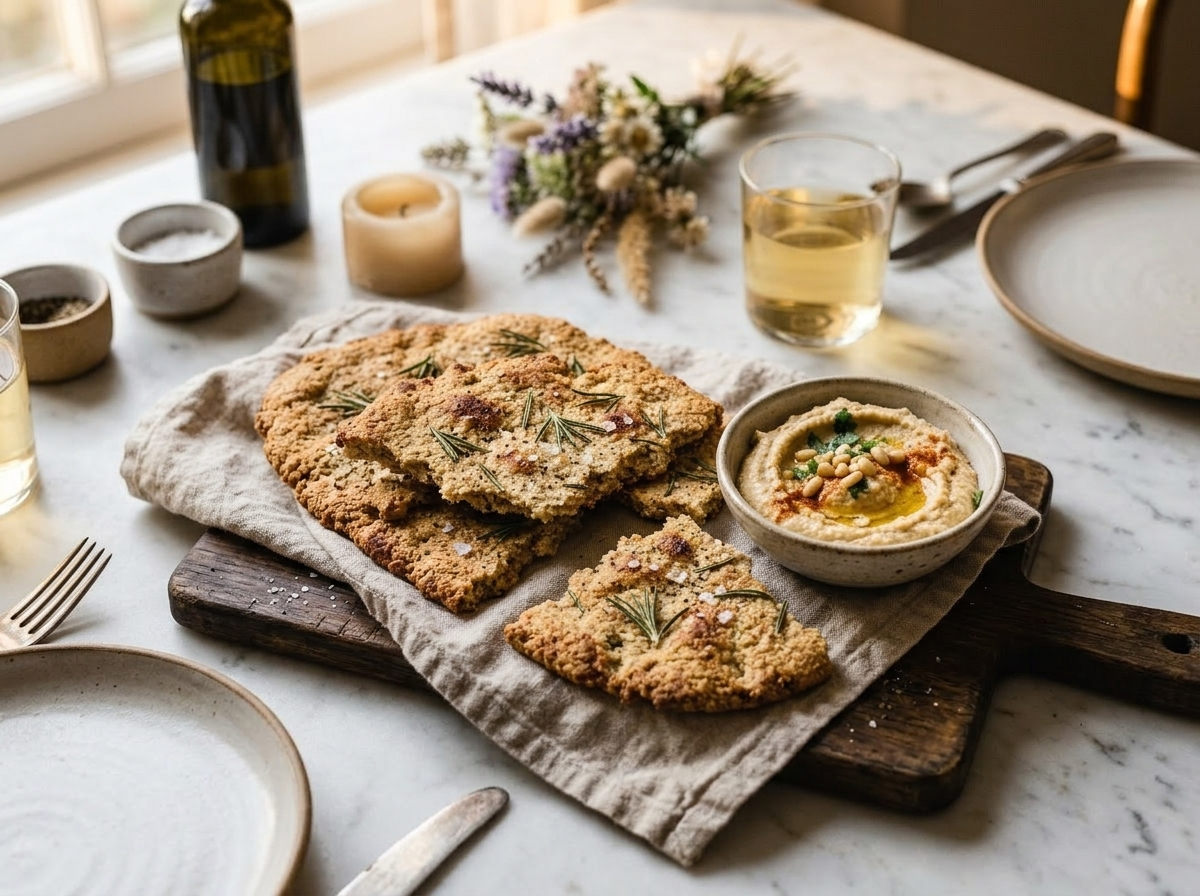
For a casual spread, break it into pieces and serve alongside a cheese board with a handful of grapes and some good olives. It sits right in the middle of simple and considered.
FAQ
Why is my gluten-free rosemary flatbread soft in the middle instead of crisp?
The dough was most likely pressed too thick. Aim for about 3 mm across the whole surface. Also make sure you’re baking on parchment at the right temperature and letting it cool on a wire rack, not on the hot pan.
Can I use coconut flour instead of almond flour in this flatbread?
No, not as a direct swap. Coconut flour absorbs much more liquid than almond flour and the ratios would need a full recipe rebuild. Stick with blanched almond flour or try oat flour if you don’t need it grain-free.
Can I freeze this gluten-free flatbread after baking?
Yes. Let it cool completely, then layer pieces between parchment sheets in a freezer bag. Freeze for up to 2 months. Reheat straight from frozen on an oven rack at 180 C / 350 F for 6 to 7 minutes.
What dips or toppings go well with rosemary flatbread?
Hummus, white bean dip, and baba ganoush all pair well with the earthy rosemary flavor, much like they do alongside rosemary garlic turkey medallions. If you want something richer, whipped ricotta with a drizzle of olive oil works well.
Is this rosemary flatbread also dairy-free?
Yes, as written it contains no dairy. The only animal product is the egg. If you need it fully vegan, try a flax egg (1 tbsp ground flaxseed plus 3 tbsp water, rested 5 minutes) as a substitute.
How is this almond flour flatbread different from a traditional Italian focaccia?
Focaccia is a yeasted bread with a soft, airy crumb and thick crust. This flatbread is unleavened, thin, and crisp, much closer to a cracker in texture. The rosemary flavor overlaps, but the structure and process are completely different.