Jump to Recipe
I’ll be honest, watercress soup gets overlooked. Most people reach for spinach or kale and forget that watercress brings something sharper, slightly peppery, and genuinely interesting to a blended soup.
This one is simple. You soften an onion, add stock, drop in frozen peas and a big handful of watercress, and blend. That’s the whole thing.
The peas keep it naturally sweet and smooth. The watercress cuts through with a bit of bite. Together they make a bowl that tastes like it took effort, even though it didn’t.
At under 120 calories per serving, it fits into a lighter lunch alongside a roasted garlic and cauliflower soup rotation without any compromise on flavor.
Why You’ll Love This Recipe
- Under 120 calories per generous bowl
- Ready from start to finish in 40 minutes
- Five main ingredients, no fancy prep needed
- Works warm in winter or chilled in summer
Ingredient Notes
- Watercress: Use fresh watercress for the best peppery flavor and bright color. Baby spinach or rocket can substitute, though both taste milder and less complex.
- Frozen peas: Frozen peas work better here than fresh shelled ones because they’re sweeter and more consistent. No need to thaw before adding to the pot.
- Vegetable stock: A low-sodium stock keeps the calorie and salt count down. Chicken stock works too if you’re not keeping it vegetarian.
- White onion: White or yellow onion both work. Leek is a good substitute for a more delicate, slightly sweeter base flavor.
- Garlic: Two cloves gives a background warmth without overpowering the watercress. You can skip it entirely if cooking for kids who are sensitive to garlic flavor.
- Olive oil: Just one teaspoon keeps the calories low while still giving enough fat to soften the onion properly. A light spray of cooking oil works too.
Low-Cal Watercress and Pea Soup
Ingredients
Method
- Heat the olive oil in a 3-quart saucepan over medium heat. Add the chopped onion and cook for 6 to 8 minutes, stirring occasionally, until fully translucent and soft with no browning.
- Add the minced garlic and stir for 1 minute until fragrant.
- Pour in the vegetable stock and bring to a gentle simmer over medium-high heat.
- Add the frozen peas and cook for 3 to 4 minutes until just tender and bright green.
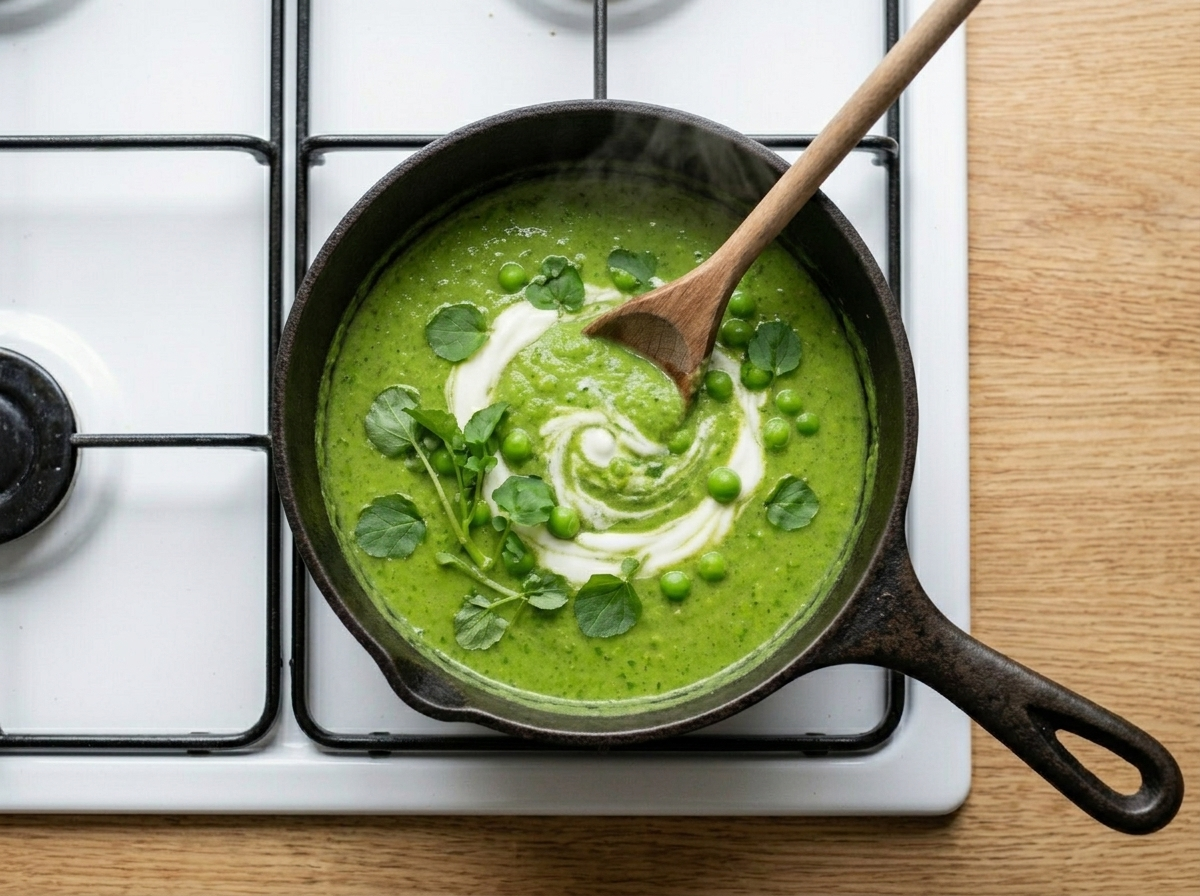
- Remove the pan from the heat. Stir in the watercress and allow it to wilt in the residual heat for 30 seconds. Do not simmer the watercress or the color will dull.
- Transfer the soup in batches to a high-speed blender and blend on high for 60 seconds until smooth. Alternatively use an immersion blender directly in the pan.
- Return the blended soup to the pan over low heat. Stir in the lemon juice, then season with salt and black pepper. Taste and adjust.
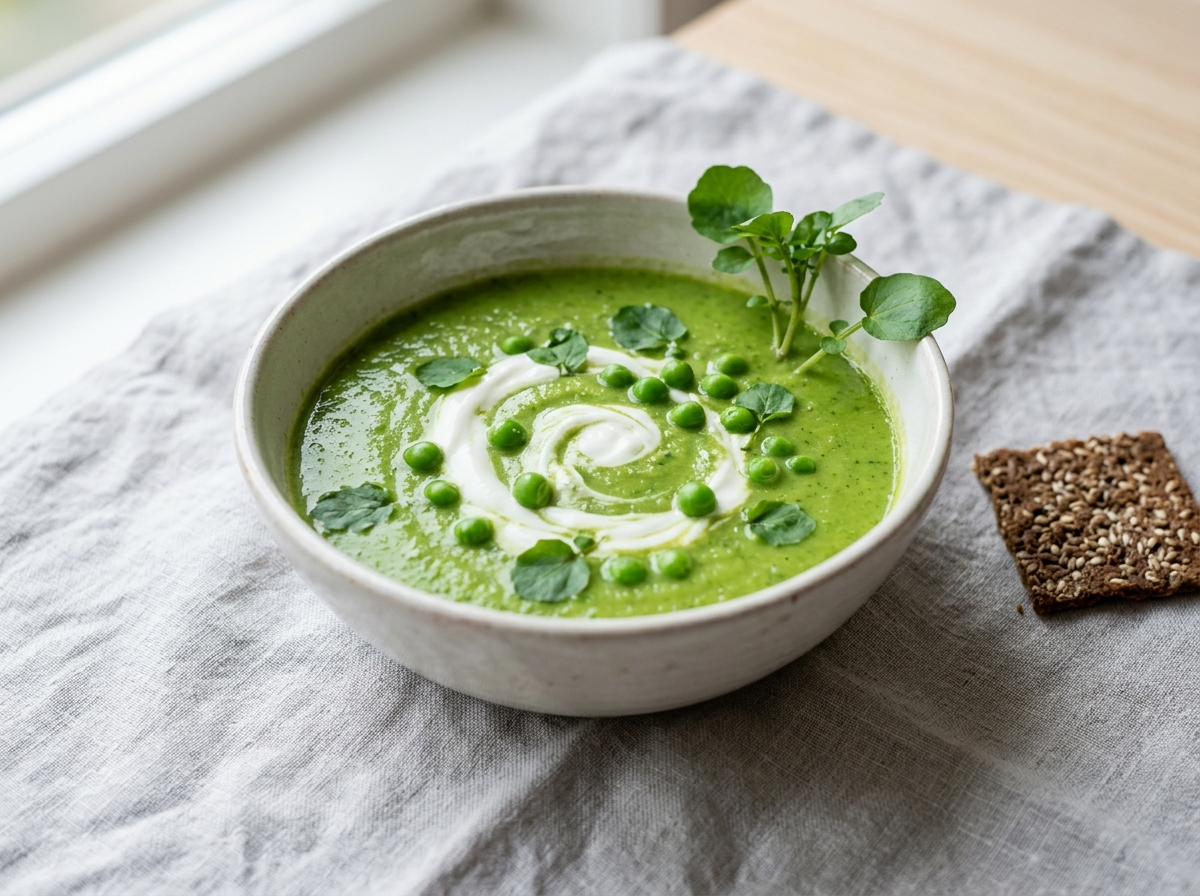
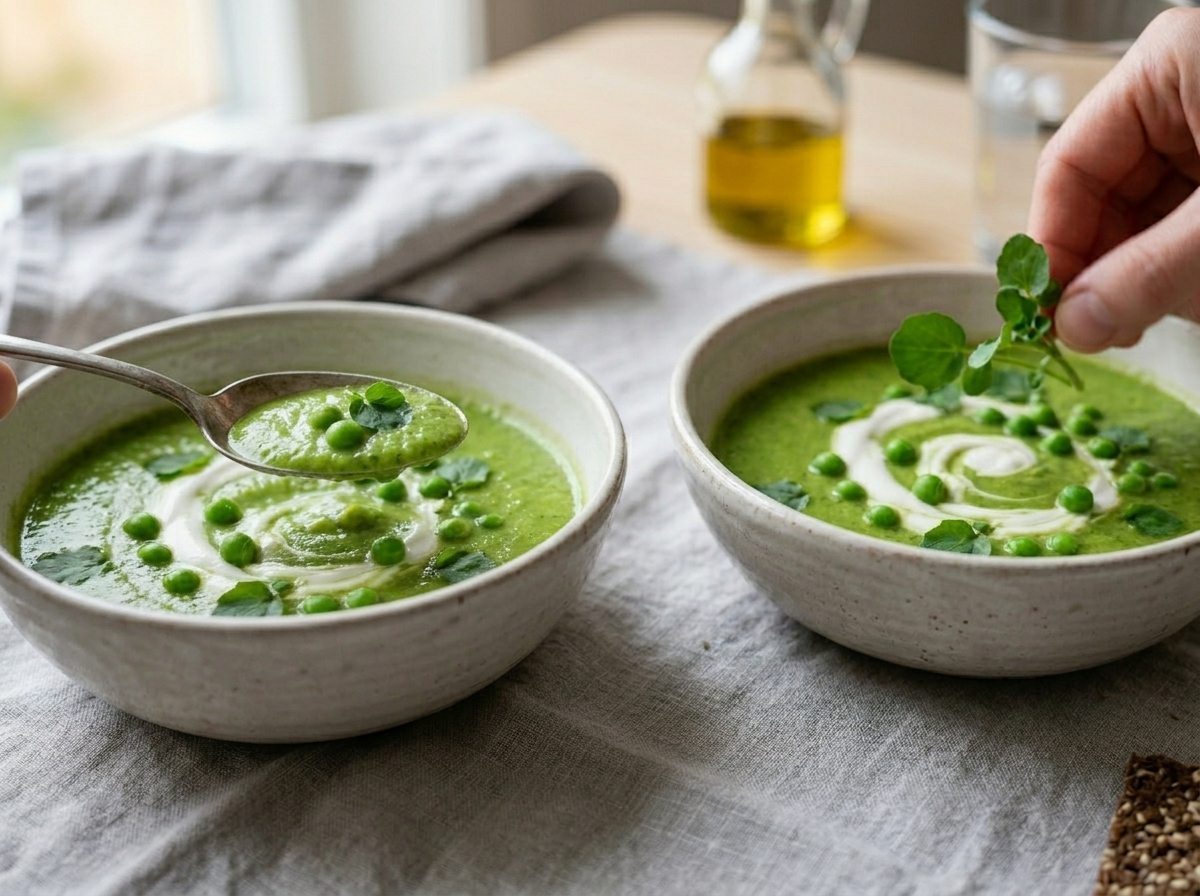
- Ladle into bowls and serve immediately with an optional swirl of plain yogurt or a few whole peas scattered on top.
Notes
Tips for Success
- Add watercress off the heat just before blending to preserve its green color and peppery bite.
- Blend in batches if using a jug blender and leave the lid slightly ajar to release steam safely.
- Season only after blending since stock saltiness varies and over-seasoning early is hard to fix.
- Strain through a fine-mesh sieve after blending if you want a restaurant-smooth, velvety texture.
- Swirl one tablespoon of plain yogurt on top just before serving, much like the Greek yogurt used in salad bowls, to add creaminess without many extra calories.
Variations
- Add a small peeled potato with the onion for a thicker, more filling soup with the same green color.
- Stir in half a teaspoon of ground cumin with the garlic for a warm, earthy spiced version.
- Replace half the vegetable stock with coconut milk for a creamy, dairy-free soup with a subtle sweetness.
Storage and Reheating
Store cooled soup in an airtight container in the fridge for up to 3 days. The color stays green if you cool it quickly and keep the lid on.
Reheat gently in a saucepan over low-medium heat, stirring occasionally, until just hot through. Avoid a rolling boil as it dulls the color and flattens the flavor.
This soup freezes well for up to 2 months. Freeze in individual portions so you can thaw just what you need. Defrost overnight in the fridge, then reheat as above.
Serving Suggestions
A small bowl makes a solid starter before a light main like Mediterranean baked sea bass with olives. A larger portion with a slice of seeded rye bread or a couple of oat crackers turns it into a proper lunch.
For a more filling meal, top each bowl with a soft-boiled egg halved and placed on top, or a small handful of cooked shredded chicken stirred in. Both add protein without pushing the calorie count too high.
In summer, serve it chilled straight from the fridge with a squeeze of lemon and a few ice cubes. It holds up well cold and tastes bright and refreshing at room temperature.
FAQ
Why does my watercress and pea soup turn brown after blending?
This usually happens when the watercress is cooked too long before blending. Add the watercress off the heat, blend immediately, then cool the soup quickly in an ice bath to lock in the green color.
Can I use rocket instead of watercress in this soup?
Yes, rocket works as a substitute and gives a similar peppery note. The flavor will be a little milder and the color slightly less vivid than with watercress.
Can I freeze watercress and pea soup without it going grey?
It can lose a bit of brightness after freezing, but the flavor stays good. Cool the soup fast before freezing and reheat gently to minimize color loss.
What bread pairs well with watercress and pea soup for a low-calorie lunch?
A thin slice of seeded rye bread or a couple of rye crispbreads keeps the meal under 200 calories total. Both add a crunchy contrast to the smooth soup.
Is this watercress and pea soup suitable for a vegan diet?
Yes, as long as you use vegetable stock and skip any dairy toppings like yogurt or cream. All the core ingredients are plant-based.
How do I know when the onion is soft enough before adding the peas?
It should look translucent and feel completely tender when pressed with a spoon, usually after 6 to 8 minutes over medium heat. Any golden or brown color means it cooked too hot and will affect the final flavor.