Some soups warm you from the inside out. Others, like low-calorie miso soup, do that and somehow make you feel like you’re doing something good for your body too. It’s the kind of bowl that’s both simple and soul-soothing—perfect for anyone craving comfort without guilt.
I’ve made this countless times, especially on days when I want something savory but don’t have the energy (or patience) for a long kitchen session. It’s fast, flexible, and deeply satisfying. Let’s dive into what makes this Asian soup so special—and how you can whip it up in under 20 minutes.
Why Miso Soup Deserves a Spot in Your Weekly Routine
Think of miso soup as your culinary reset button. Light enough for lunch, cozy enough for dinner, and nutrient-packed enough to count as a healthy meal prep idea.
What makes this soup shine is miso paste—a fermented soybean base rich in probiotics, umami, and plant protein. It’s like the quiet hero in your fridge, just waiting to turn hot water and a few veggies into a legit meal.
If you’ve ever had miso soup at a Japanese restaurant, you already know the earthy, savory depth that defines it. But this version? It’s a little lighter, a little cleaner, and surprisingly versatile. You can serve it warm or chilled, depending on your mood.
The Secret Behind a Perfect Miso Soup
The magic is in balance.
A great miso soup layers saltiness, savoriness, and subtle sweetness without tipping too far in any direction. Here’s how I like to do it:
- Base: Low-sodium vegetable or dashi broth (you can use instant dashi if you’re short on time).
- Miso Paste: I recommend starting with white miso (shiro miso) for a milder flavor or red miso (aka miso) if you prefer something deeper and bolder.
- Add-ins: Cubed tofu, scallions, wakame seaweed, and thinly sliced mushrooms are classics. You can also toss in spinach, bok choy, or even shredded carrots for extra color and texture.
- Finish: Never boil the miso paste—it kills the beneficial probiotics and dulls the flavor. Stir it in gently once the heat is off.
That’s it. Just a few mindful steps, and you’ve got restaurant-quality soup that happens to be low in calories.
Low-Calorie Miso Soup Recipe
Serves: 2–3
Prep Time: 5 minutes
Cook Time: 10 minutes
Total Time: 15 minutes
Ingredients:
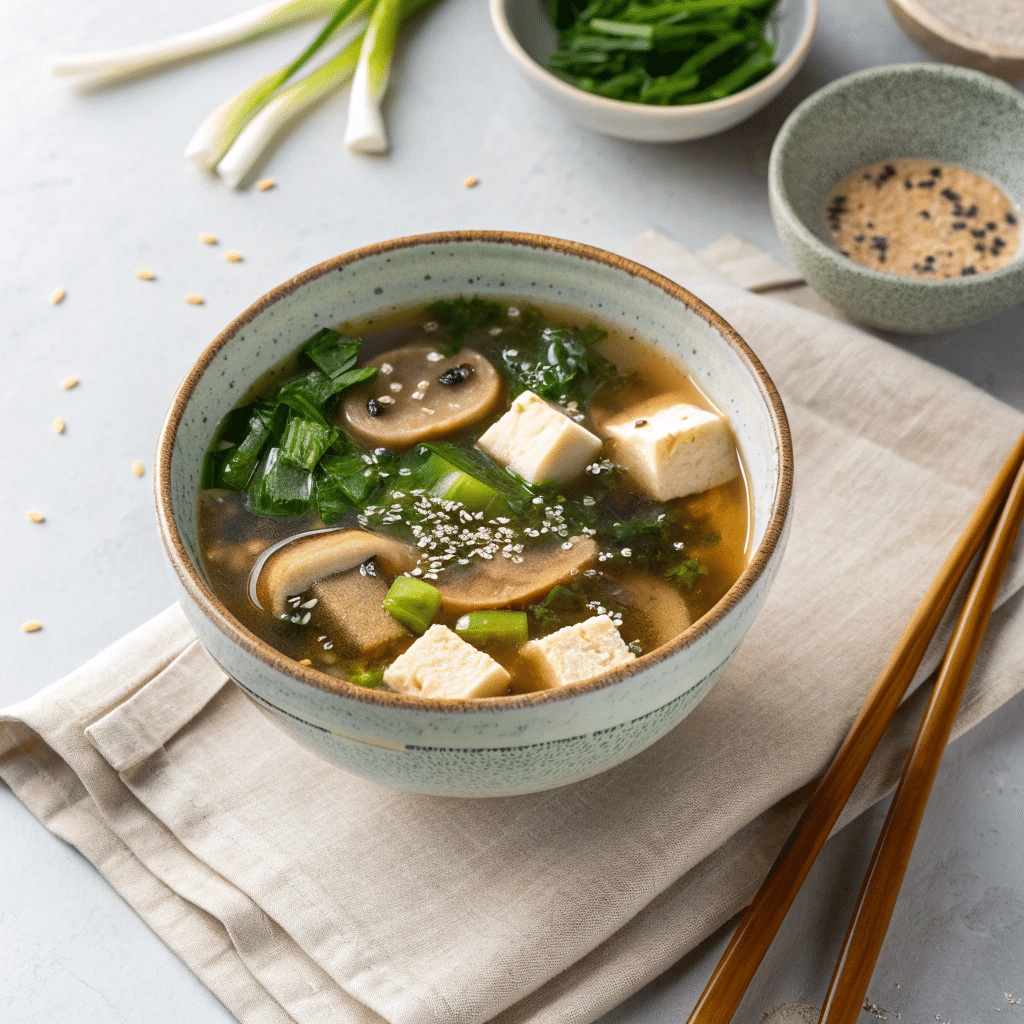
- 3 cups low-sodium vegetable broth (or dashi)
- 2 tablespoons miso paste (white or red)
- ½ cup cubed soft tofu
- 1 tablespoon dried wakame seaweed
- 2 green onions, thinly sliced
- ½ cup sliced mushrooms (shiitake or button)
- Optional: baby spinach, shredded carrots, sesame seeds, or chili flakes
Instructions:
- Soak the Wakame: Place the dried seaweed in a small bowl with warm water. Let it rehydrate for about 5 minutes, then drain and set aside.
- Prepare the Broth: In a medium pot, bring the vegetable broth to a gentle simmer. Add mushrooms and cook for 5 minutes until tender.
- Add Tofu and Wakame: Stir in tofu cubes and wakame. Let everything heat through for another 2–3 minutes.
- Stir in the Miso: Turn off the heat. Scoop out a bit of hot broth into a small bowl, whisk in the miso paste until smooth, then return it to the pot. This keeps the soup silky and flavorful.
- Finish and Serve: Sprinkle with sliced green onions, and add sesame seeds or a dash of chili if you like a kick. Serve immediately.
Optional Variations to Try
- Vegan Miso Soup: Use vegetable broth and tofu. Skip any fish-based dashi.
- Chilled Miso Soup: Perfect for warmer days! Cool the broth and add miso at room temperature. Top with cucumber slices or shredded nori for freshness.
- Spicy Twist: Add a drizzle of chili oil or a pinch of gochugaru for gentle heat.
- Hearty Version: Toss in rice noodles or quinoa to make it more filling but still light on calories.
The beauty of miso soup is that it never feels repetitive. Each variation brings a new mood to the table.
How Many Calories Are in Miso Soup?
A standard bowl (about one cup) of this low-calorie miso soup sits around 45–60 calories, depending on the ingredients you add. That’s less than a handful of almonds!
It’s a smart choice if you’re focusing on clean eating, gentle detoxing, or meal prepping without feeling deprived.
Healthy Meal Prep Tip
If you’re into healthy meal prep, this recipe is a gem. You can double the batch, keep the broth and toppings separate, and reheat when needed. Just remember: add the miso paste after reheating to keep its nutrients alive.
I often keep a jar of miso paste and some pre-cut tofu in my fridge. On busy days, I can pull this meal together faster than it takes to scroll through a delivery app.
Why I Love This Recipe
There’s something grounding about stirring miso into hot broth—it’s almost meditative. You can feel the transformation as the paste melts and turns the water into something savory, silky, and deeply comforting.
It’s simple food, but there’s heart in it. I think that’s why it always hits the spot.
Plus, it’s the kind of recipe that makes you feel accomplished even when you’re short on time. A few pantry staples, a bit of stirring, and suddenly your kitchen smells like a cozy Japanese café.
Common Mistakes to Avoid
- Boiling the Miso: It kills the flavor and the probiotics. Always stir it in gently after removing from heat.
- Using Too Much Miso: It can get salty fast. Start with 1–2 tablespoons and adjust later.
- Skipping the Wakame: That tiny bit of seaweed adds minerals, texture, and that authentic ocean-kissed note.
Pairing Ideas
Serve your miso soup with:
- A side of steamed edamame
- A light cucumber salad with sesame dressing
- Or even alongside sushi or rice bowls
It pairs beautifully with any Asian-inspired meal, and it’s the perfect light start before a richer main course.
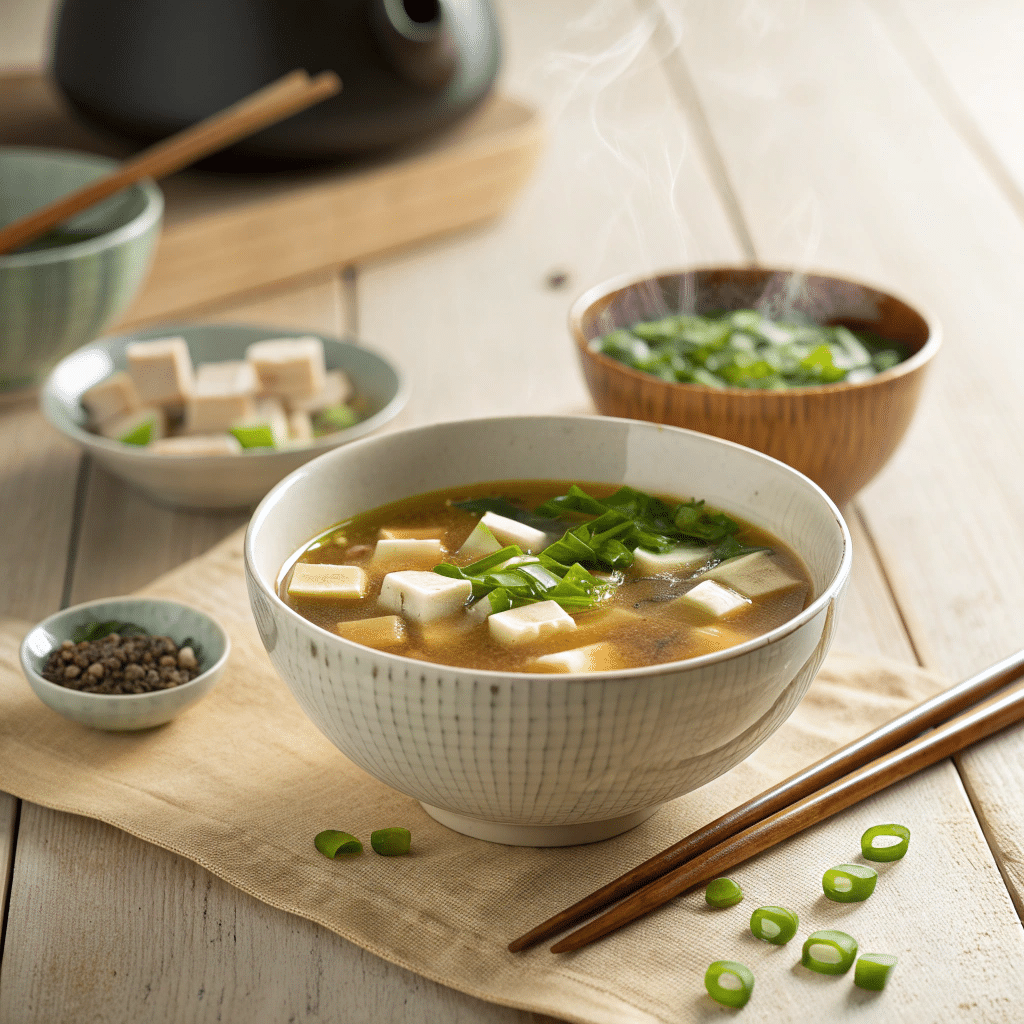
Low-Calorie Miso Soup
Ingredients
Method
- Place the dried wakame seaweed in a small bowl of warm water for 5 minutes. Drain and set aside.
- In a medium pot, bring the vegetable broth to a gentle simmer. Add the mushrooms and cook for 5 minutes until tender.
- Stir in the cubed tofu and rehydrated wakame. Let it warm through for another 2–3 minutes.
- Turn off the heat. Scoop out a small amount of the hot broth into a separate bowl, whisk in the miso paste until smooth, then pour it back into the pot. Don’t boil the miso.
- Sprinkle sliced green onions on top and add any extras like sesame seeds, spinach, or chili flakes. Serve right away while warm.
Notes
- Don’t boil the miso paste — it’ll lose flavor and nutrients.
- You can switch white miso for red miso for a stronger, saltier taste.
- To meal prep, keep the broth separate and mix in miso when reheating.
- This soup is naturally vegan if you use vegetable broth.
FAQ
1. Can I make miso soup ahead of time?
Yes! Just store the broth separately and mix in miso paste when reheating. That keeps the flavor and nutrients fresh.
2. What’s the best miso paste to use?
White miso (shiro) is mild and slightly sweet. Red miso (aka) is richer and saltier. You can also mix the two for balance.
3. Can I freeze miso soup?
The broth freezes well, but tofu can get spongy. Freeze just the broth and add tofu fresh when reheating.
4. How can I make it heartier?
Add noodles, rice, or extra veggies like spinach or carrots. Still light—but more filling.
5. Is miso soup vegan?
It can be! Just skip fish-based dashi and use veggie broth instead.
Final Thoughts
This low-calorie miso soup proves that healthy eating doesn’t have to be complicated or bland. It’s quick, wholesome, and endlessly customizable. Whether you serve it warm on a chilly evening or chilled for a refreshing lunch, this soup never fails to comfort.
If you’ve been craving something nourishing yet easy, this might just become your new go-to.
So grab that miso paste, warm up a pot, and let’s make something deliciously simple—you deserve it.