Jump to Recipe
I’ll be honest, some nights I need dinner done without a pile of dishes waiting for me. This herb pork skillet is exactly that.
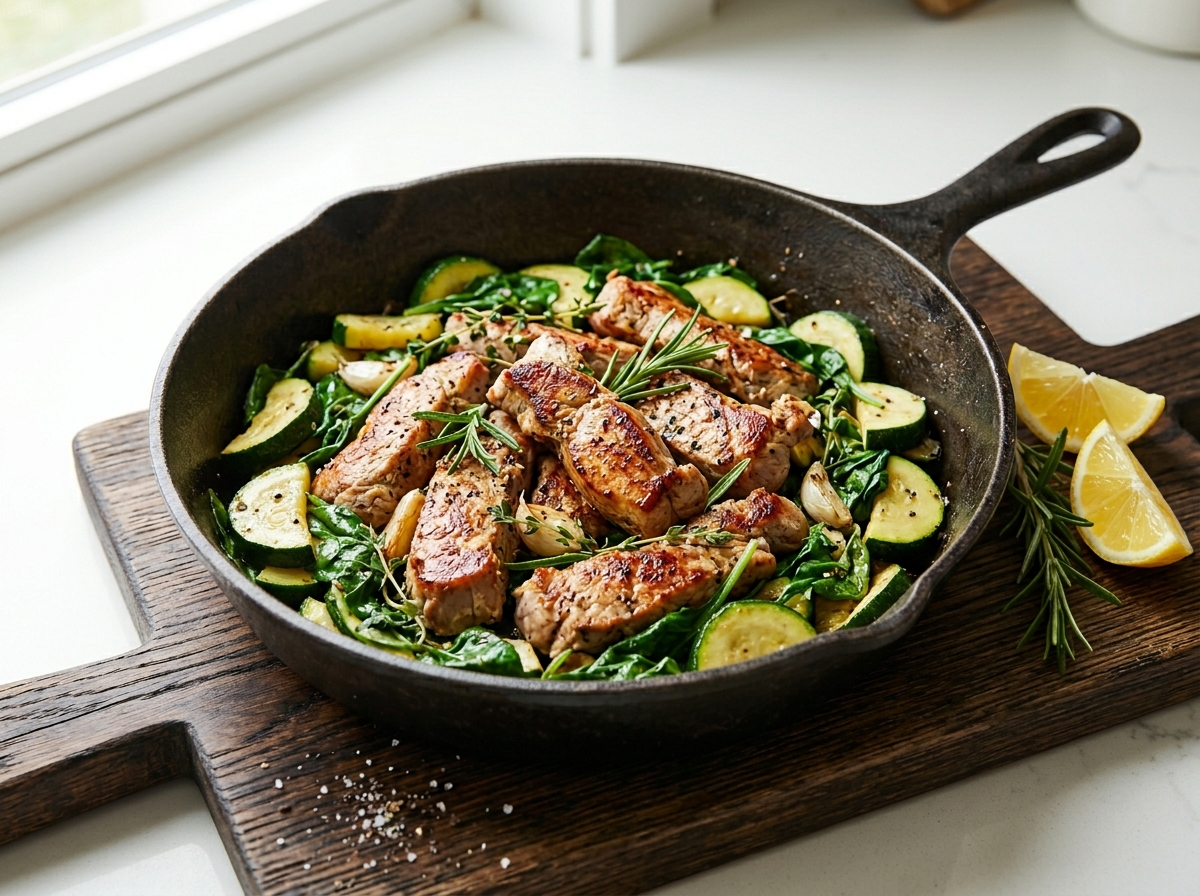
Strip-cut pork tenderloin hits a hot cast iron pan with garlic, rosemary, and thyme, using the same bold herb approach found in these rosemary garlic turkey medallions. The outside gets a proper sear. The inside stays juicy. It’s fast, it’s satisfying, and it fits a keto plate without any tricks.
Zucchini and spinach round it out so you get a full meal from one pan. No cauliflower rice required, though it pairs well if you want more volume.
This one sits right in your weeknight rotation.
Why You’ll Love This Recipe
- One pan, minimal cleanup, done in 40 minutes
- Under 6g net carbs with 38g protein per serving
- Fresh herbs give real flavor without a sauce
- Works for meal prep, holds well in the fridge
Ingredient Notes
- pork tenderloin: Tenderloin cooks fast and stays tender. Pork loin works too but needs 5 extra minutes and should be sliced thinner.
- fresh rosemary: Fresh rosemary gives a piney, resinous note that dried can’t fully match. If using dried, use 1 tsp instead of 1 tbsp.
- fresh thyme: Thyme brings an earthy base. Dried thyme works at half the volume if that’s what you have.
- zucchini: Cut zucchini into half-moons so they cook quickly and don’t get mushy. Yellow squash swaps in directly.
- baby spinach: Spinach wilts in under 2 minutes at the end. Kale works but needs 3 to 4 minutes and benefits from a splash of water.
- olive oil: Use a neutral olive oil or avocado oil for high-heat searing. Both are keto-friendly.
Low-Carb Herb Pork Skillet
Ingredients
Method
- Pat the pork strips dry with paper towels, then season all over with salt, black pepper, rosemary, and thyme. Set aside while you prep the vegetables.
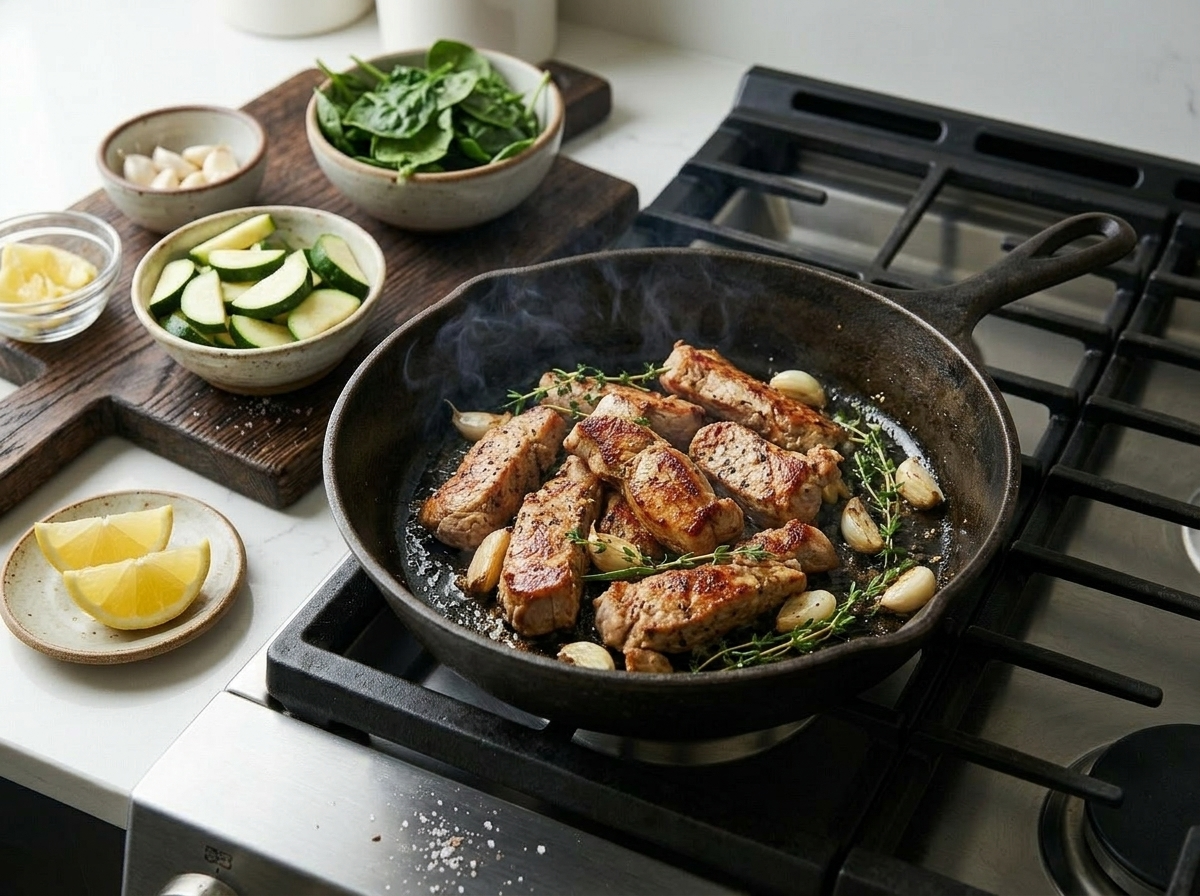
- Heat a large cast iron or heavy skillet over medium-high heat for 2 minutes until hot. Add 1 tbsp olive oil and swirl to coat.
- Add the pork strips in a single layer, working in two batches if needed. Sear for 3 to 4 minutes per side until golden brown on the outside and just cooked through. Transfer to a plate and tent loosely with foil.
- Reduce heat to medium. Add the remaining 1 tbsp olive oil, then add the zucchini. Cook for 4 to 5 minutes, stirring occasionally, until the edges are lightly golden and the pieces are just tender.
- Add the minced garlic and lemon zest to the pan. Stir constantly for 60 seconds until fragrant but not browned.
- Pour in the chicken broth and lemon juice, scraping up any browned bits from the pan bottom. Let it bubble for 1 minute.
- Return the pork strips and any resting juices to the skillet. Toss to coat with the pan liquid and heat for 1 minute.
- Remove the pan from heat. Add the baby spinach in two handfuls and fold through until wilted, about 90 seconds. Taste and adjust seasoning, then serve immediately.
Notes
Tips for Success
- Pat the pork strips dry before seasoning so the surface sears instead of steams.
- Get the skillet genuinely hot before adding oil, a drop of water should evaporate on contact.
- Don’t crowd the pan, cook pork in two batches if needed to keep the sear rather than a steam.
- Add garlic after the pork is done searing to prevent it from burning and turning bitter.
- Finish spinach off the heat by folding it in with residual pan warmth to keep it bright green.
Variations
- Swap zucchini for diced bell pepper and add smoked paprika for a Spanish-style skillet.
- Use pork shoulder strips for a fattier, chewier result with a longer 10-minute cook time.
- Add 2 tbsp heavy cream and 1 tsp Dijon mustard at the end for a creamy herb pan sauce.
Storage and Reheating
Store leftovers in an airtight container in the fridge for up to 4 days. Keep the pork and vegetables together, the flavors meld overnight.
Reheat in a skillet over medium-low heat with a splash of water or chicken broth to loosen it up, about 3 to 4 minutes. Microwave works in a pinch at 70% power for 90 seconds.
This freezes reasonably well for up to 2 months. Thaw overnight in the fridge before reheating. The spinach softens more after freezing, which is fine.
Serving Suggestions
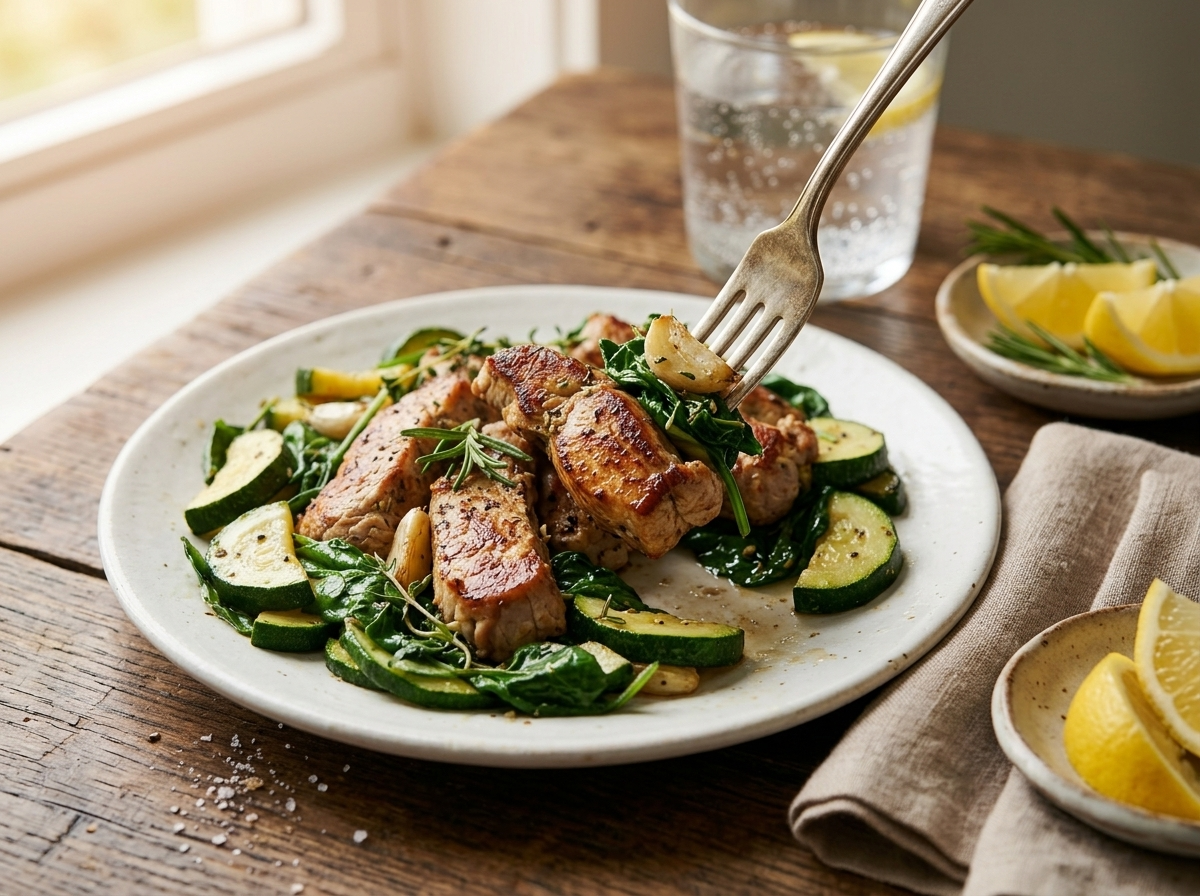
Serve straight from the skillet with a simple green salad dressed with lemon and olive oil, or alongside a light roasted fennel salad. That’s the easiest move on a weeknight.
For more volume on a keto plate, spoon it over cauliflower rice or alongside roasted broccoli. The herb pan juices act as a light sauce over whatever’s underneath.
If you’re not strictly low-carb, this works just as well over plain white rice or with a slice of crusty bread to soak up the pan drippings.
FAQ
Why is my herb pork skillet dry instead of juicy?
Overcooked tenderloin dries out fast since it’s a very lean cut. Pull the pork off heat when it reads 63 C / 145 F internally and let it rest for 2 minutes before serving.
Can I use dried herbs instead of fresh in this pork skillet?
Yes, use one-third the amount since dried herbs are more concentrated. Add them with the garlic rather than at the start so they don’t scorch on the hot pan.
Can I freeze this keto pork skillet with the zucchini in it?
You can, but zucchini becomes quite soft after freezing and thawing. If texture matters, freeze the pork separately and add fresh zucchini when you reheat.
What vegetable goes well with herb pork skillet besides zucchini?
Asparagus, green beans, or sliced mushrooms all work well and stay keto-friendly, much like the vegetables in this creamy leek mushroom skillet. Add them right after the garlic and cook until just tender, about 4 to 5 minutes.
Is this herb pork skillet dairy free?
Yes, the base recipe uses only olive oil, pork, vegetables, and herbs, no dairy at all. Just skip the creamy variation with heavy cream if you need to stay dairy free.
How does pork tenderloin differ from pork loin for a skillet like this?
Tenderloin is smaller, leaner, and cooks in about half the time of pork loin. Loin is wider and firmer, so it needs thinner slices and a couple of extra minutes in the pan.