Jump to Recipe
High-protein salmon cakes with dill are pan-seared patties made from fresh salmon, egg, Greek yogurt, and panko, giving you about 25 grams of protein per serving, similar to my salmon egg muffins, without a scoop of protein powder anywhere near them.
I make a batch on Sunday and eat them all week. Fresh salmon instead of canned keeps the texture chewier and the dill flavor brighter, not fishy.
The trick is not overmixing. Overwork the mixture and the patties turn dense instead of flaky. I chop the salmon by hand with a knife instead of a food processor, so there’s still texture in every bite.
They’re done when the outside is deep golden and the center hits 145°F / 63°C, about 3 to 4 minutes per side in a hot skillet.
Why You’ll Love This Recipe
- Packs about 25g of protein into every serving
- Fresh salmon gives a chewier bite than canned
- Ready in under an hour, mostly hands-off chilling
- Freezes well for easy weekday lunches
Ingredient Notes
- salmon fillet: Use skinless salmon and chop it by hand for texture. Canned salmon works in a pinch but the cakes turn softer.
- egg: Binds the mixture together. One large egg is enough for this amount of salmon.
- Greek yogurt: Adds moisture and protein without the heaviness of mayonnaise. Plain, full-fat or 2% both work fine.
- panko breadcrumbs: Holds the patties together without making them dense. Swap for almond flour to keep the recipe gluten free.
- fresh dill: Gives the cakes their bright, herby flavor. Dried dill works at a third of the amount.
- green onion: Adds a mild bite. Finely minced regular onion works too.
- Dijon mustard: Cuts through the richness of the salmon. Whole grain mustard is a good substitute.
- lemon: Zest and juice brighten the whole mixture. Don’t skip the zest, it carries more flavor than the juice alone.
- olive oil: Used for pan-searing. A neutral oil like avocado oil works if you want a milder taste.
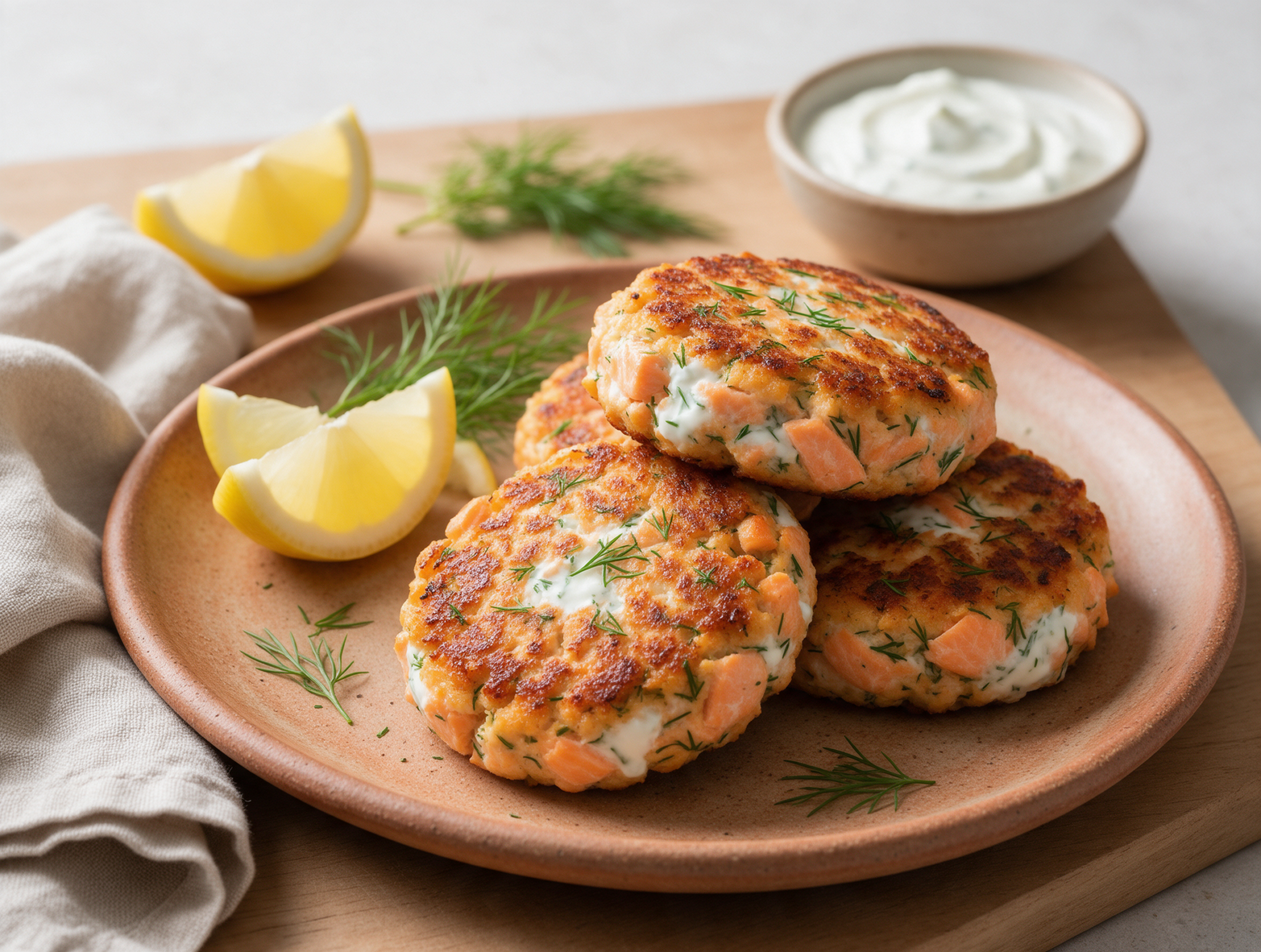
High-Protein Pan-Seared Salmon Cakes with Fresh Dill
Ingredients
Method
- Pat the salmon dry with paper towels, cut into small pieces, then chop finely with a knife until it looks like coarse mince. Don’t over-process it into a paste.
- Add the chopped salmon to a mixing bowl with the egg, Greek yogurt, panko, dill, green onion, Dijon mustard, lemon zest, lemon juice, salt, and pepper. Mix gently with a fork just until combined.
- Divide the mixture into 8 portions, about 75 g each, and shape into patties roughly 6 cm / 2.5 inches wide and 2 cm / 3/4 inch thick.
- Place the patties on a sheet pan and chill in the fridge for 15 minutes so they firm up and hold together better.
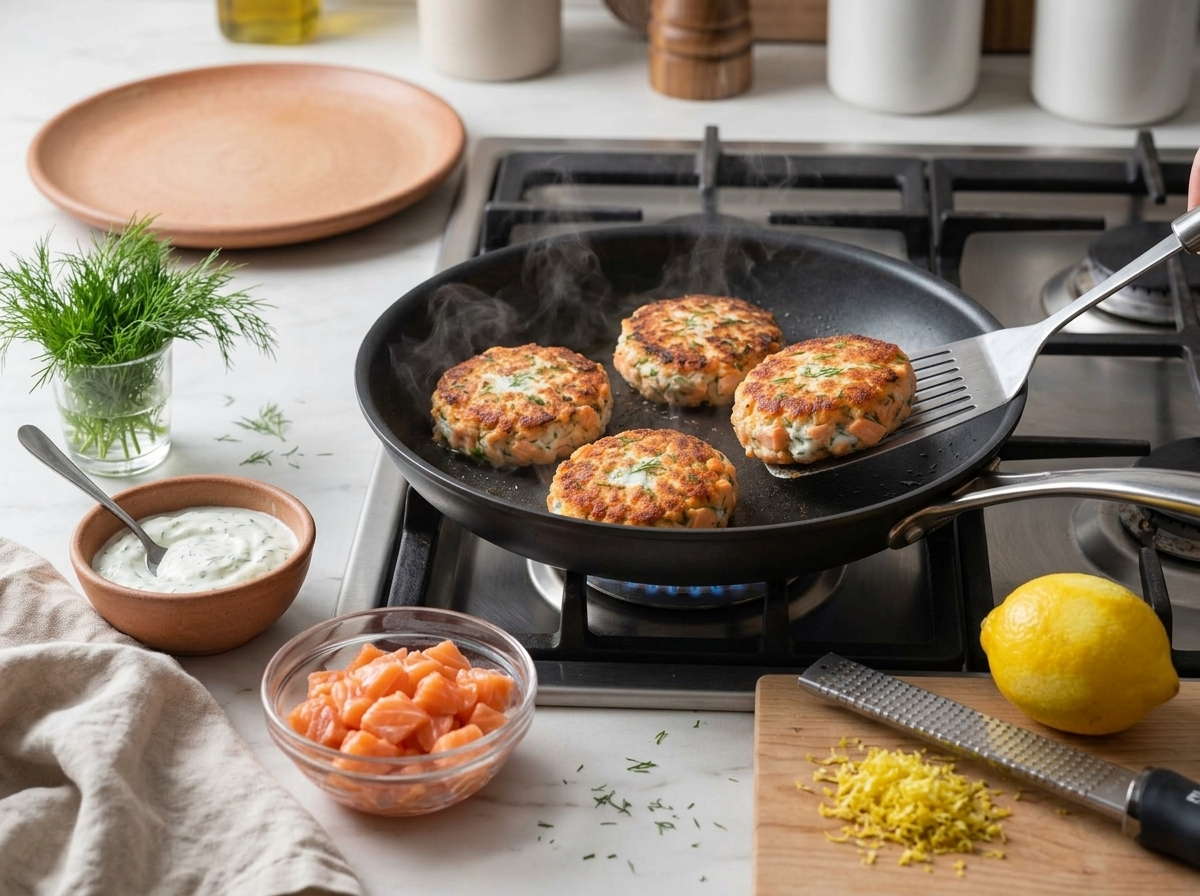
- Heat 1 tbsp olive oil in a 12-inch nonstick skillet over medium heat. Add 4 patties, leaving space between them, and cook for 3 to 4 minutes until deep golden on the bottom.
- Flip carefully with a fish spatula and cook another 3 to 4 minutes, until golden on the second side and the internal temperature reads 145°F / 63°C.
- Transfer the cooked patties to a plate. Wipe out the skillet, add the remaining 1 tbsp olive oil, and repeat with the remaining 4 patties.
- Serve warm with lemon wedges and a scattering of extra dill.
Notes
- Chop salmon by hand for texture, don’t use a food processor.
- Chill patties 15 minutes before cooking so they hold together.
- Cook in two batches in a 12-inch skillet, don’t crowd the pan.
- Internal temp should read 145°F / 63°C at the thickest point.
Tips for Success
- Pat the salmon dry with paper towels before chopping so the mixture isn’t too wet to hold a patty shape.
- Chill the formed patties for 15 minutes before cooking so they hold together better in the hot skillet.
- Don’t crowd the skillet, cook the patties in two batches of four, the same way I do with these pan-fried chickpea tuna patties, so each side gets a proper crust.
- Flip the patties only once, using a thin spatula, to keep the golden crust intact.
- Check for doneness with an instant-read thermometer, the center should read 145°F / 63°C.
Variations
- Swap the panko for crushed pork rinds or almond flour to make these salmon cakes low-carb and gluten free.
- Add a diced jalapeno and swap dill for cilantro for a spicier, Mexican-inspired version.
- Stir in a tablespoon of capers and swap Dijon for whole grain mustard for a briny, deli-style patty.
Storage and Reheating
Salmon cakes keep well in the fridge for 3 to 4 days in an airtight container. Let them cool completely before stacking so they don’t turn soggy.
To reheat, warm them in a 12-inch skillet over medium heat for 2 to 3 minutes per side, or in the oven at 350°F / 175°C for 8 to 10 minutes, until heated through and the crust re-crisps. Skip the microwave, it turns the crust rubbery.
To freeze, lay cooked patties flat on a sheet pan until solid, then transfer to a freezer bag for up to 2 months. Thaw overnight in the fridge before reheating in the skillet or oven.
Serving Suggestions
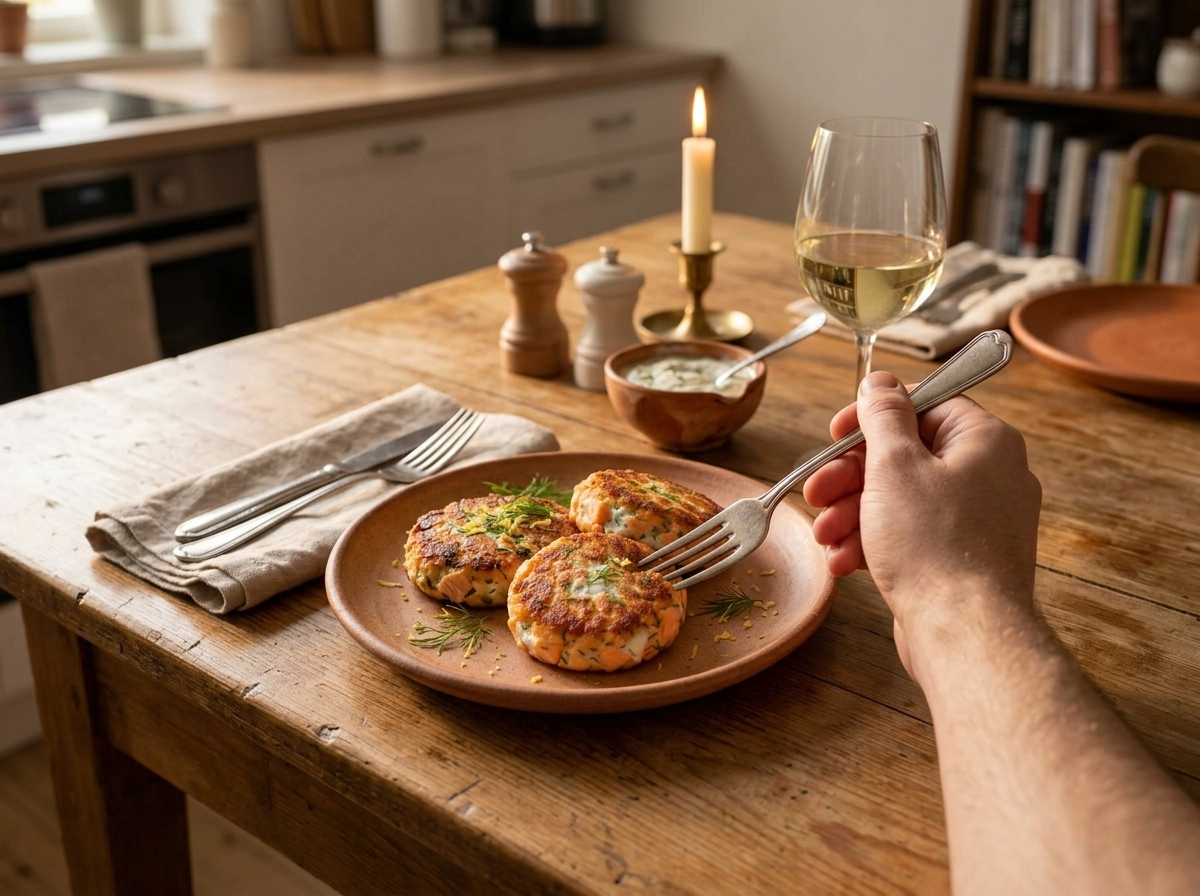
Salmon cakes with dill go well with a simple green salad or steamed asparagus for a light dinner. A squeeze of lemon over the top wakes up the whole plate.
For a heartier meal, serve them over rice or alongside roasted baby potatoes. A dollop of the same Greek yogurt mixed with extra dill and lemon works as a quick sauce.
They also hold up well tucked into a toasted bun with lettuce and tomato for a salmon burger, or crumbled over a green salad for lunch.
FAQ
Why do my salmon cakes fall apart in the pan?
Salmon cakes usually fall apart when the mixture is too wet or the patties haven’t chilled before cooking. Pat the salmon dry, use just enough panko to bind it, and chill the formed patties for 15 minutes before they hit the skillet. A hot pan with enough oil also helps the crust set fast so the patty holds its shape.
Can I use canned salmon instead of fresh for these salmon cakes?
Yes, canned salmon works if you drain it well and remove any bones or skin first. The texture turns softer and less flaky than fresh salmon, and the flavor is a bit stronger, so you might cut the Dijon mustard slightly. Use about 400g of drained canned salmon in place of the fresh fillet.
Can I freeze salmon cakes before cooking them?
Yes, freeze the raw, formed patties on a sheet pan until solid, then stack them in a freezer bag for up to 2 months. Cook them straight from frozen in a hot skillet, adding a couple extra minutes per side, or thaw overnight in the fridge first for more even cooking.
What goes well with salmon cakes with dill besides rice?
Salmon cakes with dill pair well with a crisp green salad, steamed asparagus, or roasted baby potatoes for a full dinner. A lemony Greek yogurt sauce on the side pulls the whole plate together. They also work tucked into a bun with lettuce for a quick salmon burger.
Are these high-protein salmon cakes gluten free?
These salmon cakes aren’t gluten free as written because of the panko breadcrumbs, but they’re easy to adjust. Swap the panko for the same amount of almond flour, like the gluten-free almond crust or crushed gluten-free crackers, and the patties hold together the same way. Check your Dijon mustard label too, most are gluten free but some brands add wheat.
What’s the difference between salmon cakes and salmon croquettes?
Salmon cakes are pan-seared in a skillet with just enough oil to crisp the outside, while croquettes are typically breaded and deep-fried. This recipe uses the pan-seared method, so the crust turns golden and crisp but stays lighter than a deep-fried croquette.