Jump to Recipe
I’ll be honest: grain bowls can feel like a chore to put together. This one doesn’t.
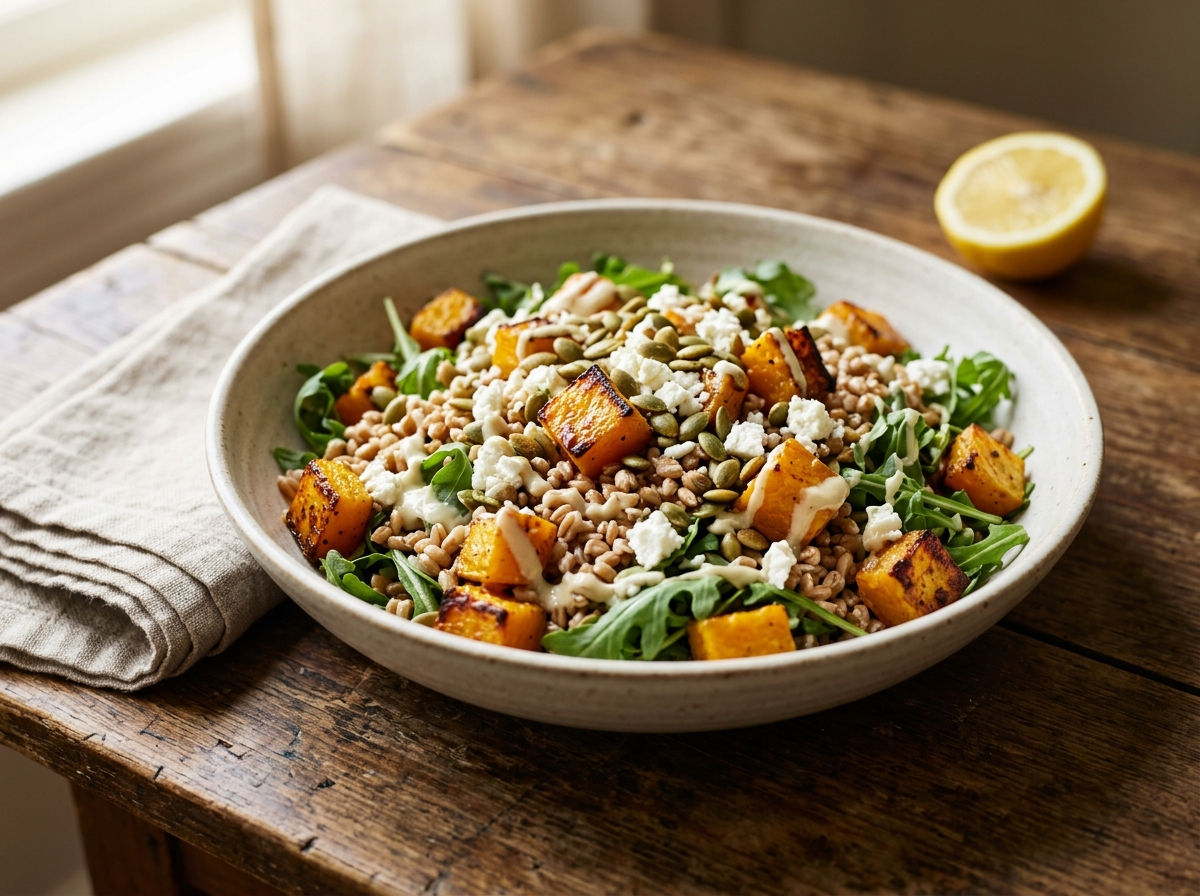
The base is pearled farro, nutty and slightly chewy, topped with squash that’s been roasted until the edges go deep gold. A lemon-tahini dressing ties everything together without overpowering the earthy grain.
It holds up well, which means it’s genuinely good for lunch the next day. The squash stays soft, the farro doesn’t turn to mush.
This sits comfortably in your weekly rotation. Real food doing its thing.
Why You’ll Love This Recipe
- Stays filling for hours thanks to farro’s fiber
- Squash caramelizes into something deeply savory-sweet
- Lemon-tahini dressing doubles as a dip or sauce
- Holds well for next-day lunch without going soggy
Ingredient Notes
- Butternut squash: Butternut roasts evenly and gets nicely caramelized edges. Delicata or kabocha work too and don’t need peeling.
- Pearled farro: Pearled farro cooks fastest, around 20-25 minutes. Whole farro works but needs an extra 15-20 minutes of simmering.
- Tahini: Use a runny, well-stirred tahini for a smooth dressing. Sunflower seed butter is a nut-free swap that keeps the same creamy texture.
- Pepitas: Raw pepitas toast in the oven during the last 5 minutes of squash roasting. Toasted sunflower seeds or chopped walnuts work just as well.
- Baby arugula: Arugula adds a peppery bite that contrasts the sweet squash. Baby spinach or chopped kale are milder swaps.
- Lemon: Fresh lemon juice is worth it here for brightness. Bottled juice makes the dressing taste flat.
Roasted Squash Farro Salad Bowl
Ingredients
Method
- Heat the oven to 220 C / 425 F. Line a large sheet pan with parchment paper.
- Toss squash cubes with olive oil, smoked paprika, garlic powder, salt, and pepper until evenly coated.
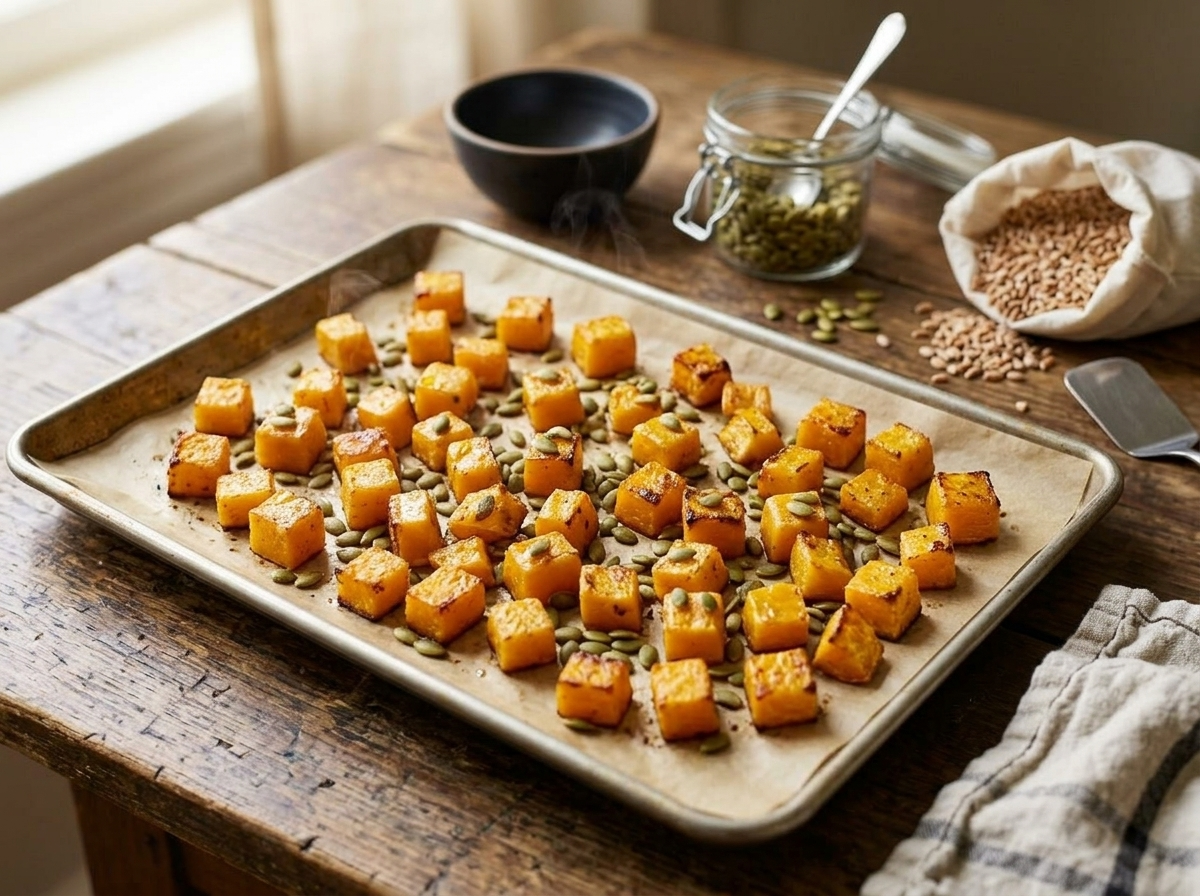
- Spread squash in a single layer on the pan with space between pieces. Roast for 20 minutes.
- Scatter pepitas over the pan and roast for another 5 minutes, until squash edges are deep gold and pepitas are lightly toasted. Set aside.
- While squash roasts, bring water or broth and salt to a boil in a medium saucepan.
- Add rinsed farro, reduce heat to a steady simmer, and cook uncovered for 20-25 minutes, until farro is tender but still has a slight chew.
- Drain any excess liquid and spread farro on a plate or tray for 2 minutes to cool slightly.
- Whisk tahini, lemon juice, olive oil, minced garlic, maple syrup, and salt together in a small bowl.
- Add warm water one tablespoon at a time, whisking until the dressing is pourable and smooth. Taste and adjust salt or lemon.
- Divide warm farro among four bowls.
- Top each bowl with roasted squash, a handful of arugula, and toasted pepitas.
- Drizzle lemon-tahini dressing over each bowl. Add feta and cranberries if using. Serve right away.
Notes
Tips for Success
- Cut squash into even 3/4-inch cubes so every piece roasts at the same rate.
- Spread squash in a single layer with space between pieces; crowding steams instead of roasts.
- Salt the farro cooking water generously, like pasta water, so the grain has flavor on its own.
- Whisk tahini dressing while farro is still warm so it absorbs a little before serving.
- Add arugula just before eating if prepping ahead to keep leaves from wilting.
Variations
- Add crumbled feta and dried cranberries for a salty-sweet Mediterranean twist.
- Stir in a drained can of chickpeas for extra plant-based protein without extra cooking.
- Swap lemon-tahini for a maple-miso dressing to lean into the squash’s natural sweetness.
Storage and Reheating
Store farro and roasted squash together in an airtight container in the fridge for up to 4 days. Keep the dressing and arugula separate so nothing gets soggy.
To reheat, warm the farro and squash in a skillet over medium heat for 3-4 minutes, or microwave for 90 seconds. Add fresh arugula and dressing after reheating.
Farro freezes well on its own for up to 2 months. Squash gets watery after freezing, so freeze the grain separately and roast fresh squash when you’re ready to serve.
Serving Suggestions
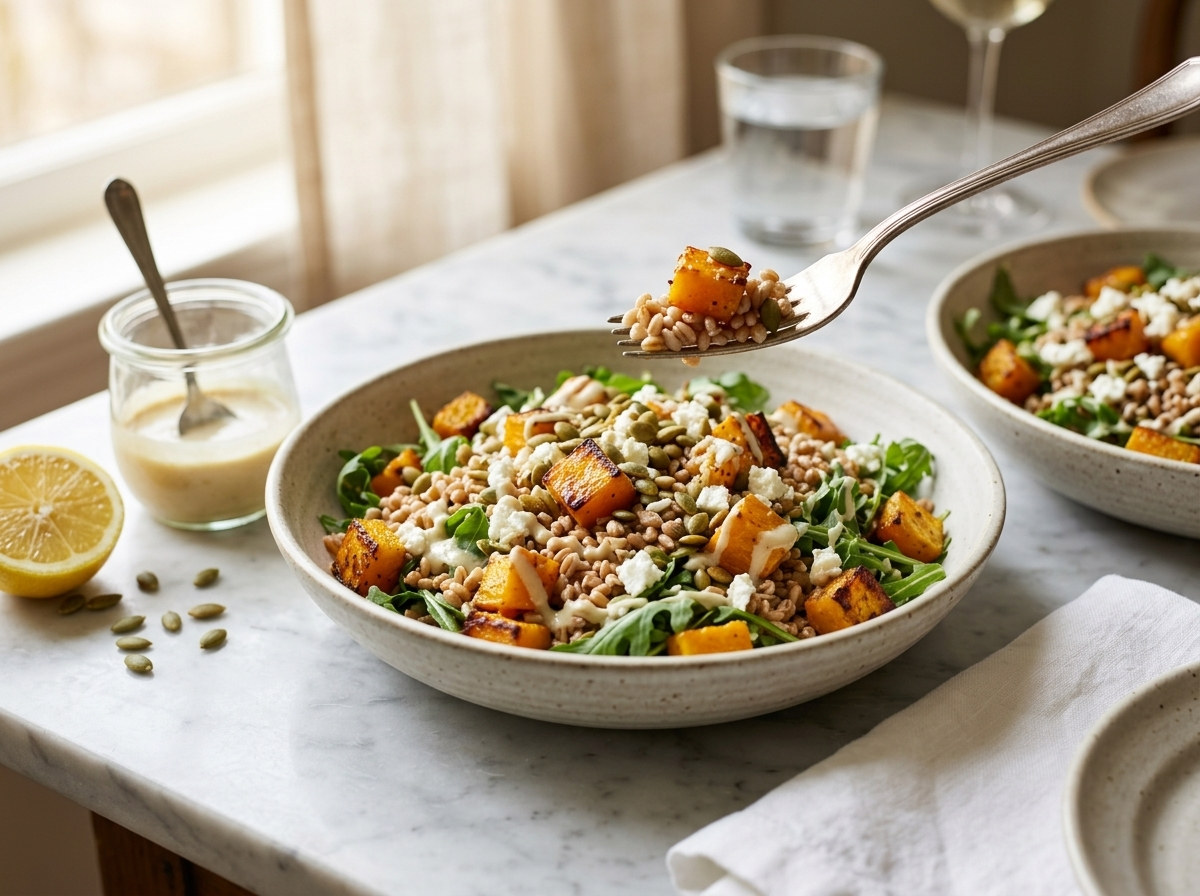
Serve the bowls warm or at room temperature. Spoon farro first, pile squash on top, scatter pepitas, then drizzle dressing over everything. A handful of fresh arugula on top adds color and bite.
For a bigger spread, serve alongside a hearty roasted parsnip lentil salad or a wedge of crusty sourdough. A soft-boiled egg on top adds protein if you want something more substantial.
For a crowd, lay out farro, squash, greens, toppings, and dressing separately and let people build their own bowls. It works well as a buffet-style weeknight dinner.
FAQ
Why is my roasted squash watery instead of caramelized?
The squash is probably too crowded on the pan. Water steams off slowly when pieces are packed together, so they cook instead of roast. Use two sheet pans if needed and make sure there’s space between each cube.
Can I use wheat berries instead of farro in this salad bowl?
Yes, wheat berries work as a direct swap and have a similar chew. They take about 45-60 minutes to cook, so plan for extra time and check them early.
Is this roasted squash farro salad bowl gluten free?
No, farro contains gluten. For a gluten-free version, swap farro for cooked quinoa or brown rice, which both pair well with the roasted squash and tahini dressing, much like the grains in a flavor-packed vegan rice bowl.
How do I know when the farro is done cooking?
Farro is done when it’s tender but still has a slight chew in the center, similar to al dente pasta. Start tasting around the 20-minute mark and drain it as soon as it hits that texture.
What protein goes well with a roasted squash farro bowl?
Chickpeas, a soft-boiled egg, or sliced rosemary garlic turkey all work well here without competing with the squash. Crumbled feta or a scoop of hummus also add protein while doubling as a topping.
Can I roast the squash ahead and keep it for the week?
Yes, roasted squash keeps in the fridge for up to 4 days in a sealed container. Reheat it in a dry skillet for a couple of minutes to bring back some of the caramelized texture before assembling the bowl.