Jump to Recipe
Skinny shakshuka with greens is a lightened-up version of the classic North African egg dish, built on a spiced tomato sauce loaded with spinach or kale instead of extra oil and cheese.
I make this most weeknights when the fridge has half a bag of wilting spinach and not much else. The eggs poach right in the sauce, so it’s one pan and maybe 15 minutes of actual cooking.
The greens do double duty here. They bulk up the sauce so you eat less bread to feel full, and they turn the whole dish a deep, earthy green-red instead of just red.
A small scatter of feta at the end keeps it from tasting like diet food. It’s still rich. Just not heavy.
Why You’ll Love This Recipe
- One skillet, less than 30 minutes start to finish
- Loaded with greens instead of extra oil or cream
- Poached eggs cook right in the tomato sauce
- Naturally gluten-free and easy to make dairy-free
Ingredient Notes
- olive oil: Stick to 2 tbsp to keep the sauce light. More turns it greasy and dulls the fresh tomato flavor.
- yellow onion: Yellow onion gives the sweetest base, but white onion works fine as a swap.
- red bell pepper: Adds natural sweetness and body. Swap for a poblano if you want more heat in the sauce.
- baby spinach: Kale or Swiss chard both work here, just chop them smaller and let them cook a minute or two longer.
- crushed tomatoes: A good quality can makes a real difference. Watery brands leave you with a thin, soupy sauce.
- smoked paprika: This is what gives the sauce its backbone. Regular paprika works but tastes flatter and less smoky.
- feta: Skip it or swap in a vegan feta if you need this dairy-free.
Skinny Shakshuka with Greens, Feta and Poached Eggs
Ingredients
Method
- Heat olive oil in a 26 cm / 10-inch skillet over medium heat. Add the onion and cook for 4 to 5 minutes until soft and translucent.
- Add garlic and red bell pepper. Cook 3 minutes until the pepper starts to soften.
- Stir in cumin, smoked paprika and chili flakes. Cook 30 seconds until fragrant.
- Pour in the crushed tomatoes, salt and black pepper. Simmer uncovered for 8 to 10 minutes, stirring occasionally, until the sauce thickens and coats the back of a spoon.
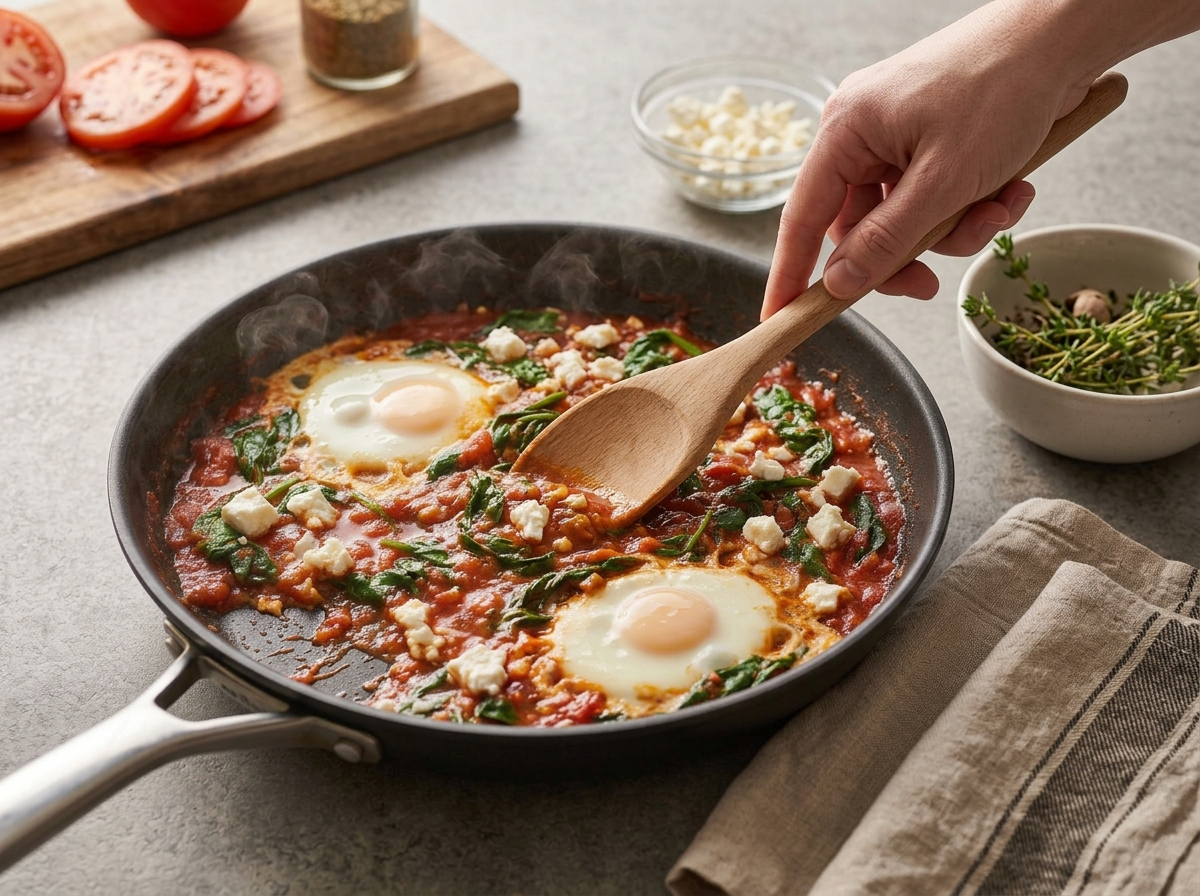
- Stir in the spinach a handful at a time, letting each batch wilt before adding more, about 2 to 3 minutes total.
- Taste the sauce and adjust salt. Use the back of a spoon to make 4 shallow wells in the sauce.
- Crack one egg into each well. Cover the skillet and cook over medium-low heat for 5 to 7 minutes, until the whites are fully set and the yolks are still soft.
- Remove from heat and scatter feta and parsley over the top.
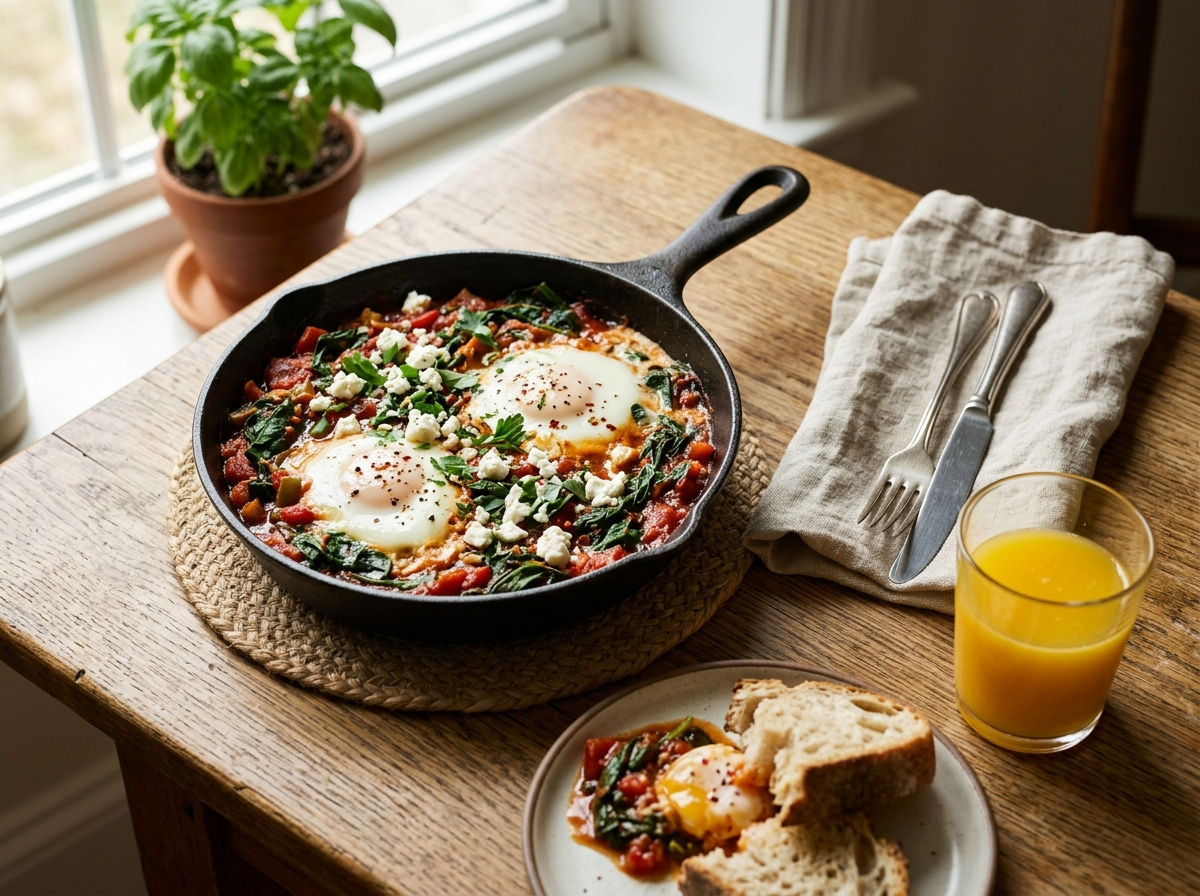
- Serve straight from the skillet with lemon wedges and warm bread.
Notes
- Simmer sauce until thick before adding eggs to avoid a watery shakshuka.
- Use a 26 cm skillet with a tight lid for even egg poaching.
- Don’t skip wilting the greens fully, it cuts any bitterness.
- Add feta right before serving so it stays crumbly, not melted.
Tips for Success
- Make small wells in the sauce with a spoon before adding eggs so they don’t slide toward the pan’s edges.
- Cover the skillet fully while the eggs poach so the whites set on top without overcooking the yolks.
- Cook the tomato sauce down for a full 8 to 10 minutes before adding eggs so it holds them without pooling.
- Add spinach in two batches in a 10-inch skillet since a full bag looks like too much at first.
- Taste and adjust salt in the sauce before adding eggs, since it’s hard to season once the eggs are in.
Variations
- Swap spinach for chopped kale or Swiss chard, adding it a minute earlier since it takes longer to wilt down.
- Stir in a can of drained chickpeas with the tomatoes for a heartier, higher-protein version that works as dinner.
- Use harissa paste instead of chili flakes and cumin for a deeper, smokier heat running through the whole sauce.
Storage and Reheating
Store leftover shakshuka in an airtight container in the fridge for up to 3 days. The eggs firm up more than fresh but still taste good the next morning.
Reheat gently in a 26 cm / 10-inch skillet over low heat, covered, for 5 to 7 minutes until warmed through, or microwave in 30-second bursts. Skip high heat, it turns the yolks rubbery fast.
The sauce alone, without eggs, freezes well for up to 2 months. Thaw it in the fridge overnight, reheat until bubbling, then crack in fresh eggs and poach as usual.
Serving Suggestions
Serve shakshuka straight from the skillet with warm pita or crusty bread for scooping up the sauce.
A dollop of plain yogurt or an extra scatter of feta on top adds richness without much extra effort.
For a full brunch spread, add a simple cucumber salad on the side and a pot of mint tea.
FAQ
Why is my shakshuka sauce too watery?
Watery sauce usually means the tomatoes didn’t reduce long enough before the eggs went in. Simmer the crushed tomatoes uncovered for 8 to 10 minutes so it thickens and coats the back of a spoon. If it’s still thin, stir in a spoonful of tomato paste to tighten it up fast.
Can I use kale instead of spinach in this shakshuka?
Yes, kale works fine in place of spinach. Chop it small and add it 2 to 3 minutes before you’d add spinach since kale takes longer to wilt down. Swiss chard is another good swap, just strip the tough stems first so the texture stays tender.
Can I make the shakshuka sauce ahead of time?
Yes, the tomato and greens base keeps well in the fridge for up to 3 days, or in the freezer for about 2 months. Reheat it in a skillet until it’s bubbling again, then crack in fresh eggs and poach them as usual for the best texture.
What goes well with skinny shakshuka?
Warm pita, crusty bread, or toasted sourdough are the classic pick for scooping up the sauce. A simple cucumber-tomato salad or a small pile of arugula on the side keeps the plate balanced and adds some crunch without much extra work.
Is this skinny shakshuka gluten-free?
Yes, the shakshuka itself is naturally gluten-free since it’s just eggs, vegetables, canned tomatoes and spices. Just double check your feta and paprika labels if you’re strict about cross-contamination, then serve it with gluten-free bread or skip the bread and eat it with a fork instead.
How do I know when the eggs are done in shakshuka?
The whites should look fully set and opaque while the yolks stay soft and slightly jiggly, which takes about 5 to 7 minutes covered over medium-low heat. Gently shake the skillet to check doneness, and cook a minute longer if you prefer firmer yolks.