Jump to Recipe
Low-cal shirataki noodle pad thai swaps rice noodles for shirataki noodles, so you get the same tangy, salty, sweet sauce without the carb load. Each bowl runs about 360 calories and still tastes like the pad thai from your favorite takeout spot.
I was skeptical of shirataki the first time I cooked with it. Straight out of the bag, the noodles smell a little fishy and feel slippery, almost rubbery.
The trick is dry-frying them in a hot pan before anything else touches them. That step gets rid of the excess water and the smell, and it firms up the texture so the noodles actually soak up the sauce instead of sitting in a puddle of it.
This one comes together in one skillet in under 30 minutes. Shrimp, egg, bean sprouts, and crushed peanuts do the heavy lifting for texture and protein.
Why You’ll Love This Recipe
- Full pad thai flavor at roughly 360 calories a bowl
- One skillet, ready to eat in under 30 minutes
- Shrimp and egg keep it high in protein
- Naturally low-carb thanks to the shirataki noodles
Ingredient Notes
- shirataki noodles: These come packed in liquid that smells fishy straight out of the bag. Rinse well and dry-fry before saucing, it’s what keeps them from tasting rubbery.
- shrimp: Look for peeled and deveined shrimp to save time. Chicken thigh or extra-firm tofu both work as a swap, just adjust the cook time and internal temp.
- tamarind paste: This gives pad thai its sour edge. If you can’t find it, use 1.5 tbsp rice vinegar plus an extra squeeze of lime.
- fish sauce: Brands vary a lot in saltiness, so taste the sauce before adding it to the pan and adjust with lime juice if it’s too sharp.
- coconut sugar: Balances the sour and salty notes. A monk fruit or brown sugar substitute works fine if that’s what you have.
- crushed peanuts: Toast raw peanuts in a dry pan for a couple minutes first if yours taste flat, it wakes up the flavor before crushing.
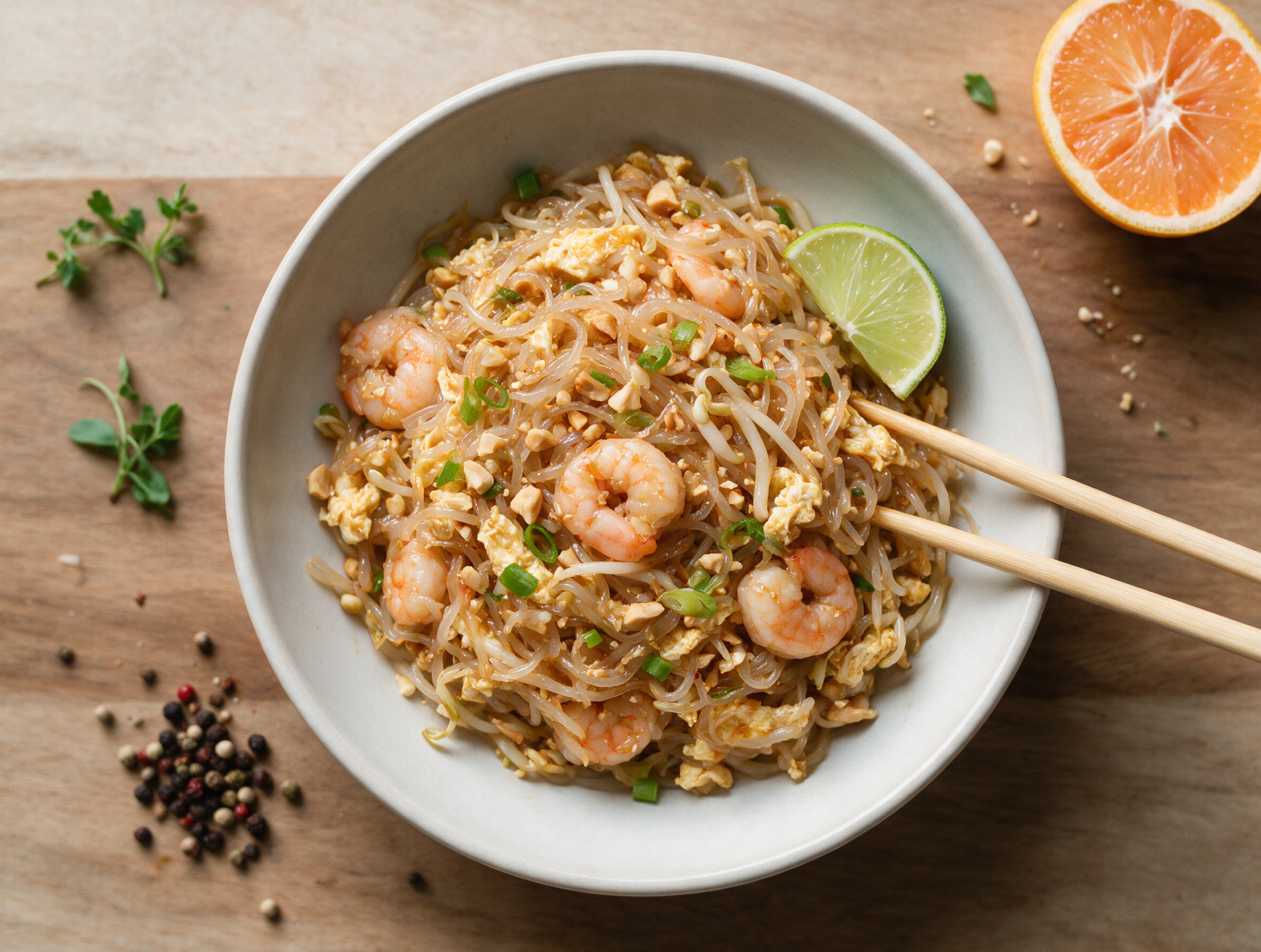
Stir-Fried Shirataki Noodle Pad Thai with Shrimp
Ingredients
Method
- Drain the shirataki noodles and rinse well under cold water for about 1 minute to wash off the packing liquid smell. Snip any very long strands with kitchen scissors.
- Heat the empty 12-inch nonstick skillet over medium-high. Add the noodles with no oil and dry-fry for 3 to 4 minutes, stirring often, until they squeak slightly and look drier. Transfer to a plate.
- Whisk the fish sauce, lime juice, coconut sugar, tamarind paste, and sriracha in a small bowl until the sugar dissolves. Set the sauce aside.
- Add the avocado oil to the same skillet over medium-high heat. Add the shrimp in a single layer and cook 2 minutes per side until pink, opaque, and 145 F / 63 C at the thickest point. Remove to the plate with the noodles.
- Add the garlic and carrot to the skillet and cook for 1 minute until fragrant.
- Push the vegetables to one side, crack the eggs into the empty space, and scramble for 1 to 2 minutes until just set.
- Return the dry-fried noodles and shrimp to the skillet. Pour in the sauce and toss for 2 to 3 minutes until the noodles are coated and heated through.
- Add the bean sprouts and half the green onions. Toss for 1 minute until the sprouts are just wilted but still crisp.
- Remove from heat and divide between two bowls. Top with crushed peanuts, remaining green onions, cilantro, and a lime wedge.
Notes
- Dry-fry shirataki noodles before saucing, it fixes the rubbery texture.
- Fish sauce brands vary in saltiness, taste the sauce before tossing it in.
- Shrimp goes from opaque to rubbery fast, pull it at 145 F / 63 C.
- Sauce ingredients can be mixed a day ahead and kept in the fridge.
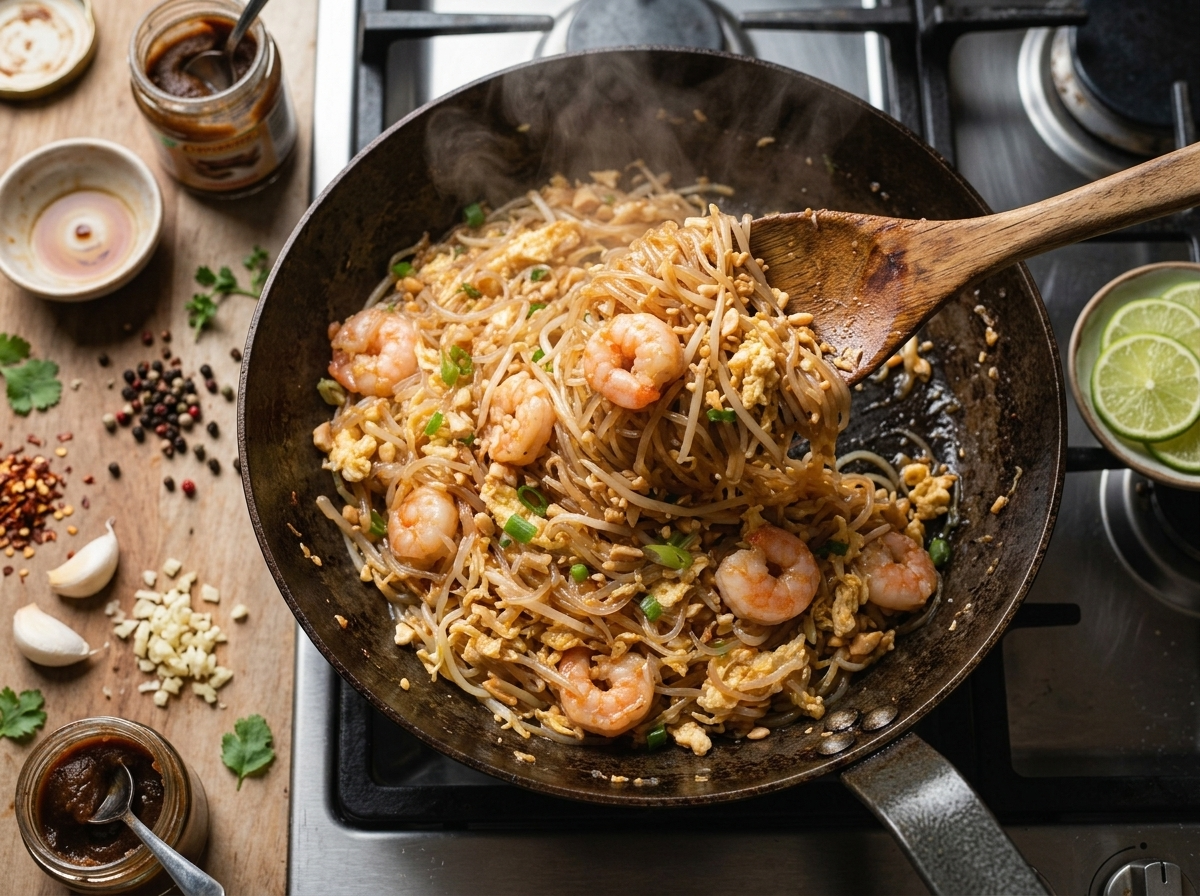
Tips for Success
- Dry-fry the shirataki noodles for a full 3 to 4 minutes before saucing, or they’ll taste watery and rubbery.
- Rinse the noodles under cold water for a full minute to wash off the fishy packing liquid smell.
- Cook the shrimp in a single layer without crowding the pan so they sear instead of steam.
- Mix the sauce before you start cooking so it’s ready the second the noodles hit the pan.
- Taste the sauce before adding it and adjust with extra lime or sriracha, since fish sauce brands vary in saltiness.
Variations
- Make it vegetarian by swapping shrimp for extra-firm tofu and using tamari instead of fish sauce in the sauce.
- Add sliced red bell pepper and snap peas with the carrot for more crunch and color in the stir-fry.
- Turn up the heat with an extra teaspoon of sriracha or a spoonful of chili garlic sauce in the sauce mix.
Storage and Reheating
Shirataki noodle pad thai keeps in an airtight container in the fridge for 3 to 4 days.
Reheat it in a 12-inch skillet over medium heat for 3 to 4 minutes, adding a splash of water to loosen the sauce as it warms. Stir often so the eggs don’t overcook and the noodles heat through evenly.
Skip the microwave if you can, it tends to make shirataki noodles rubbery around the edges before the center warms up. Freezing isn’t worth it here either, the noodles and egg both turn spongy once thawed.
Serving Suggestions
Shirataki noodle pad thai works well on its own as a full bowl, thanks to the shrimp and egg carrying the protein.
For a fuller spread, add a cold cucumber salad with rice vinegar on the side, or a handful of edamame tossed with sea salt.
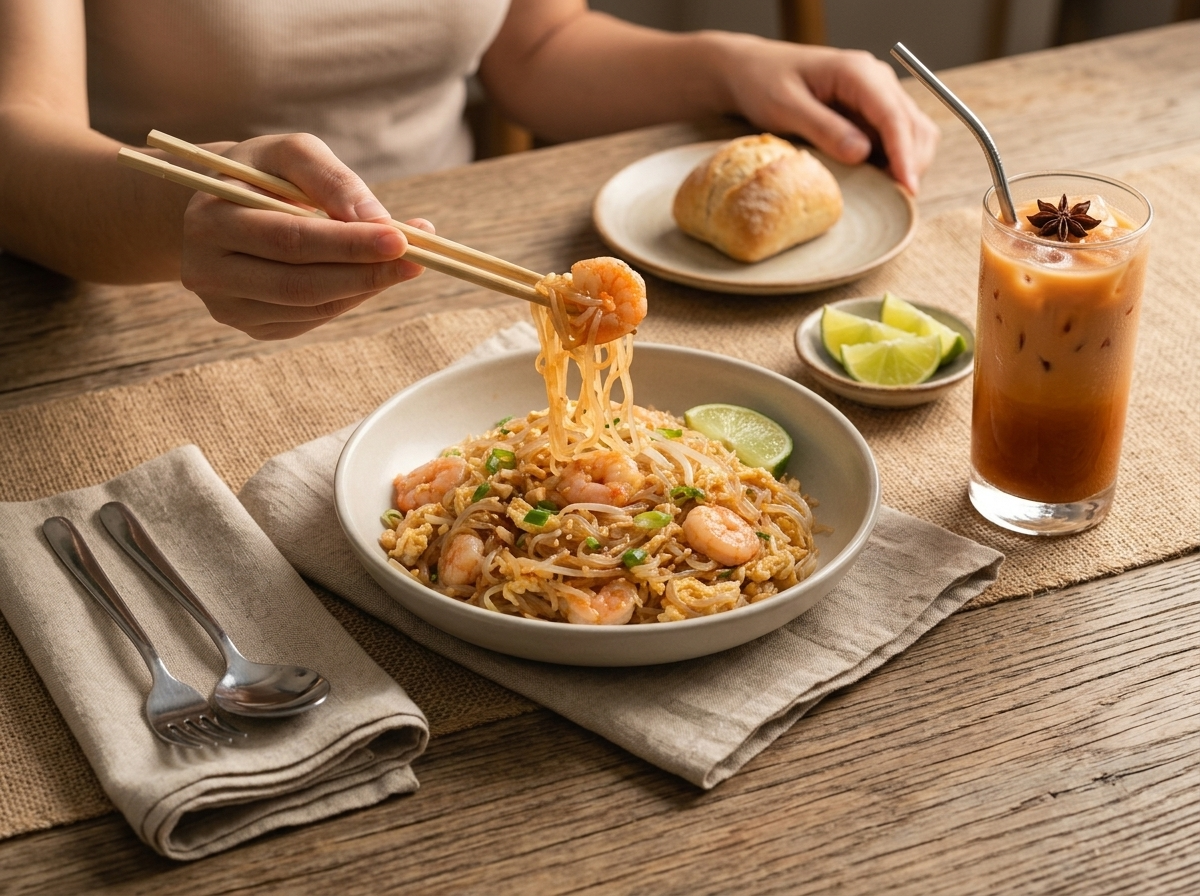
Iced Thai tea or sparkling water with lime pairs well here. Keep extra lime wedges, chili flakes, and crushed peanuts on the table so everyone can adjust their own bowl.
FAQ
Why are my shirataki noodles still chewy and slippery after cooking?
You probably skipped the dry-fry step. Shirataki noodles come packed in a starchy liquid that keeps them slick, and dry-frying them in a hot 12-inch skillet for 3 to 4 minutes with no oil pulls out that extra moisture so the sauce actually sticks instead of sliding right off.
Can I use chicken or tofu instead of shrimp in this shirataki pad thai?
Yes, swap in 200 g of diced chicken thigh or extra-firm tofu for the shrimp. Cook chicken in the same skillet until it hits 165 F / 74 C and is no longer pink inside. Pat tofu dry and pan-fry until golden before tossing it back in with the noodles.
Can I meal-prep this shirataki noodle pad thai ahead of time?
You can mix the sauce and dry-fry the noodles up to 2 days ahead and store them separately in the fridge. Cook the shrimp and eggs fresh, then toss everything together right before eating, since shirataki noodles get chewier the longer they sit in sauce.
What goes well with shirataki noodle pad thai?
A cold cucumber salad with rice vinegar cuts through the salty-sweet sauce well. Iced Thai tea or a squeeze of extra lime keeps things bright, and a side of extra crushed peanuts lets everyone add more crunch to their own bowl.
Is this shirataki noodle pad thai actually low carb?
Yes, shirataki noodles are mostly water and glucomannan fiber, so a 200 g portion has only a few grams of carbs compared to 40 plus grams in rice noodles. This version lands at roughly 13 g of carbs per bowl, mostly from the carrot, sprouts, and sauce.
What’s the difference between this shirataki version and traditional pad thai?
Traditional pad thai uses dried rice noodles that soak up a lot of oil and carbs during stir-frying. This shirataki version keeps the same tamarind-lime-fish sauce base with shrimp, egg, and peanuts, but runs about 360 calories a bowl instead of 500 or more.