Jump to Recipe
I’ll be honest – I spent a long time thinking gluten-free crackers were always a compromise. Chalky, crumbly, or soft in ways that made them useless for anything beyond dry snacking.
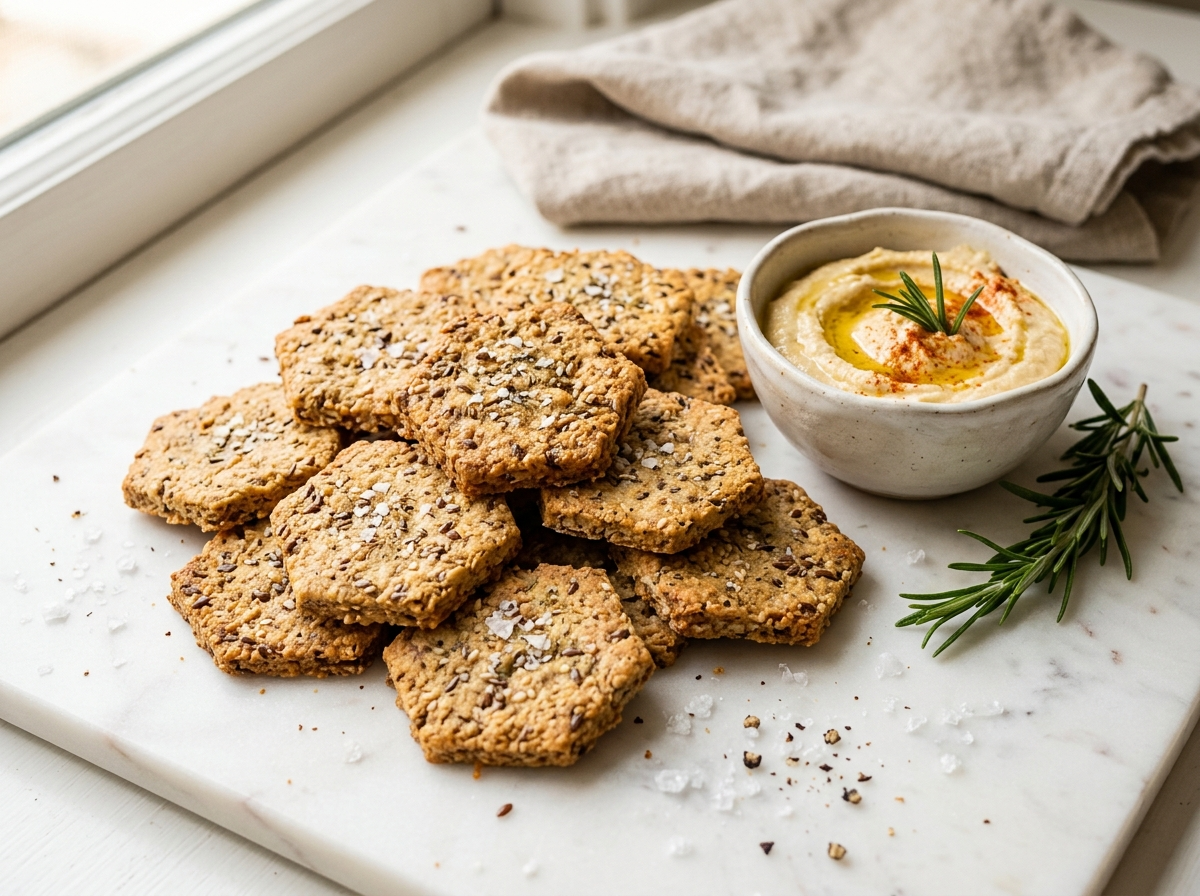
These aren’t that. They bake up thin and crisp, with a nutty richness that actually tastes intentional. The almond flour pulls double duty: it’s the structure and the flavor.
The dough comes together in one bowl in about five minutes, similar to how almond flour gluten-free fritters come together with minimal fuss. Roll it thin, score it, bake it. That’s the whole process.
They hold their snap for days in a jar, which makes them genuinely worth the small effort.
Why You’ll Love This Recipe
- Just 5 ingredients, all pantry staples
- Crispy texture that holds up under heavy dips
- One bowl, no mixer, minimal cleanup
- Stays crunchy for up to 5 days in a jar
Ingredient Notes
- Blanched almond flour: Use blanched (not almond meal) for a smoother, crispier cracker. Almond meal made from whole almonds gives a grainier, softer result.
- Egg: One egg binds the dough and helps the crackers crisp up. For an egg-free version, 1 tablespoon of ground flaxseed mixed with 3 tablespoons of water works reasonably well, though the crackers will be slightly more fragile.
- Olive oil: Adds richness and helps browning. Avocado oil works equally well and has a more neutral flavor.
- Salt: Fine sea salt distributes evenly through the dough. Flaky salt sprinkled on top before baking adds a nice crunch.
- Garlic powder (optional): Adds a savory depth without overpowering. Smoked paprika, dried rosemary, or onion powder are all solid swaps depending on what you’re pairing them with.
Gluten-Free Almond Flour Crackers
Ingredients
Method
- Heat the oven to 175 C / 350 F. Cut two sheets of parchment paper to fit your baking pan.
- Add the almond flour, salt, and garlic powder to a large mixing bowl and stir to combine.
- Add the egg and olive oil. Mix with a fork, then use your hands to bring the dough together into a smooth, slightly firm ball. If it feels sticky, add 1 tablespoon of almond flour.
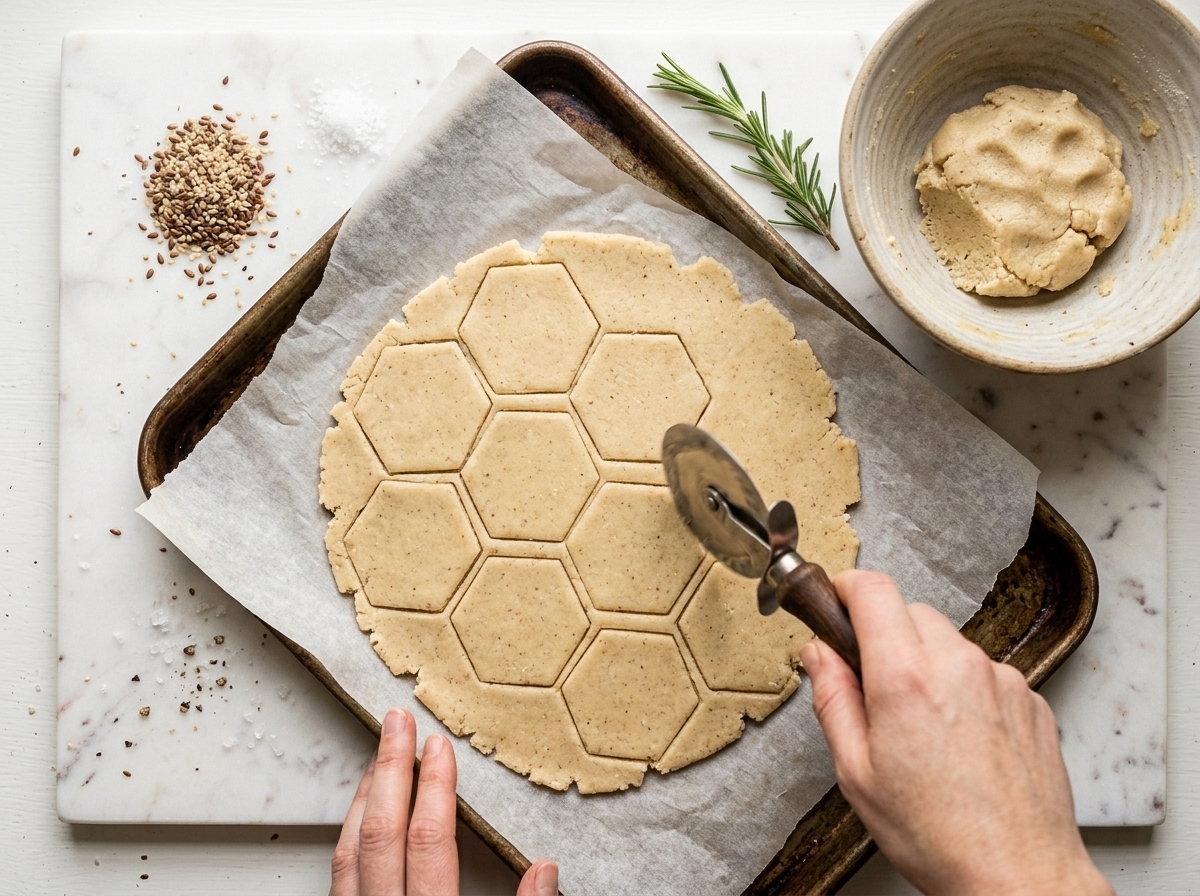
- Place the dough ball on one sheet of parchment. Lay the second sheet on top. Roll the dough out to about 2 mm thickness – you want it even across the whole surface.
- Peel off the top sheet of parchment. Transfer the bottom parchment with the rolled dough onto your baking pan.
- Using a sharp knife or pizza cutter, score the dough into rectangles or squares, roughly 4 x 5 cm. Press lightly into the dough but don’t cut all the way through yet. Sprinkle with a pinch of flaky salt if using.
- Bake for 18 to 22 minutes, until the crackers are golden brown at the edges and lightly golden in the center. Watch closely after 18 minutes – they brown fast.
- Remove from the oven and let the crackers cool completely on the pan for at least 10 minutes. They will feel soft when hot and crisp up fully as they cool. Break along the scored lines once cooled.
Notes
Tips for Success
- Roll the dough between two sheets of parchment to get it thin and even, around 2 mm thick.
- Score the dough before baking so you can snap clean crackers without breaking them after.
- Watch the oven closely after 18 minutes – almond flour browns fast at the edges.
- Let crackers cool completely on the pan before transferring – they crisp up as they cool.
- If edges start browning too fast, fold a strip of foil loosely over the outer crackers.
Variations
- Rosemary and sea salt: press fresh rosemary leaves into the top of each cracker before baking.
- Everything bagel: brush tops lightly with water and press in everything bagel seasoning before baking.
- Parmesan and black pepper: fold 30 g of finely grated Parmesan and 1/2 tsp cracked black pepper into the dough.
Storage and Reheating
Store cooled crackers in an airtight glass jar or container at room temperature for up to 5 days. Keep them away from moisture – any humidity will soften them.
If they lose their snap after a few days, spread them on a sheet pan and bake at 160 C / 320 F for 5 minutes. They’ll crisp back up as they cool.
Freezing isn’t recommended. The texture changes on thawing and they rarely get back to their original crunch.
Serving Suggestions
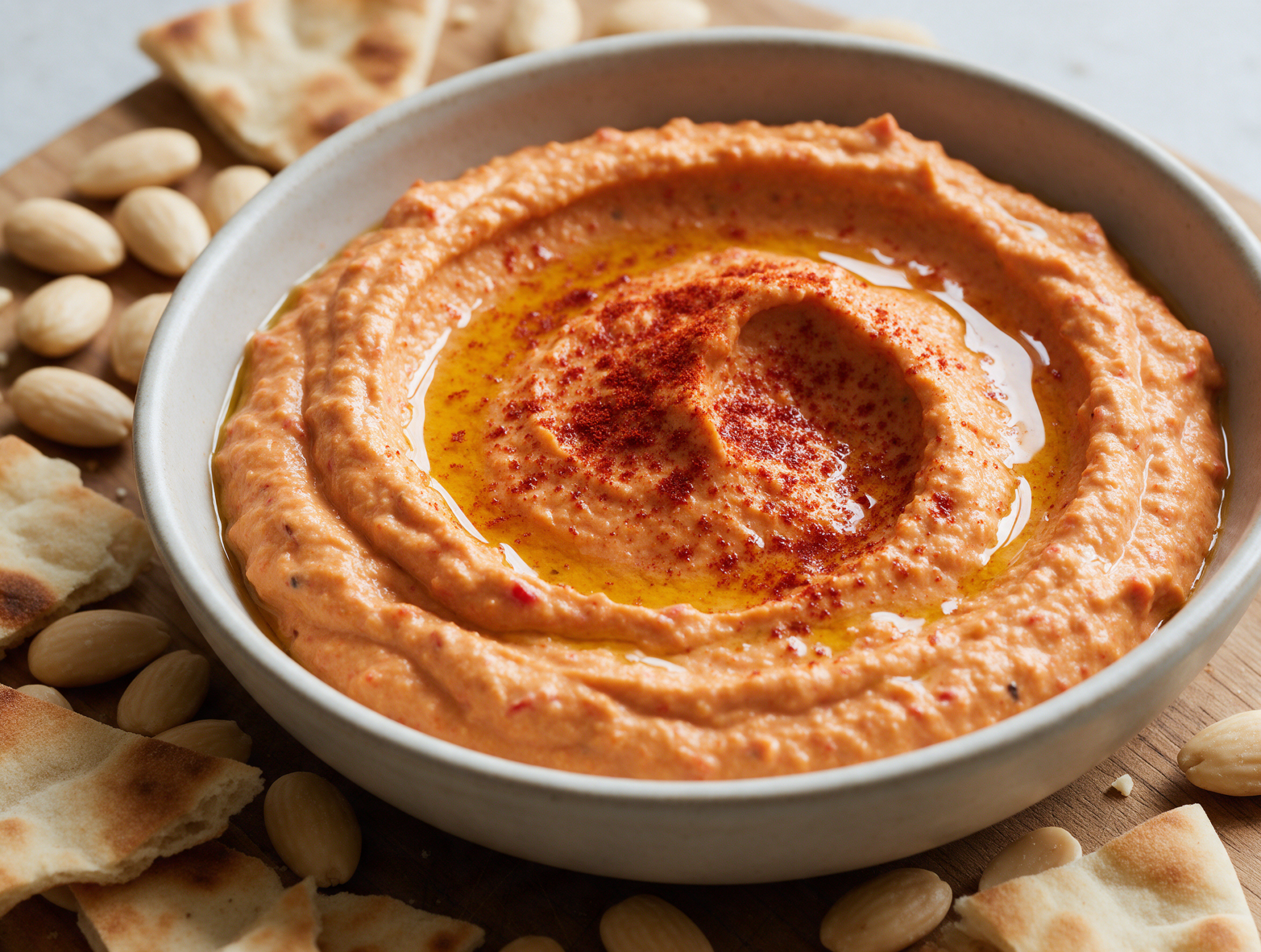
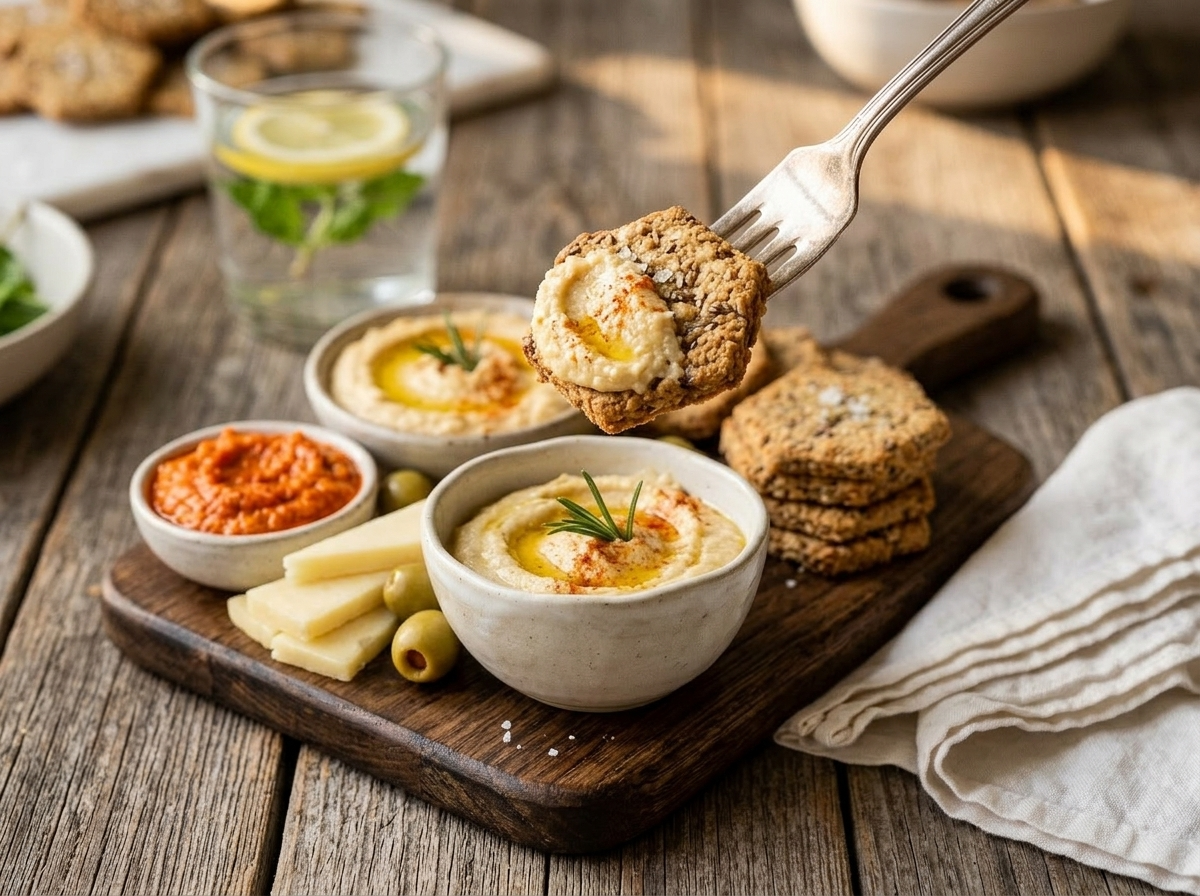
These crackers go well with hummus, roasted red pepper dip, or a thick tzatziki. They’re sturdy enough to scoop without snapping mid-dip, which is the main thing.
For a simple snack board, pair them with sliced cheddar, a soft goat cheese, olives, and a small bowl of Marcona almonds. The nutty flavor of the crackers ties the board together without competing.
They also work as a base for simple canapés – top with cream cheese and smoked salmon, or mashed avocado with a squeeze of lemon, much like the toppings on a crisp gluten-free flatbread.
FAQ
Why are my almond flour crackers soft instead of crispy?
The most common reason is underbaking or rolling the dough too thick. Aim for about 2 mm thickness and bake until the edges are clearly golden. They also firm up as they cool, so give them at least 10 minutes on the pan before testing.
Can I use almond meal instead of blanched almond flour for these crackers?
You can, but the texture will be noticeably coarser and the crackers won’t crisp up as cleanly. Blanched almond flour gives a smoother, more uniform cracker that holds together better.
Can I freeze almond flour cracker dough to bake later?
Yes, the raw dough freezes well. Wrap it tightly in plastic wrap and freeze for up to 1 month. Thaw in the fridge overnight, then roll and bake as normal.
What dips or cheeses pair best with these almond flour crackers?
They work well with anything fairly thick – hummus, baba ganoush, whipped ricotta, or a firm aged cheddar. Thin, watery dips tend to soften the cracker quickly, so stick to denser options.
Are these almond flour crackers suitable for a keto diet?
Yes. Each serving comes in at roughly 4 to 5 grams of net carbs depending on the batch size. Almond flour is low-carb and high in fat, making these a solid fit for keto snacking and low-carb meals.
How thin should I roll almond flour cracker dough for the best snap?
Around 2 mm is the sweet spot – thin enough to crisp fully but thick enough not to tear when you score it. If it tears while rolling, press the dough back together and keep going, it’s forgiving.