Jump to Recipe
I’ll be honest – I spent a long time skeptical of zucchini noodles. They seemed like a sad substitute for the real thing.
Then I stopped trying to make them taste like pasta and just let them be what they are: tender, fresh, and good at soaking up a garlicky sauce. That shift changed everything.
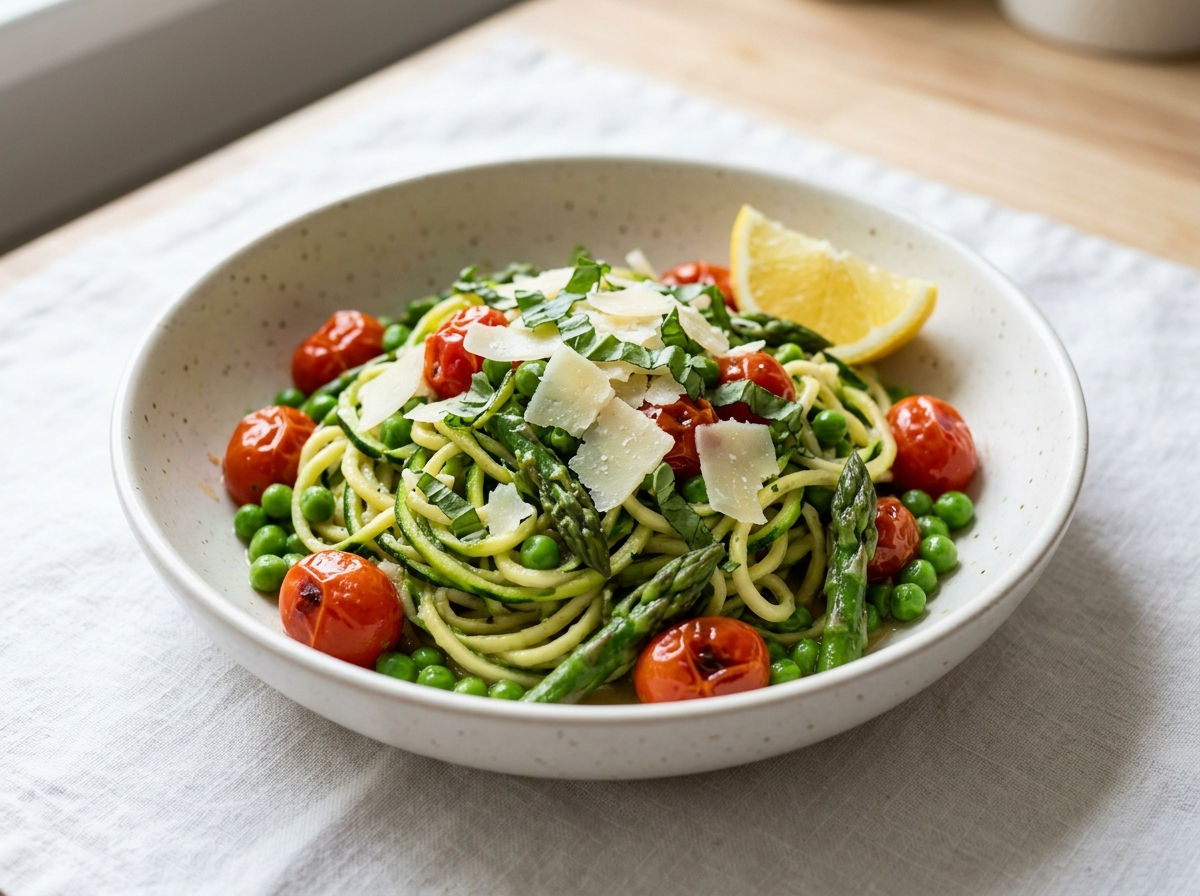
This primavera uses whatever spring vegetables you have on hand. Cherry tomatoes, peas, asparagus, bell pepper. It comes together fast, sits well in a bowl, and doesn’t leave you counting the minutes until dinner feels over.
At around 180 calories per serving, it’s the kind of meal that fits a lighter week without making you feel like you’re missing out.
Why You’ll Love This Recipe
- Under 200 calories per serving, no sacrifice on flavor
- Ready in 30 minutes with one skillet
- Works with any spring or summer vegetables you have
- Naturally gluten-free and easy to make vegan
Ingredient Notes
- Zucchini: Medium zucchini (about 200 g each) spiralize the best. Avoid very large ones – they hold more water and make the noodles soggy.
- Asparagus: Snap off the woody ends and cut into 3 cm pieces. Green beans or broccolini work as a direct swap if asparagus is out of season.
- Cherry tomatoes: Blistering them briefly in the hot pan adds a concentrated sweetness. Grape tomatoes work just as well.
- Frozen peas: No need to thaw – add straight from frozen and they’ll cook through in 2 minutes. Fresh shelled peas work if you have them.
- Parmesan: A small amount goes a long way for flavor. Skip it or use nutritional yeast to keep the dish vegan and dairy-free.
- Olive oil: Use a good quality extra-virgin oil since it’s a main flavor carrier in the sauce. You only need 1.5 tablespoons total.
- Lemon: Fresh lemon juice added at the end lifts the whole dish. Bottled juice is flat by comparison – fresh makes a real difference here.
Low-Cal Zucchini Noodle Primavera
Ingredients
Method
- Spiralize the zucchini into noodles and place them in a colander over the sink.
- Sprinkle with 1 tsp salt, toss to coat, and leave for 10 minutes to draw out moisture.
- Press the noodles firmly with a clean kitchen towel or several layers of paper towels until they feel dry to the touch. Set aside.
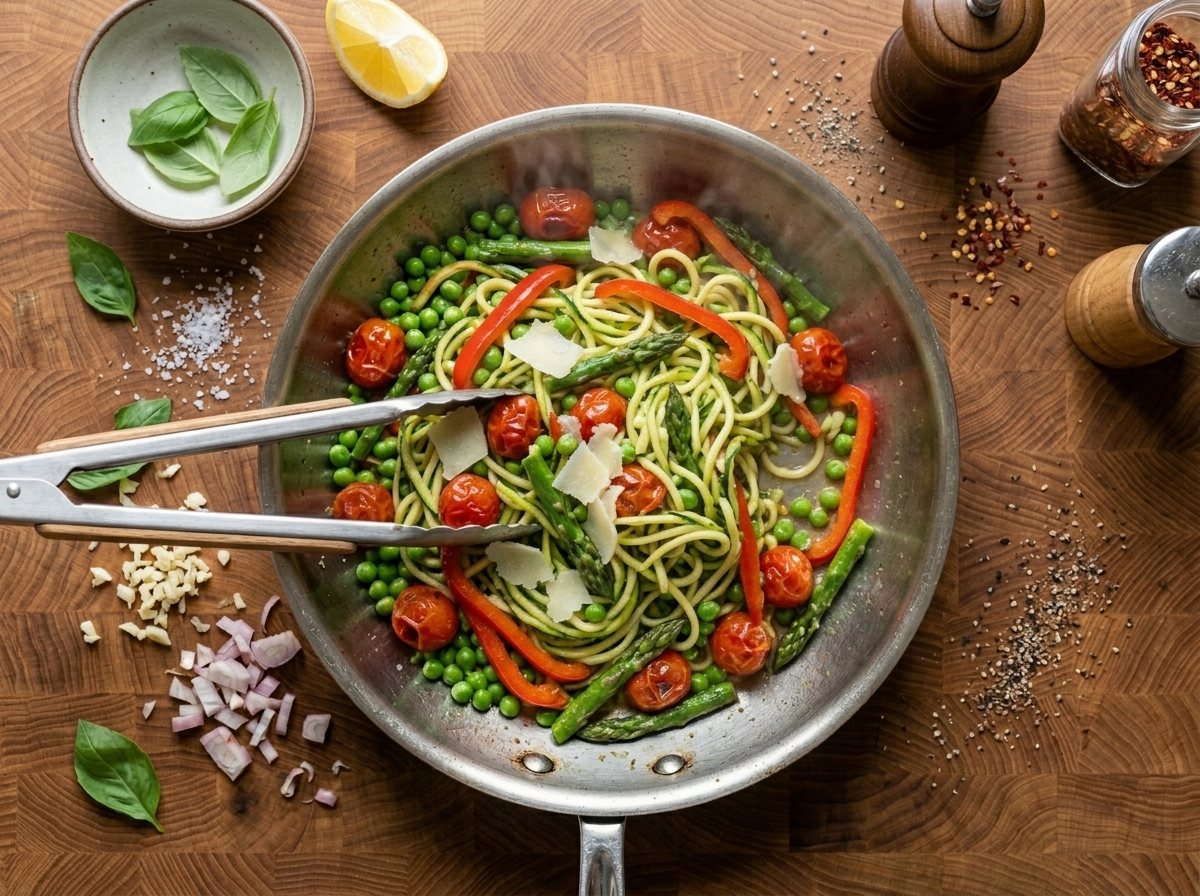
- Heat a 12-inch nonstick skillet over high heat until hot. Add the halved cherry tomatoes cut-side down with no oil and cook for 2 minutes until blistered and slightly charred. Transfer to a plate.
- Add the olive oil to the same skillet over medium-high heat. Add the red bell pepper and asparagus and cook, stirring occasionally, for 3 to 4 minutes until just tender with some color.
- Add the minced garlic and red pepper flakes (if using) and stir for 30 seconds until fragrant.
- Add the frozen peas and stir for 1 to 2 minutes until heated through. Return the blistered tomatoes to the pan.
- Increase heat to high. Add the dry zucchini noodles to the skillet and toss with tongs for 60 to 90 seconds until just heated through and lightly coated in the pan juices. Do not overcook.
- Remove the skillet from the heat. Add the lemon juice, lemon zest, and black pepper, and toss to combine.
- Divide between four bowls. Top with torn basil and Parmesan if using. Serve immediately.
Notes
Tips for Success
- Salt zucchini noodles and let them sit 10 minutes, then pat very dry to prevent a watery skillet.
- Cook zucchini noodles last and only for 90 seconds – overcooking makes them limp and releases excess liquid.
- Blister tomatoes in the dry pan first before adding oil to concentrate their flavor quickly.
- Add lemon juice off the heat so the brightness doesn’t cook off and turn flat.
- Toss in fresh basil or flat-leaf parsley right before serving for a clean herby finish.
Variations
- Add 120 g cooked shrimp in the last 2 minutes for a high-protein pescatarian version.
- Use a mix of zucchini and yellow squash noodles for color and a slightly firmer texture.
- Stir in 1 tbsp white miso with the garlic for a savory umami depth without extra calories.
Storage and Reheating
Store leftover zucchini noodle primavera in an airtight container in the fridge for up to 2 days. The noodles will release some water as they sit – that’s normal.
Reheat in a skillet over medium heat for 2 to 3 minutes, tossing gently. Avoid the microwave if you can – it steams the zucchini and turns it mushy.
This dish doesn’t freeze well. The zucchini texture breaks down completely once frozen and thawed.
Serving Suggestions
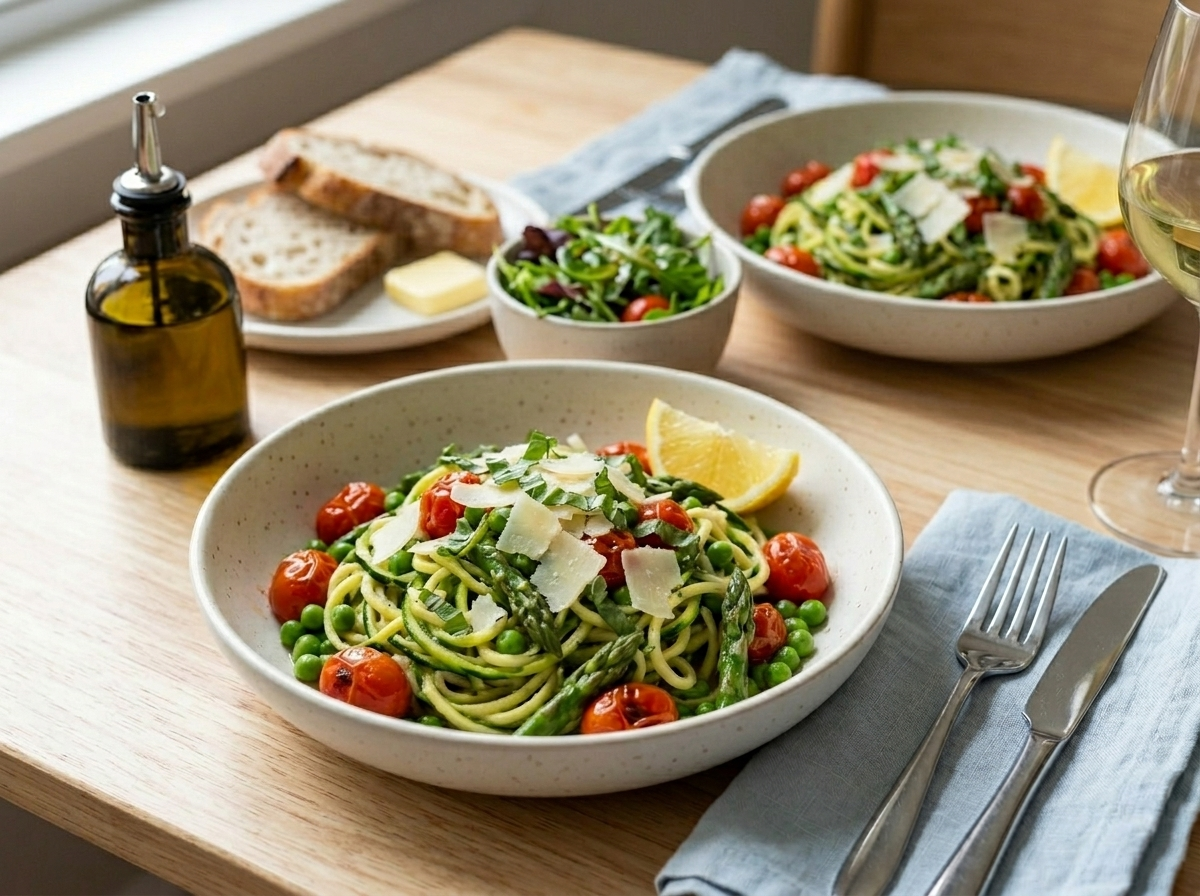
Serve it in a wide, shallow bowl with a wedge of lemon on the side and a scatter of fresh basil. A small shaving of Parmesan on top (optional) adds just enough richness.
It pairs well alongside a simple green salad with lemon vinaigrette, or a slice of crusty sourdough if you’re not watching carbs. A glass of cold, crisp white wine – something like Pinot Grigio – works nicely too.
For a more filling plate, top with a soft-poached egg or roasted salmon with turmeric yogurt flaked on top. Either adds protein without changing the character of the dish.
FAQ
Why are my zucchini noodles watery after cooking?
Zucchini holds a lot of moisture that releases when it hits heat. Salt the raw noodles, wait 10 minutes, then press them firmly with a clean towel before they go in the pan. Also keep the cook time to 90 seconds max – the longer they cook, the more water they shed.
Can I use yellow squash instead of zucchini for the noodles?
Yes, yellow squash spiralizes almost identically and has a similar mild flavor. It’s slightly firmer, which some people actually prefer since the noodles hold their shape a little longer in the skillet.
Can I spiralize the zucchini the night before to save time?
You can, but store the raw noodles between paper towels in an airtight container in the fridge. Don’t salt them until right before cooking or they’ll weep overnight and turn soft.
Is this zucchini noodle primavera gluten-free?
Yes, the base recipe is naturally gluten-free since there’s no pasta or flour involved. Just check that your Parmesan and any broth you add are certified gluten-free if you’re cooking for someone with celiac disease.
What protein goes best with zucchini noodle primavera?
Sauteed shrimp is the most natural fit – it cooks in about 2 minutes and matches the light garlic-oil sauce, or you could flake in leftovers from a Mediterranean baked sea bass for a similar effect. Grilled chicken breast sliced thin or a poached egg are good options if you want something that works for meal prep.
How is zucchini noodle primavera different from regular pasta primavera?
Traditional pasta primavera uses wheat pasta and often a heavier cream or butter sauce — much like this pumpkin seed pesto pasta — landing around 450 to 600 calories per serving. This version swaps in zucchini noodles and uses olive oil with lemon instead, cutting calories roughly in half while keeping all the spring vegetable character.