Jump to Recipe
I’ll be honest: I started making pumpkin seed pesto because pine nuts got expensive. What I didn’t expect was how much better it tasted.
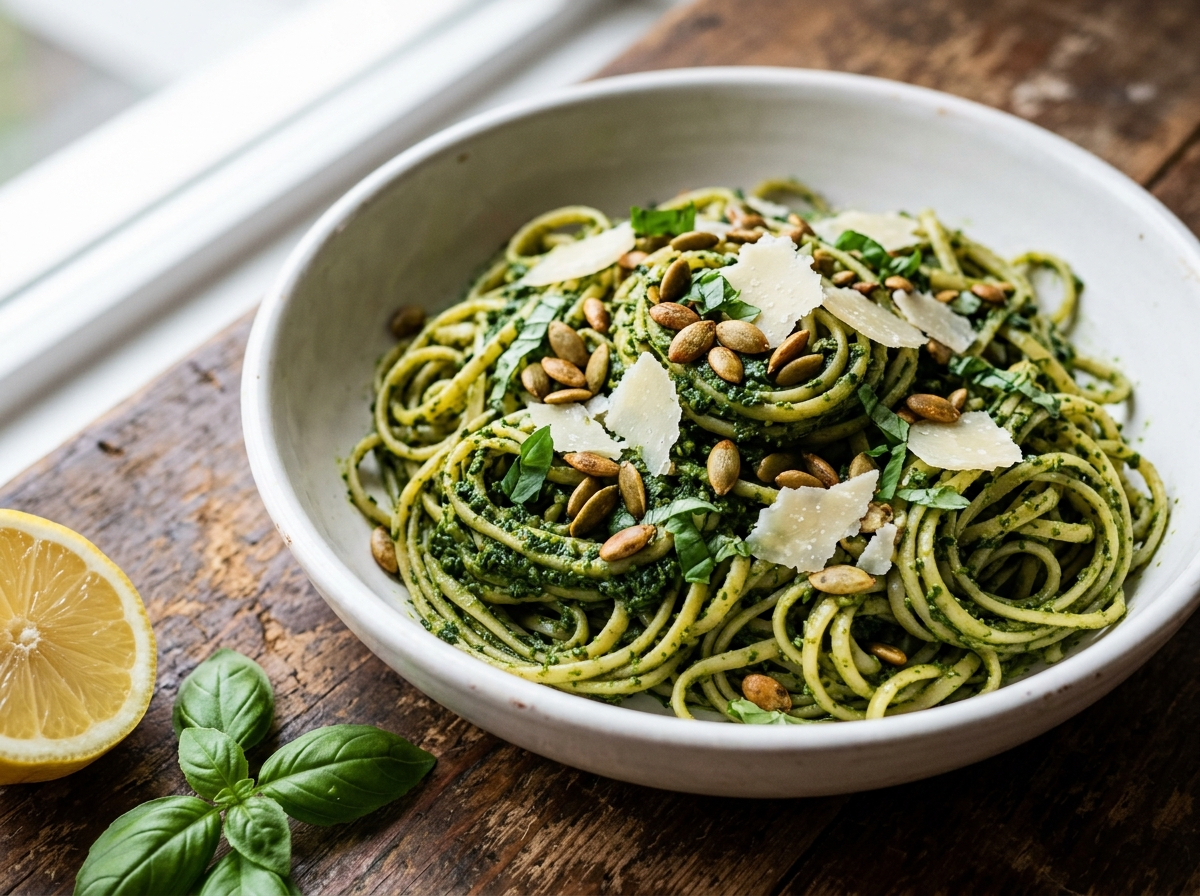
The seeds toast up nutty and slightly sweet. The pesto turns a deep, mossy green. It coats pasta like a proper sauce should.
Pumpkin seeds are one of the best whole-food sources of zinc around. A single serving of this pasta gets you a solid chunk of your daily target, which matters if you eat mostly plant-based.
This is a weeknight recipe. Fifteen minutes of prep, twenty-five minutes of cook time, one blender, one pot. Real food doing its thing.
Why You’ll Love This Recipe
- High-zinc meal from whole-food pumpkin seeds, not supplements
- Nut-free pesto that works for school lunches and allergies
- Ready start to finish in 40 minutes on a weeknight
- Sauce blends in minutes and keeps well for three days
Ingredient Notes
- Raw pumpkin seeds (pepitas): Use raw, hulled pepitas so you can toast them yourself for max flavor. Pre-toasted work in a pinch but go dark fast in the pan.
- Parmesan cheese: Freshly grated melts into the pesto cleanly. For a vegan version, swap in 3 tbsp nutritional yeast and a pinch of extra salt.
- Fresh basil: Two packed cups is the base, but you can swap half for flat-leaf parsley if your basil is sparse or pricey.
- Garlic cloves: Two raw cloves give a sharp kick. If you want something milder, roast them first or reduce to one.
- Lemon juice: Freshly squeezed only. Bottled lemon juice goes flat in a blended sauce and dulls the green color.
- Pasta shape: Linguine or spaghetti works well, but short ridged shapes like rigatoni or fusilli hold the pesto in the grooves even better.
- Extra virgin olive oil: A good, grassy olive oil makes a noticeable difference here. Add it slowly while blending for the smoothest emulsion.
Zinc-Rich Pumpkin Seed Pesto Pasta
Ingredients
Method
- Place the pumpkin seeds in a dry 10-inch skillet over medium heat. Stir constantly for 4 to 5 minutes until the seeds start to pop and turn golden. Remove from heat immediately and spread on a plate to cool for 5 minutes.
- Set aside 2 tablespoons of toasted seeds for garnish. Use the rest for the pesto.
- Bring a large pot of water to a rolling boil. Add 1 tablespoon of salt, then add the pasta.
- Cook according to package instructions until al dente, usually 9 to 11 minutes for linguine. Before draining, scoop out 120 ml (about 1/2 cup) of pasta cooking water and set it aside.
- Drain the pasta and return it to the pot. Do not rinse it.
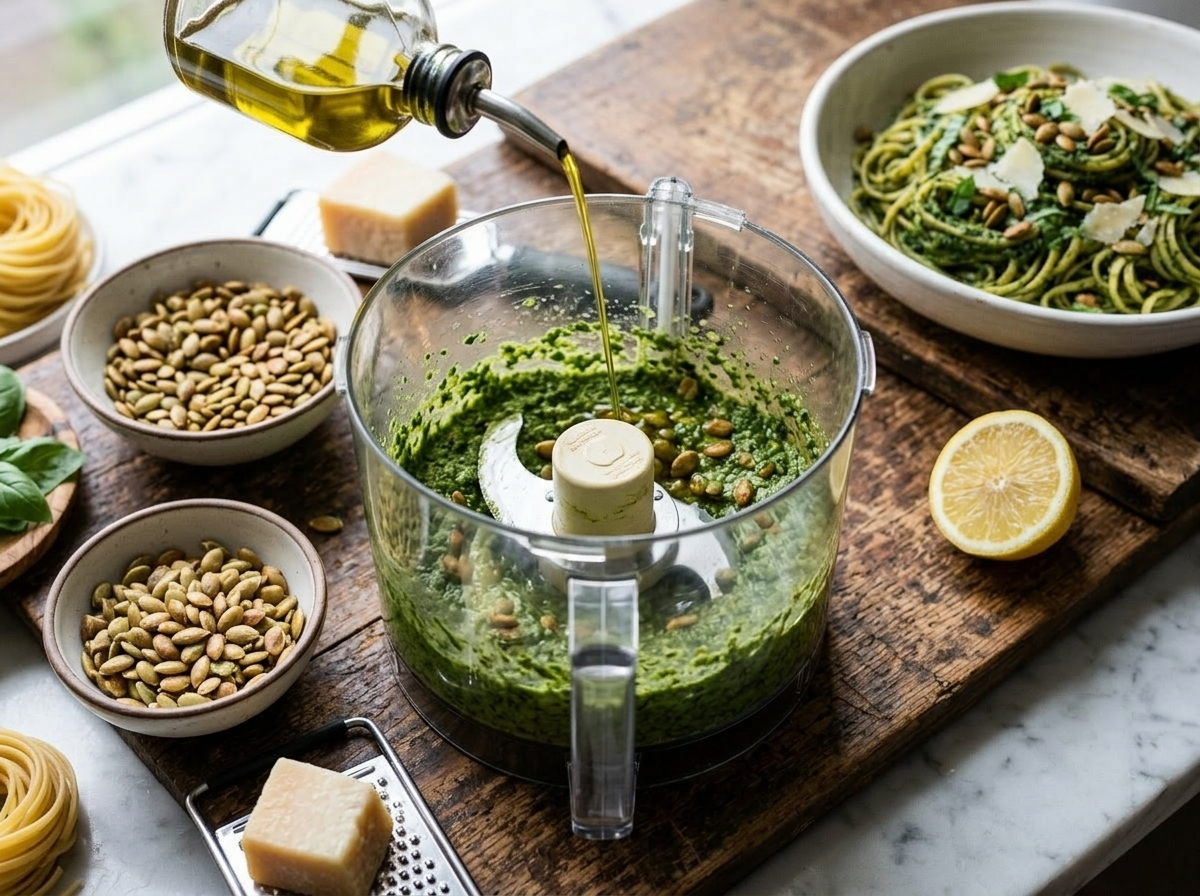
- Add the cooled toasted pumpkin seeds, basil, Parmesan, garlic, lemon juice, lemon zest, salt, and black pepper to a food processor or blender.
- Pulse 5 to 6 times to break everything down roughly. With the motor running, pour in the olive oil in a slow, steady stream and blend until the pesto is mostly smooth but still has a little texture. Scrape down the sides and taste for seasoning.
- Take the pot with drained pasta off the heat. Add the pesto and toss to coat, adding pasta cooking water a splash at a time until the sauce coats every strand evenly and looks glossy.
- Divide into four bowls. Scatter the reserved toasted pumpkin seeds over each portion, add shaved Parmesan, and finish with a little lemon zest if you like. Serve straight away.
Notes
Tips for Success
- Toast pumpkin seeds in a dry skillet over medium heat, stirring often, until they pop and smell nutty, about 4 to 5 minutes.
- Reserve at least half a cup of pasta cooking water before draining, the starch helps the pesto coat every strand.
- Blend pesto ingredients with ice-cold water or chilled olive oil to keep the basil bright green and prevent browning.
- Add pesto off the heat after draining pasta, then toss with pasta water a splash at a time until saucy.
- Taste pesto before adding salt because Parmesan is already salty, so season at the end rather than the beginning.
Variations
- Swap basil for baby spinach and arugula for a peppery, iron-forward version with similar color.
- Add a can of drained white beans to the finished pasta for extra protein and a creamier texture.
- Use gluten-free pasta like brown rice fusilli to make the full dish gluten-free with zero other changes needed.
Storage and Reheating
Store leftover pasta in an airtight container in the fridge for up to 3 days. The pesto darkens slightly but the flavor holds well.
Reheat in a skillet over low heat with a splash of water or olive oil, stirring until loosened and warm. Microwaving works too, covered, for 60 to 90 seconds at medium power.
Store extra pesto separately in a small jar, pressed flat, with a thin layer of olive oil on top to slow oxidation. It keeps for 4 days in the fridge or up to 2 months frozen in an ice cube tray.
Serving Suggestions
Serve straight from the pan with an extra handful of toasted pumpkin seeds scattered on top for crunch. A little lemon zest and shaved Parmesan over each plate finishes it cleanly.
This pasta pairs well alongside a simple arugula salad dressed with lemon and olive oil. The bitterness of the greens cuts the richness of the pesto.
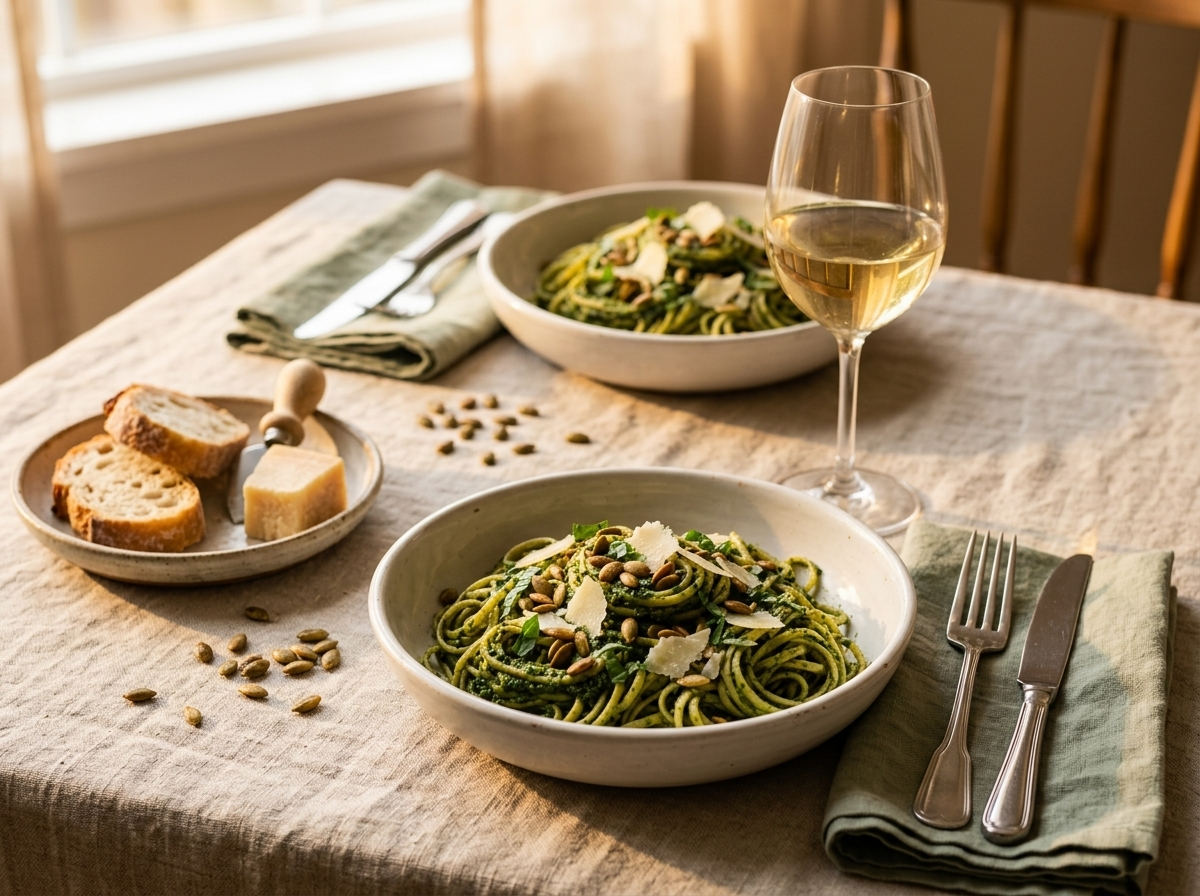
For a bigger spread, serve it with grilled zucchini or roasted cherry tomatoes on the side. A glass of dry white wine like Vermentino or Pinot Grigio works well with the herby, slightly nutty pesto.
FAQ
Why is my pumpkin seed pesto turning brown instead of staying green?
Heat and air oxidize the basil fast. Blend with cold olive oil or a small cube of ice, and add the pesto to pasta off direct heat. Working quickly and keeping the blender running short bursts helps too.
Can I use sunflower seeds instead of pumpkin seeds in this pesto?
You can, but sunflower seeds have notably less zinc than pepitas, so you’d lose the main nutritional payoff of this recipe. They taste fine though and give a similar creamy texture.
How much zinc does one serving of this pumpkin seed pesto pasta actually have?
Each serving provides roughly 4 to 5 mg of zinc, mostly from the pumpkin seeds, which is about 36 to 45 percent of the adult daily value. That makes it one of the more meaningful plant-based zinc sources you can build a meal around.
Can I freeze the pumpkin seed pesto and use it later?
Yes. Freeze pesto in an ice cube tray, then transfer the cubes to a zip bag for up to 2 months. Thaw in the fridge overnight or drop a cube directly into warm pasta and let it melt in.
Is this pumpkin seed pesto pasta suitable for a dairy-free diet?
The base recipe uses Parmesan, so it contains dairy. To make it dairy-free, replace the Parmesan with 3 tablespoons of nutritional yeast plus a pinch of extra salt and a squeeze more lemon.
What is the difference between pumpkin seed pesto and traditional Genovese basil pesto?
Traditional Genovese pesto uses pine nuts, Parmesan, and Pecorino with a strict ratio. Pumpkin seed pesto swaps the nuts for pepitas, giving a earthier, slightly denser sauce and a much higher zinc content per serving.