Jump to Recipe
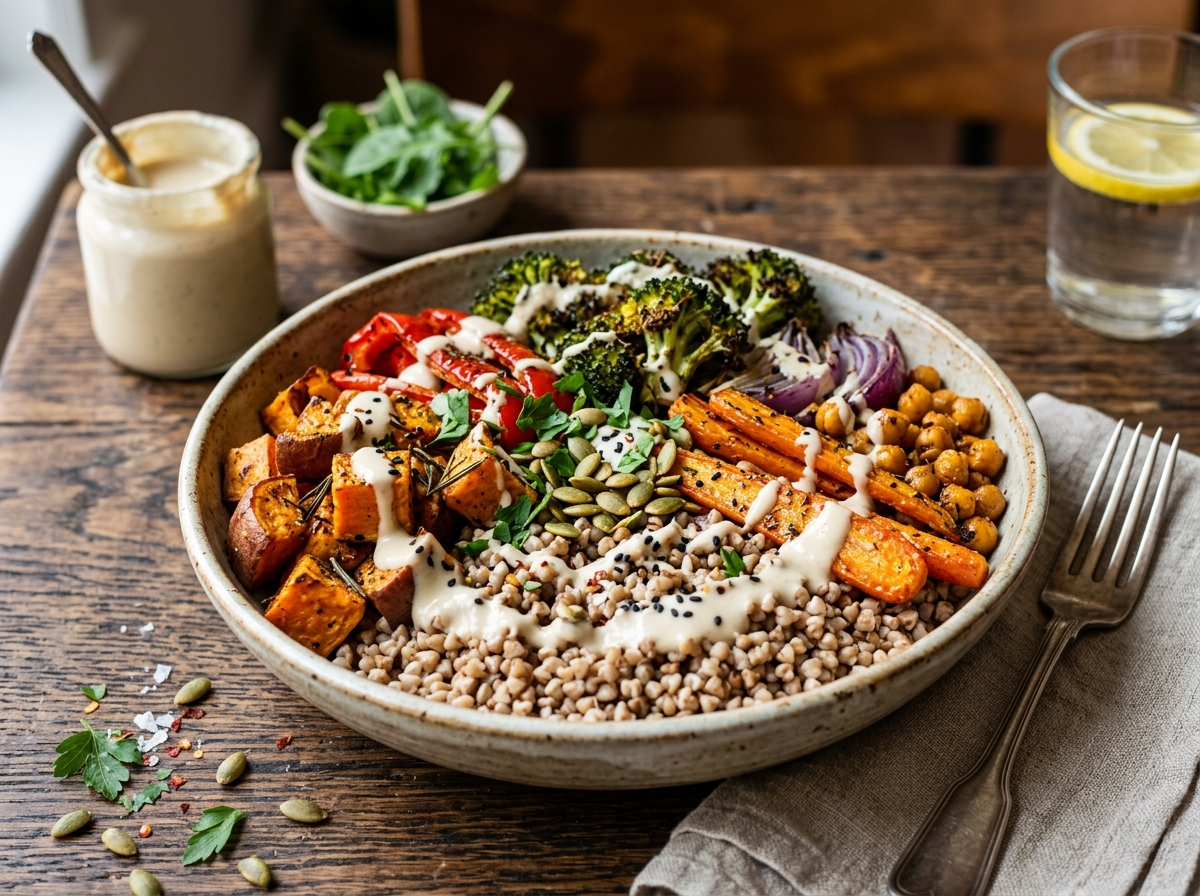
Buckwheat and roasted veggie power bowls are warm grain bowls built on toasted buckwheat groats, roasted sweet potato and chickpeas, and broccoli, tied together with a lemon-tahini dressing. The buckwheat cooks in 15 minutes and turns nutty and chewy, not mushy, if you don’t overcook it.
I started making this bowl on Sundays when I wanted something I could eat for lunch four days straight without getting bored. The roasted vegetables hold up in the fridge, the buckwheat doesn’t turn gummy, and the dressing keeps everything from tasting dry by day three.
One thing that trips people up: buckwheat groats look like brown rice but cook fast. Leave them on the stove too long and they turn to mush. Pull them off the heat right at 12 to 15 minutes, once the liquid is absorbed and the grains are tender but still hold their shape.
This bowl is naturally gluten-free since buckwheat isn’t related to wheat despite the name, and it’s vegan as written.
Why You’ll Love This Recipe
- Ready in 45 minutes with mostly hands-off roasting time
- Naturally gluten-free and vegan without swapping a thing
- Holds up well in the fridge for meal prep
- Nutty buckwheat and creamy tahini balance every roasted bite
Ingredient Notes
- Buckwheat groats: Use raw, hulled groats, not roasted kasha, unless you want a deeper flavor and shorter simmer time of 10 to 12 minutes.
- Sweet potato: Cut into even 2 cm cubes so it roasts at the same rate as the broccoli and chickpeas.
- Chickpeas: Drain and rinse well, then pat dry before tossing with oil so they crisp instead of steam in the oven.
- Tahini: Look for a runny, pourable tahini. Thick jars need extra water to loosen into a dressing.
- Broccoli: Cut florets to a similar size as the sweet potato cubes so nothing burns before the rest is tender.
- Maple syrup: Balances the bitterness of the tahini and lemon. Honey works if you’re not keeping the dressing vegan.
Buckwheat Power Bowl: Roasted Veggies and Tahini Sauce
Ingredients
Method
- Heat oven to 200 C / 400 F and line a sheet pan with parchment paper.
- Toss sweet potato, broccoli, chickpeas and red onion with olive oil, salt and pepper.
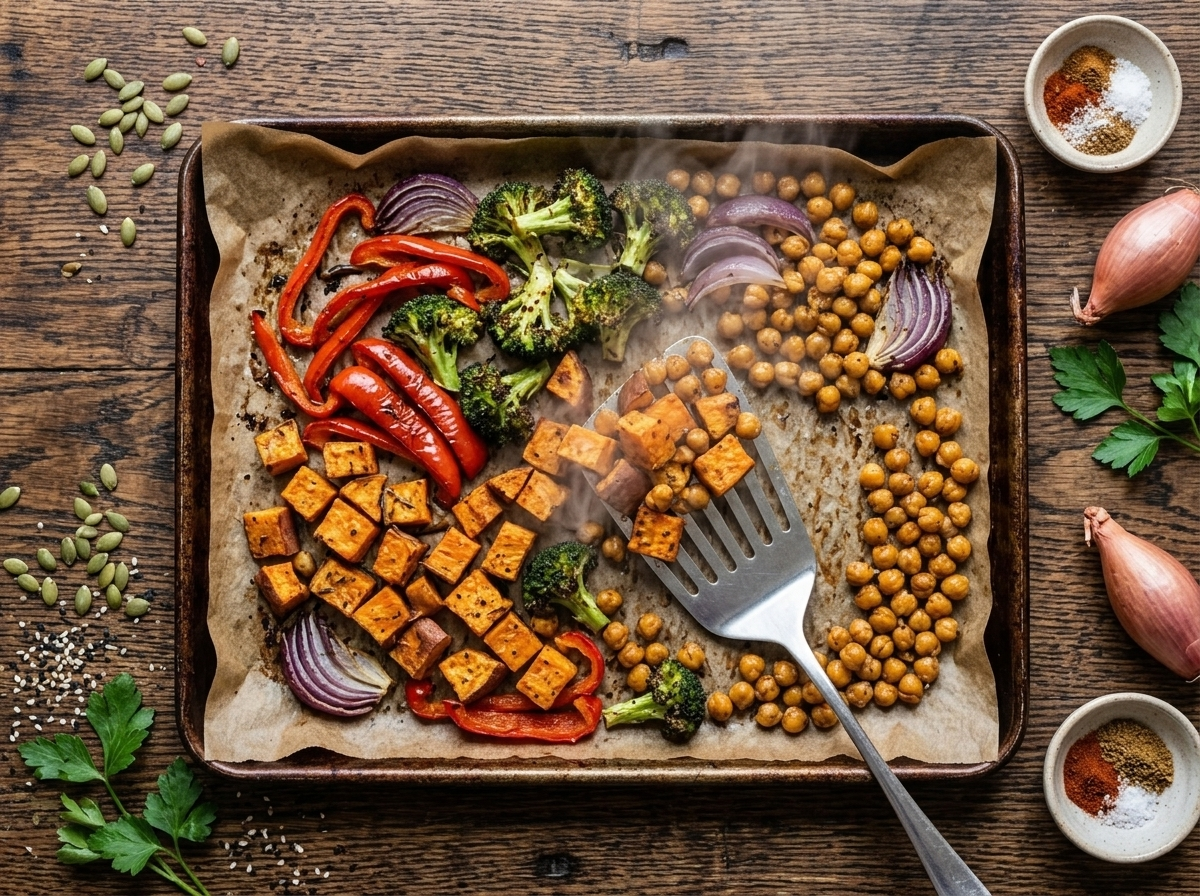
- Spread in a single layer and roast for 25 to 30 minutes, flipping once, until sweet potato is fork-tender and edges are browned.
- Rinse buckwheat groats under cold running water until the water runs clear.
- Combine buckwheat with water or broth in a saucepan and bring to a boil.
- Reduce heat, cover, and simmer for 12 to 15 minutes until liquid is absorbed and grains are tender but still hold their shape. Fluff with a fork.
- Whisk tahini, lemon juice, garlic and maple syrup with 2 tbsp water until smooth.
- Add more water, 1 tbsp at a time, until the dressing is pourable. Season with a pinch of salt.
- Divide buckwheat among 4 bowls.
- Top with roasted sweet potato, broccoli and chickpeas.
- Drizzle with tahini dressing and scatter pumpkin seeds over the top. Serve warm.
Notes
- Rinse buckwheat groats well before cooking to prevent a gummy texture.
- Cut vegetables into similar sizes so they roast evenly in the same time.
- Keep dressing separate from bowls until ready to eat for meal prep.
- Toast raw groats in a dry skillet first for a nuttier, deeper flavor.
Tips for Success
- Rinse buckwheat groats before cooking to wash off the surface starch that makes them clump.
- Cut sweet potato into even 2 cm cubes so every piece roasts at the same rate.
- Roast vegetables in a single layer with space between pieces or they’ll steam instead of browning.
- Thin the lemon tahini dressing with water one tablespoon at a time until it pours off a spoon easily.
- Toast raw buckwheat groats in a dry pan for 2 minutes before boiling for a deeper, nuttier flavor.
Variations
- Swap sweet potato for butternut squash or roasted beets when sweet potato isn’t in season or on hand.
- Add a fried or soft-boiled egg on top for extra protein if you’re not keeping the bowl vegan.
- Use quinoa instead of buckwheat groats for a lighter texture, cooking it the same way in about 15 minutes.
Storage and Reheating
Store the buckwheat, roasted vegetables and dressing in separate containers in the fridge for up to 4 days. Keeping the dressing apart stops the bowl from getting soggy.
Reheat the buckwheat and vegetables together in a skillet over medium heat for 3 to 4 minutes, or microwave for 90 seconds to 2 minutes until warmed through. Add the tahini dressing after reheating so it stays glossy instead of clumping.
This bowl doesn’t freeze well. The roasted sweet potato turns watery and grainy once thawed, so I’d rather make a fresh batch of vegetables and keep the cooked buckwheat frozen on its own for up to 2 months.
Serving Suggestions
Serve the power bowl warm on its own for a filling lunch, or add a scoop of hummus on the side for extra protein.
For dinner, I’ll add a fried egg or a few slices of pan-seared tofu to round it out. A handful of baby spinach or arugula tossed in at the end adds a fresh, slightly bitter contrast to the roasted veggies.
Leftover dressing works well on roasted cauliflower or a simple green salad the next day, so it’s worth making a little extra.
FAQ
Why did my buckwheat turn mushy in this power bowl?
Buckwheat groats cook fast and go from tender to mushy in just a couple of minutes once the water’s absorbed. Check them at the 12-minute mark and pull the pan off the heat as soon as the liquid’s gone. Rinsing the groats first also helps keep the texture separate instead of sticky.
Can I use quinoa instead of buckwheat in this bowl?
Yes, quinoa works as a swap and cooks in about the same 15 minutes with a 2:1 water ratio. It’s lighter and fluffier than buckwheat, which has a chewier, nuttier bite, so the bowl will feel a little less hearty. Rinse quinoa well first to remove its bitter coating.
How long does this buckwheat power bowl keep in the fridge?
The roasted vegetables and cooked buckwheat keep well for up to 4 days when stored in separate airtight containers. Keep the tahini dressing in its own jar and add it right before eating so the bowl doesn’t turn soggy. It doesn’t freeze well because the sweet potato gets watery once thawed.
What goes well with a buckwheat and roasted veggie power bowl?
A fried egg, pan-seared tofu, or a handful of baby spinach all work well stirred into the bowl right before serving. A side of hummus or a simple cucumber salad also rounds out the meal without much extra effort. Leftover tahini dressing is good over roasted cauliflower too.
Is this buckwheat power bowl gluten free?
Yes, buckwheat is naturally gluten-free despite its name, since it’s a seed related to rhubarb, not a wheat relative. Just check that your buckwheat groats are labeled gluten-free if you need to avoid cross-contamination, since some are processed in facilities that also handle wheat.
What’s the difference between buckwheat groats and kasha in this recipe?
Kasha is buckwheat groats that have been toasted before packaging, giving a deeper, roastier flavor than raw groats. This recipe works with either, though kasha needs slightly less simmer time, closer to 10 to 12 minutes, since it’s already partially cooked through the toasting process.