Jump to Recipe
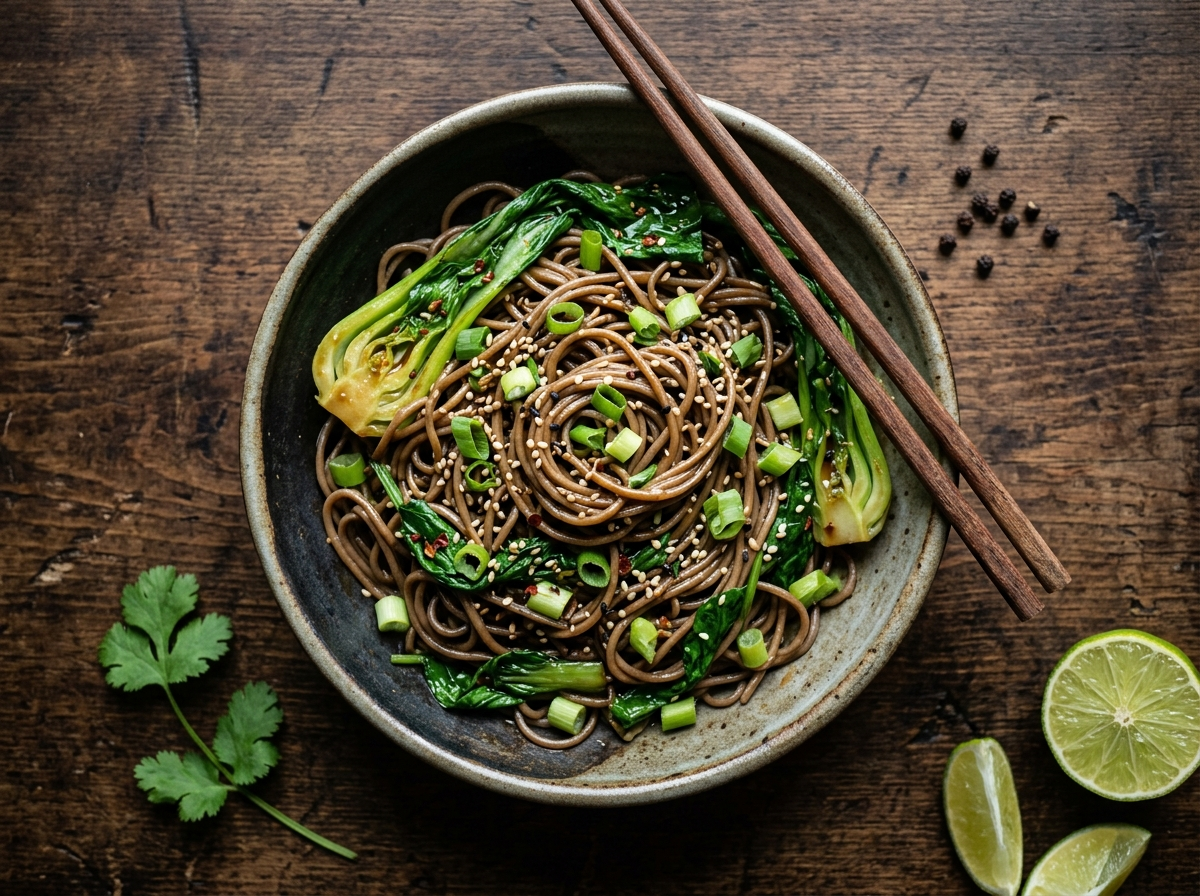
Sesame Ginger Soba with Greens is a noodle bowl built around one sauce: soy sauce, rice vinegar, toasted sesame oil, ginger, and a touch of maple syrup, whisked together while the noodles boil.
I make this on nights when the fridge has half a bag of spinach and not much else. Bok choy stems go in first for crunch, the leaves wilt into tender sautéed greens in under a minute, and the noodles get tossed right into the same pan.
The one thing that ruins this dish: skipping the cold-water rinse on the soba. Skip it and the starch turns the noodles into a sticky clump instead of separate strands.
This isn’t fancy. It’s a 30-minute bowl with real vegetables and a sauce you’ll want to make again for other things.
Why You’ll Love This Recipe
- Sauce and noodles come together in the same 30 minutes
- Uses one pot and one skillet, minimal cleanup
- Vegan as written, easy to add tofu or egg
- Tastes good cold, so leftovers work for lunch
Ingredient Notes
- Soba noodles: Most soba blends buckwheat with wheat flour, so check the label for 100% buckwheat if you need this gluten free.
- Baby bok choy: Use both the crunchy stems and the leaves, or swap in 4 cups baby spinach if bok choy isn’t around.
- Fresh ginger: Grate it with a microplane so it melts into the sauce instead of leaving stringy bits behind.
- Toasted sesame oil: Use the dark toasted kind, not the light clear version, since the toasted flavor is what carries the dish.
- Maple syrup: Keeps the recipe vegan, but honey works the same way if that’s not a concern for you.
Sesame Ginger Soba with Greens for Busy Weeknights
Ingredients
Method
- Whisk soy sauce, rice vinegar, sesame oil, maple syrup, ginger, garlic, and chili flakes in a small bowl until smooth. Set aside.
- Bring a large pot of water to a boil and cook the soba for 4 to 5 minutes until it still has a slight bite.
- Drain the noodles and rinse immediately under cold water to wash off the starch and stop them from turning gummy.
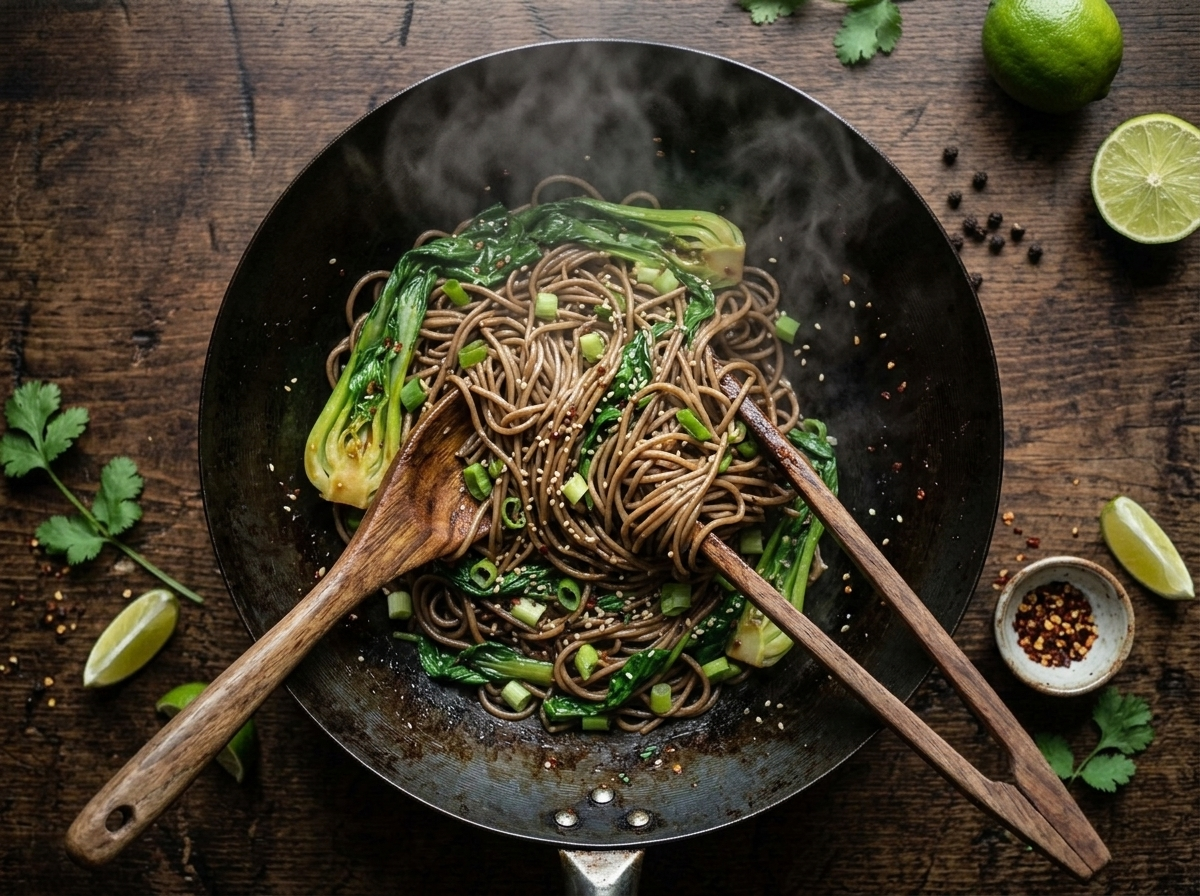
- Heat neutral oil in a wok or large skillet over medium-high heat. Add the bok choy stems and cook 2 minutes until crisp-tender.
- Add the bok choy leaves and spinach, cooking 1 to 2 minutes until just wilted.
- Add the drained noodles and the sauce to the skillet, tossing for 1 to 2 minutes until everything is coated and warmed through.
- Divide among bowls and top with scallions, toasted sesame seeds, and extra chili flakes if you want more heat.
Notes
- Reserve a splash of the noodle cooking water in case the sauce needs loosening in the skillet.
- Don’t overcook the soba, 4 to 5 minutes is usually enough for noodles with real bite.
- Slice bok choy stems and leaves separately since they cook at different speeds.
- Double the sauce if you like your noodles well coated rather than lightly dressed.
Tips for Success
- Rinse cooked soba under cold water right away to strip surface starch and stop it from turning gummy.
- Grate ginger with a microplane so it disappears into the sauce instead of leaving fibrous strings.
- Add bok choy stems before the leaves since the stems need an extra minute or two to soften.
- Taste the sauce before tossing and add a splash more rice vinegar if it tastes flat.
- Toast sesame seeds in a dry pan for 2 minutes until golden for a stronger sesame smell.
Variations
- Swap in shredded napa cabbage or kale for the spinach when bok choy isn’t in season at the store.
- Add pan-seared tofu cubes or a soft-boiled egg for extra protein without changing the sauce at all.
- Stir a spoonful of peanut butter or tahini into the sauce for a thicker, nuttier sesame ginger flavor.
Storage and Reheating
Sesame Ginger Soba with Greens keeps in an airtight container in the fridge for 3 to 4 days. The noodles firm up as they chill, which is normal.
To reheat, loosen with a splash of water or extra soy sauce and warm in a skillet over medium heat for 2 to 3 minutes, stirring often.
You can also eat it cold straight from the fridge. The sauce clings differently cold, more like a dressing, and it still tastes good with a fresh squeeze of lime.
Serving Suggestions
Sesame Ginger Soba with Greens works as a full meal on its own, but sesame soy glazed tofu steaks or a soft-boiled egg on top turns it into more of a dinner-table dish.
A side of light Asian slaw with sesame dressing cuts through the richness of the sesame oil. Steamed edamame with flaky salt is another easy add if you want more protein without more cooking.
For drinks, a light miso soup on the side keeps the whole meal in the same flavor lane without competing with the ginger.
FAQ
Why is my sesame ginger soba sticking together in clumps?
This usually means the noodles weren’t rinsed after boiling. Soba releases a lot of starch as it cooks, and if you skip the cold-water rinse right after draining, that starch glues the strands together as they sit. Rinse under cold water and toss with a little sesame oil if you’re not saucing it right away.
Can I use rice noodles instead of soba in this recipe?
Yes, thin rice noodles or rice vermicelli work as a gluten-free swap for the soba. Soak or boil them according to the package, since cook times run shorter than soba, then rinse the same way to stop them from clumping before tossing with the sauce.
Can I make sesame ginger soba ahead and eat it cold the next day?
Yes, it holds up well cold for up to 3 to 4 days in the fridge in an airtight container. The sauce soaks into the noodles as it sits, so the flavor actually gets stronger overnight, though you may want a splash more rice vinegar or soy sauce before serving.
What protein goes well with sesame ginger soba and greens?
Pan-seared tofu cubes, a soft-boiled egg, or shredded rotisserie chicken all work without changing the sauce. Edamame stirred in cold also adds protein with zero extra cooking, which is handy on a busy night when the noodles and greens are already enough work.
Is sesame ginger soba with greens gluten free?
Not automatically. Most soba noodles are a blend of buckwheat and wheat flour, so they contain gluten unless the package specifically says 100% buckwheat. Check the label, and swap in rice noodles or gluten-free soba if you need this dish fully gluten free.
What’s the difference between using bok choy versus just spinach for the greens?
Bok choy adds crunch from the stems along with soft wilted leaves, giving the bowl two textures instead of one. Spinach wilts faster and softer all the way through, with a milder taste. Either works, and using both together gives the widest range of texture in one bowl.