Jump to Recipe
Ginger miso glazed eggplant is roasted Japanese eggplant halves brushed with a sticky miso glaze, then broiled until the edges char and blister. The flesh turns custard-soft underneath a glaze that’s salty, a little sweet, and sharp with fresh ginger.
I make this when eggplant shows up cheap at the market and I want something that doesn’t feel like a side dish afterthought. It’s the kind of vegetable dish, right up there with these grilled eggplant roll-ups, that convinces people who claim they don’t like eggplant.
The glaze is just miso, mirin, soy sauce, a little sugar, and grated ginger whisked together. No cooking required for the glaze itself. All the work happens in the oven, first roasting, then broiling to get those caramelized spots.
Watch the broiler closely near the end. Mine has gone from caramelized to bitter in under a minute when I stepped away to check my phone.
Why You’ll Love This Recipe
- Ready in about 30 minutes start to finish
- Custard-soft eggplant under a sticky charred glaze
- Just one bowl for the glaze, no extra pans
- Naturally vegan and easy to make gluten-free
Ingredient Notes
- Japanese eggplant: Japanese eggplant works best since it cooks fast and has fewer seeds. Globe eggplant works too, just add a few extra minutes to the roast.
- white miso: White miso (shiro miso) is milder and sweeter than red miso. Red miso works but tastes saltier, so use a bit less.
- mirin: Mirin adds sweetness and shine to the glaze. Swap in 1 tbsp rice vinegar mixed with 1 tsp sugar if you don’t have any on hand.
- fresh ginger: Grate the ginger instead of mincing it so it blends smoothly into the glaze without stringy bits.
- soy sauce: Soy sauce brings salt and depth to the glaze. Use tamari instead if you need this gluten-free.
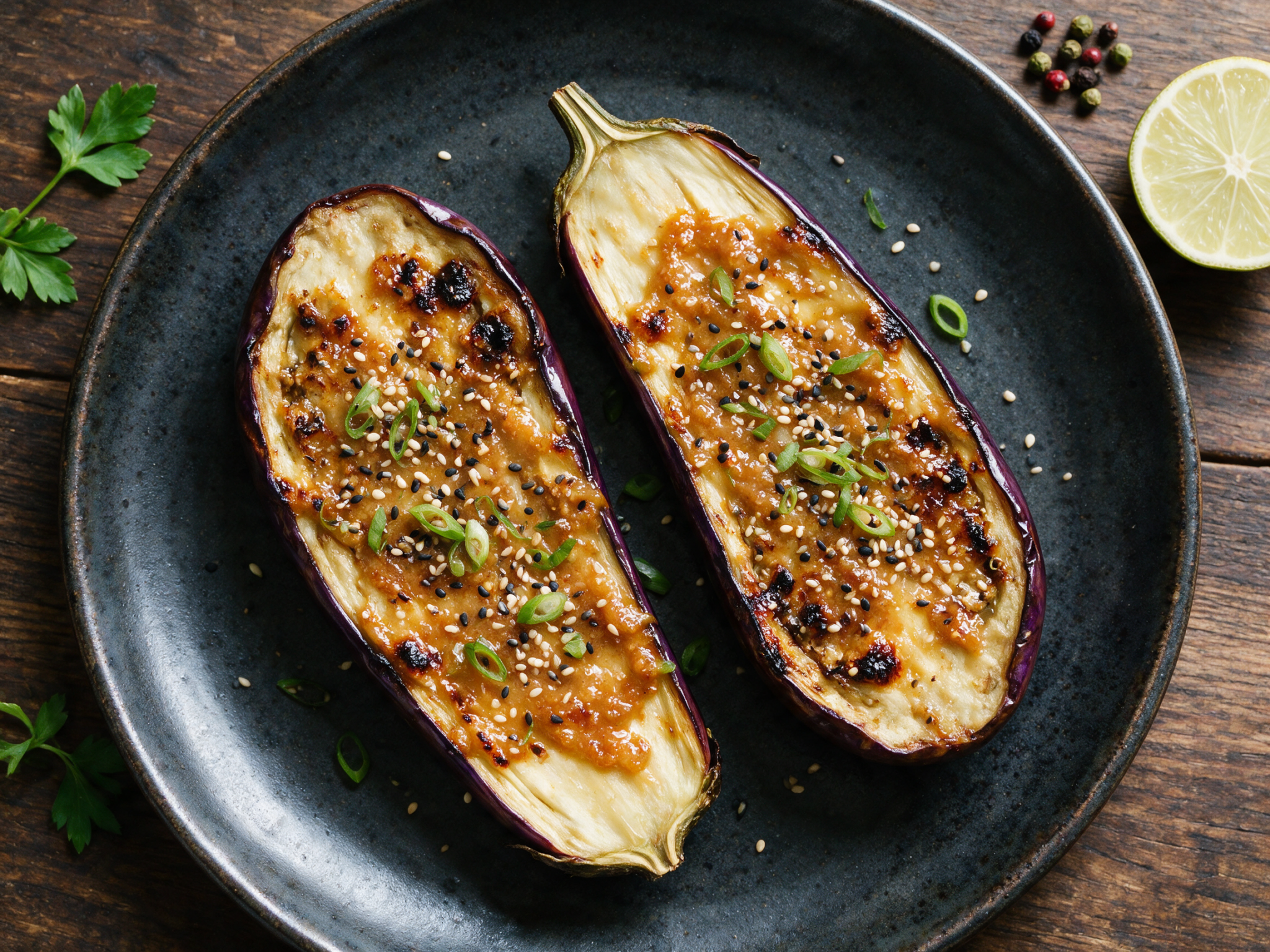
Broiled Ginger Miso Glazed Eggplant with Scallions
Ingredients
Method
- Heat the oven to 220C / 425F and line a sheet pan (33 x 46 cm / 13 x 18 inch) with parchment.
- Halve the eggplants lengthwise. Score the cut side in a crosshatch pattern, cutting about halfway into the flesh without piercing the skin.
- Brush the cut sides with oil and season with salt. Place the halves cut side down on the sheet pan.
- Roast for 15 to 18 minutes, until the flesh is tender and a knife slides in with no resistance.
- While the eggplant roasts, whisk the miso, mirin, soy sauce, brown sugar, ginger, garlic, sesame oil, and water in a small bowl until smooth.
- Flip the eggplant halves cut side up. Brush generously with about half the glaze.
- Switch the oven to broil on high. Broil for 3 to 4 minutes, watching closely, until the glaze bubbles and browns in spots and the edges char slightly.
- Remove from the oven and brush with the remaining glaze while still warm.
- Scatter with sesame seeds and sliced scallions. Serve warm over rice.
Notes
- Score eggplant flesh deeply so the glaze reaches the center.
- Use a metal spatula, the glaze sticks once caramelized.
- Broil on the middle rack, not the top, to avoid scorching.
- Double the glaze if serving over rice for extra sauce.
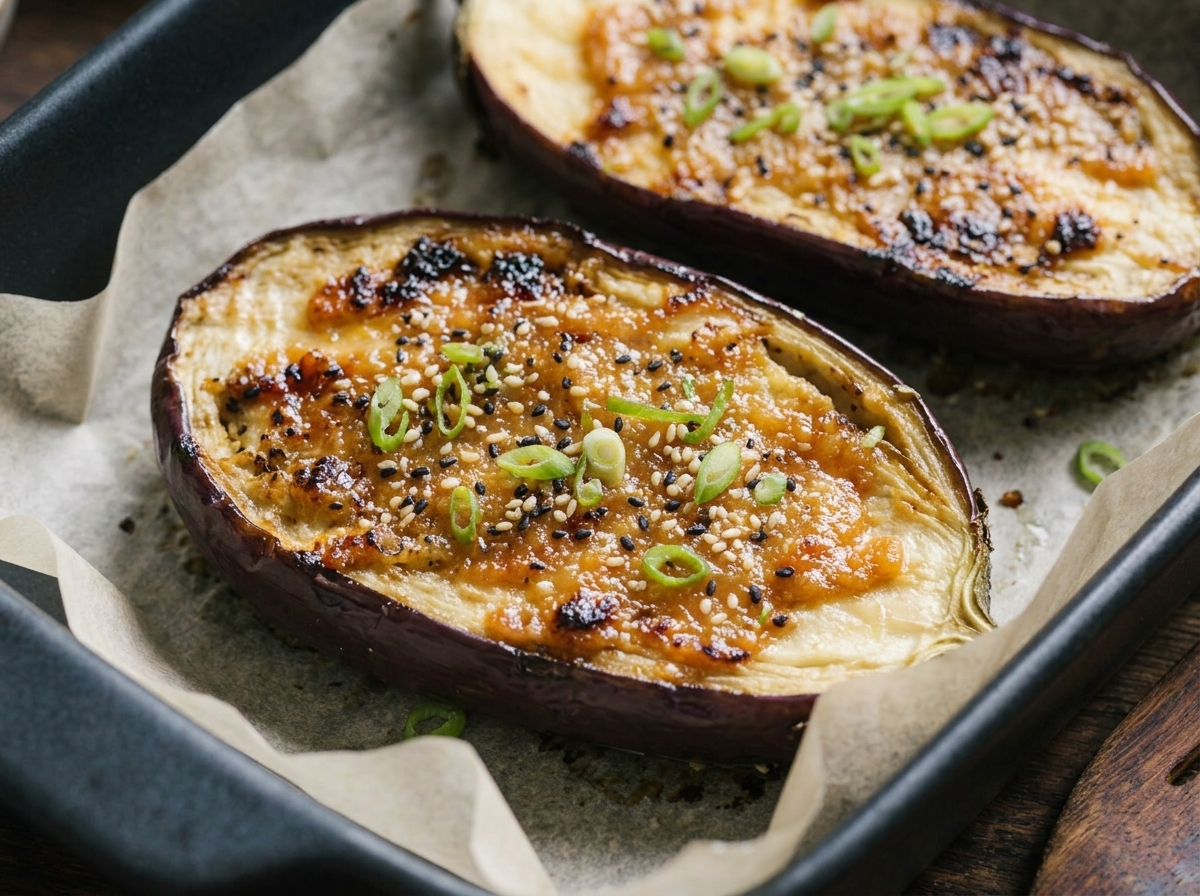
Tips for Success
- Score the eggplant flesh in a crosshatch so the glaze soaks in and the middle cooks through faster.
- Roast cut side down first so the flesh steams against the pan and turns soft before you add the glaze.
- Brush on half the glaze before broiling and save the rest for after, so the top stays glossy instead of burnt.
- Watch the broiler through the oven door instead of walking away, since it goes from charred to bitter fast.
- Use a metal spatula to lift the eggplant, since the glaze can stick to the pan once it caramelizes.
Variations
- Add a spoonful of gochujang to the glaze for a spicy version with a deeper red color.
- Top with crumbled tofu or a soft-boiled egg to turn this into a light main course.
- Swap the eggplant for zucchini halves and cut the roast time by about 5 minutes.
Storage and Reheating
Ginger miso glazed eggplant keeps in the fridge for 3 to 4 days in an airtight container. The glaze firms up as it cools, so expect a stickier texture straight from the fridge.
Reheat in the oven at 190C / 375F for 8 to 10 minutes, until warmed through and the glaze loosens up again. A quick 60-second zap in the microwave works too if you’re not fussy about the caramelized edges staying crisp.
I don’t recommend freezing this. Eggplant turns watery and mushy once thawed, and the glaze separates.
Serving Suggestions
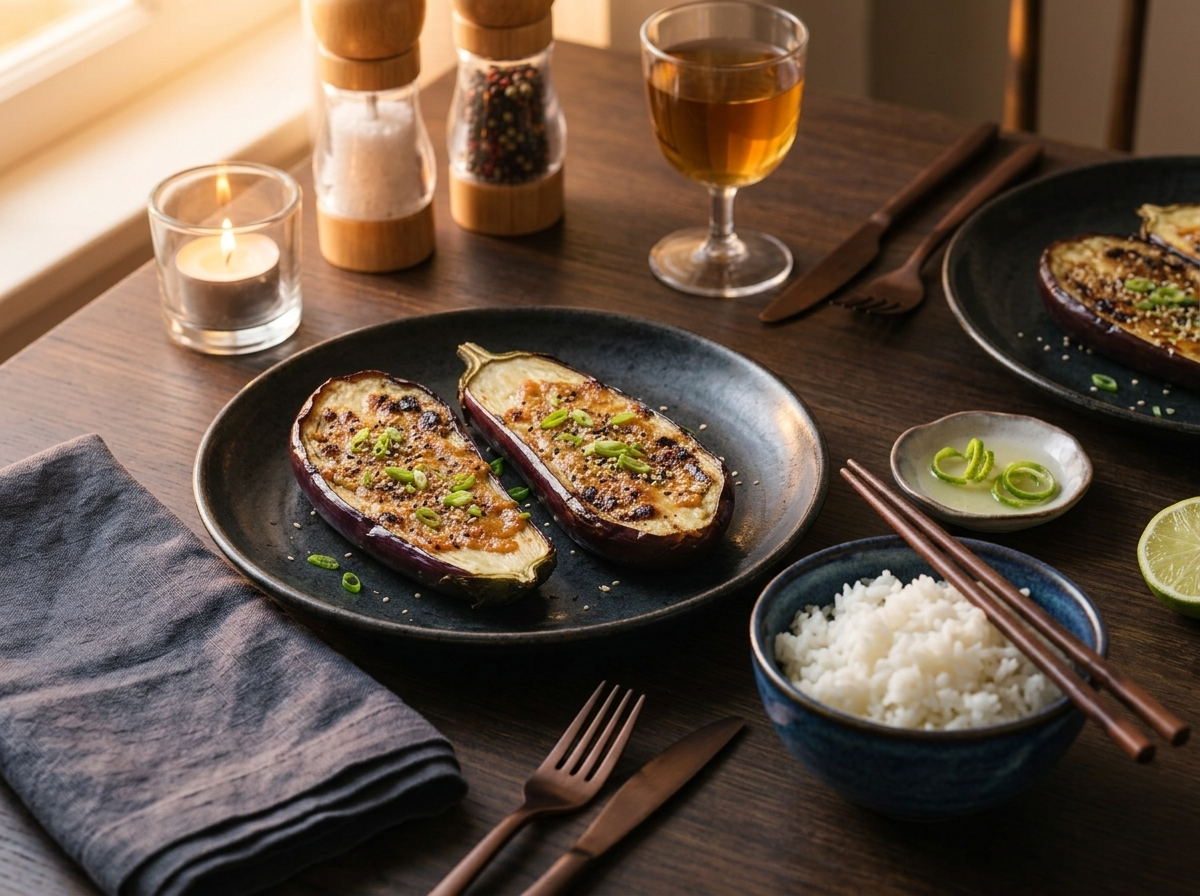
Ginger miso glazed eggplant works well spooned over a buckwheat power bowl or a bowl of steamed white or brown rice, with the glaze soaking into the grains underneath.
Pair it with a bowl of sesame ginger soba with greens or steamed edamame for a light, mostly plant-based dinner. It also sits well next to grilled salmon or teriyaki chicken if you want more protein on the plate.
For a bigger spread, serve alongside miso soup and pickled vegetables for a Japanese-inspired dinner at home.
FAQ
Why is my ginger miso glaze burning before the eggplant caramelizes?
This usually happens because the broiler runs hotter than expected or the eggplant sits too close to the heat. Move the rack down one level and check every 60 to 90 seconds once broiling starts. Sugar in the glaze burns fast, so pull the pan the moment you see deep brown spots, not black ones.
Can I use red miso instead of white miso in this recipe?
Yes, but red miso is saltier and more intense than white miso. Cut the amount to about 2 tbsp instead of 3, and taste the glaze before brushing it on. White miso stays milder and lets the ginger come through more clearly.
How do I store and reheat leftover miso glazed eggplant?
Store it in an airtight container in the fridge for 3 to 4 days. Reheat in the oven at 190C / 375F for 8 to 10 minutes until warmed through, or microwave for about a minute if you’re short on time. Freezing isn’t a good idea since eggplant turns watery once thawed.
What goes well with ginger miso glazed eggplant besides rice?
Steamed edamame, a cucumber salad, or grilled salmon all work well alongside it. The glaze is salty and a little sweet, so something crisp and cold on the side balances it out. It also holds up next to teriyaki chicken for a bigger dinner.
Is ginger miso glazed eggplant vegan and gluten free?
It’s vegan as written, since the glaze is just miso, mirin, soy sauce, ginger, and sugar. For gluten-free, swap the soy sauce for tamari and check your miso brand, since some contain barley. Otherwise there’s no dairy, egg, or meat in this dish.
What’s the difference between this and traditional nasu dengaku?
Nasu dengaku is the classic Japanese version, usually made with a thicker, sweeter dengaku miso paste and often served on skewers. This recipe uses a thinner, more ginger-forward glaze and skips the skewers, but the roast-then-broil method is the same one used for generations.