Jump to Recipe
Roasted turmeric butternut and sage soup is a silky, dairy-free soup made from 1 kg of oven-browned squash, simmered with turmeric, fresh ginger, garlic and sage, then blended with coconut milk. It takes about 65 minutes and makes 6 servings.
I’ll be honest, I used to boil my squash and wonder why the soup tasted flat. Roasting fixes that. The edges caramelize, the sweetness deepens, and the turmeric has something to stand up to.
Watch the pan. Spread the cubes in a single layer with a little space between them. Piled up, they steam and you lose the browning.
The soup is earthy. Gently sweet. A little peppery from the ginger. It’s a Sunday-batch soup that sits right in your rotation, and it reheats and freezes well.
Why You’ll Love This Recipe
- Roasting the squash builds deep flavor without extra effort
- Vegan and dairy-free, yet creamy from coconut milk
- Makes 6 servings and freezes well for busy weeks
- One butternut squash and pantry staples keep the cost low
Ingredient Notes
- butternut squash: Weigh it after peeling and seeding, you want about 1 kg. Pre-cut cubes from the produce aisle work fine and save 10 minutes.
- ground turmeric: Measure 2 tsp and no more, since extra turns the soup bitter. Fresh turmeric works too, use 1 tbsp grated. It stains, so keep it off light countertops.
- fresh sage: Fresh gives the best flavor and is the only option for the crispy topping. For the soup itself, 1 tsp rubbed dried sage can replace the 12 chopped leaves.
- full-fat coconut milk: Shake the can before opening. If you don’t need it dairy-free, 120 ml / 1/2 cup heavy cream gives a similar richness.
- low-sodium vegetable broth: Low-sodium lets you control the salt at the end. Check the label for gluten if that matters in your house.

Roasted Turmeric Butternut and Sage Soup with Coconut Milk
Ingredients
Method
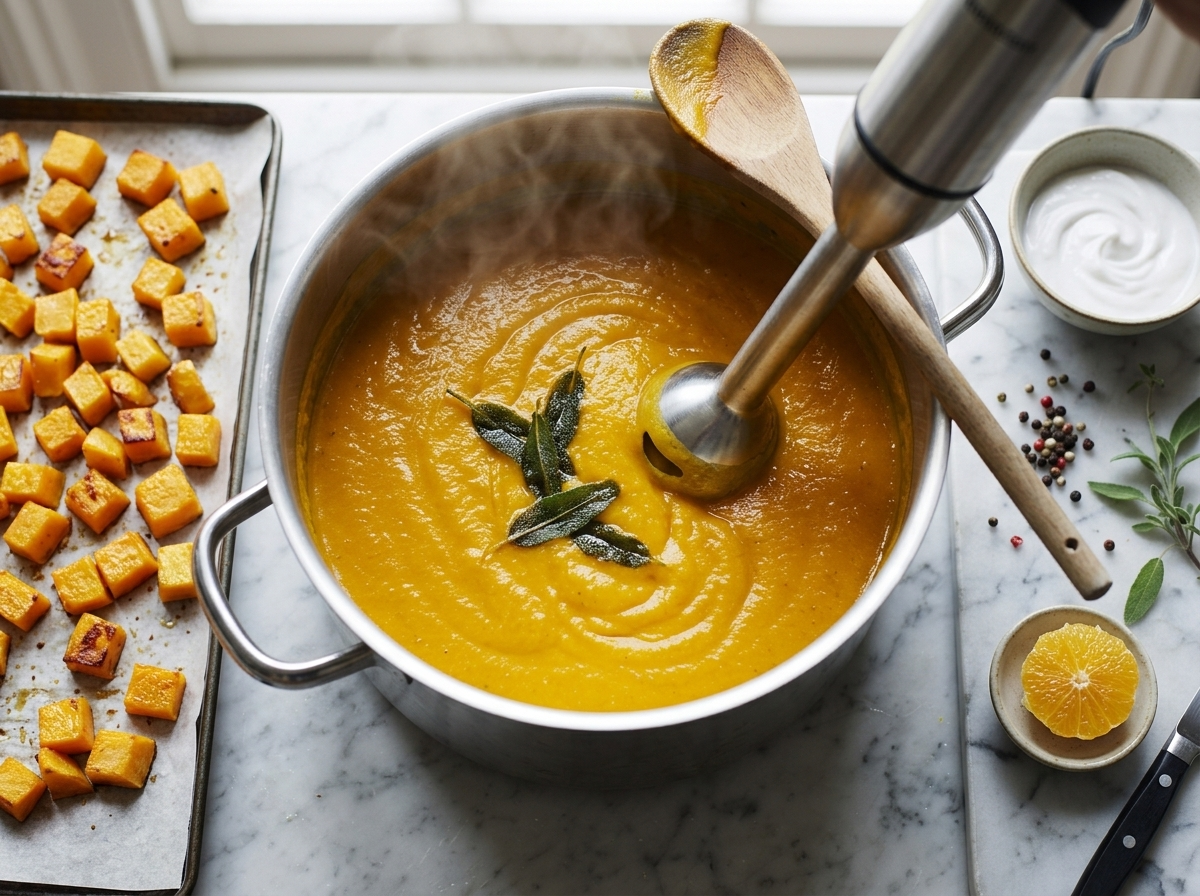
- Heat the oven to 220 C / 425 F. Toss the squash cubes and onion wedges on a 33 x 46 cm / 13 x 18-inch sheet pan with 3 tbsp olive oil, 1/2 tsp of the salt and the black pepper. Spread everything in a single layer with space between the pieces so it browns instead of steams.
- Roast for 35 minutes, flipping the pieces once at the 20-minute mark, until the edges are browned and a knife slides into the squash with no resistance.
- Heat the remaining 1 tbsp olive oil in a 5-quart / 4.7 L pot over medium heat. Add the garlic, ginger, 12 chopped sage leaves and turmeric. Stir for 30 to 45 seconds until fragrant.
- Add the roasted squash and onion, the broth and the remaining 1/2 tsp salt. Scrape any browned bits from the sheet pan into the pot with a splash of broth. Bring to a boil, then reduce the heat and simmer uncovered for 10 minutes.
- While the soup simmers, heat 1 tbsp olive oil in a 20 cm / 8-inch skillet over medium heat. Fry the 8 whole sage leaves for 30 to 45 seconds until crisp, then lift them onto a paper towel.
- Stir the coconut milk and lemon juice into the pot. Blend with an immersion blender for 1 to 2 minutes until completely smooth. For a countertop blender, work in batches, fill it no more than halfway and vent the lid. Thin with hot broth or water if needed, then taste and add salt.
- Ladle into bowls and top with the crispy sage and a crack of black pepper.
Notes
- Roast the squash in one layer so the cubes brown instead of steam.
- Cook the turmeric in oil for under a minute before adding the broth.
- Blend hot soup in batches, filling a countertop blender no more than halfway.
- Taste and adjust the salt and lemon juice after blending, not before.
Tips for Success
- Cut the squash into even 2.5 cm / 1-inch cubes so everything browns and softens at the same pace.
- Flip the cubes once at the 20-minute mark and roast until the edges are browned and a knife slides in without resistance.
- Fry the sage in oil for 30 to 45 seconds only, then lift it out the moment the leaves turn crisp and darker green.
- Thin the blended soup with hot broth or water, 60 ml at a time, because it thickens as it cools.
- Season with salt and lemon juice at the end, tasting after each addition, since roasted squash varies in sweetness.
Variations
- Stir 100 g rinsed red lentils into the pot with the broth, add 250 ml extra broth, and simmer 15 minutes for more protein.
- Swap the coconut milk for 120 ml heavy cream or plain Greek yogurt if you don’t need it dairy-free.
- Add 1/2 tsp smoked paprika with the turmeric and finish with chili flakes for a smoky, gently spicy bowl.
Storage and Reheating
Roasted turmeric butternut and sage soup keeps in an airtight container in the fridge for 4 days. Cool it for about 30 minutes first, then refrigerate within 2 hours of cooking.
Reheat on the stovetop over medium-low heat for 8 to 10 minutes, stirring often, until steaming hot. Add a splash of broth or water if it has thickened. The microwave works too, in 90-second bursts with a stir in between.
For the freezer, portion the soup into containers with 2.5 cm / 1 inch of headspace and freeze up to 3 months. Thaw overnight in the fridge. Make the crispy sage fresh each time, because the leaves go soft within hours.
Serving Suggestions
Ladle the soup into warm bowls and top with the crispy sage, a crack of black pepper, and a small swirl of coconut milk if you have some open. Toasted pumpkin seeds add a little crunch.
Crusty sourdough is the simple match. A sharp cheddar grilled cheese cut into strips is better for dunking, and kids tend to go for it.
For a lighter meal, add a green salad with lemon and olive oil. The acid cuts through the sweetness of the squash.

FAQ
Why does my turmeric butternut soup taste bitter or chalky?
Turmeric tastes chalky when it goes into the soup raw, and bitter when there’s too much. Stir 2 tsp into hot oil with the garlic and ginger for 30 to 45 seconds before adding broth, and stick to that amount for 1 kg of squash. Taste after blending and add the lemon juice to brighten it.
How do I know when the squash is roasted enough for butternut soup?
The squash is ready after about 35 minutes at 220 C / 425 F, when the edges are browned and a knife slides into the center with no resistance. Pale or firm cubes need another 5 to 10 minutes. The browned edges carry most of the flavor, so don’t pull the pan early.
Can I use dried sage instead of fresh sage in turmeric butternut soup?
Yes, for the soup itself. Use 1 tsp rubbed dried sage in place of the 12 chopped leaves and add it with the turmeric. Dried sage is stronger, so don’t go past 1 tsp. The crispy topping needs fresh leaves, so skip it or use toasted pumpkin seeds for crunch instead.
Can I freeze turmeric butternut soup made with coconut milk?
Yes, it freezes well for up to 3 months in airtight containers with 2.5 cm / 1 inch of headspace. Thaw overnight in the fridge and reheat gently on the stove. The coconut milk can separate a little, so whisk it or give it a quick blitz. Freeze it without the crispy sage.
What goes well with turmeric butternut and sage soup?
Crusty sourdough and a sharp cheddar grilled cheese are the easiest matches, since toasted bread and salty cheese balance the soup’s sweetness. For something lighter, serve a green salad dressed with lemon and olive oil. Toasted pumpkin seeds or roasted chickpeas on top add crunch.
Is roasted turmeric butternut and sage soup gluten-free and vegan?
Yes, as written it’s vegan and dairy-free, since it uses olive oil, coconut milk and vegetable broth. It’s gluten-free too if your broth is labeled gluten-free, because some brands add wheat-based flavorings. The rest of the ingredients are naturally gluten-free. Check the broth label first.