Jump to Recipe
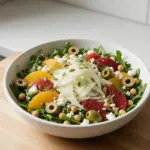
A fennel citrus and olive salad bowl is shaved raw fennel, orange and grapefruit segments, and briny green olives over peppery arugula, with chickpeas and feta to make it a full lunch. It takes 38 minutes, and most of that is slicing.
I avoided fennel for years. I thought it would taste like black licorice. Shaved thin and left in the dressing for 10 minutes, it turns crisp and mild, with a little sweetness.
Juicy citrus. Salty olives. Crunchy fennel. Peppery arugula. Every forkful lands a little differently, so the bowl doesn’t get boring halfway through.
Cut every bit of white pith off the grapefruit or the whole salad tastes bitter. That’s the one step worth slowing down for.
It works for meal prep too. Keep the dressed fennel base in the fridge and build make-ahead salad bowls through the week.
Why You’ll Love This Recipe
- Ready in 38 minutes, with only 3 minutes at the stove
- Chickpeas and feta make it filling enough for lunch
- The dressed fennel base keeps 2 days for easy meal prep
- Costs about 3 dollars a bowl from grocery store staples
Ingredient Notes
- fennel: Pick firm, white bulbs with no brown spots. The fronds are edible, so save them for garnish. Thinly sliced celery hearts plus a little dill can stand in if you can’t find fennel.
- oranges and grapefruit: Navel oranges are sweet and seedless, and ruby grapefruit adds the tart edge. Blood oranges or clementines work if you keep one tart fruit in the mix.
- Castelvetrano olives: They’re mild and buttery, which suits the citrus. Kalamata is stronger and saltier, so use about 80 g and skip extra salt.
- chickpeas: Rinse canned chickpeas well to cut the sodium. Cannellini beans work if that’s what’s in the pantry.
- feta: Block feta in brine crumbles better and tastes less dry than pre-crumbled. Goat cheese is a creamier swap.
- pepitas: Toasting takes 3 minutes and adds the crunch this bowl needs. Sunflower seeds are a fine substitute.
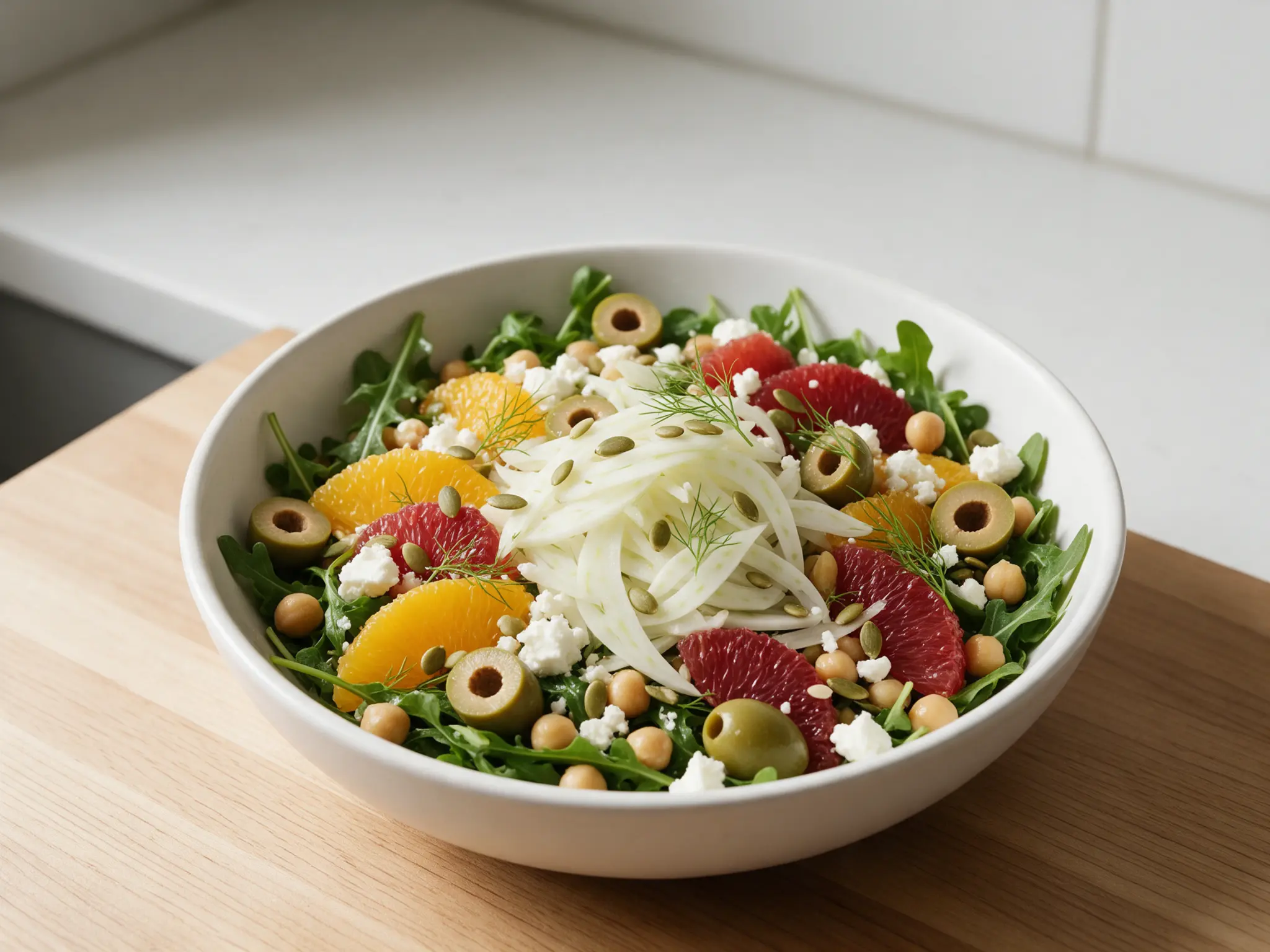
Fennel Citrus Salad Bowl with Olives and Chickpeas
Ingredients
Method
- Toast the pepitas in a dry 20 cm / 8-inch skillet over medium heat for 2 to 3 minutes, shaking the pan, until they puff up and start to pop. Tip them onto a plate to cool.
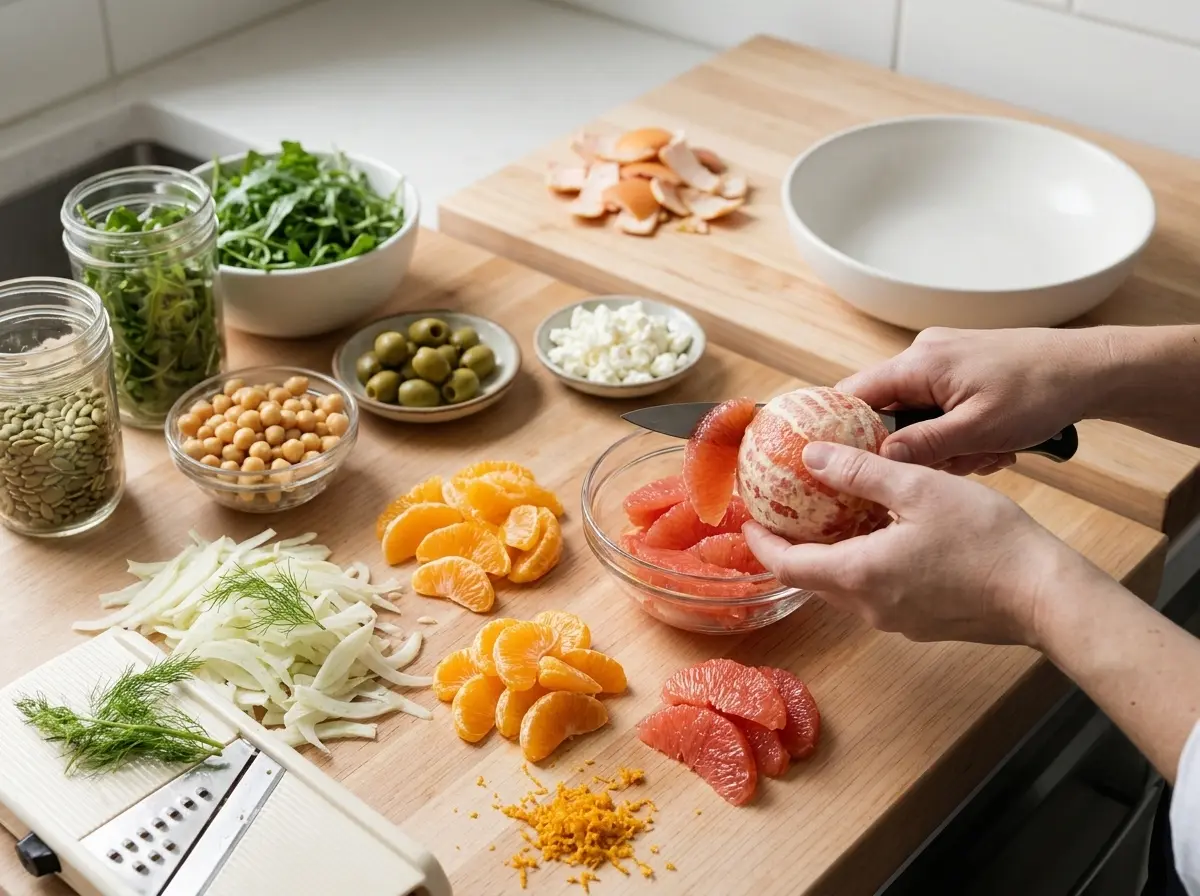
- Cut the top and bottom off the oranges and grapefruit. Slice away the peel and every bit of white pith, following the curve of the fruit. Hold each one over a 1-quart / 1 L bowl and cut between the membranes to release the segments. Squeeze the leftover membranes to collect 2 tbsp juice.
- Whisk the olive oil, vinegar, reserved citrus juice, Dijon, honey, salt, and pepper in the 3-quart / 2.8 L mixing bowl until smooth.
- Trim the fennel, save a handful of fronds, and halve each bulb. Cut out the core, then shave the bulbs into 2 mm slices with a mandoline or sharp knife. Add the fennel, onion, olives, and chickpeas to the dressing and toss. Let it sit for 10 minutes until the fennel softens slightly but still crunches.
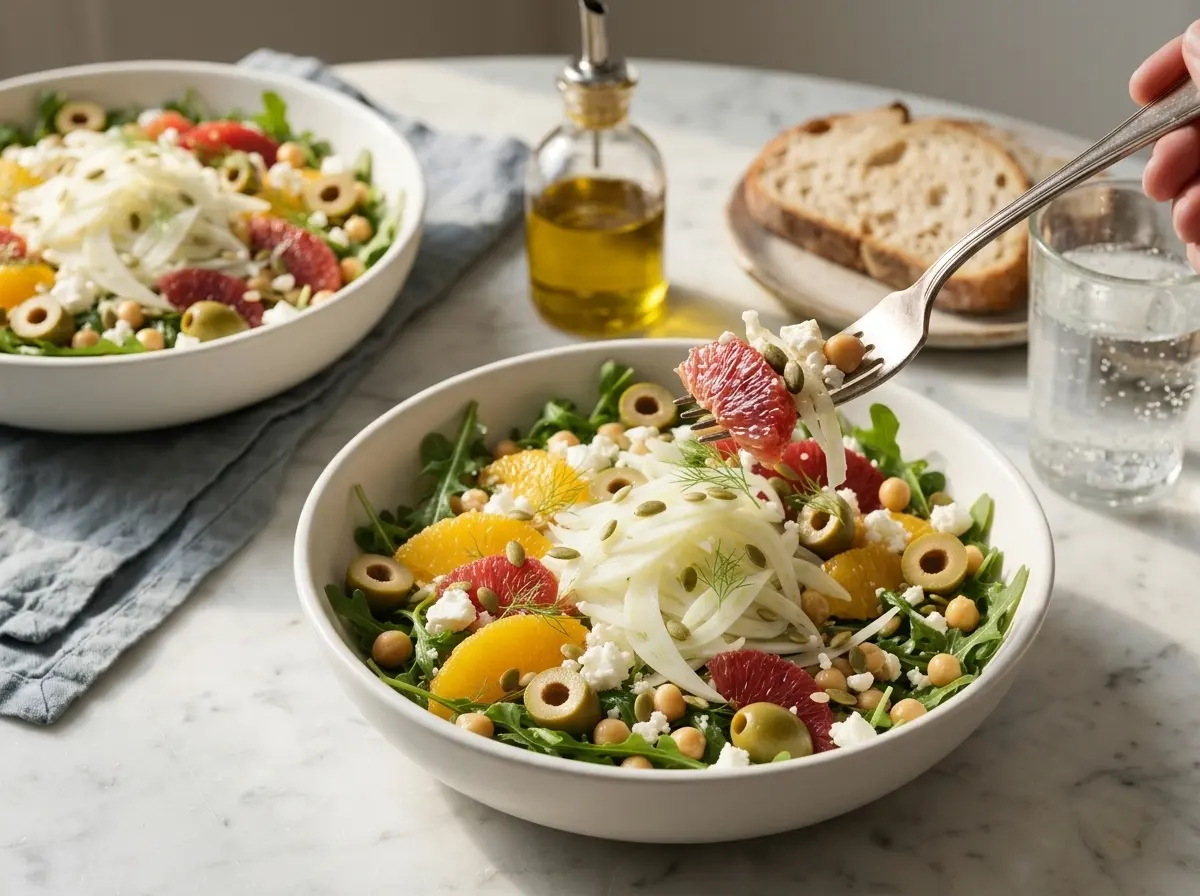
- Divide the arugula among 4 bowls. Spoon the fennel mixture on top, tuck in the citrus segments, and finish with the feta, pepitas, and fennel fronds. Serve within 20 minutes.
Notes
- Cut all white pith off the grapefruit and oranges, or the salad turns bitter.
- Let the dressed fennel and onion rest 10 minutes before assembling the bowls.
- Rinse canned chickpeas well to keep the sodium in check.
- Save the fennel fronds and scatter them over the bowls at the end.
Tips for Success
- Slice the fennel 2 mm thick with a mandoline or a sharp chef’s knife so it eats crisp and tender instead of stringy.
- Segment the citrus over a bowl to catch the juice, then squeeze the leftover membranes into the dressing for extra brightness.
- Buy pitted Castelvetrano olives to save time, and halve them so the briny flavor spreads through every forkful.
- Hold the arugula, feta, and pepitas until serving, and eat assembled bowls within 20 minutes so the greens stay springy.
- Taste the fennel after its 10-minute rest and add a small pinch of salt only if your olives were mild.
Variations
- Add 300 g of sliced grilled chicken or a drained can of oil-packed tuna to turn it into a heartier dinner bowl.
- Swap the oranges and grapefruit for blood oranges in winter, and use crumbled goat cheese in place of feta.
- Make it vegan by skipping the feta, using maple syrup instead of honey, and adding 1 diced avocado at serving.
Storage and Reheating
Fennel citrus and olive salad bowls are best built fresh and eaten cold, so there’s nothing to reheat. Assembled bowls are at their best within 20 minutes, before the arugula starts to wilt.
For meal prep, store the dressed fennel, onion, olives, and chickpeas in an airtight container in the fridge for up to 2 days. Keep the citrus segments in a separate container for the same 2 days. Add arugula, feta, and pepitas when you build each bowl.
Skip the freezer. Fennel and citrus turn watery and limp once thawed.
Serving Suggestions
Serve this fennel citrus and olive salad bowl as a light lunch with a slice of crusty bread to mop up the dressing. It’s filling without feeling heavy.
For dinner, spoon it next to pan-seared chicken souvlaki, seared salmon, or roast pork. The citrus cuts through rich meat well. A scoop of cooked quinoa underneath makes it a bigger bowl.
Scatter the reserved fennel fronds over the top right before serving. They look good and taste faintly sweet.
FAQ
Why does my fennel citrus salad taste bitter?
Leftover white pith from the grapefruit is the usual cause, so cut every trace of it away when you segment the fruit. Thick fennel slices can also taste sharp. Shave the fennel to about 2 mm and let it sit in the dressing for 10 minutes to mellow it.
Can I use blood oranges or clementines instead of navel oranges and grapefruit?
Yes. Blood oranges are a good swap and turn the bowl a deep pink. Clementines work too, but use 5 to 6 peeled and separated into wedges, since they’re smaller and sweeter. Keep one tart fruit in the mix, like grapefruit, so it doesn’t taste flat.
Can I make the fennel and olive salad the night before?
Yes, for the base. Toss the fennel, onion, olives, and chickpeas with the dressing and refrigerate for up to 2 days. Keep the citrus segments in a separate container, and add arugula, feta, and pepitas when you build each bowl so nothing wilts or goes soggy.
What goes well with a fennel citrus and olive salad bowl?
Grilled chicken, seared salmon, or roast pork all work, since the citrus cuts through rich meat. For a meatless meal, add crusty bread or a scoop of cooked quinoa. A glass of dry white wine or sparkling water with lemon suits the bright flavors.
Is this fennel citrus salad bowl vegan or gluten free?
It’s gluten free as written, and vegetarian. To make it vegan, skip the feta or use a plant-based crumble, and swap the honey for maple syrup. Skipping the feta also makes it dairy free. Check the labels on your Dijon and canned chickpeas if you avoid gluten strictly.
How is this different from a Sicilian orange and fennel salad?
A classic Sicilian orange and fennel salad is built on oranges, fennel, and olive oil, often with olives and red onion. This bowl adds grapefruit, arugula, chickpeas, feta, and pepitas, so it eats as a full lunch instead of a side. The base idea is the same.