Jump to Recipe
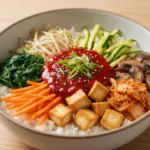
Vegan Korean tofu bibimbap is a rice bowl topped with crispy tofu, sautéed vegetables, and a sweet-spicy gochujang sauce. No egg needed. It takes about 50 minutes, and most of it can be made ahead.
I’ll be honest, bibimbap looked like a project to me for years. All those little piles. Then I noticed each part is simple, and every vegetable takes 1 to 5 minutes in the same skillet.
The tofu is crisp outside and soft inside. The vegetables stay a little crunchy. The rice turns sticky and red once you stir the sauce through.
It also works as a meal prep dinner. Cook the parts once, store them separately, and build a bowl in five minutes.
Why You’ll Love This Recipe
- Crispy tofu that stays crunchy after a quick glaze
- Most parts keep in the fridge for 3 to 4 days
- Pantry-friendly ingredients, roughly 3 dollars a bowl
- Sauce heat adjusts easily for kids or spice lovers
Ingredient Notes
- gochujang: Korean fermented chili paste, sweet, salty, and mildly hot. Three tablespoons gives medium heat, so use 2 tablespoons for kids. Check the label if you avoid gluten.
- extra-firm tofu: Extra-firm holds its shape and crisps best. Silken and soft tofu fall apart in the pan, so skip them here.
- vegan kimchi: Most jars contain fish sauce or shrimp paste. Look for a label that says vegan, or use quick-pickled cucumber instead.
- short-grain rice: Its sticky texture holds the sauce well. Sushi rice works too, and brown short-grain rice works if you add 10 minutes of cooking time.
- cremini mushrooms: Shiitake gives a deeper, meatier flavor and is the traditional choice. Use whichever is cheaper at your store.
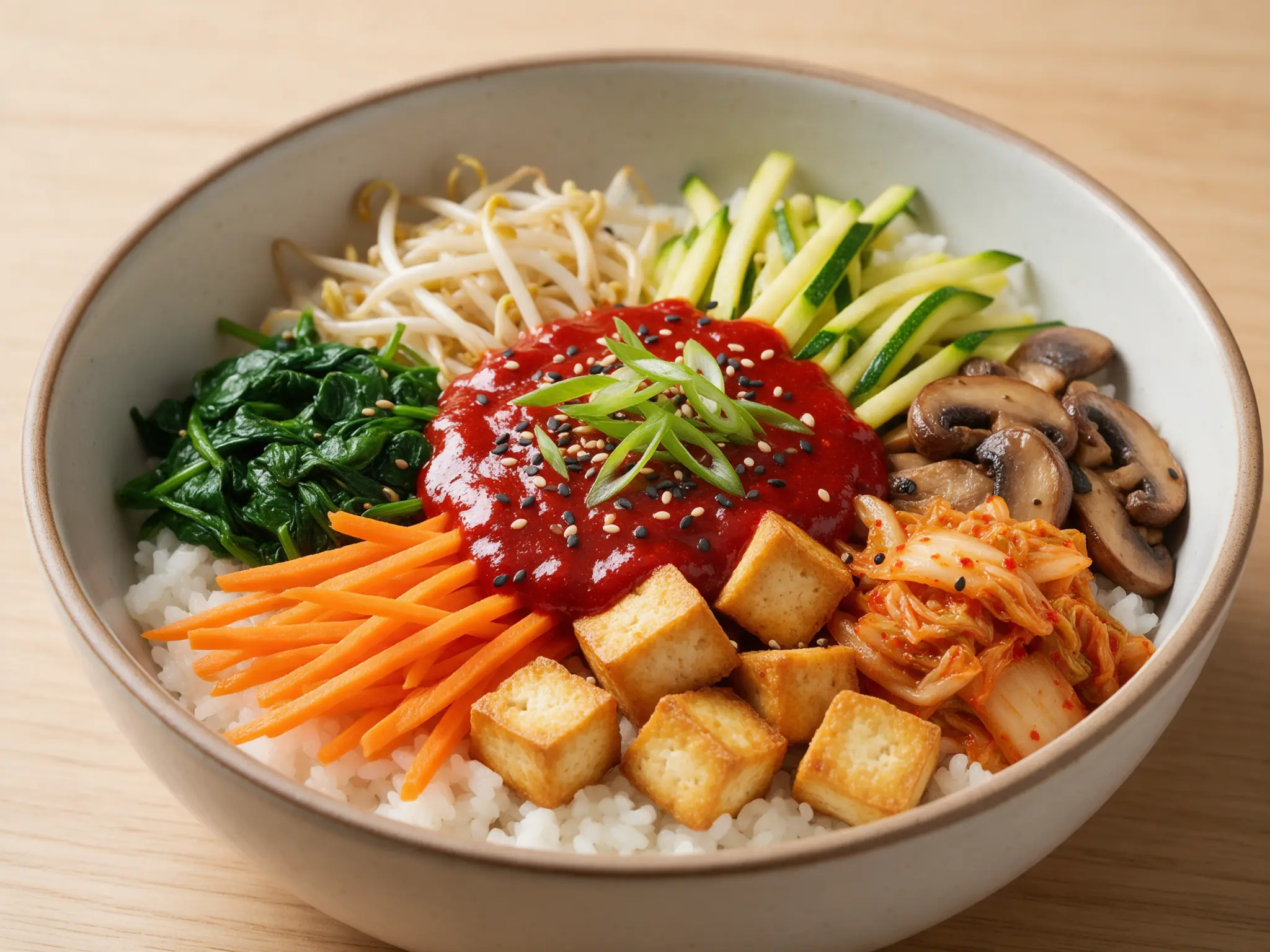
Crispy Vegan Korean Tofu Bibimbap with Gochujang Sauce
Ingredients
Method
- Wrap the tofu in a clean towel, set it on a plate, and weigh it down with a heavy pan or two cans for 15 minutes. While it presses, whisk the gochujang, 1 tbsp sesame oil, rice vinegar, 1 tbsp maple syrup, water, and grated garlic in a small bowl. Cut the carrots and zucchini into 5 mm matchsticks, slice the mushrooms, and slice the scallions.
- Add the rinsed rice and 415 ml water to a 3-quart / 2.8 L saucepan and bring to a boil. Cover, reduce the heat to low, and cook for 15 minutes. Turn off the heat and leave the lid on for 10 minutes more, until the rice is tender and sticky.
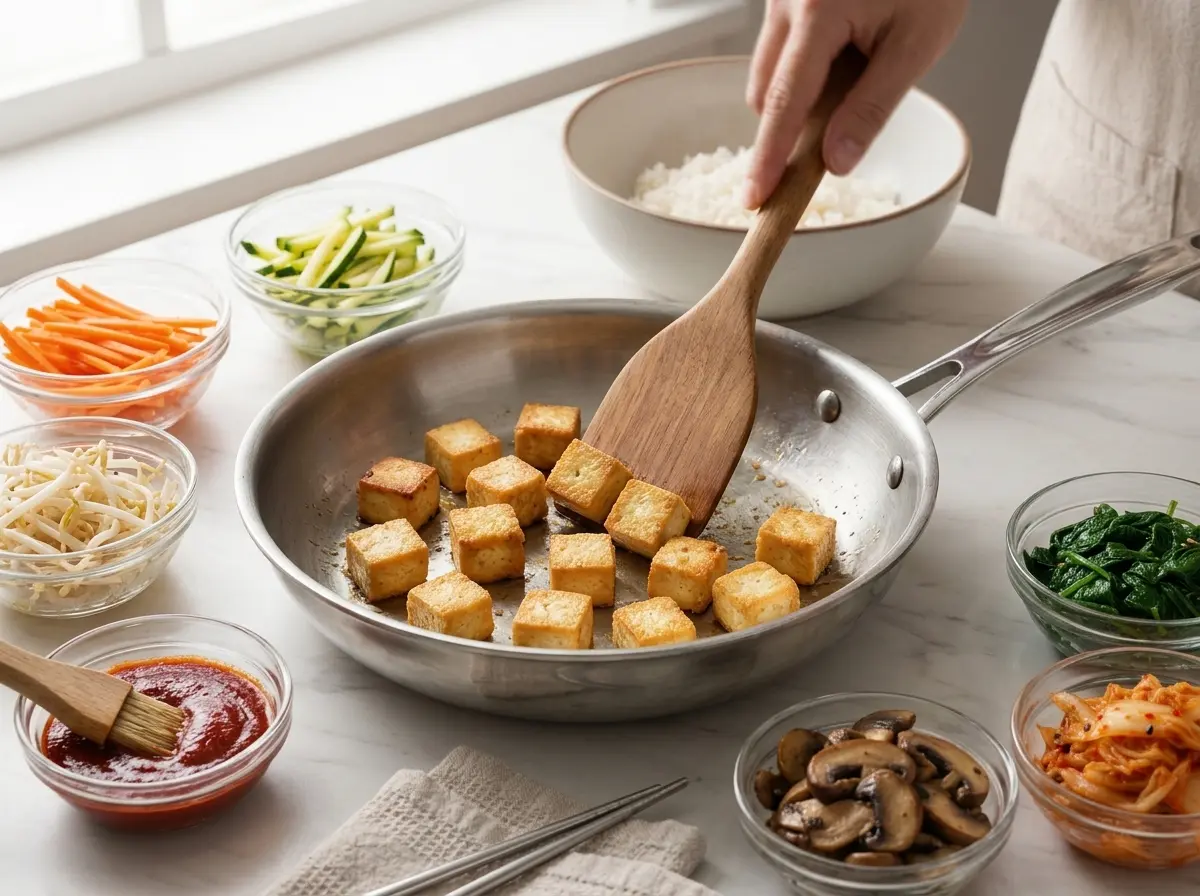
- Cut the pressed tofu into 2 cm cubes and toss with the cornstarch and 1/4 tsp salt. Heat 2 tbsp oil in a 30 cm / 12-inch nonstick skillet over medium-high heat for 1 minute, until it shimmers. Add the tofu in a single layer with space between the cubes and cook for 10 to 12 minutes, turning every 2 to 3 minutes, until golden and crisp on most sides. Stir the soy sauce and 1 tbsp maple syrup together, pour it over the tofu in the last 30 seconds, and toss until sticky. Add the glaze at the very end, because maple scorches in seconds and turns bitter. Move the tofu to a plate and wipe out the skillet.
- Heat 1 tbsp oil in the same skillet over medium-high heat. Cook the carrots with a pinch of salt for 3 minutes and move them to a plate. Cook the zucchini with a pinch of salt for 2 minutes and plate it. Cook the mushrooms for 5 minutes until browned, add the minced garlic for the last 30 seconds, season with a pinch of salt, and plate. Cook the bean sprouts for 2 minutes with a pinch of salt, then the spinach for 1 minute until wilted. Toss the sprouts and spinach with 2 tsp sesame oil.
- Fluff the rice and divide it among 4 wide bowls. Arrange the tofu, each vegetable, and the kimchi in sections on top. Sprinkle with scallions and sesame seeds, spoon on the gochujang sauce, and serve within 15 minutes so the tofu stays crisp. Stir everything together at the table.
Notes
- Press the tofu for 15 minutes while you cut vegetables and make the sauce.
- Fry tofu in a single layer with space between the cubes.
- Add the soy and maple glaze in the last 30 seconds of frying.
- Use 2 tbsp gochujang for a milder bowl that kids will eat.
- Buy vegan kimchi, or check labels for fish sauce and shrimp.
Tips for Success
- Press the tofu for the full 15 minutes, because leftover water steams the cornstarch coating soft instead of letting it crisp.
- Cut the carrots and zucchini into matchsticks about 5 mm thick so each cooks in 2 to 3 minutes and looks even in the bowl.
- Salt each vegetable with its own small pinch as it cooks. Seasoning in layers gives every pile its own flavor.
- Stir everything together at the table with a spoon until the rice turns evenly red and the tofu is coated.
- Cook the vegetables and mix the sauce 3 to 4 days ahead, then fry the tofu fresh on the night.
Variations
- Swap the tofu for tempeh cut into 2 cm cubes. Steam it for 10 minutes first to soften any bitterness, then fry it the same way.
- Replace the zucchini with 300 g roasted sweet potato cubes for a sweeter, heartier bowl that still works with the sauce.
- Press leftover rice into a hot, oiled 26 cm / 10-inch cast-iron skillet for 4 minutes to get a crunchy bottom layer.
Storage and Reheating
Vegan Korean tofu bibimbap keeps best when the parts are stored separately in airtight containers in the fridge for 3-4 days. Keep the rice, tofu, vegetables, and sauce each in their own container so nothing goes soggy.
Reheat the rice in the microwave, covered, with a splash of water for about 90 seconds. Re-crisp the tofu on a parchment-lined 33 x 46 cm / 13 x 18 inch sheet pan at 200 C / 400 F for 8 minutes. The vegetables are good cold or at room temperature, and the sauce stays cold.
Cooked rice can be frozen for up to 1 month. Skip freezing the tofu and vegetables, since both turn watery and spongy when thawed.
Serving Suggestions
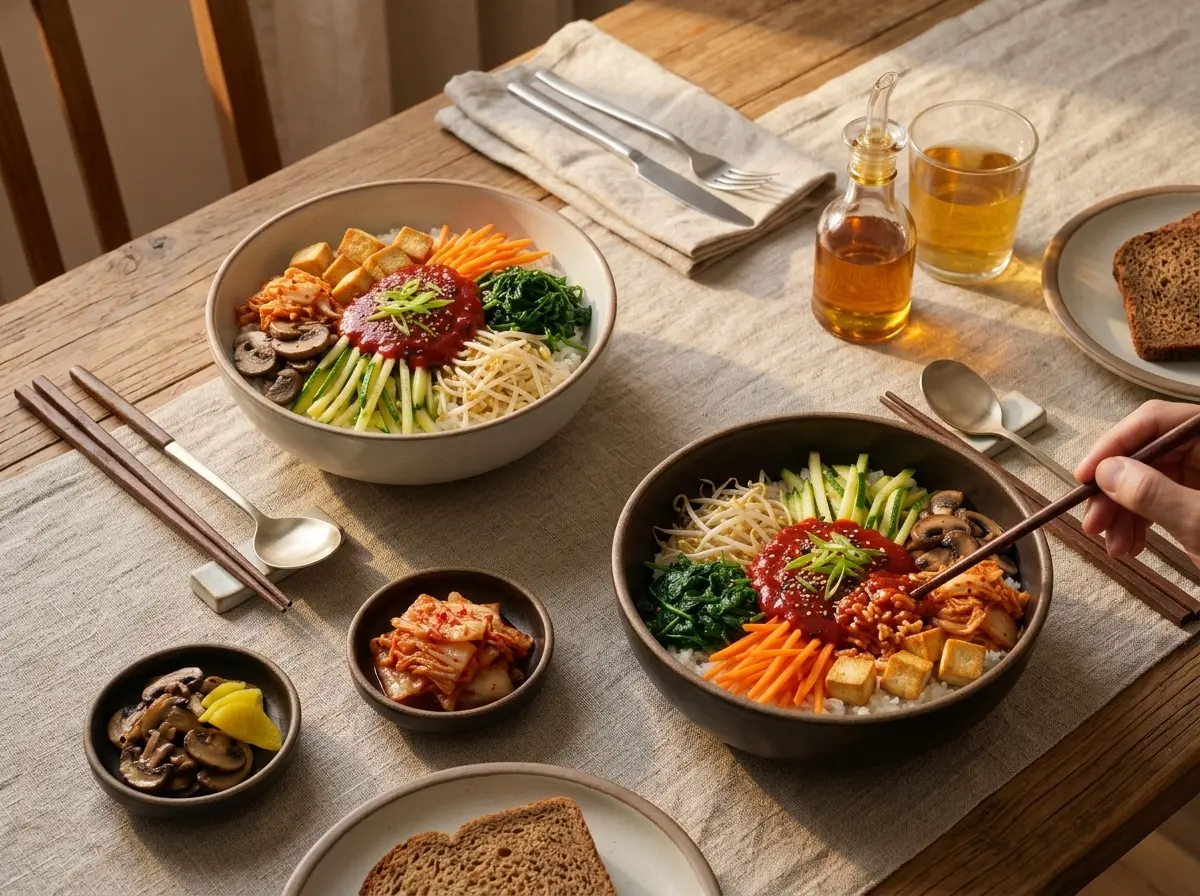
Vegan Korean tofu bibimbap is served in wide bowls with each topping in its own section and the sauce spooned over the top. Build the bowls right after the tofu comes off the heat, because the crunch holds about 15 minutes.
If kids are eating, pass the sauce at the table and let them add as much as they like. Put extra vegan kimchi and a small bottle of toasted sesame oil next to the bowls.
For a fuller spread, add miso soup, a cucumber salad dressed with rice vinegar, or a pack of roasted seaweed snacks.
FAQ
Why is my tofu not crispy in bibimbap?
Tofu turns soggy when it still holds water, the skillet isn’t hot enough, or the cubes touch each other. Press it for 15 minutes, coat it in cornstarch, and fry in a single layer over medium-high heat. Add the soy and maple glaze only in the last 30 seconds so the crust stays dry.
Can I use sriracha instead of gochujang in vegan bibimbap?
Sriracha alone won’t taste right because it’s thin and sharp, with no fermented depth. For 3 tbsp gochujang, stir together 2 tbsp sriracha, 1 tbsp white miso, and 1 tsp extra maple syrup. Skip the 1 tbsp water in the sauce, since this blend is already looser.
Can I make vegan Korean tofu bibimbap ahead for meal prep?
Yes. Cook the rice, vegetables, and sauce up to 3 to 4 days ahead and keep them in separate containers in the fridge. Fry the tofu fresh, or re-crisp stored cubes on a sheet pan at 200 C / 400 F for 8 minutes. Assemble the bowls warm or cold.
What side dishes go with vegan tofu bibimbap besides kimchi?
Miso soup, a quick cucumber salad dressed with rice vinegar and sesame oil, and extra vegan kimchi all work. Bibimbap is already a full meal, so keep sides light and cold. Roasted seaweed snacks add salt and crunch, and a glass of cold barley tea helps with the heat.
Is Korean tofu bibimbap gluten free?
Not as written. Regular soy sauce contains wheat, and many gochujang brands include wheat or barley too. Swap in tamari, as in this gluten-free rice noodle stir fry, and buy a gochujang labeled gluten-free. Check the kimchi label as well, since some brands use wheat flour in the paste. The rice, tofu, cornstarch, and vegetables are naturally gluten free.
Is kimchi vegan, and what can I use if I can’t find vegan kimchi?
Most store-bought kimchi isn’t vegan because it’s made with fish sauce or salted shrimp. Look for ‘vegan’ on the label or check the refrigerated section of a Korean market. If you can’t find it, skip it and add quick-pickled cucumber for the same sour crunch.