Jump to Recipe
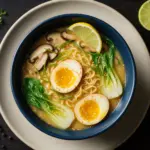
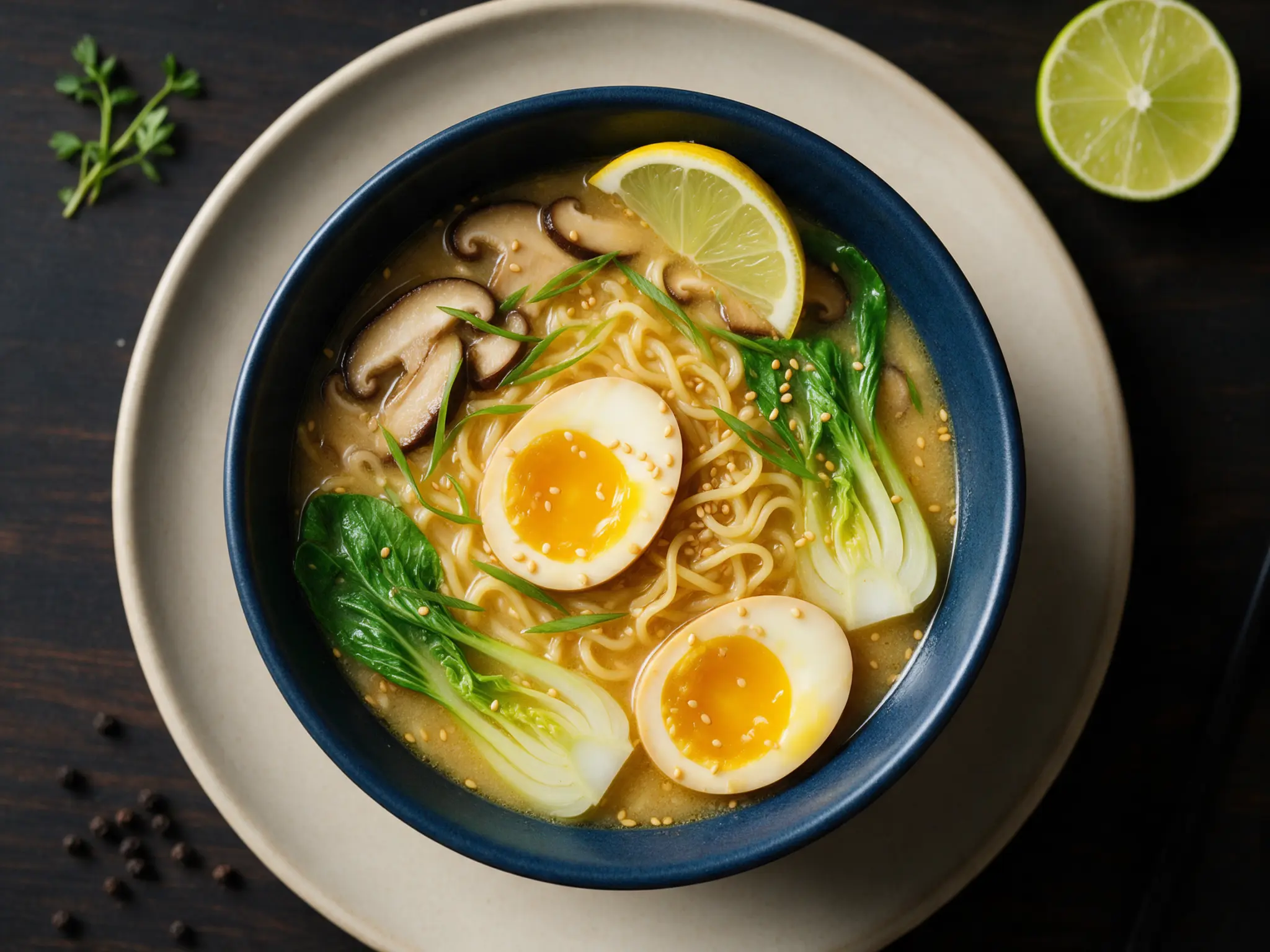
This miso ginger immune ramen bowl is a 40-minute noodle soup with a ginger-garlic broth, shiitake, bok choy, and a jammy egg. The white miso goes in at the end, off the heat.
I’ll be honest. I first made it the week everyone in my house had a cold, and I wanted something hot that felt like it was helping. It won’t cure anything. But ginger, garlic, mushrooms, and greens in one bowl is real food doing its thing.
The broth is bright. Savory. A little sharp from the fresh ginger. The noodles cook in their own pot, so the soup stays clear.
Make the broth once and lunches are sorted for 4 days. Keep the noodles and eggs in separate containers and you’re set.
Why You’ll Love This Recipe
- Broth simmers while you boil the eggs and noodles
- Fresh ginger and garlic bring warmth without needing chili
- Broth keeps 4 days, so weekday lunches are handled
- Mostly pantry staples plus a few fridge vegetables
Ingredient Notes
- white miso: White (shiro) miso is mild and slightly sweet. Yellow miso works at the same amount. Red miso is saltier, so use 2 tbsp.
- fresh ginger: Peel it with the edge of a spoon, then grate it on a microplane. Keep a knob in the freezer and grate it straight from frozen.
- shiitake mushrooms: Remove the tough stems and slice the caps. Cremini mushrooms work if shiitake is hard to find, though the broth will taste less earthy.
- ramen noodles: Use plain dried or fresh ramen and skip any seasoning packet. Fresh noodles need only 2 to 3 minutes. Rice noodles make it gluten free.
- vegetable broth: Choose low-sodium so the miso and soy sauce don’t push it too salty. Chicken broth makes a richer bowl, but the dish is no longer vegetarian.
- baby bok choy: Quarter it lengthwise so the stems cook evenly. A few big handfuls of spinach stirred in at the end can replace it.
Miso Ginger Immune Ramen Bowl with Shiitake and Egg
Ingredients
Method
- Bring 1.5 L / 6 cups of water to a boil in a 3-quart / 2.8 L (20 cm / 8-inch) saucepan over high heat. Leave it on while you build the broth.
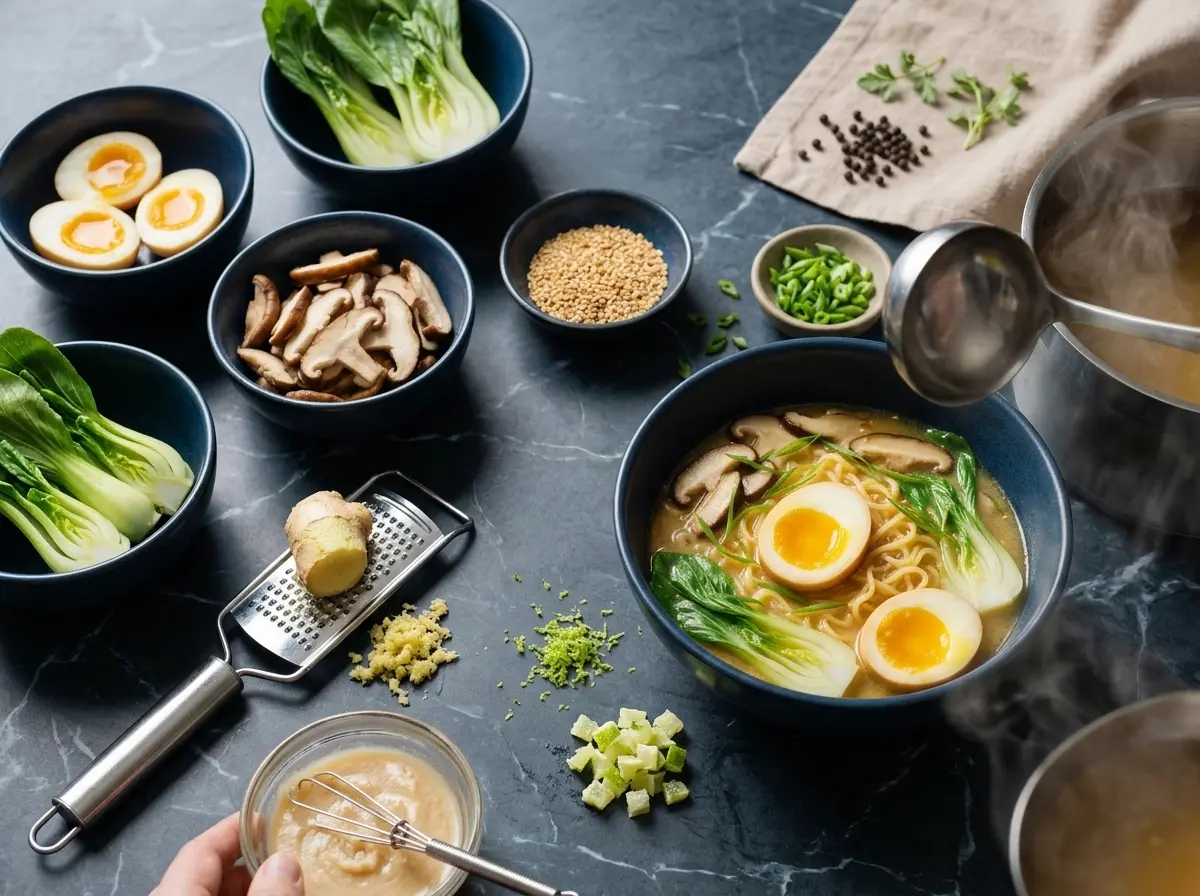
- Heat the sesame oil in a 5-quart / 4.7 L (26 cm / 10-inch) pot over medium heat. Add the shiitake and salt, and cook for 5 minutes, stirring now and then, until browned at the edges.
- Stir in the garlic, ginger, and turmeric and cook for 1 minute until fragrant. Pour in the vegetable broth and water, bring to a gentle simmer, and cook uncovered for 15 minutes.
- When the saucepan water boils, lower in the eggs with a spoon and cook for 7 minutes. Move them to a bowl of ice water for 5 minutes, then peel.
- Return the saucepan water to a boil, add the noodles, and cook for 3 to 4 minutes, until tender with a slight chew. Drain well and divide among four bowls.
- Add the bok choy to the broth for the last 3 minutes of simmering, until the stems are tender-crisp. Turn off the heat. Whisk the miso, soy sauce, and rice vinegar into 1 cup / 240 ml of hot broth in a small bowl until smooth, then stir it back into the pot. Don’t let it boil again, because boiling flattens the miso’s flavor.
- Ladle the broth and bok choy over the noodles. Halve the eggs and set them on top with the scallions, sesame seeds, and a lime wedge. Eat within 10 minutes, before the noodles soften.
Notes
- Peel the ginger with the edge of a spoon. It wastes less than a knife.
- Use fridge-cold eggs and a 7-minute timer for a jammy yolk.
- Stir the miso in off the heat so the broth stays savory and bright.
- Check the miso label if you need gluten free, since some brands contain barley.
- Salt last. Miso and soy sauce add more than you’d expect.
Tips for Success
- Whisk the miso with a ladle of hot broth in a small bowl first, so it dissolves smoothly instead of clumping.
- Cook the noodles in separate water, not in the broth, so their starch doesn’t cloud the soup or thicken it overnight.
- Grate the ginger on a microplane, ideally from frozen, so it melts into the broth instead of leaving stringy bits.
- Lower fridge-cold eggs into boiling water with a spoon and set a timer for 7 minutes for a jammy yolk.
- Taste the broth before adding more salt. Miso and soy sauce carry plenty, so adjust with a splash of rice vinegar instead.
Variations
- Swap the eggs for 200 g cubed firm tofu, pan-seared until golden on two sides, for a fully vegan bowl.
- Use chicken broth and add 2 cups / 300 g shredded rotisserie chicken to each pot of broth for a heartier dinner.
- Stir 1 tbsp chili crisp or a pinch of red pepper flakes into the broth for a spicier bowl.
Storage and Reheating
Miso ginger ramen broth keeps in an airtight container in the fridge for 4 days. Cool it for no more than 2 hours before it goes in. Store the cooked noodles in a separate container for up to 3 days, and keep the peeled eggs in a covered container for up to 3 days.
Reheat the broth in a saucepan over medium-low heat for 5 to 6 minutes, until steaming but not boiling, so the miso keeps its flavor. Drop the cold noodles into the hot broth for 1 minute to loosen them. You can also microwave a bowl of broth for 2 minutes, stirring halfway. Add the cold egg last and let the hot bowl warm it.
The broth freezes well for up to 2 months, without the noodles and eggs. Thaw it overnight in the fridge. The bok choy softens in storage, so add a fresh handful if you want some crunch.
Serving Suggestions
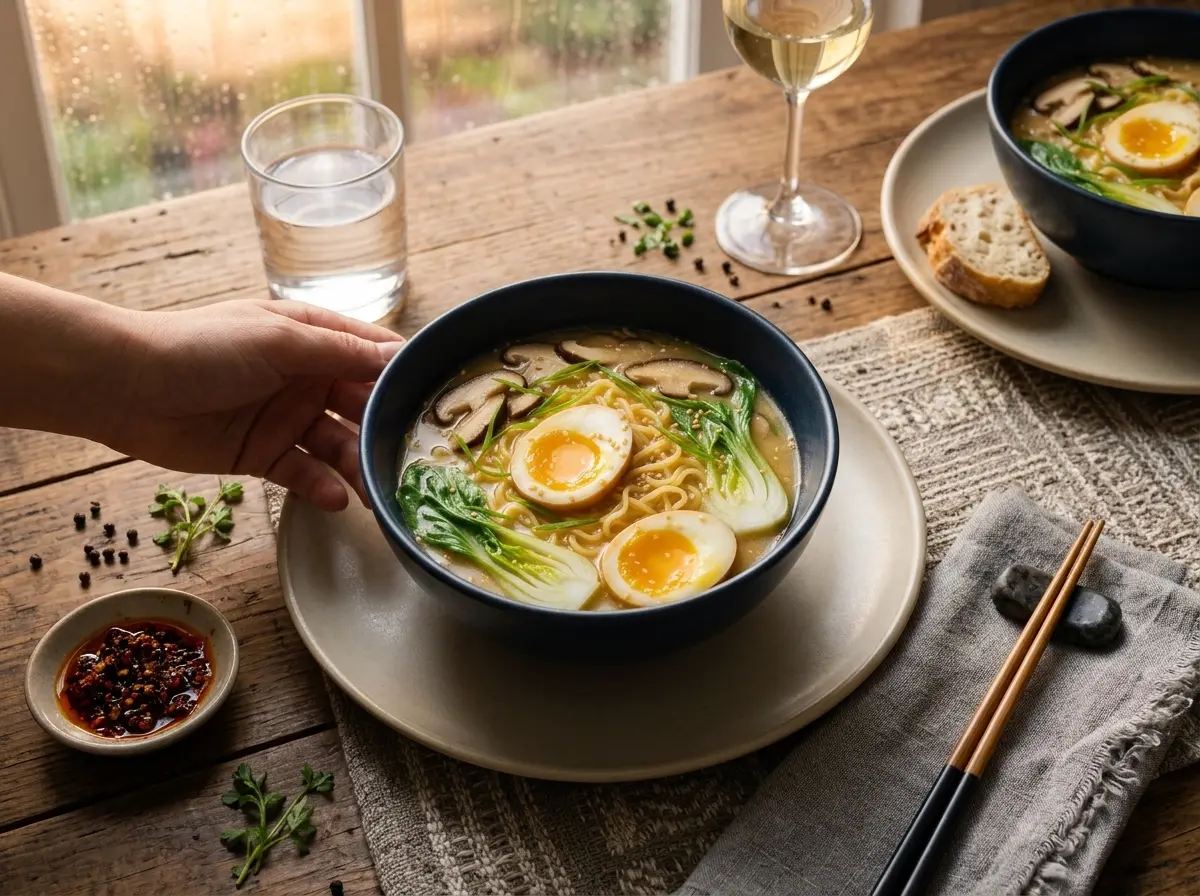
Serve each bowl with a halved egg, a handful of sliced scallions, and a pinch of sesame seeds. A squeeze of lime at the table brightens the broth. Chili crisp is there for anyone who wants heat.
For sides, keep it small. A quick cucumber salad with rice vinegar, steamed edamame with flaky salt, or a few pan-fried frozen dumplings all fit.
For kids, ladle the broth into a smaller bowl and keep the noodles and egg on the side. Easy to build their own.
FAQ
How do I know when the eggs for miso ginger ramen are jammy?
Boil fridge-cold eggs for exactly 7 minutes, then chill them in ice water for 5 minutes. When you halve one, the white is set and the yolk is deep orange and glossy, soft in the center but not running. At 6 minutes the yolk runs, and at 9 it turns chalky.
Can I use red miso instead of white miso in this ramen bowl?
Yes, but use 2 tablespoons instead of 3. Red miso is saltier and more pungent, so it can bury the ginger and shiitake. Yellow miso works at the same 3 tablespoons as white. Taste the broth after stirring it in, and add a splash of water if it’s too salty.
Can I freeze the broth from a miso ginger ramen bowl?
Yes. Freeze the broth, with the shiitake and bok choy, in airtight containers for up to 2 months. Leave out the noodles and eggs, which turn mushy and rubbery. Thaw it overnight in the fridge, then warm it over medium-low heat until steaming. Don’t let it boil.
What goes well with a miso ginger ramen bowl?
Small, bright sides work best. A cucumber salad with rice vinegar, steamed edamame with flaky salt, or pan-fried dumplings all fit. The bowl already has noodles, egg, and vegetables, so keep the side light. Chili crisp at the table covers anyone who wants more heat.
Is miso ginger immune ramen gluten free or dairy free?
It’s dairy free, but not gluten free as written. Ramen noodles and soy sauce both contain wheat. For a gluten-free bowl, use rice noodles and tamari, and check your miso label, since some brands contain barley. Vegetable broth makes it vegetarian, though the eggs keep it from being vegan.
What’s the difference between miso ramen and this miso ginger ramen bowl?
Restaurant miso ramen usually starts with a pork or chicken bone broth cooked for hours, with fat and seasoning paste added. This bowl uses a 15-minute vegetable broth built on shiitake, ginger, and garlic, with miso stirred in at the end. It’s lighter and much faster, though less rich.