Jump to Recipe
Baked Vegan Sunflower Ricotta Lasagna swaps the usual dairy ricotta for a blended filling made from soaked sunflower seeds, lemon juice, and nutritional yeast. It’s tangy, thick, and holds its shape between the noodles the same way real ricotta does.
I started making this after running out of cashews mid-recipe one night. Sunflower seeds were cheaper anyway, and they blend just as smooth with a little extra water.
The layers are simple: marinara, noodles, sunflower ricotta, wilted spinach, repeat. It bakes at 190°C / 375°F until the sauce bubbles at the edges and the top turns golden, about 45 minutes total.
This one reheats well and actually tastes better the next day, once the layers settle.
Why You’ll Love This Recipe
- No cashews needed, just sunflower seeds and pantry staples
- Tastes rich and tangy without a drop of dairy
- Layers hold together well for clean, sliceable pieces
- Reheats well, so leftovers taste just as good
Ingredient Notes
- sunflower seeds: Use raw, unsalted seeds and soak them a full 30 minutes for a smooth ricotta. Cashews work as a substitute if you don’t need nut-free.
- lemon juice: Fresh juice brightens the ricotta and mimics the tang of dairy ricotta. Bottled works in a pinch but tastes flatter.
- nutritional yeast: This gives the ricotta a cheesy, savory note. Don’t skip it, there’s no good substitute here.
- lasagna noodles: Regular boiled noodles or no-boil sheets both work fine. Use gluten-free noodles if you need this dish gluten-free.
- crushed tomatoes: Canned crushed tomatoes give the sauce body. A jar of plain marinara works if you’re short on time.
- baby spinach: Fresh spinach wilts fast in the layers. If using frozen, thaw and squeeze out the water first or the lasagna turns watery.
- vegan mozzarella: Optional but nice for a golden top layer. Skip it and use breadcrumbs if you don’t have any on hand.
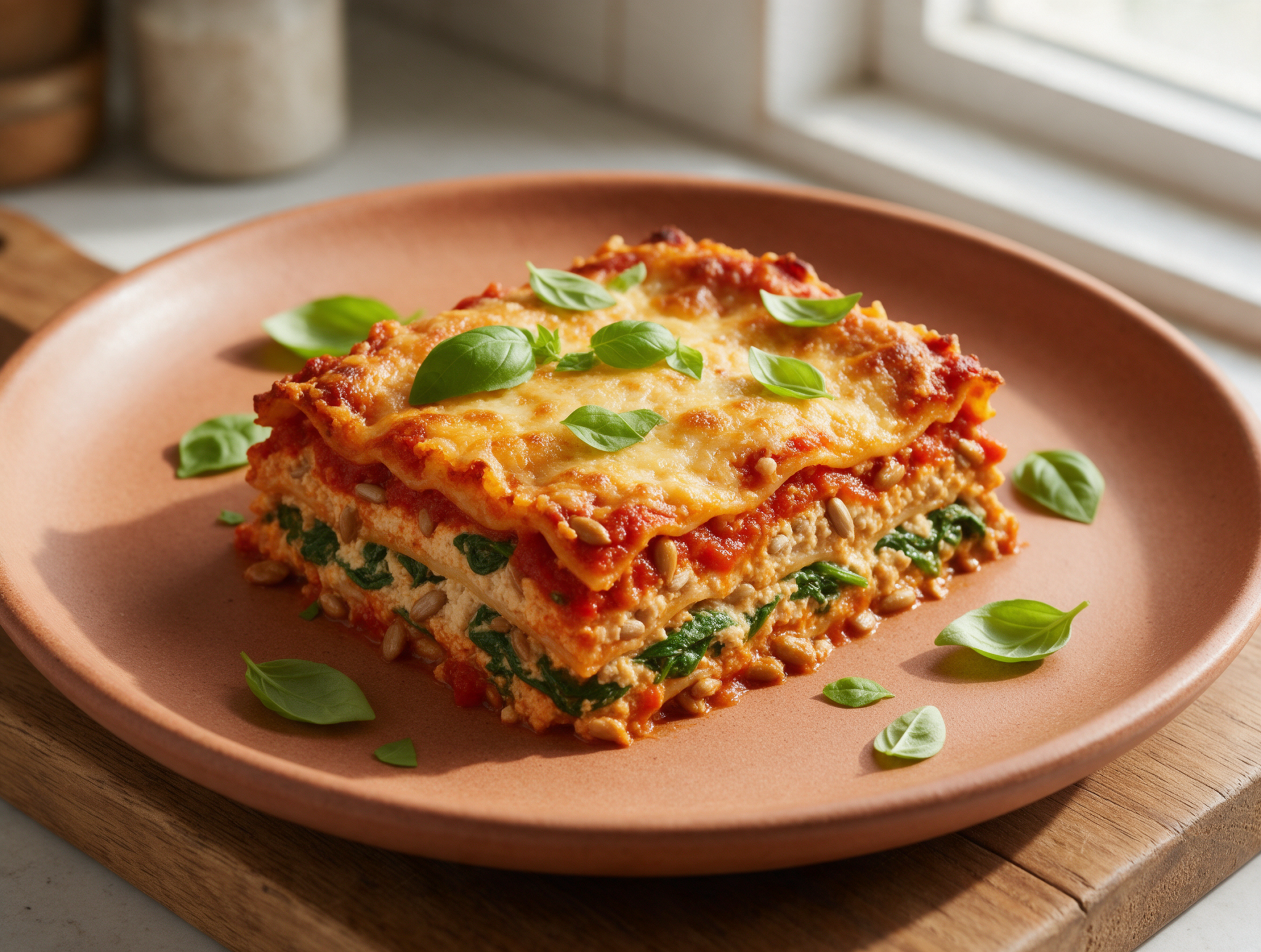
Baked Vegan Sunflower Ricotta Lasagna with Spinach
Ingredients
Method
- Soak the sunflower seeds in a bowl of hot water for 30 minutes, then drain well.
- Combine the soaked seeds, fresh water, lemon juice, nutritional yeast, garlic, salt, and olive oil in a blender. Blend for 2 to 3 minutes, scraping down the sides, until the mixture looks like thick ricotta with a little texture left. Set aside.
- Heat 1 tbsp olive oil in a 10-inch / 26 cm saucepan over medium heat. Add the onion and cook for 4 to 5 minutes until soft.
- Stir in the garlic and cook 30 seconds until fragrant. Add the crushed tomatoes, oregano, basil, salt, pepper, and sugar. Simmer uncovered for 10 minutes, stirring occasionally, until slightly thickened.
- Heat the oven to 190°C / 375°F. If using regular noodles instead of no-boil, cook them according to package directions until al dente, then drain.
- Spread about 1/2 cup of the tomato sauce across the bottom of a 9×13-inch / 23×33 cm baking dish.
- Layer 3 noodles over the sauce, then a third of the sunflower ricotta, a third of the spinach, and a third of the remaining sauce. Repeat twice more, ending with sauce on top.
- Sprinkle vegan mozzarella over the top layer if using. Cover the dish tightly with foil.
- Bake covered for 30 minutes. Uncover and bake 15 more minutes, until the sauce bubbles at the edges and the top turns golden.
- Let the lasagna rest for 10 to 15 minutes before slicing. This keeps the layers from sliding apart when you cut into it.
Notes
- Soak sunflower seeds a full 30 minutes for the smoothest ricotta texture.
- Use no-boil noodles to skip a step, or boil regular sheets until just al dente.
- Rest the lasagna 10 to 15 minutes before cutting so slices hold their shape.
- Squeeze water from thawed frozen spinach if swapping for fresh.
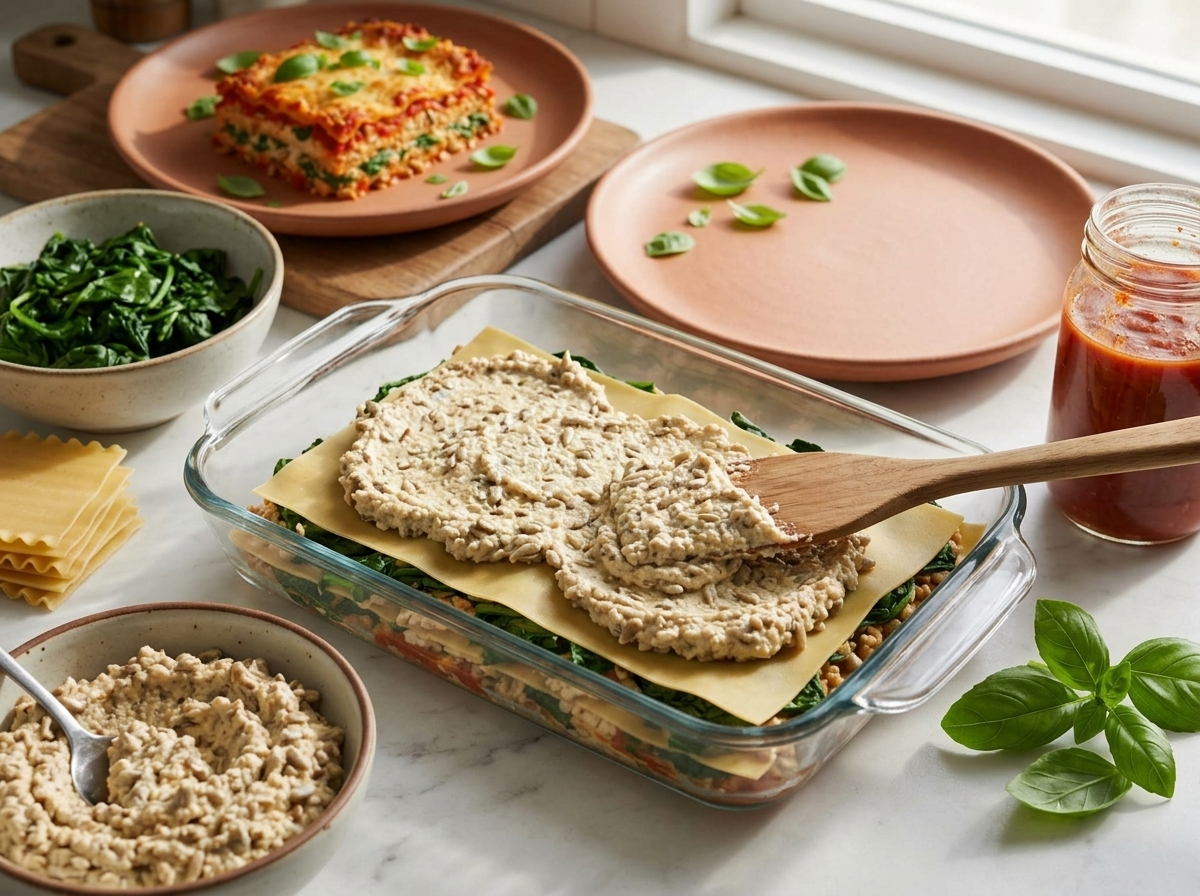
Tips for Success
- Soak sunflower seeds in hot water for the full 30 minutes so the ricotta blends smooth instead of gritty.
- Drain the crushed tomatoes slightly if the can looks watery, so the sauce doesn’t thin out the layers.
- Squeeze excess water from thawed frozen spinach if you use it instead of fresh, or the lasagna turns watery.
- Let the lasagna rest a full 10 to 15 minutes before slicing so the layers hold together.
- Use a high-speed blender for the ricotta, since regular blenders can leave small seed bits behind.
Variations
- Swap half the tomato sauce for a jarred pesto layer to add a brighter, herbier flavor between the noodles.
- Add sautéed mushrooms or zucchini ribbons to the spinach layer for extra vegetables and a heartier bite.
- Use gluten-free no-boil lasagna sheets and double check your nutritional yeast label to make the whole dish gluten-free.
Storage and Reheating
Baked Vegan Sunflower Ricotta Lasagna keeps in the fridge for 4 to 5 days in an airtight container. The flavors actually settle and taste better on day two, once the sauce has soaked into the noodles a bit more.
To reheat, cover a portion with foil and warm in a 175°C / 350°F oven for 15 to 20 minutes, or until heated through. A single slice also reheats fine in the microwave in 90-second bursts, though the noodles stay a little softer that way.
For longer storage, freeze baked and cooled portions in a freezer-safe container for up to 3 months. Thaw overnight in the fridge before reheating in the oven.
Serving Suggestions
Baked Vegan Sunflower Ricotta Lasagna works fine on its own with a sprinkle of fresh basil and a crack of black pepper on top.
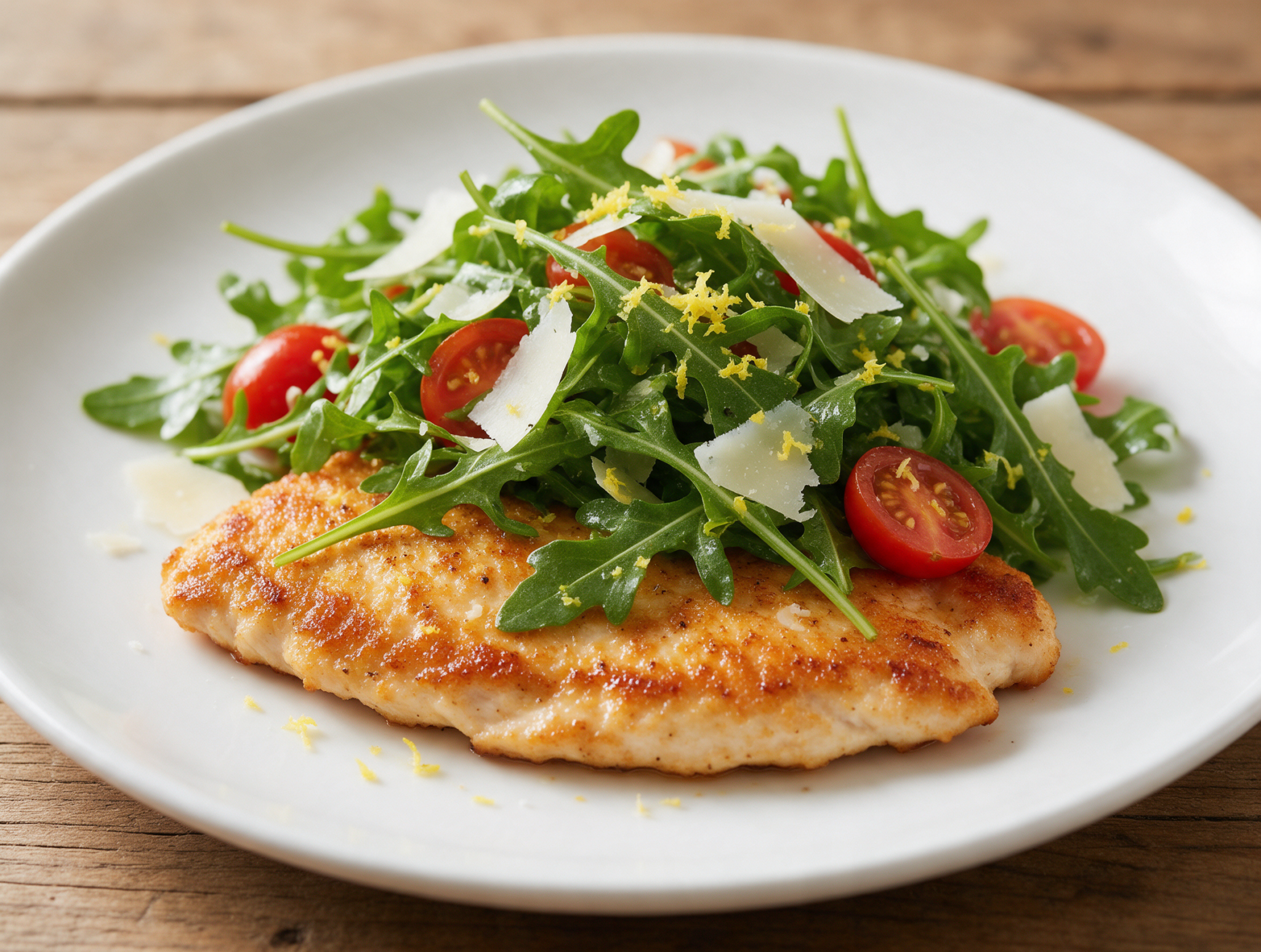
For a full dinner, add a simple arugula salad with lemon and olive oil, or garlic bread to catch the extra sauce on the plate.
It also holds up well for meal prep. Pack a slice with a side salad for lunch, and the layers stay intact through a few days in the fridge.
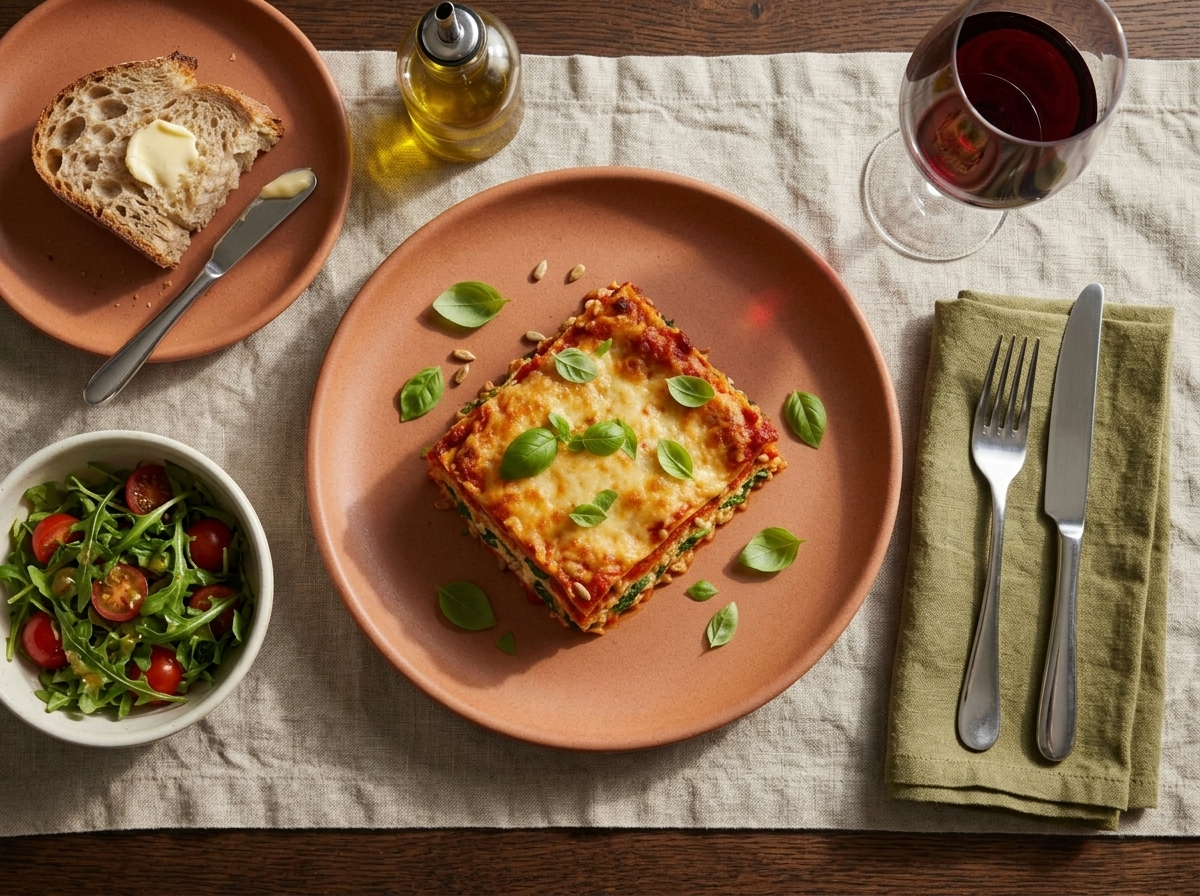
FAQ
Why is my sunflower seed ricotta bitter or gritty?
Bitterness usually means the seeds weren’t soaked long enough or your blender couldn’t break down the hulls fully. Soak raw sunflower seeds in hot water for a full 30 minutes before draining, and blend for 2 to 3 minutes, scraping down the sides so no whole seeds are left. A high-speed blender gives the smoothest result.
Can I use cashews instead of sunflower seeds for the ricotta?
Yes, swap in 300 g raw cashews soaked the same way and blend with the same amounts of lemon juice, nutritional yeast, and salt. Cashews give a slightly richer, milder result, while sunflower seeds taste a touch earthier and cost less. Both work in the same layered assembly.
Can I freeze this vegan lasagna after baking?
Yes, baked and cooled lasagna freezes well in a freezer-safe container for up to 3 months. Thaw it overnight in the fridge, then reheat covered in a 175°C / 350°F oven for 15 to 20 minutes until warmed through. Freezing it unbaked works too, though the ricotta layer can turn slightly grainy after thawing.
What goes well with baked vegan sunflower ricotta lasagna?
A simple green salad with lemon vinaigrette cuts through the richness of the layers nicely. Garlic bread or a crusty loaf works for scooping up extra sauce, and roasted broccoli or sautéed greens round out the plate without competing with the lasagna’s flavor.
Is this sunflower seed ricotta lasagna gluten-free?
Not as written, since regular lasagna noodles contain wheat. Swap in gluten-free lasagna sheets or gluten-free no-boil noodles and check that your nutritional yeast and canned tomatoes are certified gluten-free. Everything else in the recipe, including the sunflower seed ricotta, is naturally gluten-free.
What’s the difference between sunflower seed ricotta and cashew ricotta?
The texture ends up similar once blended smooth, but sunflower seeds taste earthier and more savory than the mild sweetness of cashews. Sunflower seeds are also cheaper and nut-free, which matters if you’re cooking for someone with a tree nut allergy. Both hold their shape well between lasagna layers.