Jump to Recipe
Gluten-Free Millet Porridge with Fruit is a warm breakfast bowl made by simmering hulled millet in oat milk until it turns thick and creamy, then topping it with fresh fruit, chia, and a drizzle of maple syrup.
I used to skip toasting the millet and wondered why the porridge tasted flat. Toasting it dry for a few minutes before adding any liquid makes a real difference in flavor.
It’s soft. Slightly nutty. Thick enough to hold a spoon upright.
This one sits right in your rotation on busy mornings. Cook a batch, portion it into jars, and breakfast is mostly done for the week.
Why You’ll Love This Recipe
- Naturally gluten-free grain with a nutty, wholesome flavor
- Ready in 30 minutes with mostly hands-off simmering
- Meal-preps well for grab-and-go weekday breakfasts
- Naturally sweetened with fruit and a little maple
Ingredient Notes
- millet: Rinse it well before cooking to wash off the powdery coating that can taste bitter. Use hulled millet, not millet flour.
- oat milk: Use a certified gluten-free brand if you’re avoiding cross-contamination. Almond milk or regular milk work fine too, though the porridge turns out slightly thinner.
- maple syrup: Adjust the amount to taste depending on how sweet your fruit is. Honey works as a swap if you don’t need this vegan.
- chia seeds: These add thickness and fiber and aren’t essential, but they help the porridge hold its texture longer in the fridge.
- banana: Use a ripe, spotty banana for natural sweetness. Add it after cooking so it stays firm instead of turning mushy.
- mixed berries: Fresh or frozen and thawed both work well. Pat frozen berries dry first so they don’t water down the porridge.
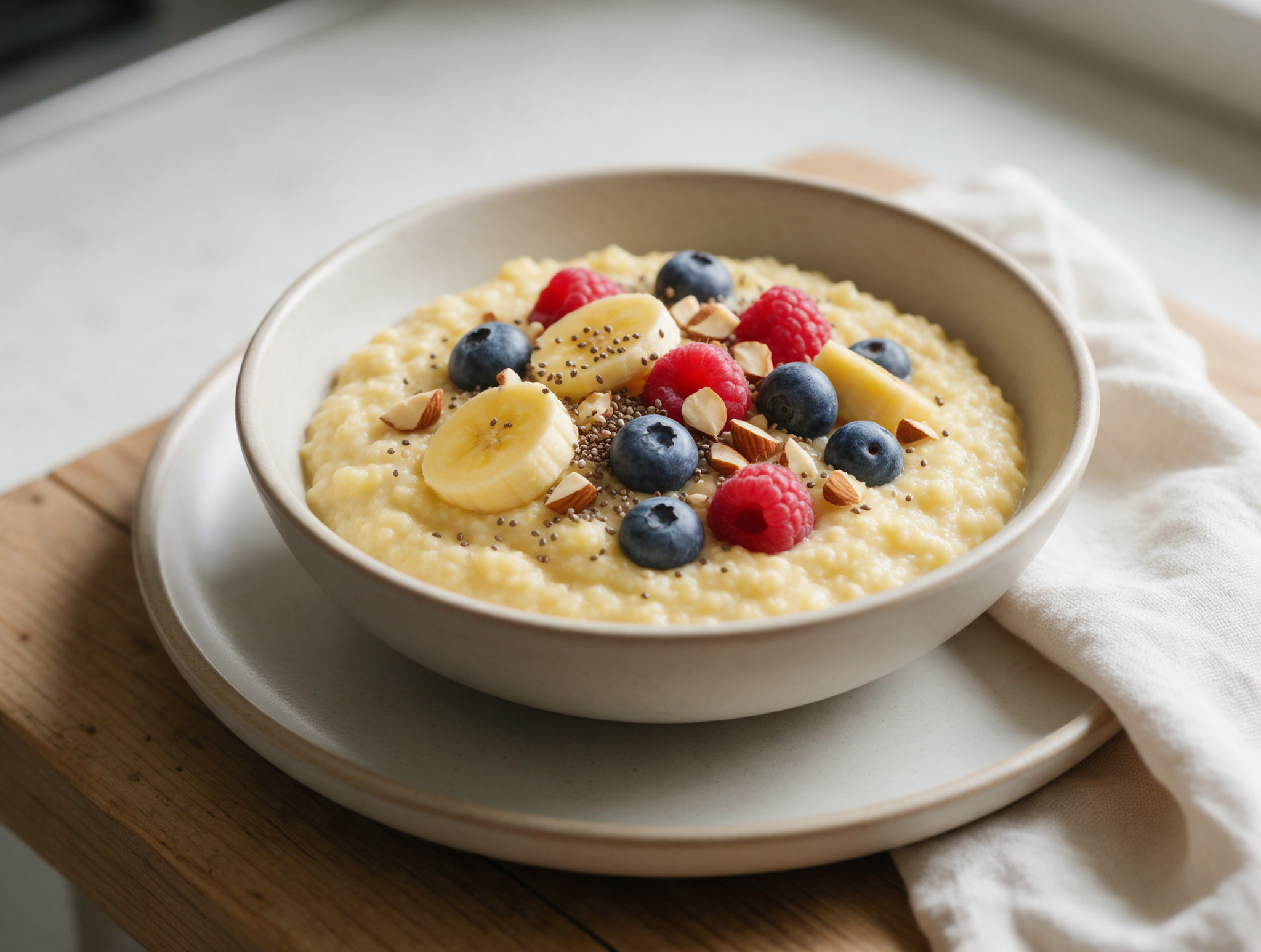
Creamy Gluten-Free Millet Porridge with Fresh Fruit
Ingredients
Method
- Rinse the millet in a fine-mesh strainer under cold running water for about 30 seconds, until the water runs mostly clear. Drain well.
- Add the rinsed millet to a dry 2-quart / 1.9 L saucepan and toast over medium heat for 3 to 4 minutes, stirring often, until it smells nutty and looks lightly golden.
- Pour in the water, oat milk, salt, and cinnamon. Bring to a boil, then reduce the heat to low.
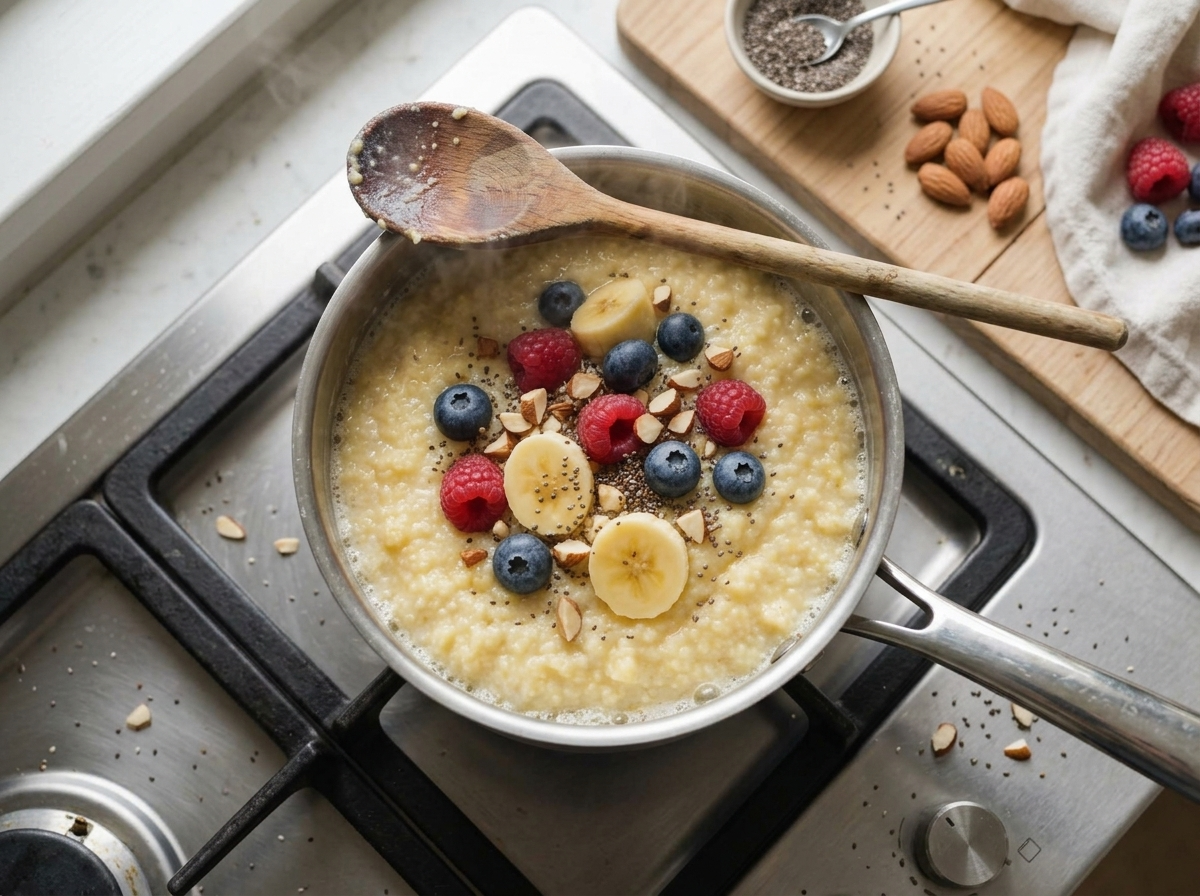
- Cover and simmer for 18 to 20 minutes, stirring only two or three times, until the millet is tender and most of the liquid is absorbed. It should look thick and loose, like cooked oatmeal, not soupy or gluey.
- Remove the pan from the heat and stir in the vanilla and maple syrup. Cover and let it sit for 5 minutes, it will thicken more as it rests.
- Spoon the porridge into bowls. Top each with banana slices, berries, chia seeds, and chopped almonds.
- Drizzle with extra maple syrup and a splash of oat milk if you want it looser, then serve warm.
Notes
- Toast the millet dry before adding liquid for deeper, nuttier flavor
- Rinse millet thoroughly to remove its bitter outer coating
- Don’t over-stir while simmering or the porridge turns gluey
- Porridge thickens as it cools, thin with extra oat milk if needed
Tips for Success
- Toast the dry millet for 3 to 4 minutes before adding liquid to deepen its nutty flavor
- Rinse the millet thoroughly to remove the bitter powdery coating on the grains
- Stir only two or three times while it simmers, constant stirring releases starch and turns it gluey
- Thin the porridge with a splash of oat milk if it thickens too much on standing
- Add fruit toppings after cooking, not during, so they stay bright and don’t turn mushy
Variations
- Swap oat milk for coconut milk and top with toasted coconut and mango for a tropical version
- Stir in a spoonful of almond butter after cooking for a thicker, more protein-packed bowl
- Cook the millet in apple cider instead of water for a naturally sweet, fall-leaning porridge
Storage and Reheating
Millet porridge keeps well in the fridge for 3 to 4 days when stored in an airtight container without the fruit toppings.
To reheat, add a splash of oat milk and warm it in a small saucepan over low heat, stirring until it loosens back to a spoonable texture, about 3 to 4 minutes. A microwave works too, in 30-second bursts, stirring between each.
Add fresh fruit, chia, and nuts only after reheating so they stay bright and crisp instead of going soft in storage.
Serving Suggestions
Serve this porridge warm in the morning with extra fruit piled on top and a drizzle of maple syrup.
It pairs well with high-protein salmon egg muffins or a slice of toast on the side if you want more protein at the table.
For meal prep, portion the cooked porridge into jars, add toppings right before eating, and breakfast is ready to grab all week.
FAQ
Why is my millet porridge gummy instead of fluffy?
Gummy porridge usually means you stirred too often or skipped toasting the millet first. Constant stirring releases starch and turns the grains sticky and gluey. Toast the rinsed millet dry for 3 to 4 minutes before adding liquid, then stir only a couple of times while it simmers so the texture stays loose and spoonable.
Can I use quinoa instead of millet for this porridge?
Yes, quinoa works as a swap, though it comes out fluffier and less creamy than millet. Rinse it the same way to remove the bitter coating, and cut the simmer time to about 15 minutes since quinoa cooks faster. Add an extra splash of maple syrup, since quinoa has a slightly grassier flavor.
Can I make this millet porridge ahead for meal prep?
Yes, this porridge keeps well for meal prep. Cook it fully, then store it in an airtight container in the fridge for 3 to 4 days without the fresh fruit toppings. Reheat portions in a saucepan over low heat with a splash of oat milk, stirring until it loosens back up, then add fruit fresh.
What fruit works best on millet porridge besides banana and berries?
Stone fruit like peaches or plums work well in warmer months, and roasted pear or baked apple are good choices in colder months. Diced mango or pineapple, similar to our mango coconut pudding, add brightness if you want something tropical. Add fruit after cooking so it stays fresh instead of turning mushy in the hot porridge.
Is this millet porridge recipe vegan and dairy-free?
Yes, this recipe is vegan and dairy-free as written, much like our avocado kale lime smoothie, using oat milk and maple syrup instead of dairy milk and honey. It’s also naturally gluten-free since millet is a gluten-free grain, just check your oat milk label for a certified gluten-free brand if you’re strict about cross-contamination.
What’s the difference between millet porridge and oatmeal?
Millet porridge has a nuttier flavor and a firmer, less sticky bite than oatmeal, since millet grains stay more distinct even after simmering. Oatmeal breaks down softer and creamier from the start. Millet is also naturally gluten-free, making it a good oat-free option for anyone avoiding oats specifically.