Jump to Recipe
Sugar-Free Mango Coconut Pudding is a chilled coconut milk pudding you thicken on the stovetop with cornstarch, then top with a fresh mango puree sweetened only with monk fruit. No refined sugar, no gelatin, just real mango doing the sweetening work.
I make this when mangoes are at their ripest and I want something cool that doesn’t spike blood sugar. The first few times I made it, I rushed the chilling step and ended up with a pudding that was still loose in the middle. Give it the full 3 hours.
The texture is smooth. Faintly coconutty. The mango layer is bright and a little tart from the lime. Toasted coconut flakes on top add crunch.
It sits well in the fridge for days, which makes it an easy make-ahead dessert for the week.
Why You’ll Love This Recipe
- No added sugar, sweetened with ripe mango and monk fruit
- Sets in the fridge, ready for busy weeknights
- Only 8 ingredients, no gelatin or eggs needed
- Naturally dairy-free and gluten-free for most diets
Ingredient Notes
- Coconut milk: Use full-fat canned coconut milk, not the thin carton kind, so the pudding actually sets. Shake the can well before opening.
- Cornstarch: Thickens the pudding on the stove. Arrowroot starch works as a 1:1 swap and sets slightly softer.
- Monk fruit sweetener: A 1:1 sugar substitute here. Swap in an erythritol or allulose blend if that’s what’s in your pantry, adjusting to taste.
- Mango: Pick fruit that smells sweet at the stem end and gives slightly under pressure. Ripe mango means you need less added sweetener.
- Lime juice: Keeps the mango layer from tasting flat. Fresh squeezed is worth it over bottled here.
- Coconut flakes: Toast right before serving so they stay crunchy instead of going soft against the chilled pudding.
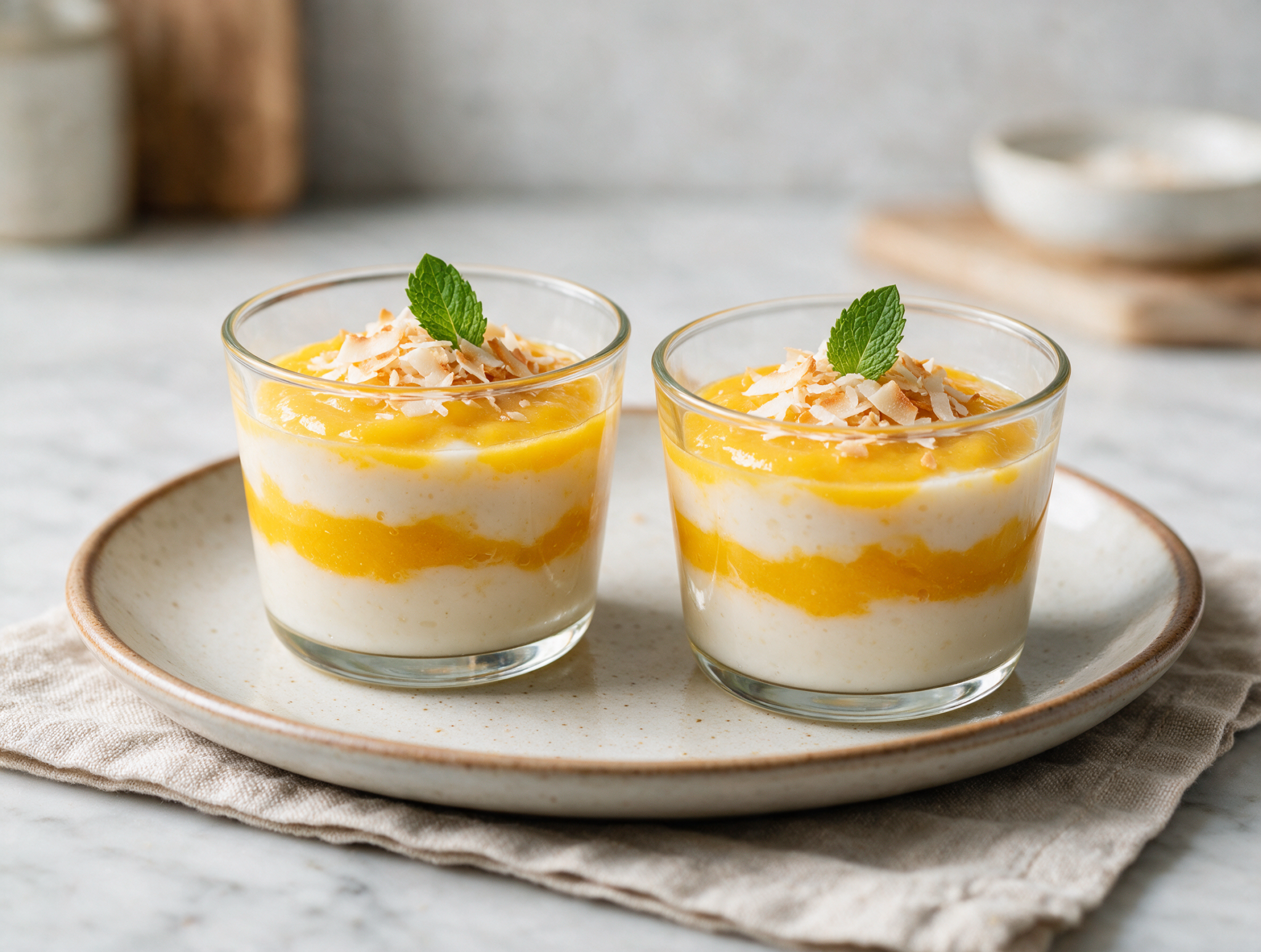
Sugar-Free Mango Coconut Pudding with Toasted Coconut
Ingredients
Method
- In a small bowl, whisk the cornstarch with 3 tbsp of the cold coconut milk until completely smooth. Set the slurry aside.
- Pour the remaining coconut milk into a 2-quart / 1.9L saucepan. Add the monk fruit sweetener and salt, and whisk over medium heat until the sweetener dissolves.
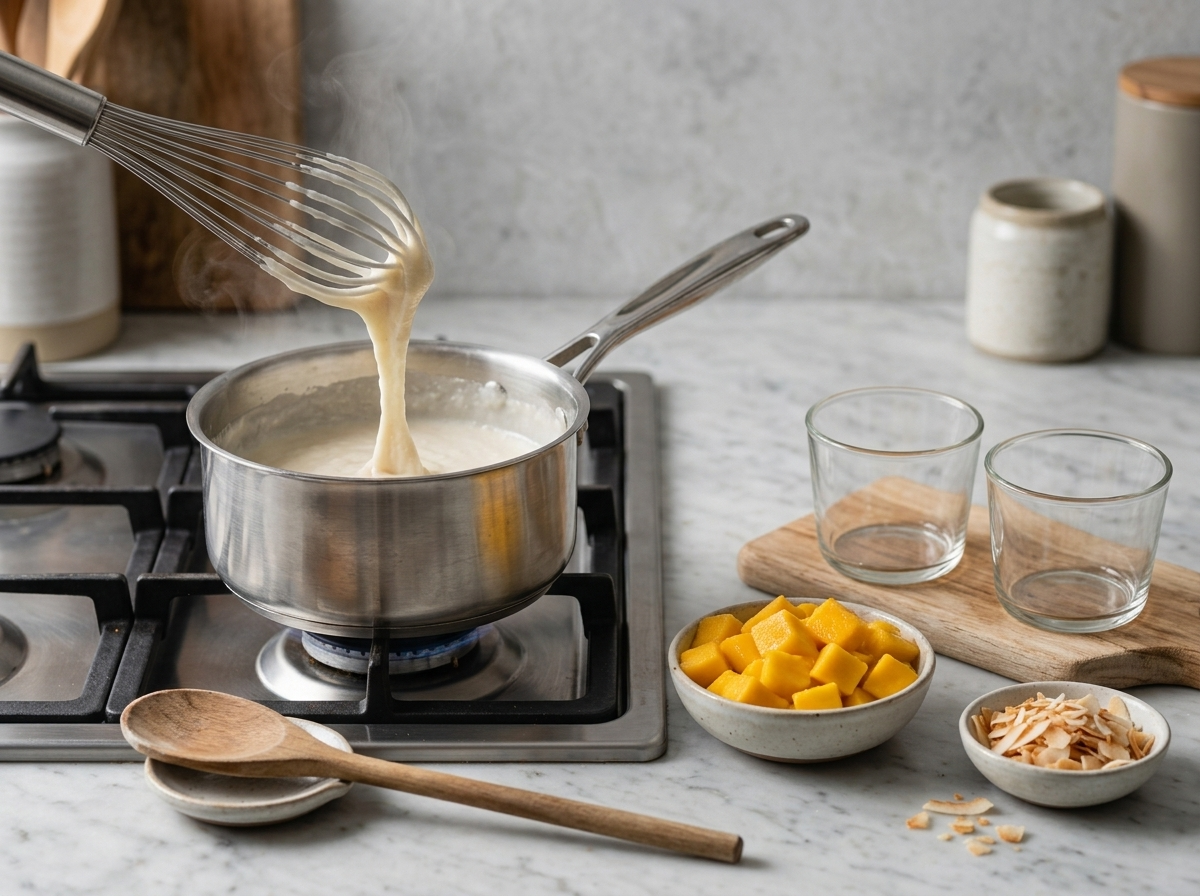
- Once the coconut milk is warm and steaming, whisk in the cornstarch slurry. Cook, stirring constantly, for 3 to 4 minutes, until the mixture thickens enough to coat the back of a spoon, around 85 C / 185 F.
- Remove from the heat and stir in the vanilla extract. Divide the pudding among 4 small glasses (about 180 ml each). Let cool at room temperature for 15 minutes, then cover and chill for 2 hours, until firm to the touch.
- While the pudding chills, add the mango, lime juice, water, and the optional 1 tbsp sweetener to a blender. Blend until completely smooth, about 30 seconds.
- Once the coconut pudding has set, spoon the mango puree evenly over each glass. Cover and chill for another hour, until the mango layer is set.
- Just before serving, toast the coconut flakes in a dry 20 cm / 8-inch skillet over medium heat for 2 to 3 minutes, stirring often, until golden. Watch closely, they burn fast once they start to color.
- Top each pudding with toasted coconut, a few cubes of fresh mango, and mint leaves if using. Serve chilled.
Notes
- Whisk the cornstarch slurry until smooth before it hits the hot coconut milk.
- Chill the coconut layer 2 full hours before adding mango puree on top.
- Toast coconut flakes right before serving so they stay crunchy.
- Taste ripe mango before adding sweetener, it varies a lot in sweetness.
Tips for Success
- Whisk the cornstarch slurry until fully smooth before adding it to hot coconut milk, or you’ll get lumps.
- Chill the coconut layer for a full 2 hours before adding mango puree so it doesn’t sink in.
- Taste your mango before adding sweetener since ripe mango varies a lot in sweetness.
- Toast coconut flakes in a dry skillet over medium heat and stir constantly, they go from golden to burnt fast.
- Use small glasses instead of one big dish so the pudding sets faster and looks nicer for serving.
Variations
- Swap mango for pureed peaches or ripe pineapple when mango is out of season or pricey.
- Add 1 tsp grated ginger to the mango puree for a warmer, slightly spicy edge.
- Use agar-agar instead of cornstarch for a fully vegan set that holds up outside the fridge longer.
Storage and Reheating
Sugar-Free Mango Coconut Pudding keeps well in the fridge for 3 to 4 days, covered tightly so it doesn’t pick up other smells. The coconut layer actually gets firmer as it sits, and the mango layer stays fresh as long as it’s cold.
This pudding is a chilled dessert by design, so there’s no reheating step here. Skip the freezer too, the coconut milk and cornstarch turn grainy and separate once thawed.
For meal prep, make the full recipe through the mango layer step and hold the toasted coconut topping separate in a small jar. Add it right before you eat so it stays crunchy instead of going soft in the fridge.
Serving Suggestions
Sugar-Free Mango Coconut Pudding works well after a spicy dinner, something like a Thai curry or grilled shrimp, where the cool coconut and mango calm things down. It’s also light enough for a weekday snack.
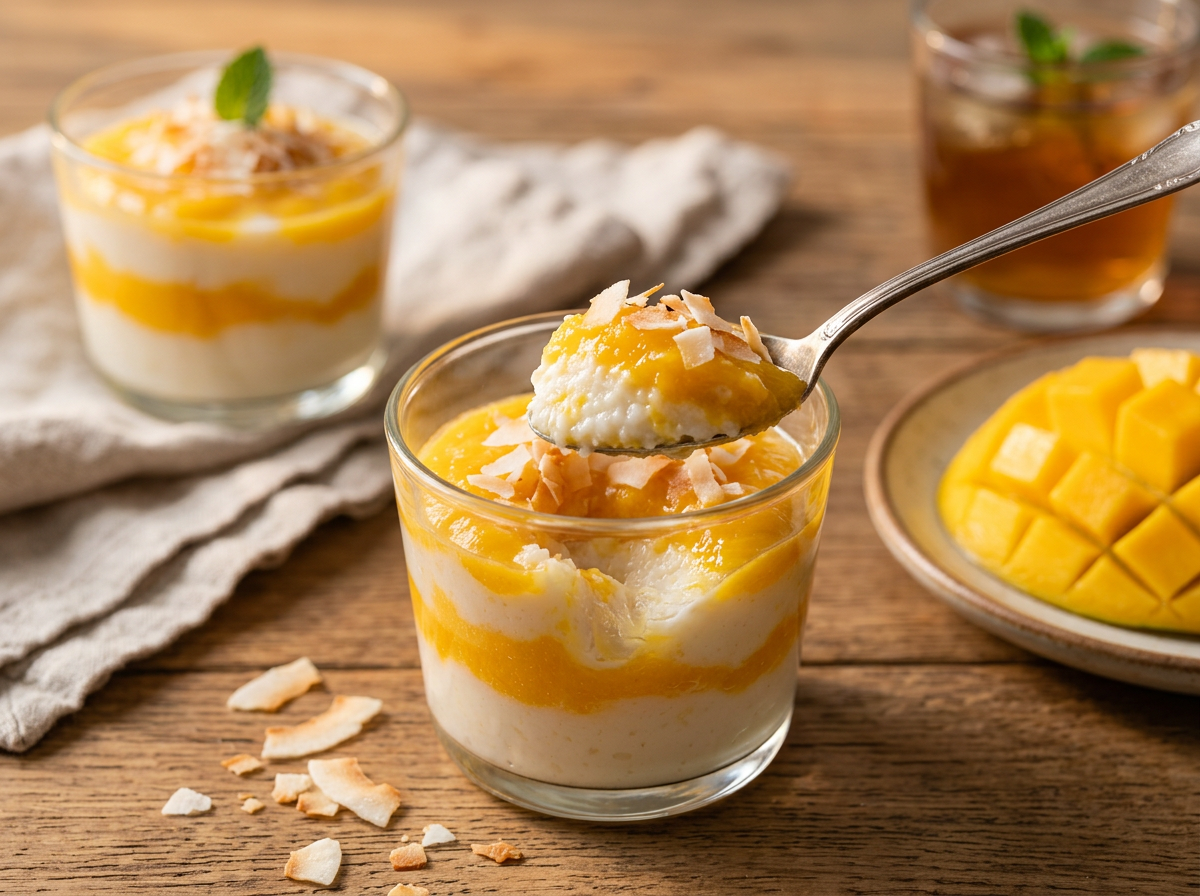
Serve it in the same small glasses you chilled it in, so the layers show through the glass. A few extra mango cubes and mint on top make it look like more effort than it actually took.
For a bigger dessert spread, set it out alongside coconut macaroons or a simple fruit salad, and pour something cold like iced hibiscus tea or sparkling water with lime.
FAQ
Why is my mango coconut pudding not setting properly?
It usually means the cornstarch slurry didn’t cook long enough or wasn’t whisked in smoothly. Cook the mixture for a full 3 to 4 minutes at a gentle simmer, stirring the whole time, until it visibly coats the back of a spoon. Pudding that looks thin off the heat will firm up more in the fridge, but it still needs that initial thickening on the stove.
Can I use erythritol or allulose instead of monk fruit sweetener?
Yes, either works as a 1:1 swap in this pudding. Allulose dissolves the smoothest and won’t leave a cooling aftertaste, while erythritol blends can sometimes taste slightly sharp in the mango layer. Start with a bit less than the recipe calls for, then taste and adjust before chilling.
How far ahead can I make this mango coconut pudding?
Make it up to 3 to 4 days ahead and keep it covered in the fridge. The coconut layer actually firms up more after the first day, and the mango puree stays fresh as long as it’s chilled. Add the toasted coconut topping right before serving so it stays crunchy.
What can I serve alongside mango coconut pudding for a bigger dessert spread?
Fresh fruit like pineapple or berries, a plate of coconut macaroons, or a pot of iced hibiscus tea all pair well. The pudding is rich from the coconut milk, so something acidic or crunchy on the side balances it out. I like it next to a simple fruit salad.
Is sugar-free mango coconut pudding keto-friendly?
Not strictly, since ripe mango has natural sugar and carbs, around 21g per serving here. It has no added sugar and is lower in sugar than a traditional pudding, but it’s not a low-carb dessert. For a stricter keto version, swap the mango for a smaller portion of raspberries.
What’s the difference between this pudding and mango sticky rice?
Mango sticky rice is a Thai dish built on glutinous rice and coconut sauce, served warm or at room temp with fresh mango on the side. This pudding skips the rice and uses cornstarch-thickened coconut milk as the base, chilled and layered with mango puree instead. It’s lighter and needs no added sugar.