Jump to Recipe
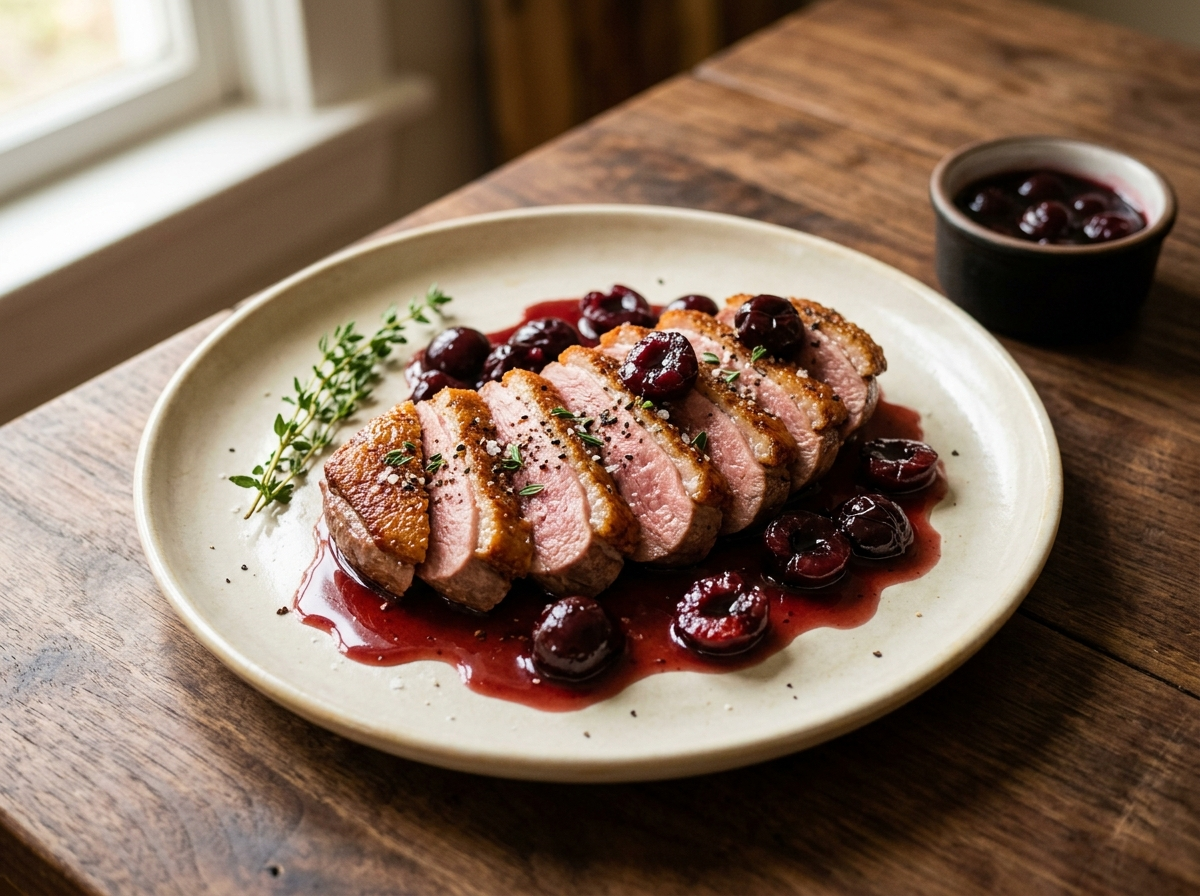
Duck breast has a reputation for being finicky, but it comes down to two things: scoring the fat correctly and starting it in a cold pan.
The cherry balsamic reduction does a lot of work here. Sweet cherries, tangy vinegar, and a splash of red wine come together in about eight minutes, using the same pan you just seared the duck in. Nothing goes to waste.
This is the kind of recipe that looks restaurant-caliber but doesn’t require anything beyond a sharp knife and an oven-safe skillet. It’s rich without being heavy, and the sauce keeps the whole plate from feeling one-note.
I make this when I want something genuinely impressive that still fits into a weeknight if I plan ahead.
Why You’ll Love This Recipe
- Crispy, golden skin that doesn’t turn rubbery
- One pan for both duck and the reduction
- Cherry balsamic sauce balances rich duck fat perfectly
- Restaurant-quality result with straightforward technique
Ingredient Notes
- duck breasts: Look for Moulard or Pekin breasts, around 200-220 g each. Pat them completely dry before scoring or the skin won’t crisp.
- fresh or frozen cherries: Bing or Morello cherries both work. Frozen are fine, just thaw and drain them first so you don’t add too much liquid to the sauce.
- balsamic vinegar: Use a mid-range balsamic, not the very cheap thin kind. It needs some natural sweetness to balance without adding extra sugar.
- dry red wine: A Pinot Noir or Syrah works well here. You can substitute chicken stock with a teaspoon of red wine vinegar if you’d rather skip the wine.
- shallot: Shallots melt into the sauce and stay subtle. A small red onion works in a pinch, but use half as much.
- unsalted butter: Swirled in at the end to give the reduction a glossy finish and round out the acidity. Don’t skip this step.
- fresh thyme: Two sprigs add a quiet herbal note without overpowering the cherry. Dried thyme works but use half the amount.
Duck Breast with Cherry Balsamic Reduction
Ingredients
Method
- Heat your oven to 200 C / 390 F with a rack in the center.
- Pat the duck breasts completely dry with paper towels. Using a sharp knife, score the fat cap in a crosshatch pattern at 1 cm intervals, cutting down to but not through the meat.
- Season both sides generously with salt and pepper.
- Place the duck breasts skin-side down in a cold, dry oven-safe skillet. Set the heat to medium and let the fat render for 10 to 12 minutes, without moving the duck, until the skin is deep golden and most of the fat has melted out.
- Flip the breasts and sear the flesh side for 1 minute until lightly browned.
- Transfer the skillet to the oven and roast for 5 to 6 minutes, until an instant-read thermometer reads 57 C / 135 F at the thickest part for medium.
- Transfer the duck to a warm plate, tent loosely with foil, and rest for 5 minutes. Pour off all but 1 tablespoon of the rendered fat from the pan and reserve the rest for another use.
- Return the skillet to medium heat. Add the minced shallot and cook for 2 minutes, stirring, until softened and just translucent.
- Add the red wine and scrape up any browned bits from the bottom of the pan. Let it simmer for 2 minutes until reduced by half.
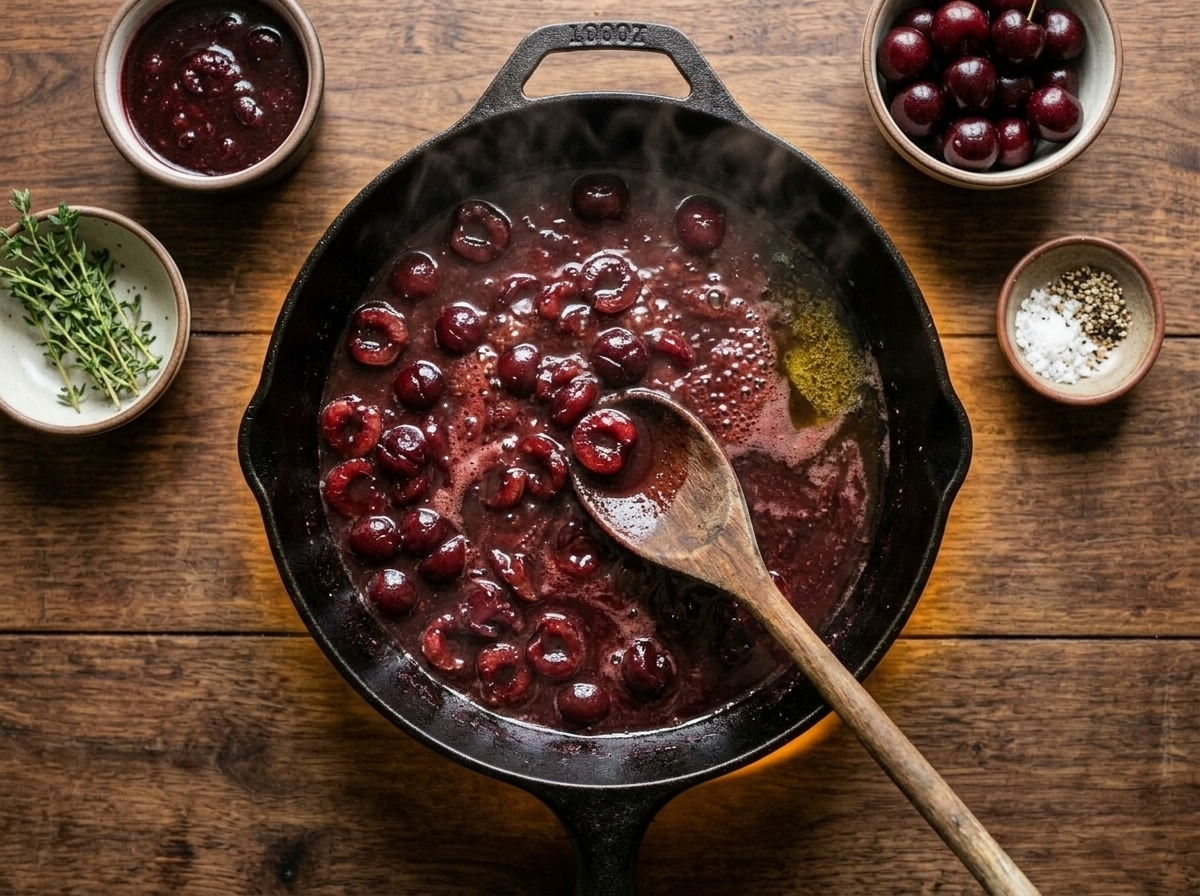
- Add the cherries, balsamic vinegar, stock, thyme sprigs, and honey if using. Stir to combine.
- Simmer over medium-high heat for 6 to 8 minutes, stirring occasionally, until the sauce has reduced to a consistency that coats the back of a spoon and the cherries have softened.
- Remove from heat. Discard the thyme sprigs. Swirl in the cold butter cubes one at a time until the sauce is glossy. Taste and adjust salt and pepper.
- Slice each duck breast on a bias into four or five pieces and fan across a warm plate.
- Spoon the cherry balsamic reduction generously over and around the duck. Serve immediately.
Notes
Tips for Success
- Score the fat in a crosshatch pattern down to but not through the meat to help fat render evenly.
- Start the duck skin-side down in a cold, dry pan so the fat renders slowly without burning.
- Pull the duck from the oven at 57 C / 135 F internal temp for a rosy medium, then rest five minutes.
- Build the reduction in the same pan while the duck rests to pick up every bit of flavor from the fond.
- Add cold butter off the heat and swirl, never stir, to keep the sauce glossy and emulsified.
Variations
- Use dried tart cherries and port wine instead of fresh cherries for a deeper, more concentrated sauce.
- Swap cherries for fresh blackberries and add a pinch of five-spice to the duck seasoning for an Asian-leaning profile.
- Replace balsamic with pomegranate molasses and add a strip of orange zest for a Middle Eastern-inspired finish.
Storage and Reheating
Cooked duck breast keeps well wrapped in the fridge for up to three days. Store the cherry balsamic reduction separately in a small jar or container.
To reheat the duck without drying it out, place it skin-side up on a wire rack over a baking sheet in a 160 C / 320 F oven for about eight minutes. A microwave will make the skin soft, so skip it if you care about texture.
The reduction reheats gently in a small saucepan over low heat. Add a tablespoon of water if it has thickened too much in the fridge.
Serving Suggestions
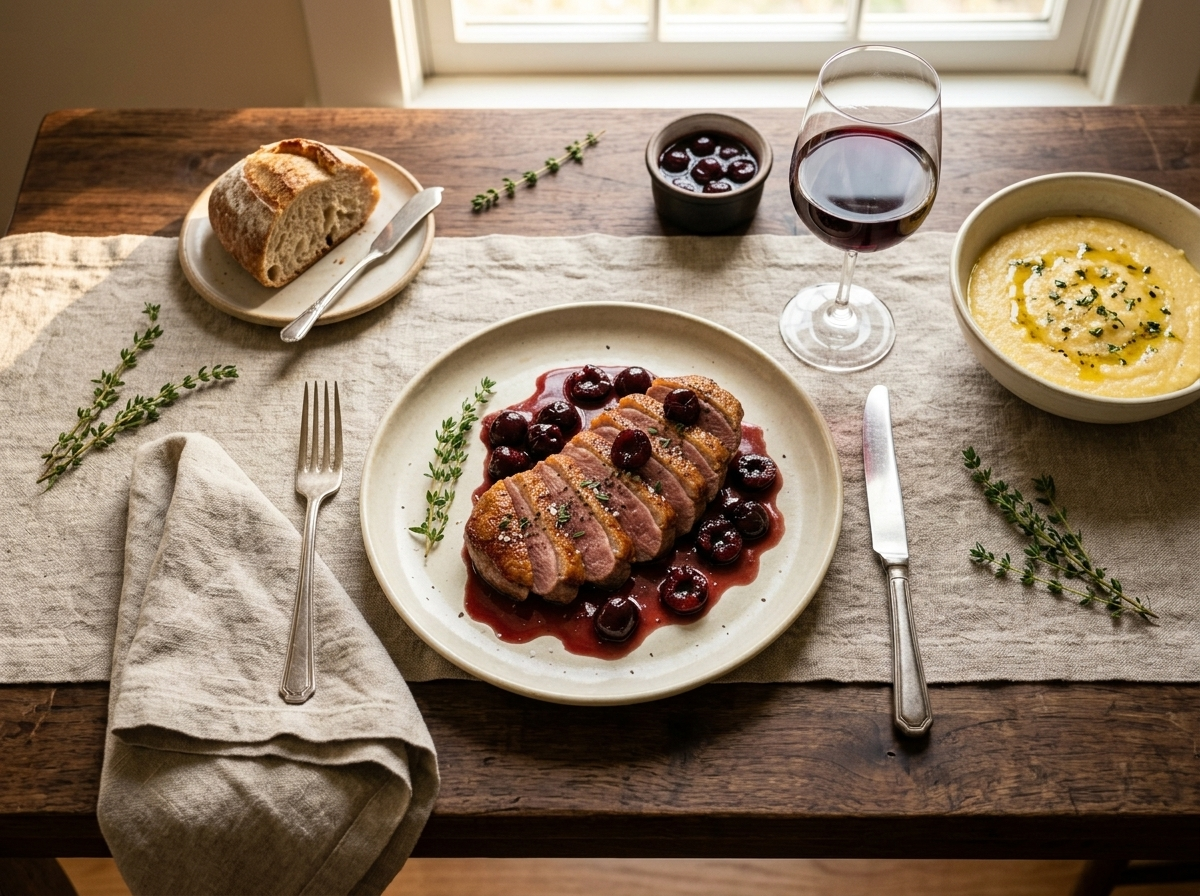
Duck breast with cherry balsamic sauce works best alongside something starchy that absorbs the pan sauce. Creamy polenta is a natural fit. Roasted fingerling potatoes or a celery root puree are both good options.
For greens, wilted spinach or blanched haricots verts keep the plate from feeling too heavy, much like the approach in a herb-crusted rack of lamb with greens. A simple bitter green salad dressed with lemon also cuts through the richness of the duck.
If you’re building a full dinner, start with a light roasted garlic cauliflower soup or a small cheese board. The duck is the centerpiece, so keep everything around it understated.
FAQ
Why is my duck breast skin not crispy after searing?
The most common reason is starting the pan too hot or not scoring the fat deeply enough. A cold pan start over medium heat lets the fat render out slowly, which is what gives you that crispy, even skin. Make sure the fat is nearly all rendered before you flip.
Can I use frozen cherries for the cherry balsamic reduction?
Yes, frozen cherries work fine. Thaw them completely and drain off the excess liquid before adding them to the pan, otherwise the sauce takes longer to reduce and can turn watery.
How do I know when the duck breast is done in the oven?
Use an instant-read thermometer and pull the duck at 57 C / 135 F for medium with a rosy pink center. The internal temp will rise a few degrees while it rests, so don’t wait for it to hit 60 C in the oven.
Can I make the cherry balsamic reduction ahead of time?
You can make it up to two days ahead and store it in the fridge. Reheat gently over low heat and swirl in a small knob of cold butter just before serving to bring back the gloss.
What is the difference between Moulard and Pekin duck breast for this recipe?
Moulard breasts are larger and fattier, with a deeper, gamier flavor that pairs especially well with the sweet-tart cherry sauce. Pekin breasts are smaller and milder, which makes them more forgiving for first-timers cooking duck.
Is duck breast with cherry balsamic reduction gluten-free?
This recipe is naturally gluten-free as written. Just double-check your balsamic vinegar label, as some cheaper brands add thickeners that may contain gluten.