Jump to Recipe
I’ll be honest – I started making these because I ran out of store-bought crackers and had half a block of cheddar sitting in the fridge. What came out of the oven surprised me.
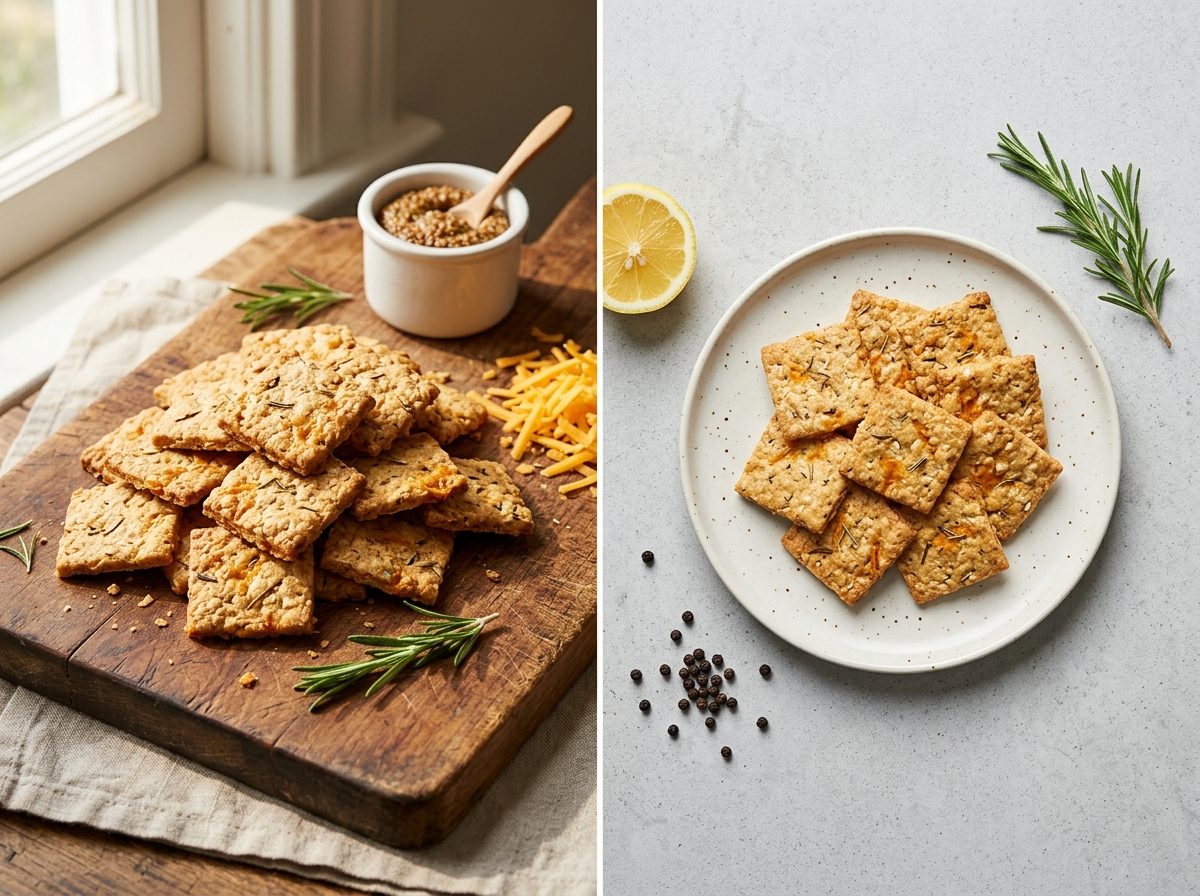
They’re thin, crisp at the edges, and deeply cheesy. The rolled oats add a texture that’s hard to get any other way. Slightly coarse. A little nutty. Nothing like a standard butter cracker.
They work on a cheese board, next to a bowl of soup, or just eaten by the handful over the sink. No judgment.
The dough comes together in one bowl, rolls out easily, and bakes in under 20 minutes. You probably have every ingredient already.
Why You’ll Love This Recipe
- Ready in 40 minutes with basic pantry ingredients
- Rolled oats add a nutty crunch no flour cracker has
- Sharp cheddar flavor in every bite, not just a hint
- Keeps well for a week – great for snacking all week
Ingredient Notes
- rolled oats: Use old-fashioned rolled oats, not instant oats. Instant oats turn mushy and lose the texture that makes these crackers interesting.
- sharp cheddar: Finely grated sharp or extra-sharp cheddar melts into the dough evenly. Mild cheddar works but gives less punch – I’d go sharp every time.
- all-purpose flour: Plain all-purpose flour holds the dough together. You can swap half for whole wheat flour for a slightly earthier flavor.
- cold butter: Cold, cubed butter creates a flaky, short texture. Don’t soften it first – the cold fat is what keeps the crackers from going tough.
- fresh rosemary: Fresh rosemary gives a fragrant, pine-like note. Dried rosemary works at half the amount, or swap for fresh thyme if that’s what you have.
- ice water: Add ice water one tablespoon at a time just until the dough holds together. Too much water makes the crackers soft instead of crisp.
Savory Oat and Cheddar Crackers
Ingredients
Method
- Heat the oven to 190 C / 375 F. Line a large sheet pan with parchment paper.
- Add the rolled oats, flour, salt, garlic powder, black pepper, and rosemary to a large mixing bowl. Stir to combine.
- Add the cold butter cubes. Use a pastry cutter or your fingertips to rub the butter into the dry ingredients until the mixture looks like coarse crumbs with some pea-sized pieces of butter remaining.
- Add the finely grated cheddar and toss it through the crumb mixture until distributed.
- Add ice water one tablespoon at a time, stirring with a fork after each addition, until the dough just comes together and holds when pressed. Stop as soon as it holds – you may not need all 4 tablespoons.
- Turn the dough out onto a lightly floured surface. Press it into a flat disk, wrap in plastic wrap, and refrigerate for 10 minutes.
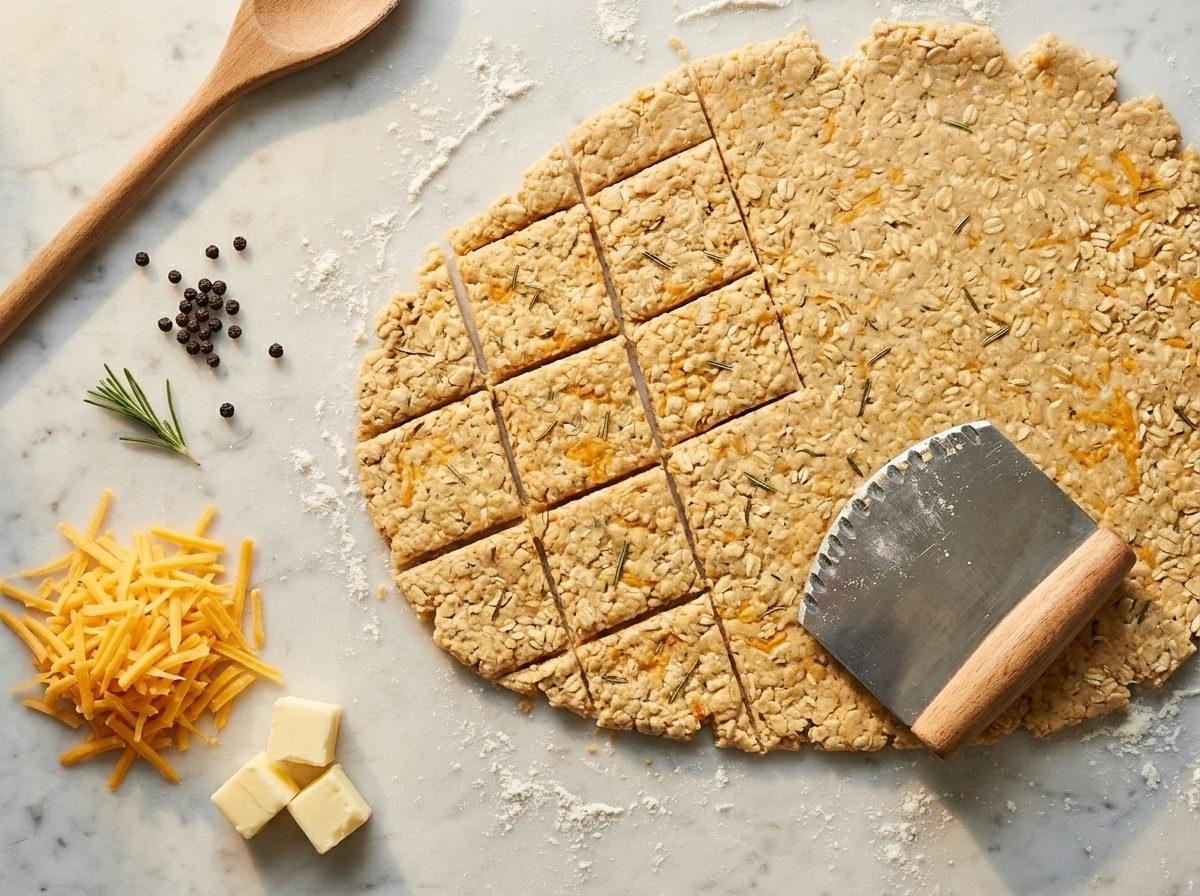
- On a lightly floured surface, roll the dough to about 3 mm thickness. Cut into rectangles or squares roughly 4 x 5 cm, or use a round cutter if you prefer.
- Transfer crackers to the prepared sheet pan, leaving a small gap between each one. Prick each cracker three times with a fork.
- Bake for 16 to 18 minutes until the edges are golden and the surface looks dry. Check at 15 minutes – oven temps vary.
- Remove from the oven and leave the crackers on the pan for 10 minutes to firm up before moving them to a wire rack. They crisp fully as they cool.
Notes
Tips for Success
- Roll the dough to exactly 3 mm thick so every cracker bakes evenly without soft centers.
- Chill the cut crackers on the sheet pan for 10 minutes before baking to hold their shape better.
- Prick each cracker three times with a fork to prevent bubbling and keep them flat.
- Grate the cheddar yourself on the fine side of the grater – pre-shredded cheese has coatings that affect how it binds.
- Pull the crackers at the first sign of golden edges – they firm up significantly as they cool on the pan.
Variations
- Add 1 tsp smoked paprika and a pinch of cayenne for a smoky, mildly spicy version.
- Swap cheddar for Parmesan and add 1 tbsp finely chopped sun-dried tomatoes for an Italian-style cracker.
- Mix in 2 tbsp sesame seeds and 1 tsp garlic powder for a nuttier, more savory bite.
Storage and Reheating
Store cooled crackers in an airtight tin or container at room temperature for up to 7 days. Keep them away from moisture or they’ll lose their snap.
If they soften after a few days, spread them on a sheet pan and bake at 160 C / 320 F for 5 minutes. They’ll crisp right back up as they cool.
These crackers freeze well too. Layer them between parchment in a zip-lock bag and freeze for up to 2 months. Thaw at room temperature for 30 minutes, then re-crisp in the oven if needed.
Serving Suggestions
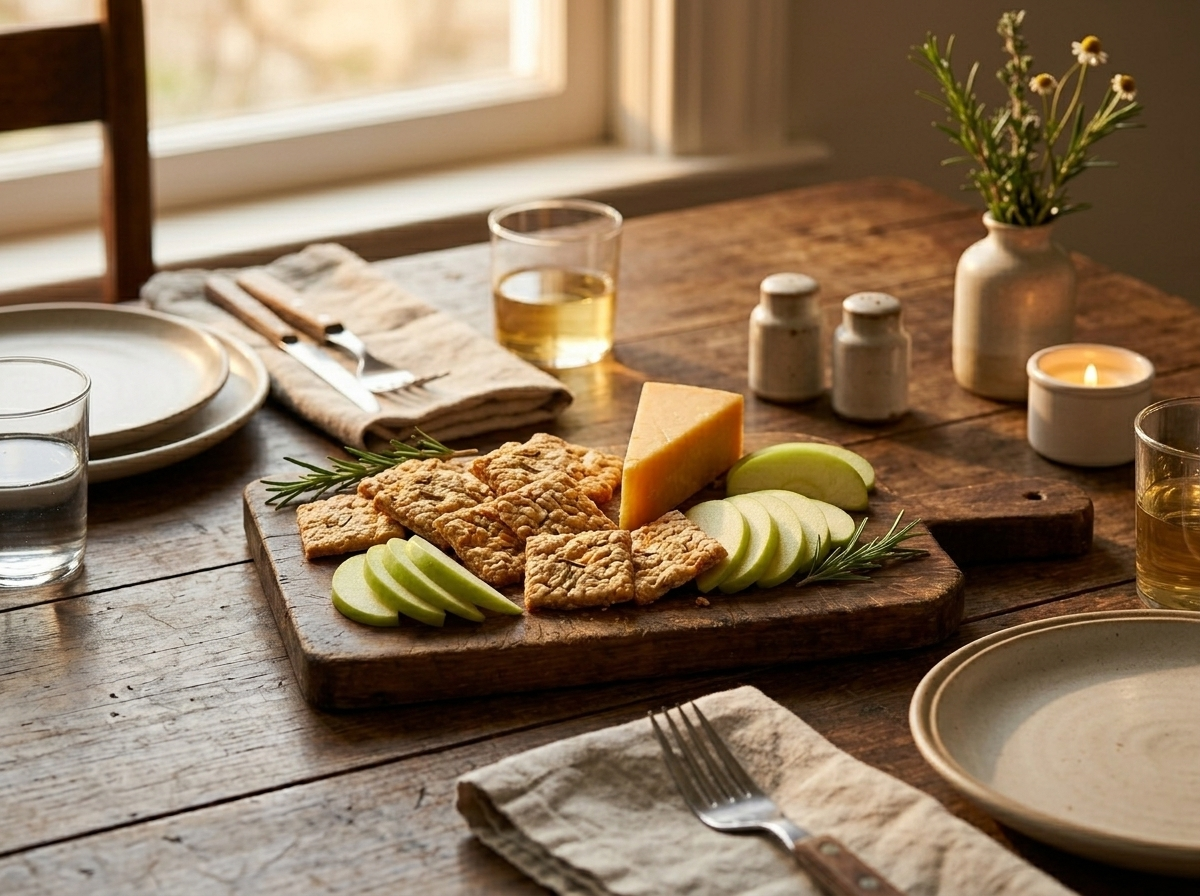
These crackers sit comfortably on any cheese board. Pair them with a sharp blue cheese or a creamy brie – the oat texture holds up well under soft spreads without crumbling immediately.
They’re also a solid match for chunky soups. Try them alongside a tomato bisque or a roasted red pepper soup where the cheesy, herby flavor adds contrast to something acidic and smooth.
For a quick snack plate, arrange them with sliced apple, a few grapes, and a small pot of whole grain mustard. Simple, no cooking required, and it looks put-together.
FAQ
Why are my oat and cheddar crackers soft instead of crispy?
The most common cause is too much water in the dough or rolling them too thick. Aim for 3 mm thickness and add water only until the dough just holds together. They also need to cool completely on the pan before you judge the texture – they crisp up as they cool.
Can I use quick oats instead of rolled oats in these crackers?
Quick oats are cut finer and absorb liquid faster, which makes the dough stickier and the crackers denser. Rolled oats are worth seeking out here – they’re what gives these crackers their slightly coarse, nutty texture.
Can I freeze the unbaked cracker dough and roll it out later?
Yes. Shape the dough into a flat disk, wrap it tightly in plastic wrap, and freeze for up to 6 weeks. Thaw overnight in the fridge before rolling – don’t try to rush it at room temperature or the butter will get too soft.
What cheese works besides cheddar in this oat cracker recipe?
Gruyere, Parmesan, and aged Gouda all work well because they’re firm and low in moisture. Avoid fresh mozzarella or any soft cheese – too much water content makes the dough sticky and the crackers won’t crisp properly.
Are these oat and cheddar crackers suitable for a gluten-free diet?
Not as written, since the recipe uses all-purpose wheat flour. You can try a 1:1 gluten-free flour blend, but make sure your rolled oats are certified gluten-free too, as oats are often processed in facilities that handle wheat.
What’s the difference between these homemade oat crackers and oatcakes?
Traditional Scottish oatcakes use mostly oat flour or fine oatmeal with very little fat and no cheese, giving them a drier, more neutral flavor. These crackers have a higher butter and cheddar ratio, which makes them richer, flakier, and more snack-like.