Jump to Recipe
I’ll be honest, my first batch of fermented beet and cabbage slaw grew a thin white film on top and I almost tossed the whole jar. Turns out that’s kahm yeast, harmless, and a sign I hadn’t kept the vegetables submerged.
Fermented beet and cabbage slaw is a raw, salt-cured mix of shredded cabbage and grated beets left to ferment at room temperature for 5 to 7 days. Salt draws out the vegetables’ own liquid, which becomes a natural brine, and wild bacteria do the rest.
The result is tangy, crunchy, and a little fizzy on the tongue. The beets add an earthy sweetness and a deep pink color that bleeds into every strand of cabbage.
It’s a probiotic side that sits right in your fridge for weeks, ready whenever a sandwich or bowl needs some crunch.
Why You’ll Love This Recipe
- Needs just 5 ingredients and no cooking at all
- Gets tangier and better with each week in the fridge
- Adds a probiotic crunch to sandwiches, tacos, and bowls
- Costs under a dollar a serving to make
Ingredient Notes
- green cabbage: Gives the classic crunch and a milder color than red cabbage. Red cabbage works too but stains everything a deeper pink.
- beets: Grate them raw, don’t cook first. Wear gloves if you don’t want stained hands for the rest of the day.
- fine sea salt: Use non-iodized salt. Iodized table salt can slow fermentation and make the brine cloudy.
- caraway seeds: Adds a light anise note typical of Eastern European ferments. Swap for cumin seeds or leave out entirely.
- garlic: Adds bite and depth as it ferments. Skip it if you want a milder, more classic slaw flavor.
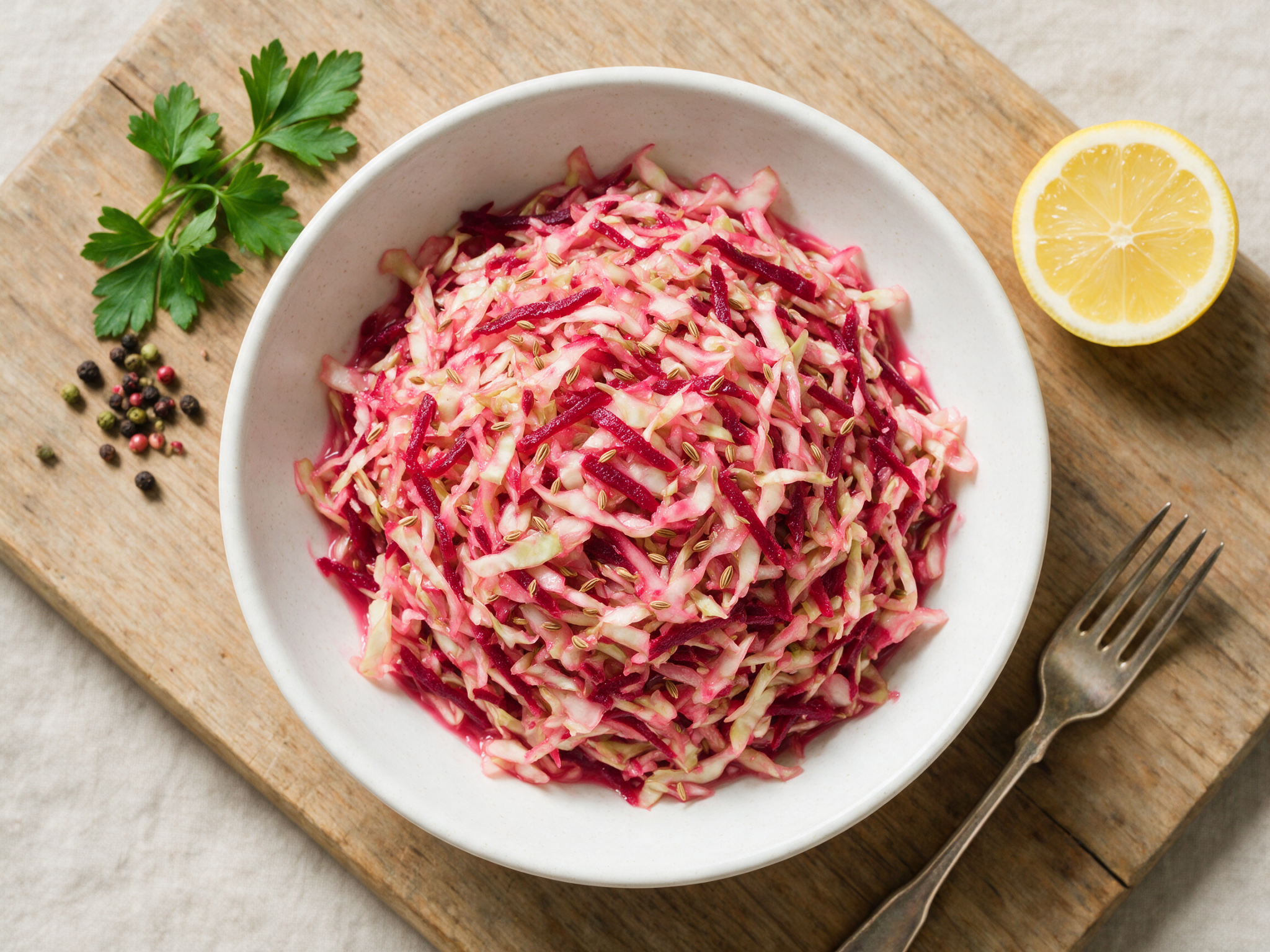
Fermented Beet and Cabbage Slaw: Crunchy and Tangy
Ingredients
Method
- Weigh the cored, sliced cabbage and grated beets together. They should land around 1.2 kg / 2.6 lb total, which tells you exactly how much salt you need for a clean 2% ferment.
- Combine the cabbage and beets in a large mixing bowl. Sprinkle the fine sea salt evenly over the top.
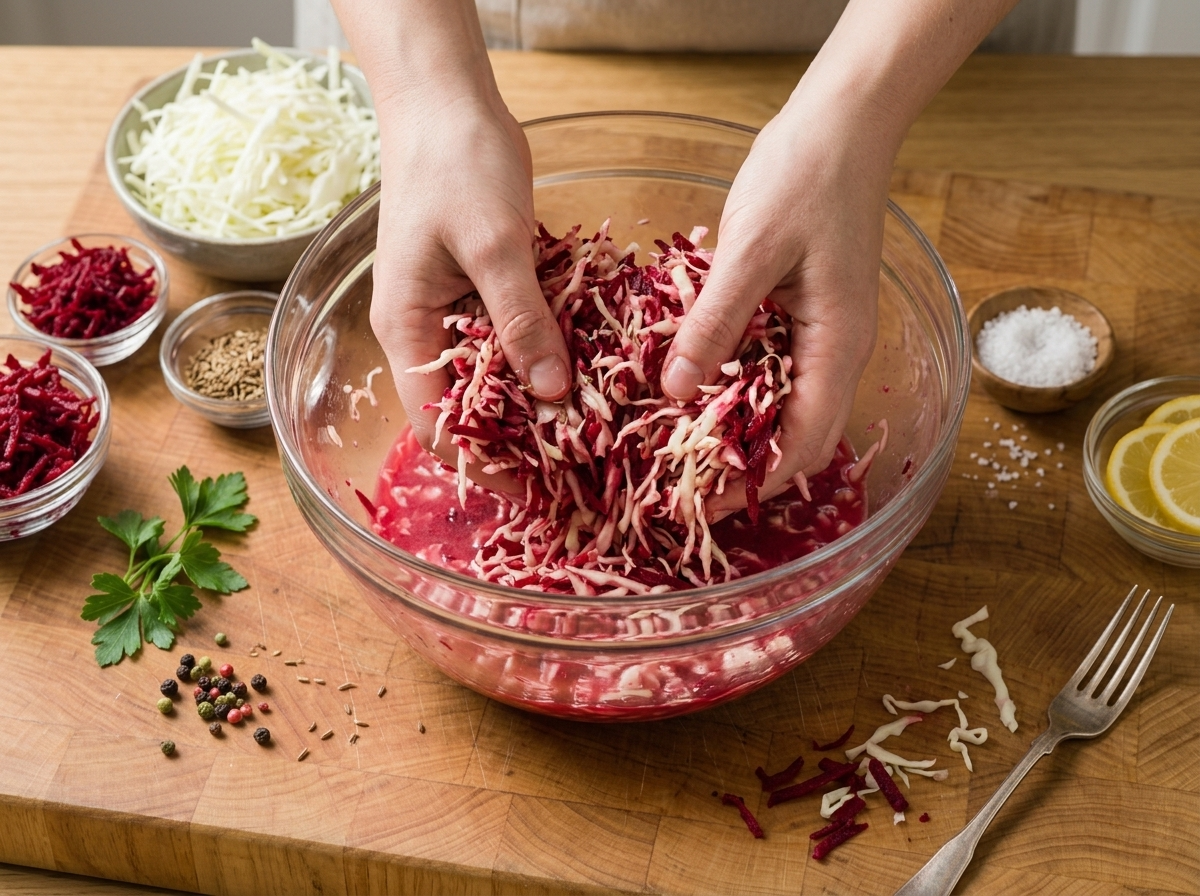
- Massage the salted vegetables with your hands for 8 to 10 minutes, squeezing and folding, until they go limp and pool in their own liquid at the bottom of the bowl.
- Stir in the caraway seeds and sliced garlic.
- Pack the mixture tightly into a 1-quart / 1 L fermentation jar, pressing down with your fist or a wooden tamper after each handful to force out air bubbles.
- Pour any leftover brine from the bowl over the top. The liquid should cover the vegetables by at least 2.5 cm / 1 inch; top up with filtered water and a pinch of salt if it falls short.
- Weigh the vegetables down with a fermentation weight or a folded outer cabbage leaf so nothing floats above the brine. Seal with an airlock lid or a loosely fitted regular lid.
- Set the jar on a plate, since it may bubble over, in a spot away from direct sun, at 18 to 22 C / 64 to 72 F, for 5 to 7 days. Press the vegetables down once a day to release gas and keep them submerged.
- Start tasting on day 5. When it’s tangy, a little fizzy, and the beets have turned everything a deep pink, move the jar to the fridge.
- Serve cold, straight from the jar, using a clean fork every time to keep it from spoiling early.
Notes
- Use non-iodized salt; iodized salt can slow fermentation and cloud the brine.
- Keep vegetables submerged under brine at all times to prevent mold.
- Taste starting day 5; longer ferments taste more sour and soft.
- Weigh vegetables before salting for an accurate 2% brine ratio.
Tips for Success
- Weigh vegetables before salting to calculate a true 2% salt ratio for a safe ferment.
- Massage the salted cabbage for a full 8 to 10 minutes until it pools in its own liquid.
- Keep vegetables fully submerged under brine the whole ferment to stop mold from forming.
- Check the jar daily since fermentation gas builds fast in the first 3 days.
- Taste starting on day 5 and move it to the fridge as soon as it’s tangy enough for you.
Variations
- Swap caraway for a tablespoon of grated fresh ginger for a spicier, brighter ferment.
- Use a mix of red and green cabbage for a slaw with even more color contrast.
- Add a few juniper berries or mustard seeds with the caraway for a deeper, earthier flavor.
Storage and Reheating
Fermented beet and cabbage slaw keeps in the fridge for 2 to 3 months once fermentation slows down. Store it in its brine in a sealed jar, and always use a clean fork to keep contamination out.
This slaw is never heated. Cooking it would kill the live cultures that give it that tang and fizz, so serve it straight from the fridge, cold or at room temperature.
If you want it ready ahead of a party, ferment it a week early and let it finish developing flavor in the fridge. It actually gets better after 2 to 3 weeks in cold storage.
Serving Suggestions
Fermented beet and cabbage slaw works as a bright side next to something rich, like grilled sausage, pulled pork, or a fatty burger.
Pile it onto sandwiches or tacos for crunch, or spoon it over a grain bowl with roasted chicken and a soft egg.
I like a small scoop on the side of scrambled eggs in the morning. It sounds odd until you try it.

FAQ
Why is there white film on top of my fermented beet and cabbage slaw?
That thin white film is kahm yeast, a harmless wild yeast that shows up when vegetables aren’t fully submerged under brine. Skim it off with a spoon, press the slaw back under the liquid, and it won’t come back. Black or fuzzy mold is different and means the batch should be tossed.
Can I use red cabbage instead of green in this beet and cabbage slaw?
Yes, red cabbage works fine and gives you an even deeper pink ferment once the beet juice bleeds through. The texture and fermentation time stay the same, around 5 to 7 days at 18 to 22 C / 64 to 72 F. It just looks more dramatic on the plate.
How long does fermented beet and cabbage slaw last in the fridge?
It keeps for 2 to 3 months in the fridge once you move it out of active fermentation. The flavor keeps developing for the first few weeks, getting tangier and softer over time. Always use a clean utensil to scoop it out so you don’t introduce bacteria that can spoil the batch.
What goes with fermented beet and cabbage slaw at dinner?
It pairs well with rich, fatty foods like grilled sausage, pulled pork, or a smash burger, since the tang cuts through the grease. It’s also good piled onto tacos or scooped over a grain bowl with roasted chicken. I like a small spoonful next to eggs in the morning too.
Is fermented beet and cabbage slaw good for gut health?
It’s a solid source of natural probiotics since the fermentation process is powered by live bacteria already on the vegetables. Those cultures may support gut bacteria diversity, though everyone’s gut responds a little differently. It’s also naturally gluten-free, dairy-free, and low in calories at around 45 per serving.
What’s the difference between this slaw and regular sauerkraut?
The main difference is the beets, which add earthy sweetness, a pink color, and extra natural sugar for the bacteria to work with. Classic sauerkraut is just cabbage and salt. Both use the same 2% salt ratio and a similar 5 to 7 day ferment at room temperature.