Jump to Recipe
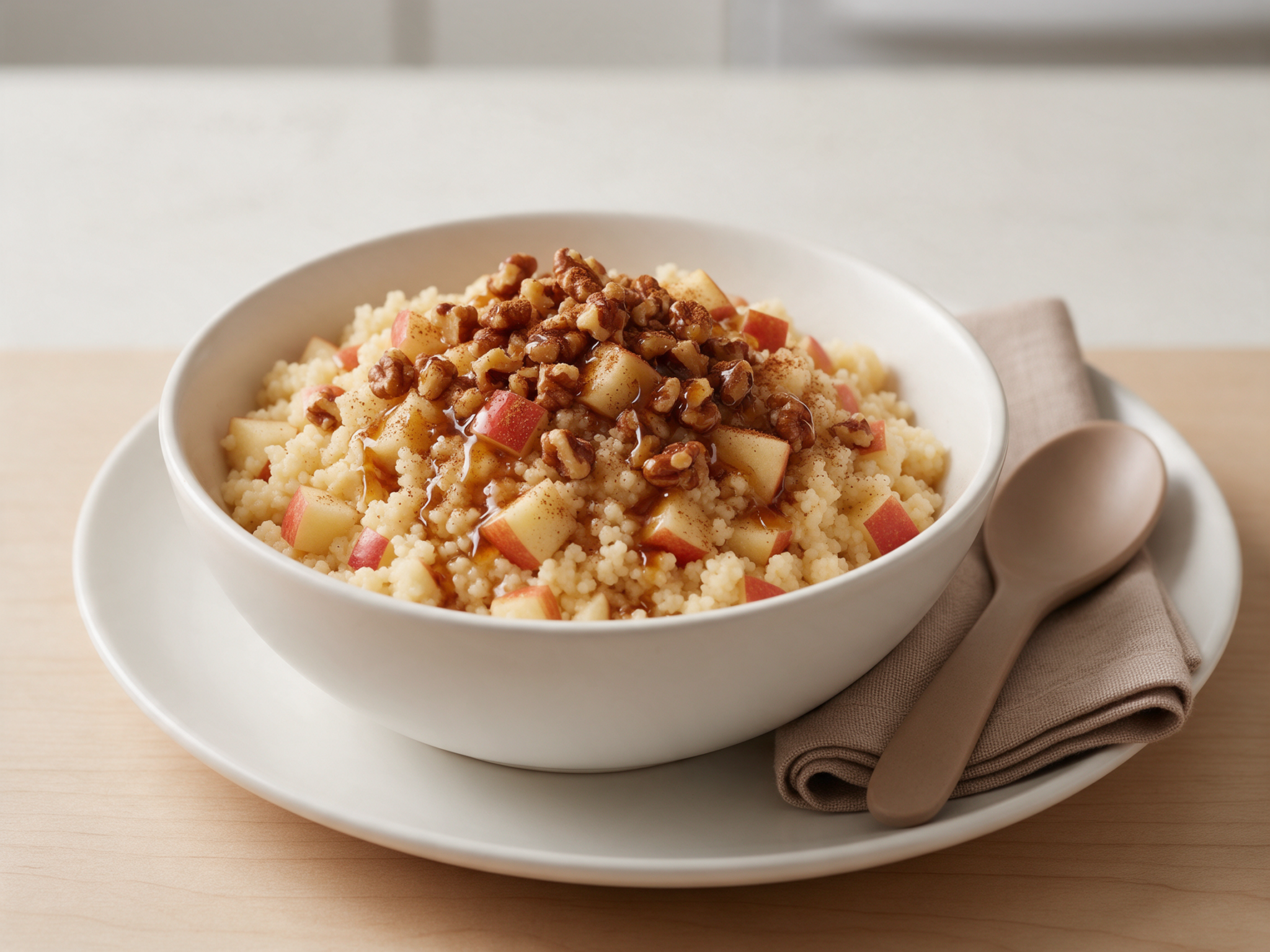
This gluten-free amaranth breakfast bowl is a thick, nutty porridge made from naturally gluten-free amaranth, simmered in milk and water for 20 minutes and topped with banana, blueberries and toasted walnuts. One pot makes four bowls.
I’ll be honest. The first time I cooked amaranth, I expected oatmeal. It’s not oatmeal. The grains are tiny and earthy, and they keep a slight pop even when soft.
Once I stopped comparing, I liked it a lot. It’s creamy. Lightly sweet, with a little chew.
It also sits right in your rotation if you like breakfast made ahead. One pot on Sunday covers most of the week. Just stir it often. Amaranth sticks to the bottom of the pan fast, and a scorched layer will taste through the whole batch.
Why You’ll Love This Recipe
- One pot covers four breakfasts with 10 minutes of prep
- Naturally gluten-free, no special flours or blends needed
- Creamy and nutty, with a slight pop in every spoonful
- Reheats with a splash of milk and tastes fresh
Ingredient Notes
- amaranth: Look for it in the bulk bins or near the gluten-free flours. If you’re avoiding gluten for celiac disease, buy a package labeled certified gluten-free.
- whole milk: Whole milk gives the creamiest result. Unsweetened soy or oat milk works in equal amounts, though oat milk makes a slightly thinner porridge.
- walnuts: Pecans are a fine swap. For a nut-free bowl, toast 3 tbsp pumpkin seeds the same way.
- maple syrup: Honey works at the same amount. Add it after cooking so the flavor stays clear.
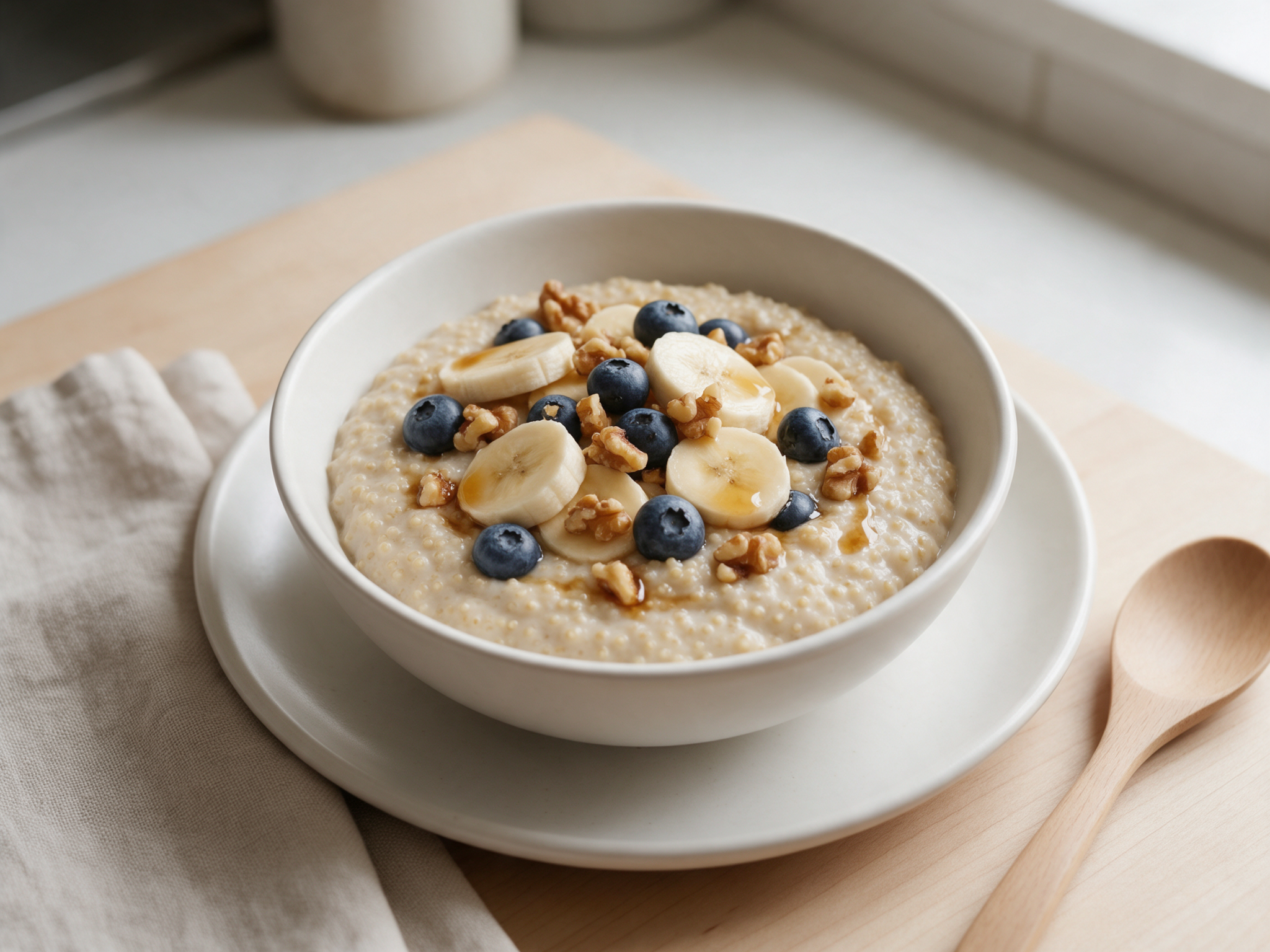
Creamy Gluten-Free Amaranth Breakfast Bowl with Walnuts
Ingredients
Method
- Rinse the amaranth in a fine-mesh sieve under cold water for 30 seconds, then shake off the excess. Roughly chop the walnuts.
- Add the amaranth, water, milk, cinnamon and salt to a 3-quart / 2.8 L saucepan. Bring to a boil over medium-high heat, about 5 minutes, stirring once or twice.
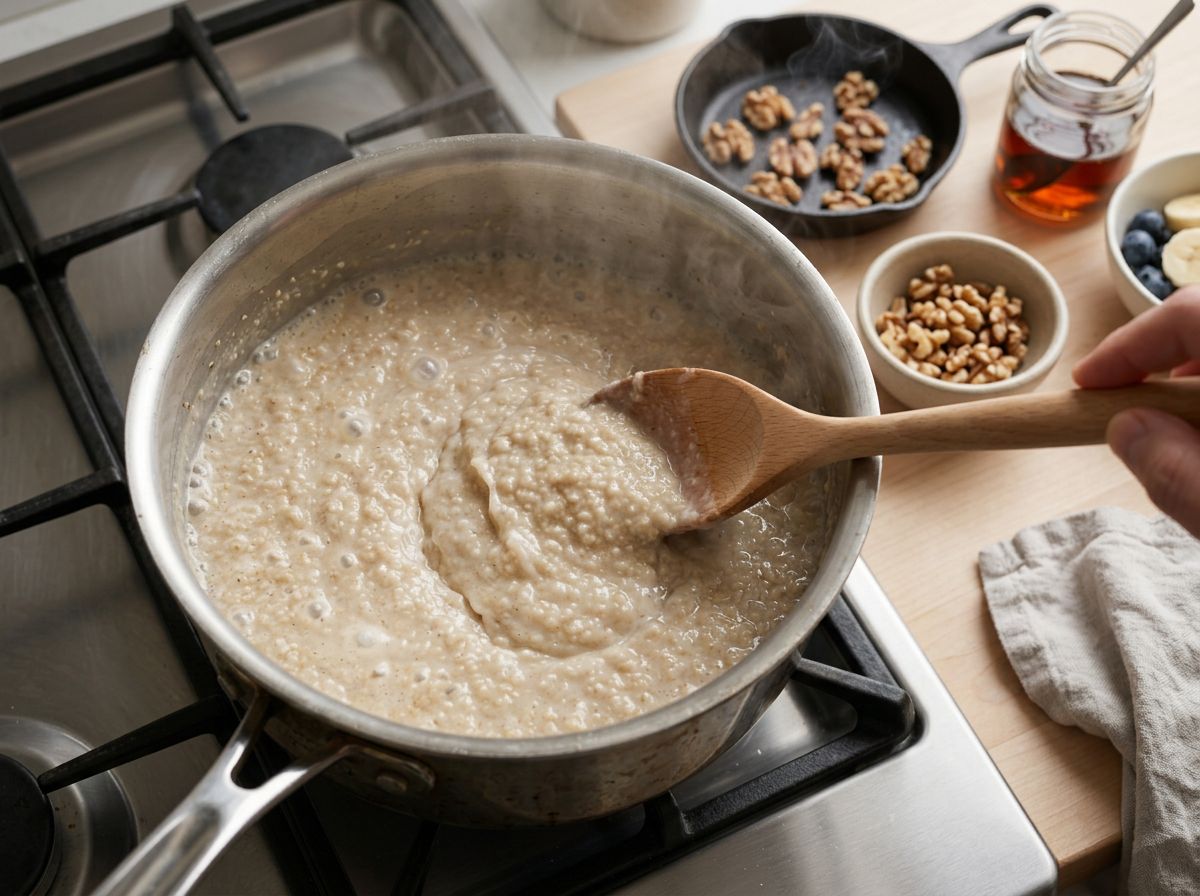
- Reduce the heat to low, set the lid slightly ajar, and simmer for 20 minutes. Stir every 4 to 5 minutes and scrape the bottom, because amaranth sticks and scorches fast. It’s ready when the porridge is as thick as loose oatmeal and the grains are soft with a slight pop.
- While it simmers, toast the walnuts in a dry 20 cm / 8-inch skillet over medium-low heat for 3 to 4 minutes, shaking the pan, until fragrant and a shade darker. Tip them onto a plate.
- Take the pot off the heat and stir in the maple syrup and vanilla. Cover and rest for 5 minutes. The porridge thickens as it sits.
- Slice the bananas. Divide the porridge among four bowls and top with the banana, blueberries and toasted walnuts. Serve warm.
Notes
- Keep the lid slightly ajar while simmering so the pot doesn’t boil over.
- Scale the batch up in a bigger pot, not by simmering longer.
- Cool leftovers within 2 hours before they go in the fridge.
- Reheat with a splash of milk, because cold porridge sets firm.
Tips for Success
- Rinse the amaranth in a fine-mesh sieve, not a colander, because the grains are about the size of poppy seeds and slip through.
- Stir every 4 to 5 minutes and scrape the bottom of the pot with a flat-edged wooden spoon so nothing catches.
- Toast the walnuts in a dry skillet while the porridge simmers, then tip them onto a plate so they stop cooking.
- Rest the pot covered for 5 minutes off the heat before serving, since the porridge keeps thickening as it sits.
- Slice the bananas just before serving so the pieces stay firm and pale on top of the warm porridge.
Variations
- Swap the banana and blueberries for 2 diced apples sauteed in 1 tbsp butter with an extra pinch of cinnamon.
- Stir 1 tbsp cocoa powder and 2 tbsp peanut butter into the finished porridge, then top with sliced banana.
- Stir 120 g pumpkin puree and 1/4 tsp pumpkin pie spice into the pot for the last 10 minutes of simmering.
Storage and Reheating
Cooked amaranth porridge keeps in the fridge for 3 to 4 days in an airtight container. Cool it within 2 hours of cooking, and store it plain. Add fruit and nuts fresh, since bananas brown and walnuts go soft.
It sets firm when cold, almost like polenta. To reheat, stir in 2 to 3 tbsp milk per portion and microwave for 60 to 90 seconds at 70% power, stirring halfway. Or warm it in a saucepan over low heat for 3 to 4 minutes, stirring often.
For longer storage, freeze single portions in airtight containers for up to 3 months. Thaw overnight in the fridge and reheat the same way.
Serving Suggestions
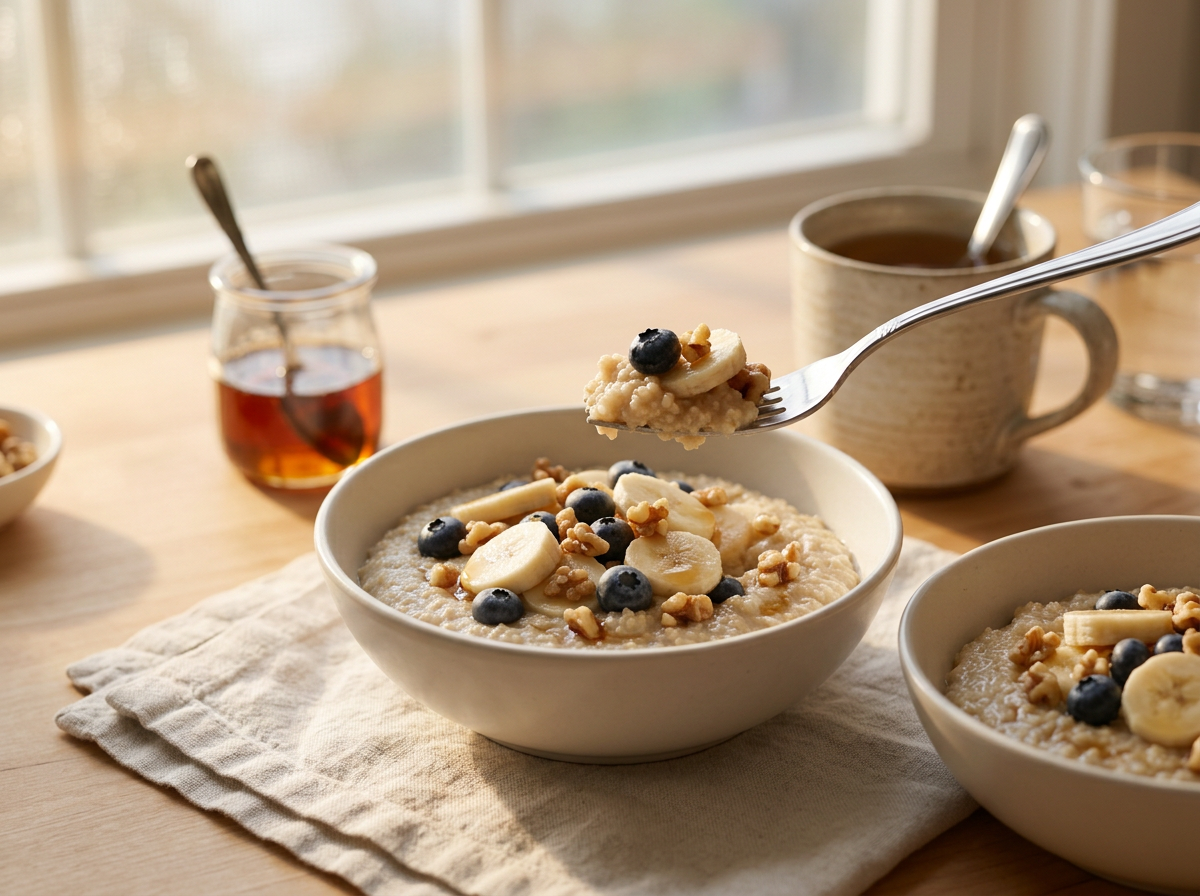
Serve the amaranth breakfast bowl warm, with the toppings added at the last minute. Warm porridge against cold blueberries is the best part.
For kids, I keep it simple: banana slices and a small drizzle of maple syrup. For grown-ups, a spoonful of plain Greek yogurt or almond butter adds protein and a little tang.
A mug of black tea or coffee sits well alongside. On rushed mornings, spoon the reheated porridge into a jar, add fruit, and eat it on the go.
FAQ
How do I know when amaranth porridge is done?
It’s done after about 20 minutes of simmering, when the porridge is as thick as loose oatmeal and the grains are soft with a faint pop. Drag a spoon across the bottom of the pot. The trail should fill in slowly. It thickens a bit more during the 5-minute rest.
Can I use quinoa instead of amaranth in this breakfast bowl?
You can, but the bowl won’t be creamy. Quinoa stays as separate, fluffy grains, so the texture is looser and more cereal-like. Cook 170 g quinoa in 360 ml of the same milk and water mix for about 15 minutes, until absorbed. For a thick porridge, millet is a closer match.
Can I freeze amaranth porridge for make-ahead breakfasts?
Yes, freeze the plain porridge in single-portion containers for up to 3 months. Thaw one overnight in the fridge, then reheat it with 2 to 3 tbsp milk, stirring until smooth. Add the banana, blueberries and walnuts fresh, since banana turns brown and mushy after freezing.
What can I top amaranth porridge with besides banana and blueberries?
Sliced pears, diced apple, raspberries, or stewed plums all work well. For protein, add a spoonful of plain Greek yogurt or almond butter. Toasted pumpkin seeds or shredded coconut give crunch if you’d rather skip walnuts. Add fruit just before serving so it stays bright.
Is this amaranth breakfast bowl gluten-free, and can I make it dairy-free?
Yes, amaranth is naturally gluten-free, but buy a package labeled certified gluten-free if you have celiac disease, since grains can pick up wheat in processing. The bowl uses whole milk, so swap in an equal amount of unsweetened soy or oat milk to make it dairy-free.
What is the difference between amaranth porridge and oatmeal?
Amaranth porridge is thicker and slightly gelatinous, with a nutty, earthy taste and tiny grains that keep a soft pop. Oatmeal is softer and milder. Amaranth also needs about 20 minutes of simmering, and it’s naturally gluten-free, while oats are only safe if certified gluten-free.