Jump to Recipe
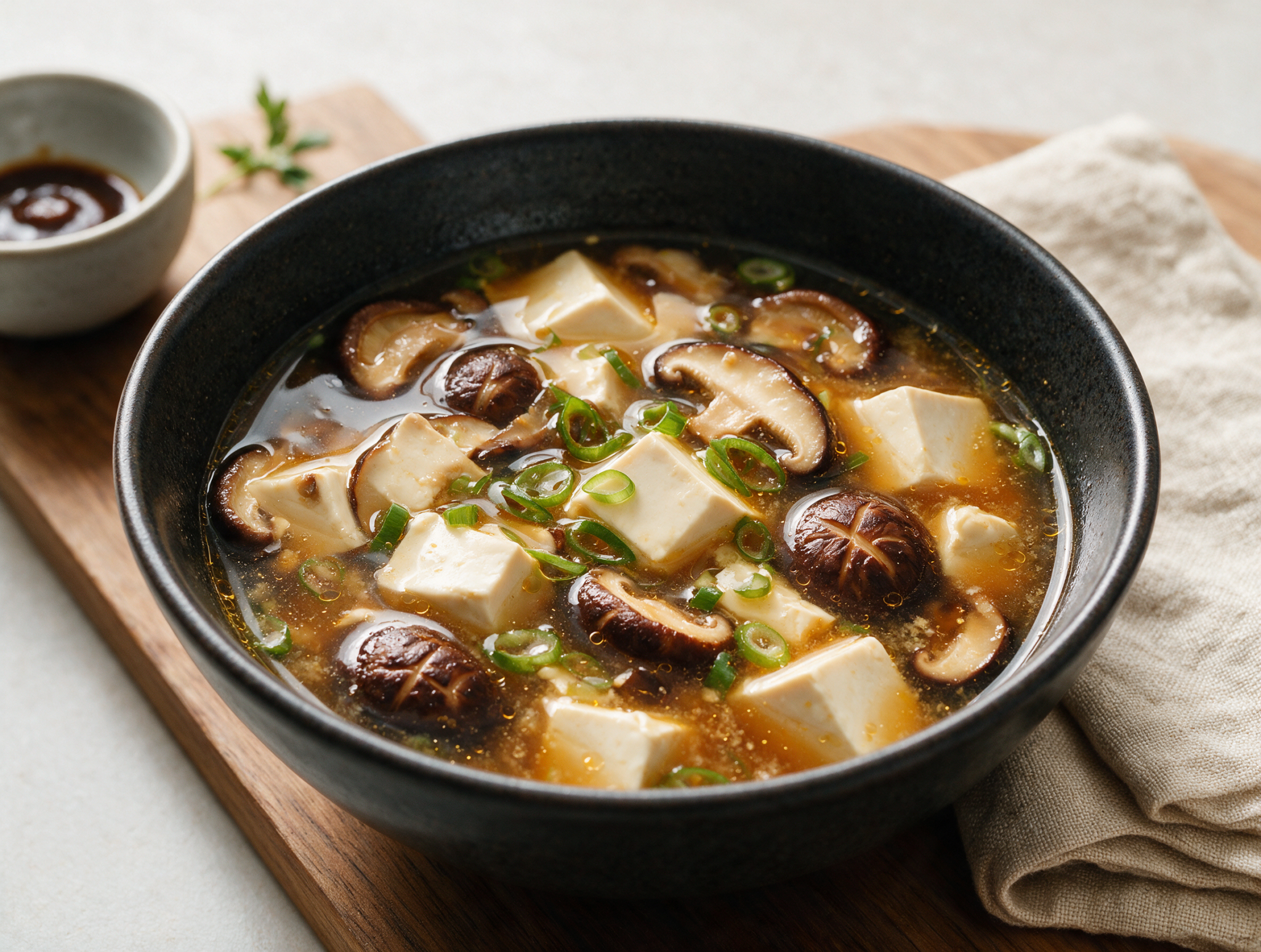
Miso shiitake mushroom soup is a light Japanese-style broth made by simmering kombu and fresh shiitake into a quick dashi, then whisking in white miso off the heat so it stays fragrant and doesn’t turn bitter. It’s ready in under an hour and tastes like it simmered much longer.
I make this on weeks when the fridge feels bare but there’s still miso in the door and a stray handful of mushrooms in the crisper. It pulls together with almost nothing and still tastes deep and savory.
The broth is light. Earthy from the shiitake. Salty and round from the miso. Silken tofu cubes add softness, and a scatter of scallions at the end keeps it fresh instead of muddy.
One thing I learned the hard way: never boil the soup once the miso goes in. Boiling kills the aroma and makes it taste flat instead of bright.
Why You’ll Love This Recipe
- Ready in under an hour with mostly hands-off simmering time
- Built on real dashi, not bouillon cubes, for deep flavor
- Naturally vegan and easy to make gluten free with tamari
- Uses one saucepan from broth to bowl
Ingredient Notes
- kombu: Adds a savory base without dominating the broth. Look for it in the Japanese or Asian aisle, sold as dried kelp strips.
- dried shiitake mushrooms: Give the dashi a deeper, more concentrated mushroom flavor than fresh alone. Soak them in the same water you’ll use for the broth.
- white miso paste: Mild and slightly sweet, it keeps this broth light. Red miso works too, just use less since it’s saltier and stronger.
- silken tofu: Soft and custardy, it soaks up the broth’s flavor. Firm tofu works if you want cubes that hold together better in leftovers.
- soy sauce: Regular soy sauce contains gluten from wheat. Swap in tamari if you need this soup gluten free.
- dried wakame: Optional but adds a briny, faintly sweet bite. Skip it if you can’t find it, the soup still tastes complete without it.
Umami Miso Shiitake Mushroom Soup with Silken Tofu
Ingredients
Method
- Combine the kombu, dried shiitake, and 1.4 L / 6 cups water in a 3-quart / 2.8L saucepan. Let it soak for 10 minutes (or up to overnight in the fridge) to pull out flavor.
- Set the pan over medium heat and bring to a gentle simmer, about 8 minutes. Remove the kombu just before the broth starts to bubble, since boiling it makes the broth slimy and bitter.
- Let the dried shiitake simmer 5 more minutes, then strain the broth through a fine-mesh strainer into a bowl. Reserve the softened mushrooms, slice thin, and set aside.
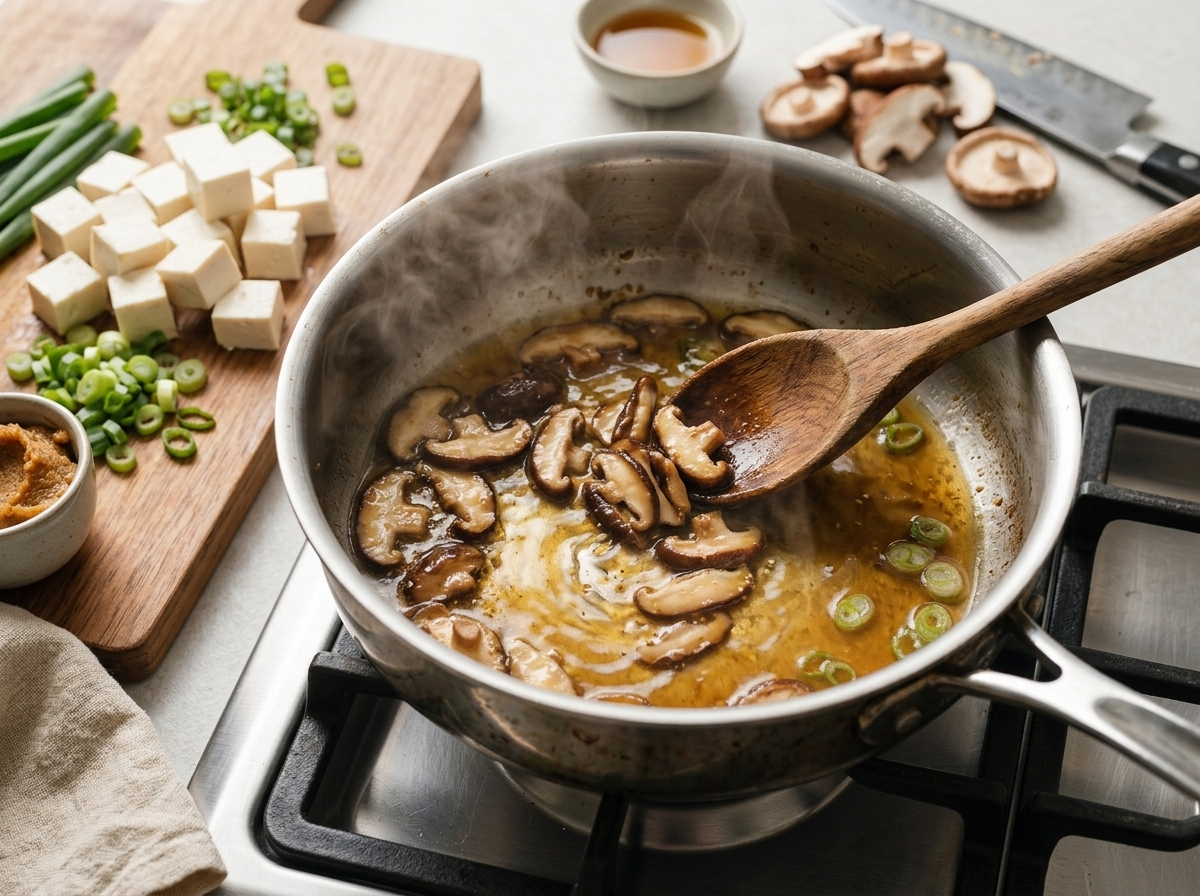
- Wipe out the saucepan and heat the sesame oil over medium. Add the fresh shiitake and cook for 5 to 6 minutes, stirring occasionally, until browned and the edges look crisp.
- Add the garlic and ginger and cook for 30 seconds until fragrant.
- Pour the strained dashi back into the pan along with the sliced rehydrated shiitake and soy sauce. Bring to a gentle simmer.
- Add the tofu cubes and simmer gently for 3 to 4 minutes, just to warm through. Keep the heat low, a hard boil breaks up the tofu.
- Ladle about 1/2 cup of the hot broth into a small bowl and whisk in the miso paste until smooth. Stir this back into the pot off the heat so the miso stays fragrant and doesn’t turn bitter.
- Stir in the wakame if using and let it sit 2 minutes to soften. Ladle into bowls, top with scallions and a drizzle of sesame oil, and serve right away.
Notes
- Never boil the soup once miso is stirred in
- Remove kombu before the broth boils to avoid bitterness
- Soak dried shiitake overnight for a stronger dashi if time allows
- Whisk miso with warm broth first to avoid lumps
Tips for Success
- Pull the kombu out before the broth boils, boiling makes it slimy and gives the broth a bitter edge
- Whisk miso with a splash of hot broth in a small bowl first so it dissolves smoothly without lumps
- Keep the heat low once miso goes in, a hard boil kills the aroma and flattens the flavor
- Slice fresh shiitake evenly, about 1/4 inch thick, so they cook through at the same rate
- Rehydrate dried shiitake in the soaking liquid, then use that liquid as part of your dashi for extra depth
Variations
- Add a soft-boiled egg and cooked soba noodles for a heartier one-bowl lunch instead of a light starter
- Swap silken tofu for firm tofu if you want cubes that hold their shape better in leftovers
- Stir in a spoonful of chili crisp or a pinch of shichimi togarashi for a spicy finish
Storage and Reheating
Store the soup in an airtight container in the fridge for up to 3 days. The broth actually deepens in flavor overnight, though the tofu softens a bit more than fresh.
Reheat gently on the stove over low heat, just until steaming, about 4 to 5 minutes. Avoid a hard boil, since it breaks up the tofu and dulls the miso’s aroma.
Freezing isn’t a great fit here. The tofu turns rubbery and the miso broth can separate once thawed, so I’d only freeze the plain dashi base without the tofu or miso stirred in.
Serving Suggestions
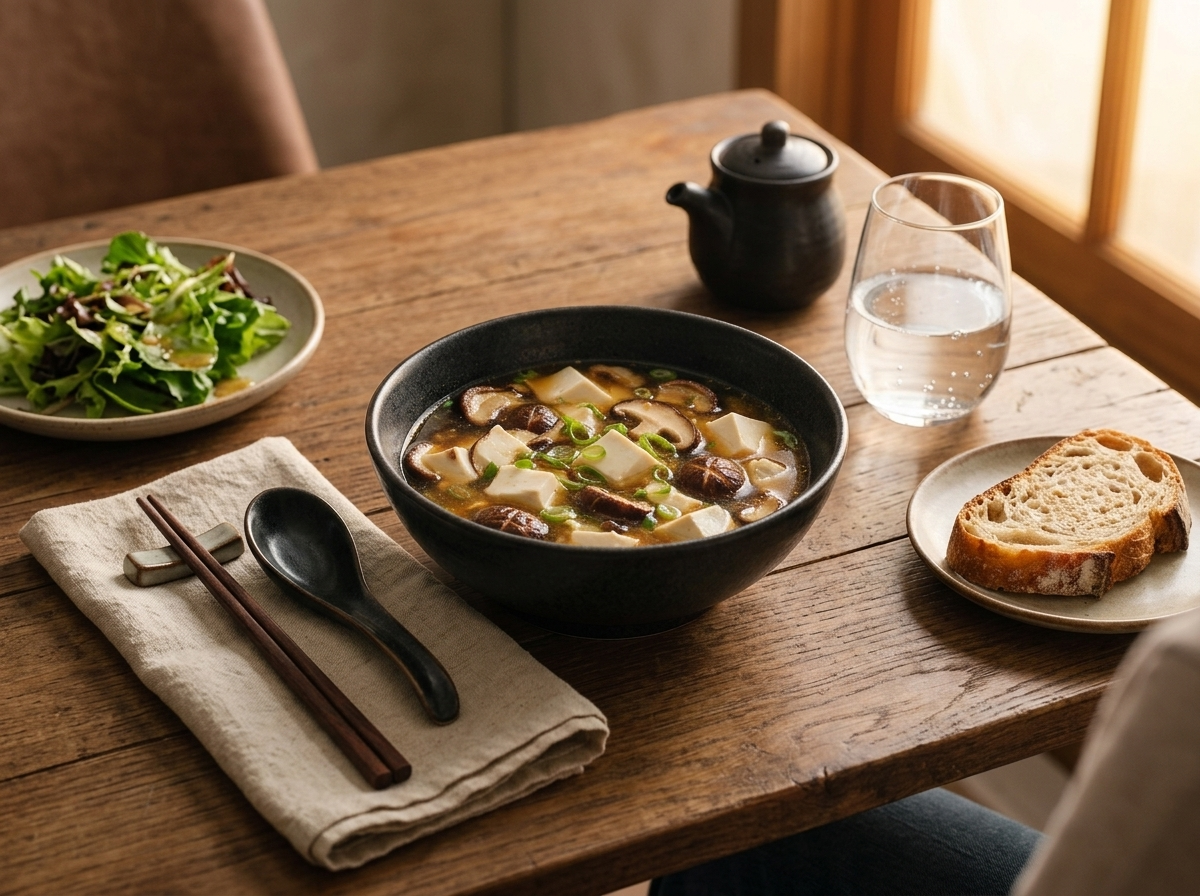
Ladle the soup into deep bowls so the broth stays hot and the tofu doesn’t sink to the bottom. A side of steamed short-grain rice turns it into a full meal.
I like adding a soft-boiled egg or a handful of soba noodles with greens straight into the bowl for something more filling on cold nights.
For a light weekend lunch, serve it alongside crisp cottage cheese cucumber boats or pickled radish for crunch.
FAQ
Why is my miso shiitake mushroom soup bitter or cloudy?
Bitterness usually comes from boiling the kombu or the miso. Boiling kombu releases a slimy, bitter compound, and boiling miso destroys its aroma and turns the broth flat. Pull the kombu out right before the broth simmers, and stir the miso in off heat so the broth stays clear and mellow.
Can I use red miso instead of white miso in this soup?
Yes, but red miso is saltier and stronger, so start with 3 tablespoons instead of 4 and taste before adding more. The broth turns darker and more savory, closer to a heartier winter soup. White miso keeps this version lighter and slightly sweet, which pairs better with delicate shiitake.
Can I make miso shiitake mushroom soup ahead of time?
You can make the dashi and cook the mushrooms up to 2 days ahead and store the broth in the fridge. Add the tofu and stir in the miso only when reheating gently, since boiled tofu turns spongy and miso loses its aroma if it sits in hot broth too long.
What pairs well with miso shiitake mushroom soup?
Steamed rice, a simple cucumber salad, or pan-fried gyoza all round out the meal without competing with the broth. I like a soft-boiled egg dropped in for extra protein, or a handful of soba noodles added straight to the bowl for a heartier lunch.
Is miso shiitake mushroom soup gluten free?
It can be, as long as you use tamari instead of regular soy sauce and check the miso label, since some brands use barley koji. Most white miso is made with rice koji and is naturally gluten free, but it’s worth a quick label check if you’re sensitive.
What’s the difference between this soup and classic miso soup with wakame?
This version leans on a fresh kombu-shiitake dashi and treats wakame as optional, so the mushroom flavor stays front and center. Classic miso soup with wakame is lighter and more delicate, while this one is earthier and more filling thanks to the extra mushrooms and tofu.