Jump to Recipe
Pickled vegetable snack jars are single-serve jars of carrot sticks, cucumber spears and radishes packed in a quick vinegar brine. Heat the brine for 5 minutes, pour it over the cut vegetables, and they’re ready to eat after 4 hours in the fridge.
I’ll be honest. I used to buy one big jar of pickles and watch half of it go limp at the back of the shelf. Four small jars fixed that. You open one, and the rest stay sealed and cold.
The vegetables are crisp. Tangy. A little sweet. Cold straight from the fridge.
Kids who skip a salad will often eat a carrot stick that tastes like a pickle. It’s about $1.25 a jar and 25 minutes of hands-on work.
Why You’ll Love This Recipe
- Only 25 minutes of hands-on work, then the fridge does the rest
- Single-serve jars slide into lunch bags and fridge doors
- About $1.25 a jar using ordinary grocery store produce
- Mild, slightly sweet brine that kids tend to like
Ingredient Notes
- white vinegar: Check the label for 5% acidity. Apple cider vinegar works one-for-one but gives a fruitier, amber brine.
- mini cucumbers: Persian or mini cucumbers stay crunchier than large waxy ones. If you only have a large cucumber, scoop out the seeds before cutting spears.
- radishes: They turn the brine and the carrots pink over a day or two. Daikon or turnip works if you can’t find radishes.
- fine sea salt: Use fine salt so it dissolves fast. Iodized table salt can cloud the brine, and coarse kosher salt measures differently by brand.
- mustard seeds: Yellow mustard seeds add a faint warm bite. Skip them or use coriander seeds if that’s what you have.
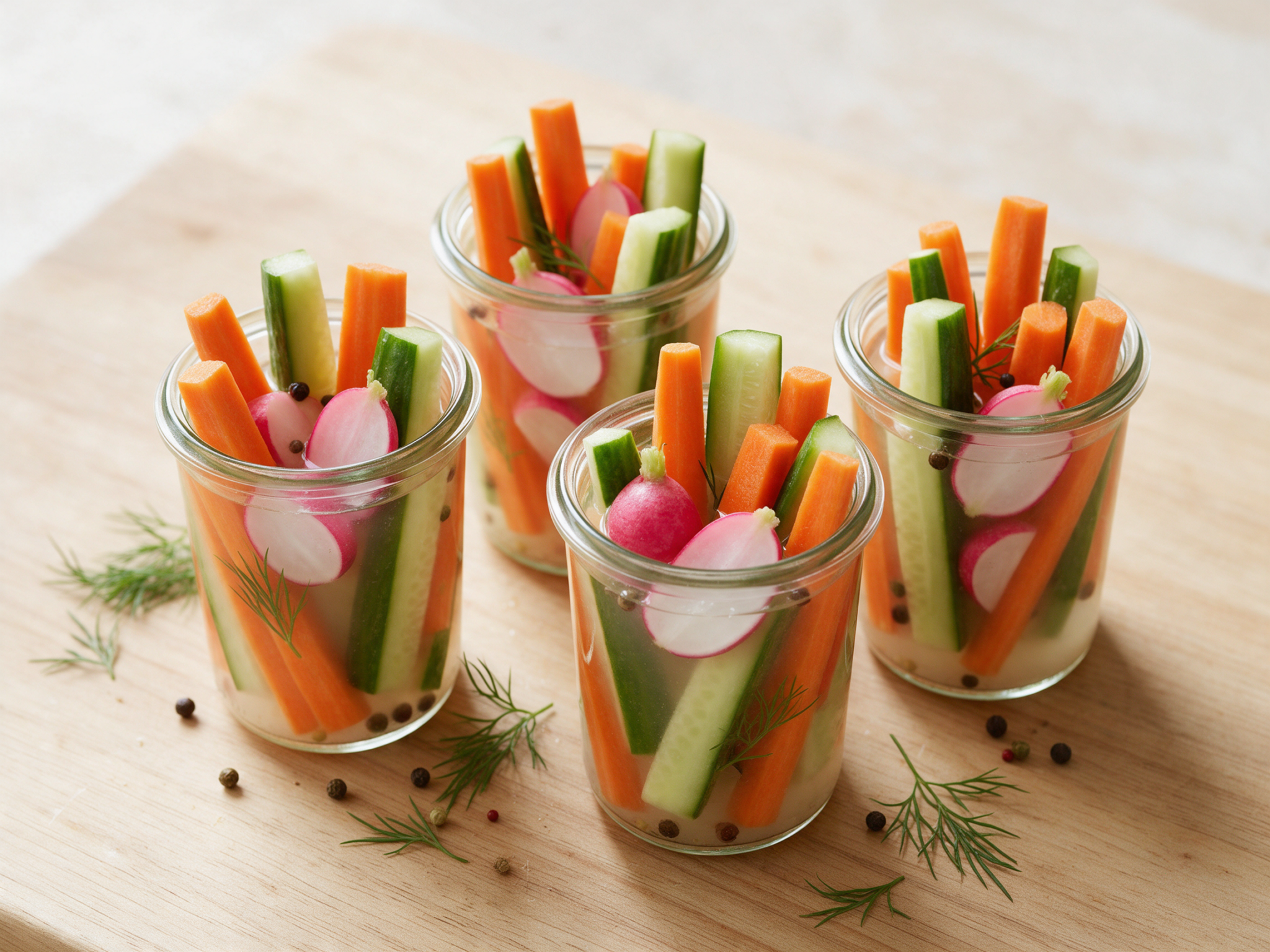
Crunchy Pickled Vegetable Snack Jars to Grab and Go
Ingredients
Method
- Peel the carrots and cut them into sticks 7 cm / 3 inches long and about 1 cm thick. Trim 5 mm off the ends of the cucumbers and cut them into spears the same size. Halve or quarter the radishes so the pieces are about the same size.
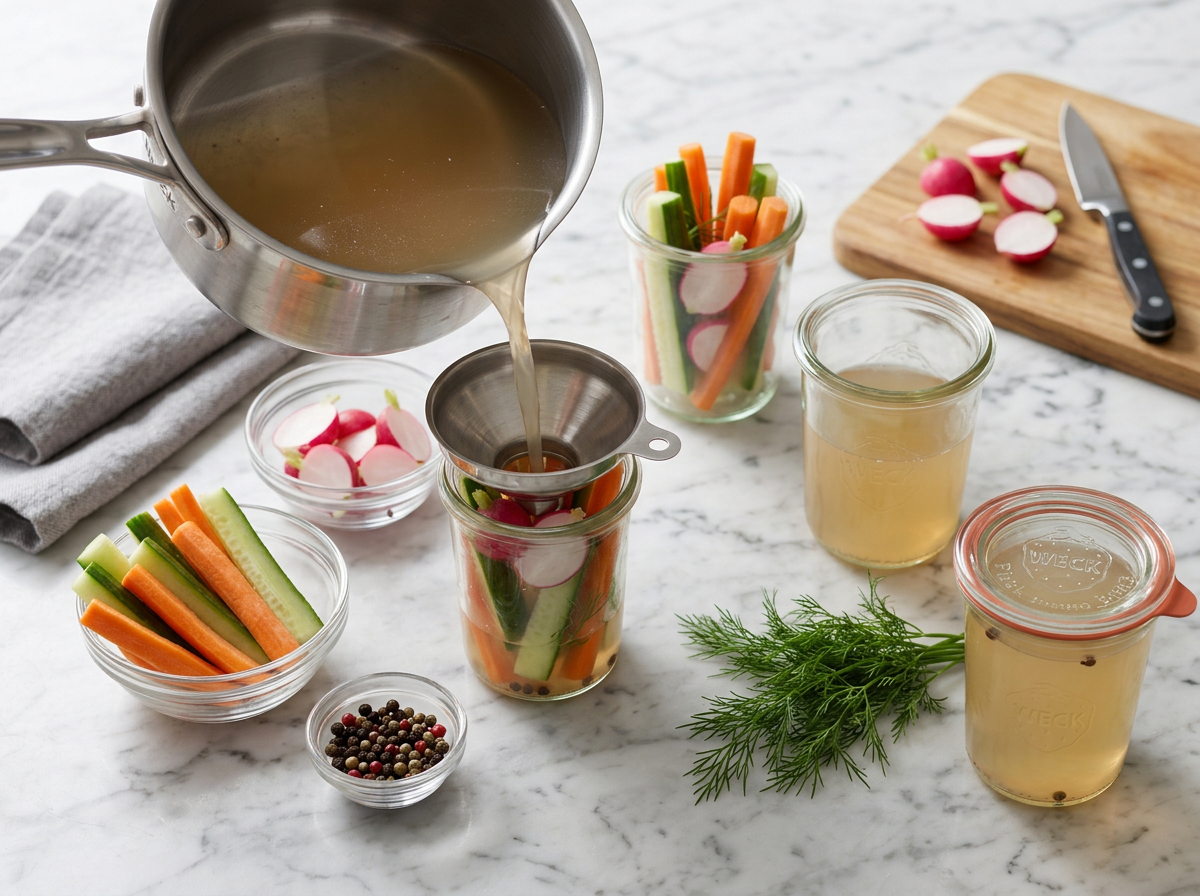
- Divide the garlic, dill, mustard seeds and peppercorns among 4 clean 350 ml / 12 oz jars, using 1 clove, 1 sprig, 1/4 tsp mustard seeds and 1/4 tsp peppercorns per jar. Stand the carrot and cucumber sticks upright and tuck the radishes in the gaps. Pack tightly, stopping 1 cm / 1/2 inch below the rim.
- Combine the water, vinegar, salt and sugar in a 1.5-quart / 1.4 L saucepan. Bring to a simmer over medium heat, stirring for 2 to 3 minutes until the salt and sugar dissolve. Remove from the heat.
- Let the brine cool for 10 minutes. Don’t pour it boiling hot, because it softens the cucumbers and you’ll end up with limp spears. Pour it over the vegetables until they’re covered, tap each jar on the counter to release air bubbles, and screw on the lids.
- Refrigerate for at least 4 hours before eating. The brine turns pink as the radishes bleed, and the flavor deepens by 24 hours. Keep the jars cold and eat within 2 weeks.
Notes
- Wash the jars and lids in hot soapy water and dry them before packing.
- Eat the first jar at 4 hours for a light crunch, or wait 24 hours for stronger tang.
- Pour the brine warm, not boiling, so the cucumbers stay crisp.
- You may have a few tablespoons of brine left over. Discard it rather than reusing it.
Tips for Success
- Cut every vegetable to about 1 cm thickness so the carrots and cucumbers pickle at the same speed.
- Use vinegar labeled 5% acidity, and keep the brine at equal parts vinegar and water for a safe, balanced tang.
- Pack the jars tightly with sticks standing upright so everything stays under the brine instead of floating to the top.
- Write the date on masking tape stuck to each lid and eat the oldest jar first.
- Taste a carrot stick at 24 hours, then adjust the next batch with a little more sugar or a pinch of red pepper flakes.
Variations
- Add a few slices of jalapeno or 1/4 tsp red pepper flakes to each jar for a spicy snack.
- Swap the radishes for cauliflower florets and add 1/2 tsp turmeric to the brine for bright yellow pickles.
- Use apple cider vinegar and tuck thin red onion slices into each jar for a sweeter, rosier version.
Storage and Reheating
Pickled vegetable snack jars keep in the fridge for up to 2 weeks with the lids on tight. They’re crunchiest in the first 7 days. Store them on a main shelf, not in the door where the temperature swings.
These are refrigerator pickles, not canned ones. Nothing is heat-processed, so they aren’t shelf-stable and need to stay cold. Freezing isn’t worth it, because the vegetables turn soft and watery once thawed.
Serve them straight from the fridge. Warming would cook the vegetables and lose the crunch, so there’s no reheating step. If the brine smells off or the vegetables feel slimy, toss the jar.
Serving Suggestions
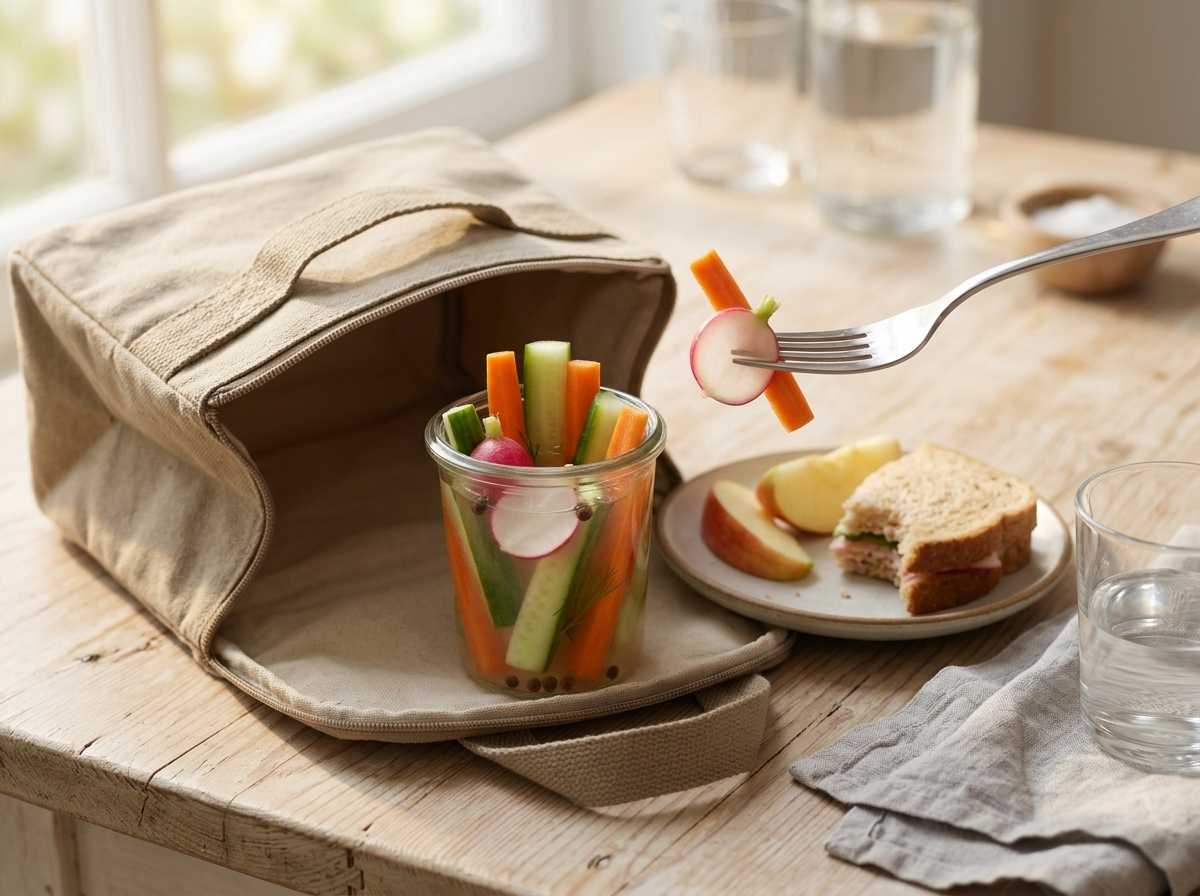
Pickled vegetable snack jars are at their best next to something rich. Pack one with a sandwich, a grilled cheese or a smoked paprika turkey burger and the acid cuts through the fat.
They also work on a cheese and cracker plate, beside hummus and pita, or chopped over rice bowls with a fried egg. Tip the jar onto a plate and leave the brine behind.
For lunchboxes, tuck the sealed jar in with an ice pack. Cold keeps the crunch and keeps things safe.
FAQ
Why are my pickled cucumbers soft in the jar?
Soft pickled cucumbers usually come from pouring boiling brine over them or from using old, waxy cucumbers. Let the brine cool for 10 minutes first, and use fresh mini cucumbers. Trimming 5 mm off the blossom end also helps, since that end holds enzymes that soften pickles as they sit.
Can I use apple cider vinegar instead of white vinegar for pickled vegetable jars?
Yes, apple cider vinegar works one-for-one as long as the label says 5% acidity. The brine turns amber and tastes fruitier than white vinegar. Keep the 1 to 1 ratio with water, because diluting it further weakens the pickling and shortens how long the jars keep.
Can I freeze pickled vegetable snack jars?
No, freezing ruins them. The water inside the cucumbers and radishes expands, and the vegetables turn soft and watery once thawed. For a lunch bag, add an ice pack and keep the jar cold until you eat. Leftovers go back in the fridge, where they last up to 2 weeks.
What goes well with pickled carrots, cucumbers and radishes?
Sandwiches such as oven-baked turkey meatball subs, burgers and grilled cheese are the easy matches, because the acid cuts through fat. They also work beside hummus and pita, on a cheese and cracker plate, or spooned over rice bowls with a fried egg. Tip the jar onto the plate and skip the brine.
Are pickled vegetable snack jars vegan and gluten free?
Yes, both. The jars hold only vegetables, vinegar, water, salt, sugar and whole spices. Stick with distilled white or apple cider vinegar, since malt vinegar is made from barley and contains gluten. Strict vegans may also want to check that their sugar isn’t bone-char filtered.
What’s the difference between quick pickled vegetables and canned pickles?
Quick pickled vegetables live in the fridge and are ready in about 4 hours. The jars aren’t heat-processed, so they last 2 weeks but stay crunchy. Canned pickles go through a water bath, which makes them shelf-stable for months but softens the vegetables. Snack jars trade shelf life for crunch.