Jump to Recipe
Thai Green Curry Vegetables is a stovetop curry where you simmer broccoli, bell pepper, zucchini, and snap peas in coconut milk and green curry paste until the sauce turns glossy and the vegetables are crisp-tender, about 8 to 10 minutes of actual simmering.
I make this on weeks when the fridge has odds and ends of produce sitting around. It sits right in your weekday rotation when you want something bright without much effort.
The paste does most of the work here. A good jarred green curry paste, like Mae Ploy, gives you real heat and lemongrass flavor without chopping a dozen ingredients yourself.
One thing I’ve learned the hard way: don’t dump all the vegetables in at once. Broccoli needs a head start over snap peas, or you end up with mushy broccoli and raw, crunchy peas in the same bowl.
Why You’ll Love This Recipe
- Ready in 30 minutes with mostly pantry staples
- One skillet, minimal cleanup, real weeknight food
- Naturally vegan and easy to make gluten free
- Uses whatever vegetables are already in your fridge
Ingredient Notes
- green curry paste: Mae Ploy or Thai Kitchen both work well, but check the label if you need this fully vegan since some brands add shrimp paste.
- coconut milk: Use full-fat canned coconut milk, light coconut milk makes the sauce thin and watery.
- soy sauce: Swap in tamari or coconut aminos if you need this gluten free.
- bamboo shoots: Canned bamboo shoots just need a rinse and a good drain, no cooking required before adding.
- Thai basil: Regular basil works in a pinch, but Thai basil has a peppery, anise-like bite that fits this dish better.
- broccoli: Cut florets small and even so they cook at the same rate as the softer vegetables.
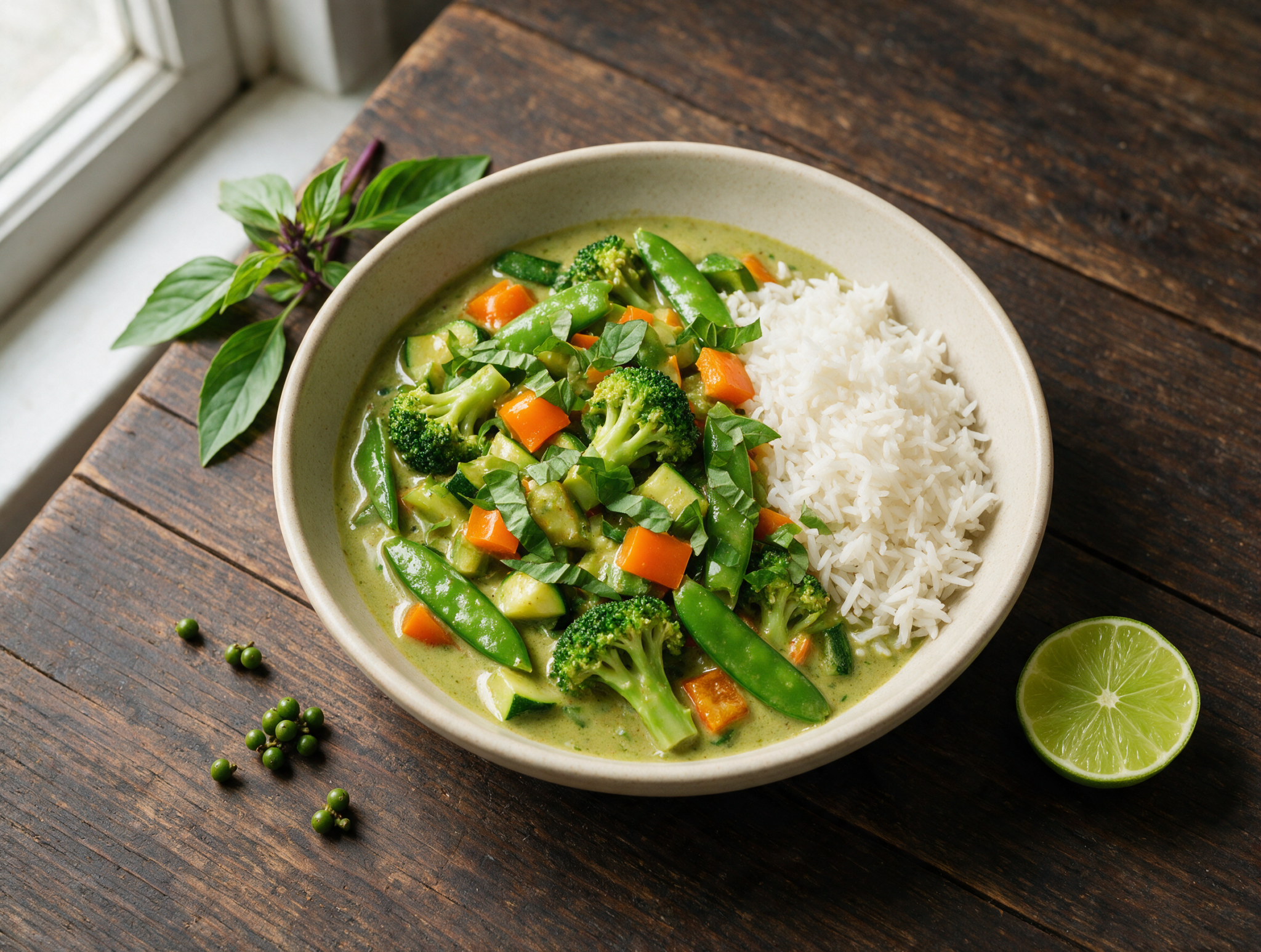
Simmered Thai Green Curry Vegetables in Coconut Milk
Ingredients
Method
- Cook the jasmine rice according to the package directions and keep it warm.
- Heat the oil in a 12-inch / 30 cm skillet or wok over medium heat.
- Add the green curry paste and fry for 1 minute, stirring, until fragrant and slightly darker.
- Pour in half the coconut milk and stir to combine. Simmer for 2 minutes until it thickens slightly and the oil starts to separate at the edges, this is normal.
- Add the remaining coconut milk, vegetable broth, brown sugar, and soy sauce. Bring to a gentle simmer.
- Add the broccoli and simmer for 3 minutes.
- Add the bell pepper, zucchini, and bamboo shoots. Simmer for 4 minutes until the vegetables are crisp-tender.
- Add the snap peas and simmer 2 minutes more.
- Remove from the heat and stir in the lime juice and Thai basil leaves until the basil wilts.
- Taste and adjust with more soy sauce or sugar if needed. Serve over the rice, topped with sliced chili and extra basil.
Notes
- Fry the curry paste before adding liquid, this deepens the flavor.
- Use full-fat coconut milk only, light versions turn the sauce watery.
- Add vegetables in stages, broccoli first and snap peas last.
- Check your curry paste label if you need this fully vegan, some brands include shrimp paste.
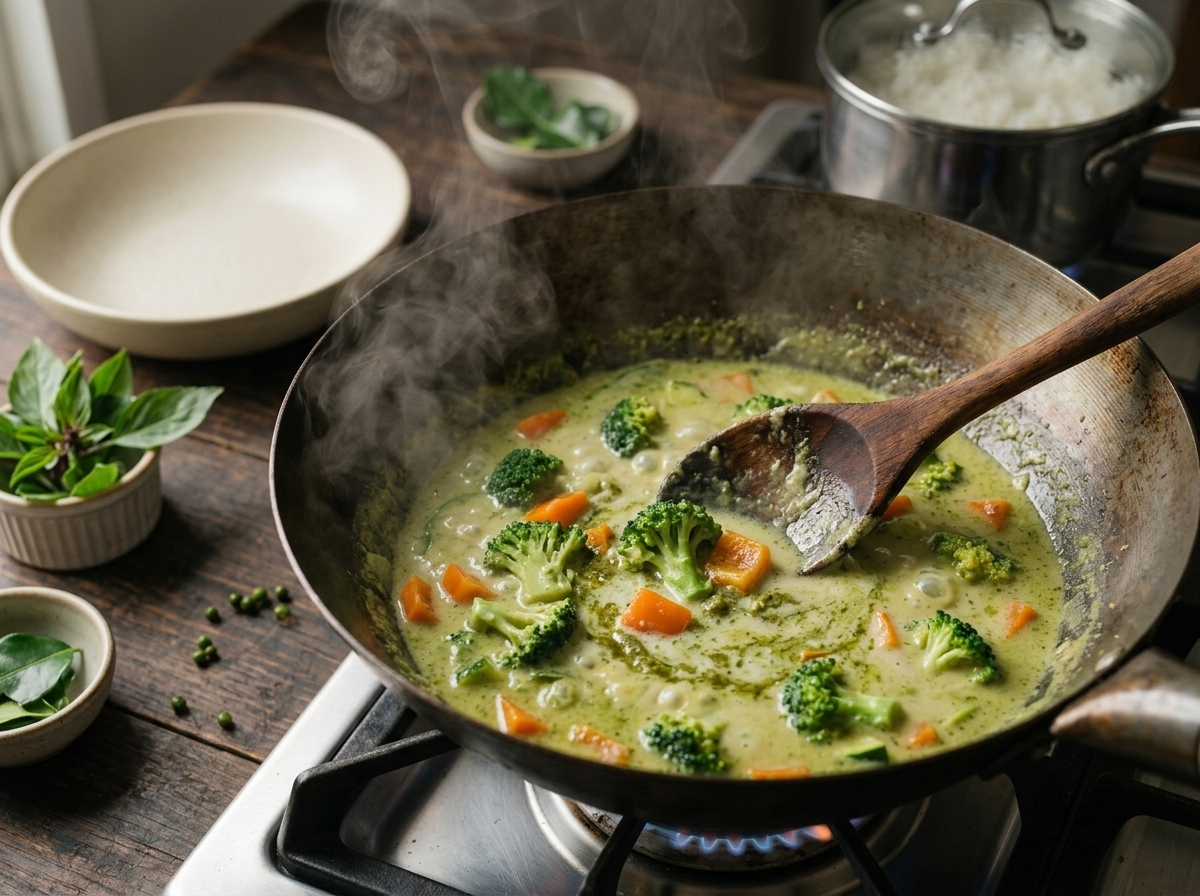
Tips for Success
- Fry the curry paste in oil for a full minute before adding liquid, this wakes up the lemongrass and chili.
- Add broccoli before softer vegetables like zucchini and snap peas so nothing turns mushy.
- Use full-fat coconut milk, not light, or the sauce turns watery and thin.
- Taste before adding extra soy sauce, some curry pastes are already salty on their own.
- Squeeze lime juice off the heat, boiling it turns the flavor bitter and flat.
Variations
- Add cubed firm tofu in step 7 for extra protein, pressing it dry first so it doesn’t fall apart.
- Stir in a can of chickpeas along with the vegetables for a heartier, protein-rich curry.
- Swap bamboo shoots for baby corn and add sliced mushrooms for a different texture mix.
Storage and Reheating
Thai Green Curry Vegetables keeps in an airtight container in the fridge for 3 to 4 days. The vegetables soften a bit more overnight, but the flavor holds up fine.
Reheat in a skillet over medium-low heat for 3 to 4 minutes, stirring often, or microwave in 30-second bursts until warmed through. Add a splash of water or broth if the sauce has thickened too much.
This curry freezes fine for up to 2 months in a sealed container. Coconut milk can separate slightly when frozen, so thaw it overnight in the fridge and stir well as it reheats.
Serving Suggestions
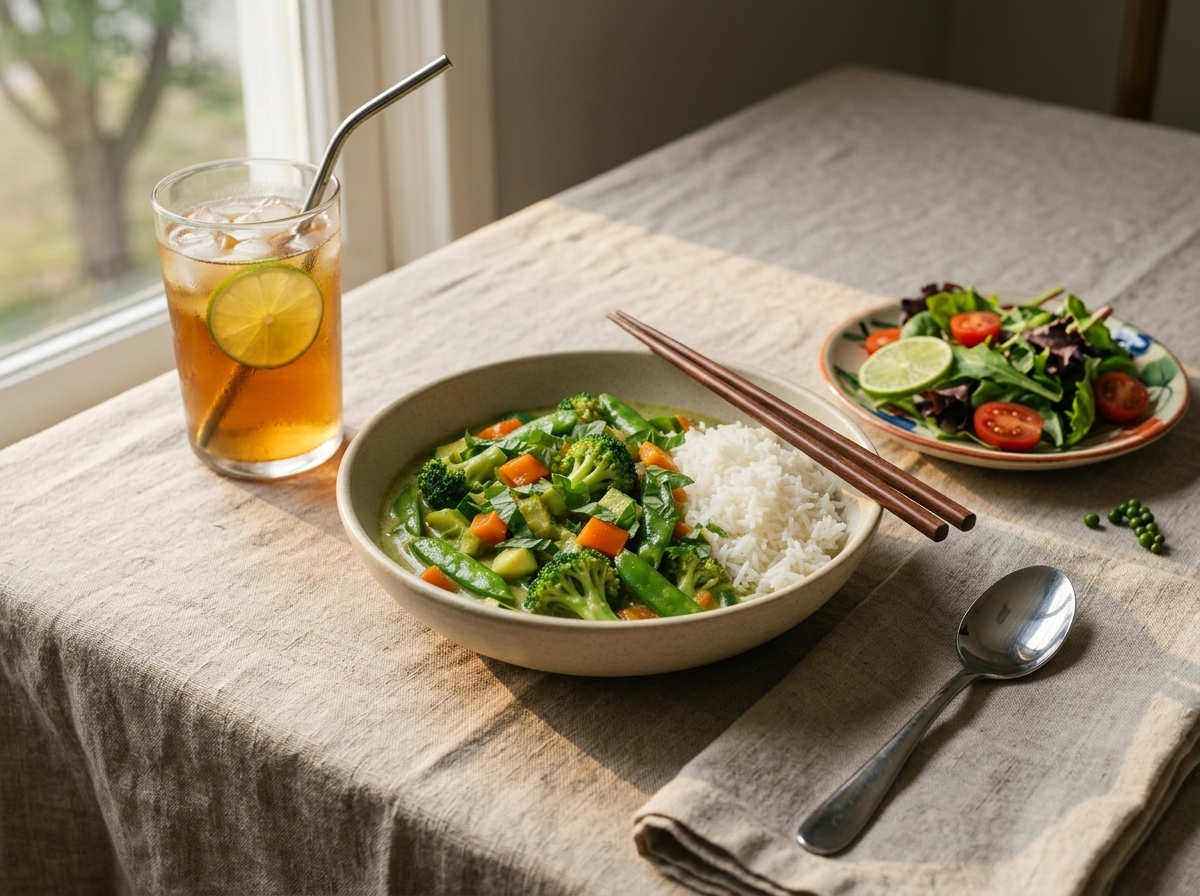
Thai Green Curry Vegetables goes straight over steamed jasmine rice, letting the sauce soak into the grains. Rice noodles work too if that’s what you have on hand.
Add a side of spring rolls or a simple cucumber salad to cut through the richness of the coconut milk. A squeeze of extra lime at the table brightens everything up.
For a heartier bowl, top it with crushed peanuts and extra Thai basil, and keep sliced chili on the side for anyone who wants more heat.
FAQ
Why is my Thai green curry vegetables sauce too thin?
It’s usually the coconut milk. Light coconut milk or skipping the step where you simmer the paste with coconut milk before adding broth leaves the sauce watery. Use full-fat coconut milk, let it simmer with the paste for a couple minutes first, or reduce it uncovered a little longer to thicken.
Can I use red curry paste instead of green curry paste in this recipe?
Yes, red curry paste works fine as a swap, though the flavor shifts since it’s made with dried chilies instead of fresh green ones. It’s usually milder and a bit sweeter. Use the same amount, then taste and adjust the sugar since red curry paste brands vary a lot.
Can I make Thai green curry vegetables ahead and freeze it?
Yes, this curry keeps well in the fridge for 3 to 4 days and freezes for up to 2 months in an airtight container. Coconut milk can separate slightly after freezing, so thaw it overnight in the fridge and stir well while reheating in a skillet.
What goes well with Thai green curry vegetables besides rice?
Rice noodles are the classic swap, but crusty bread works well too for soaking up the sauce. Spring rolls or a cold cucumber salad on the side balance the richness of the coconut milk, and a squeeze of extra lime at the table rounds it out.
Is Thai green curry vegetables gluten free?
Not as written here, because regular soy sauce contains wheat. Swap it for tamari or a gluten-free soy sauce and double check your curry paste label, since a few brands use wheat-based thickeners. Everything else in the recipe is naturally gluten free.
What’s the difference between Thai green curry and yellow curry?
Green curry gets its color and sharper heat from fresh green chilies, while yellow curry leans on dried red chilies and more turmeric for a milder, earthier flavor. Green curry paste also uses more lemongrass, galangal, and Thai basil, which is why this dish tastes brighter than a yellow curry.