Jump to Recipe
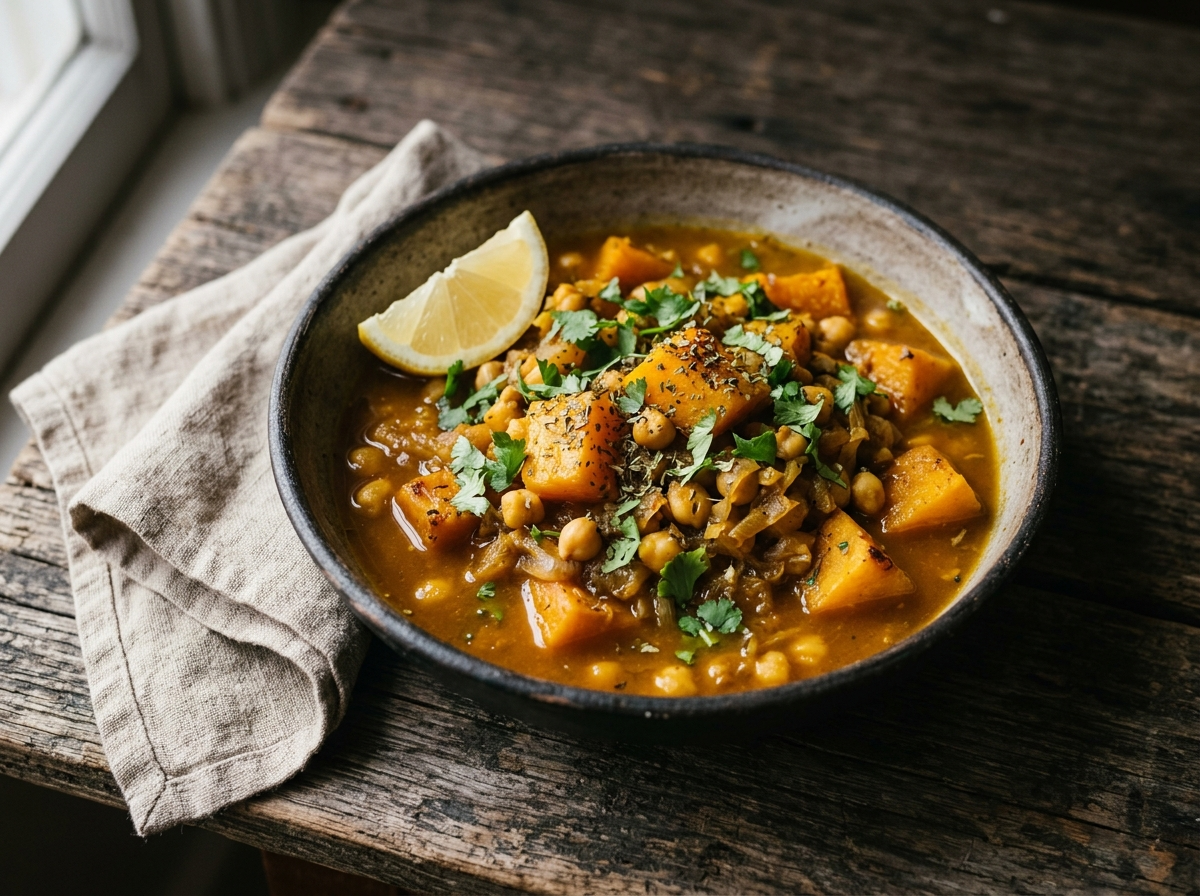
I’ll be honest – this tagine started as a way to use up half a pumpkin sitting on my counter. What came out of the pot was so good I’ve made it on purpose at least a dozen times since.
The base is straightforward: onion, garlic, tomatoes, and a short list of spices you probably already have. Cumin, coriander, cinnamon, and a spoonful of harissa do all the heavy lifting.
Pumpkin softens into the broth. Chickpeas add body. The whole thing comes together in one pot in about 40 minutes, much like this one-pot coconut spinach veggie stew, which means it fits on a Tuesday night just as comfortably as it fits on a Sunday table.
It’s warm. Slightly smoky. A little sweet from the pumpkin. Real food doing its thing.
Why You’ll Love This Recipe
- One pot, minimal cleanup, weeknight-ready in 40 minutes
- Pumpkin thickens the broth without any cream or starch
- Packed with plant-based protein and fiber from chickpeas
- Freezes well and tastes better the next day
Ingredient Notes
- Pumpkin: Use a firm cooking pumpkin like sugar pumpkin or kabocha. Butternut squash is the easiest swap and works just as well here.
- Chickpeas: Canned chickpeas are fine – drain and rinse them before adding. Dried chickpeas cooked from scratch give better texture if you have the time.
- Harissa paste: I use about 1 tablespoon for medium heat. Go lighter if you’re sensitive to spice, or add more at the end to taste. Rose harissa adds a floral note worth trying.
- Ras el hanout: This spice blend is sold in most supermarkets now. If you can’t find it, use a pinch each of cumin, coriander, cinnamon, and turmeric instead.
- Canned tomatoes: Whole peeled tomatoes crushed by hand give a slightly chunkier sauce. Passata works if you want something smoother.
- Vegetable stock: Low-sodium stock lets you control the salt. A good quality cube dissolved in boiling water is perfectly fine.
Spiced Pumpkin and Chickpea Tagine
Ingredients
Method
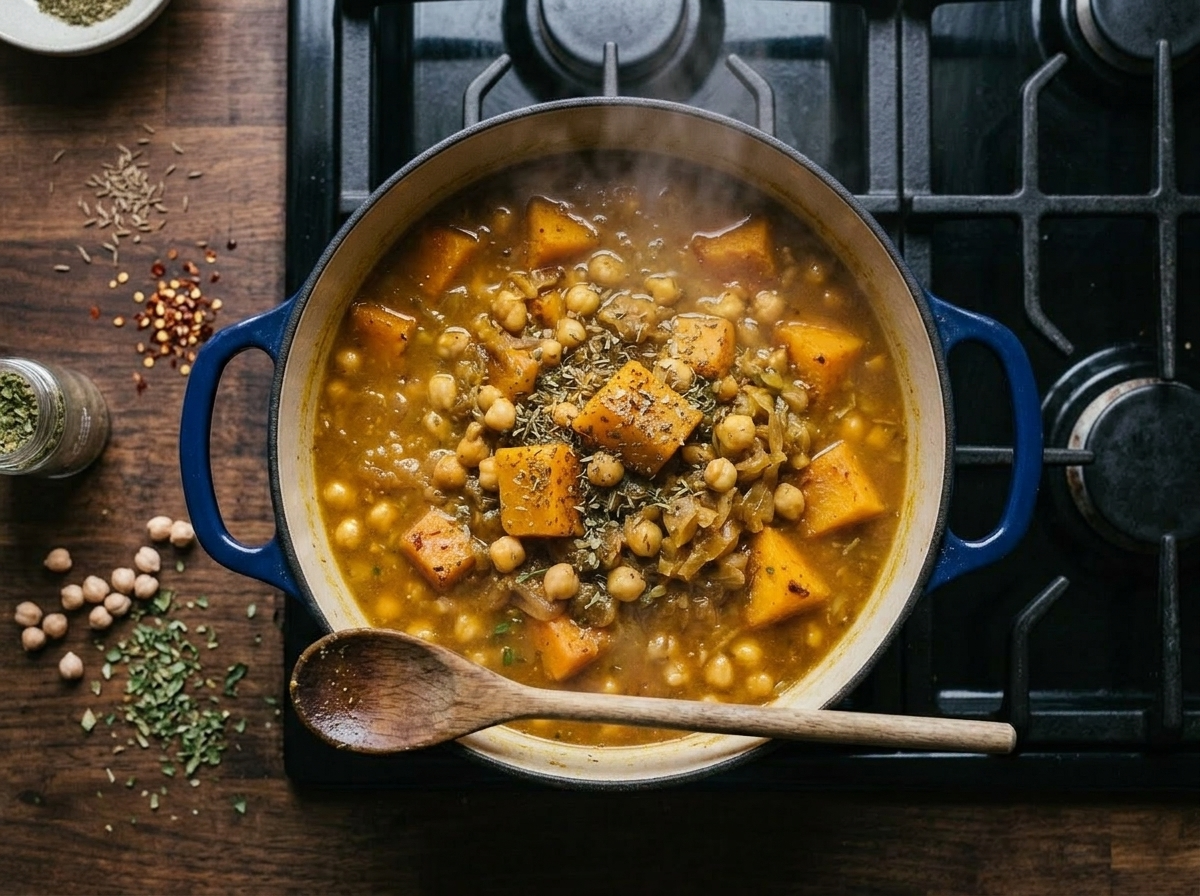
- Heat the olive oil in a large heavy-bottomed saucepan over medium heat. Add the onion and cook for 5 to 6 minutes, stirring occasionally, until soft and lightly golden.
- Add the garlic and ginger and cook for 1 minute until fragrant.
- Stir in the harissa, ras el hanout, cumin, coriander, cinnamon, and smoked paprika. Cook for 30 to 45 seconds, stirring constantly, until the spices smell toasted and darken slightly.
- Add the pumpkin cubes and stir to coat them evenly in the spice mixture.
- Pour in the crushed tomatoes and vegetable stock. Stir well, bring to a gentle boil, then reduce the heat to medium-low. Cover and simmer for 10 minutes.
- Add the drained chickpeas. Stir, replace the lid, and cook for a further 12 to 15 minutes until the pumpkin is completely tender when pierced with a fork.
- If the sauce looks thin, remove the lid and simmer for 3 to 5 minutes to reduce. Lightly mash 2 to 3 pumpkin pieces against the side of the pan for extra body.
- Season with salt and black pepper. Squeeze in the lemon juice and stir. Taste and adjust seasoning.
- Serve hot, topped with fresh cilantro or parsley.
Notes
Tips for Success
- Cut pumpkin into even 3 cm chunks so every piece cooks through at the same rate.
- Toast cumin seeds in the dry pot for 30 seconds before adding oil to sharpen their flavor.
- Add chickpeas in the last 15 minutes so they stay firm and don’t turn mushy.
- Taste for salt after the tomatoes go in, not before, since canned tomatoes vary widely.
- Finish with a squeeze of lemon juice just before serving to lift the whole dish.
Variations
- Add a handful of dried apricots with the tomatoes for a sweet-savory Moroccan note.
- Stir in a big handful of spinach or kale in the last 3 minutes for extra greens.
- Use sweet potato instead of pumpkin for a denser, slightly richer stew.
Storage and Reheating
Store leftovers in an airtight container in the fridge for up to 4 days. The flavors deepen overnight, so this is genuinely better on day two.
To reheat, warm gently on the stovetop over medium-low heat with a splash of water or stock to loosen the sauce. A microwave works fine too – cover loosely and heat in 90-second bursts, stirring between each.
This tagine freezes well for up to 3 months. Portion into freezer-safe containers and thaw overnight in the fridge before reheating.
Serving Suggestions
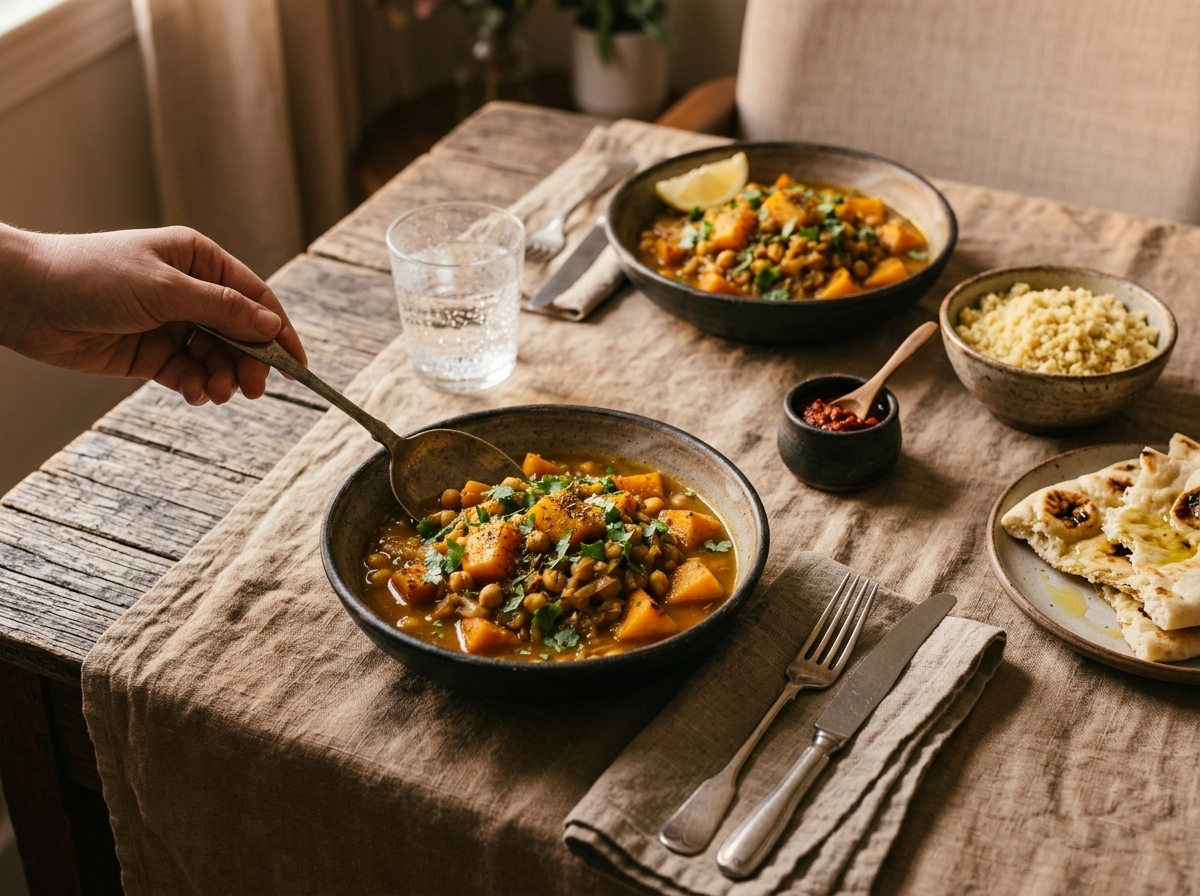
Serve over fluffy couscous or alongside warm gluten-free rosemary flatbread to scoop up the broth. A dollop of plain yogurt on top cuts through the spice nicely – use coconut yogurt to keep it vegan.
For a fuller spread, add a simple cucumber and mint salad on the side. Sliced almonds or pomegranate seeds scattered over the top add crunch and a pop of color.
If you’re feeding a crowd, put the pot in the center of the table with warm bread and let people help themselves. It holds its heat well and looks good straight from the pot.
FAQ
Why is my pumpkin and chickpea tagine watery instead of thick?
The pumpkin needs time to break down and thicken the broth naturally. If it’s still thin after 25 minutes of simmering, mash a few pumpkin chunks against the side of the pot and stir them in. You can also simmer uncovered for an extra 5 minutes to reduce the liquid.
Can I use dried chickpeas instead of canned in this tagine?
Yes, dried chickpeas work and give a firmer texture. Soak them overnight, then cook separately until just tender before adding to the pot. Don’t add raw dried chickpeas directly – they won’t cook through in the stew’s simmering time.
Can I freeze this spiced pumpkin tagine after cooking?
It freezes well for up to 3 months in airtight containers. The pumpkin softens slightly after freezing, which makes it even silkier in the sauce. Thaw overnight in the fridge and reheat on the stovetop.
What bread or grain pairs best with pumpkin and chickpea tagine?
Couscous is the most natural match – it soaks up the spiced broth and takes only 5 minutes to prepare, though a chickpea lemon rice pilaf makes a heartier base if you want something more filling. Flatbread or crusty bread works just as well for scooping. Brown rice or quinoa are good options if you want more protein.
Is this pumpkin and chickpea tagine gluten-free?
The stew itself contains no gluten. Just check your harissa paste and stock labels, as some brands add wheat-based thickeners or flavorings. Serve with rice or certified gluten-free couscous to keep the whole meal gluten-free.
What is the difference between a tagine and a regular stew?
A traditional tagine is cooked in a conical clay pot that traps steam and recirculates moisture, creating a concentrated sauce without much liquid. A regular stew is cooked in a deeper pot with more liquid. This recipe mimics the tagine result using a heavy-bottomed saucepan with a lid.