Jump to Recipe
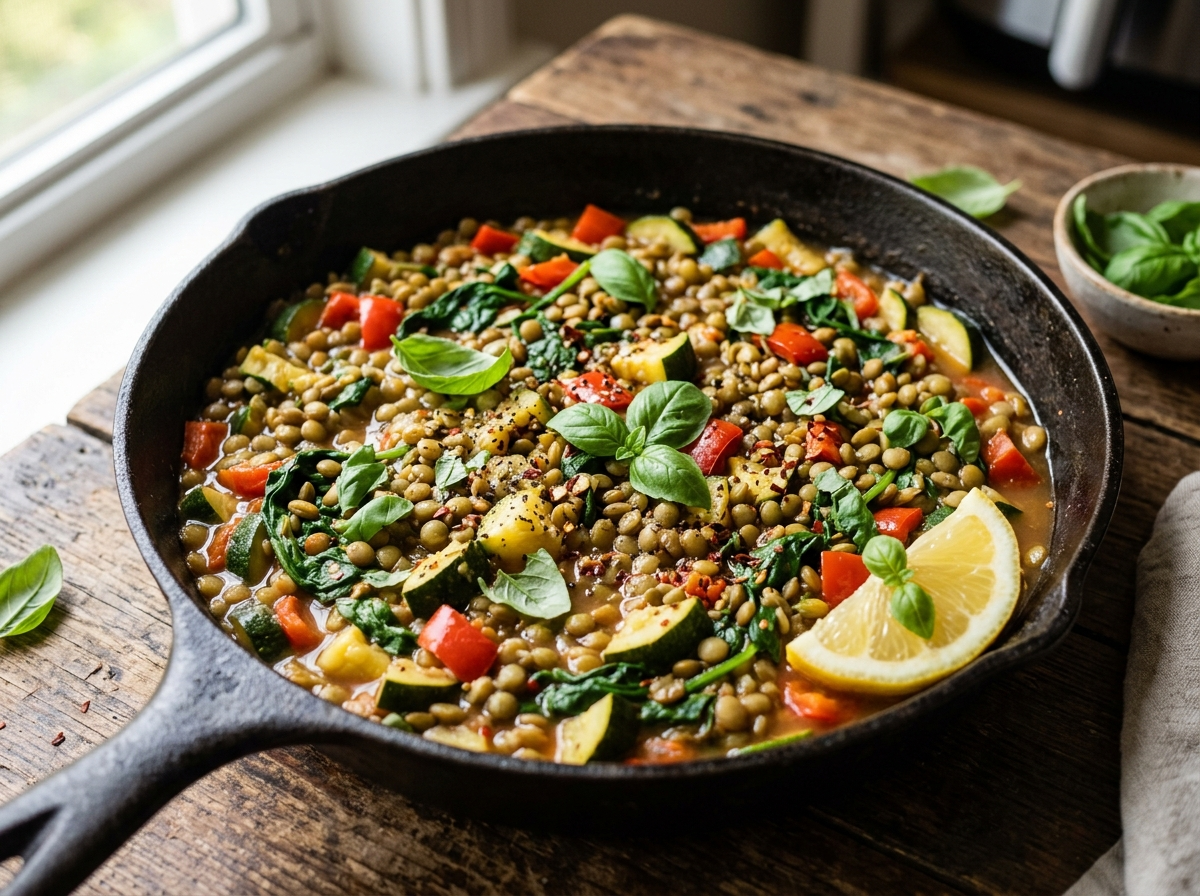
I’ll be honest – this skillet came out of a fridge-clearing moment on a Tuesday night. Green lentils, half a zucchini, a can of tomatoes, and a bunch of basil that needed using up.
What I got was something I’ve been making every couple of weeks since. Earthy lentils, soft vegetables, a broth that clings just enough, and fresh basil stirred in at the end so it stays bright and fragrant.
It’s one pan, much like a one-pan lemon cabbage stir fry, reheats beautifully, and works as a main with crusty bread or spooned over rice when you want something more filling.
No fancy technique here. Just solid, real food doing its thing.
Why You’ll Love This Recipe
- One skillet, minimal cleanup, weeknight-friendly
- Protein-rich lentils keep you full for hours
- Fresh basil added at the end stays bright and aromatic
- Meal-preps well and tastes better the next day
Ingredient Notes
- green lentils: Green or brown lentils hold their shape best here. Red lentils will turn mushy, so avoid them unless you want a thicker, more stew-like texture.
- fresh basil: Add basil off the heat so it stays green and fragrant. Dried basil won’t give you the same brightness, but 1 tsp stirred in during cooking is a workable backup.
- zucchini: Yellow squash works just as well. If you’re using a watery vegetable like eggplant, salt and press it first to avoid excess liquid in the skillet.
- canned diced tomatoes: Fire-roasted diced tomatoes add a subtle smokiness. Crushed tomatoes also work but create a thicker, saucier base.
- vegetable broth: Low-sodium broth lets you control the salt level. Water with a pinch of bouillon works in a pinch but gives less depth.
- garlic: Four cloves is the right amount for this quantity of lentils. Roasted garlic can be swapped in for a mellower, sweeter flavor.
- smoked paprika: Adds a gentle depth without heat. Sweet paprika is a fine substitute if smoked isn’t available.
- spinach: Baby spinach wilts in about 90 seconds. Kale works too but needs 3 to 4 extra minutes and a splash more broth.
Basil Lentil Veggie Skillet
Ingredients
Method
- Heat olive oil in a large, deep skillet over medium heat. Add the diced onion and cook for 4 to 5 minutes, stirring occasionally, until soft and translucent.
- Add the minced garlic, smoked paprika, cumin, and red pepper flakes. Stir and cook for 60 seconds until fragrant.
- Add the diced zucchini and red bell pepper. Cook for 3 minutes, stirring occasionally, until the edges begin to soften slightly.
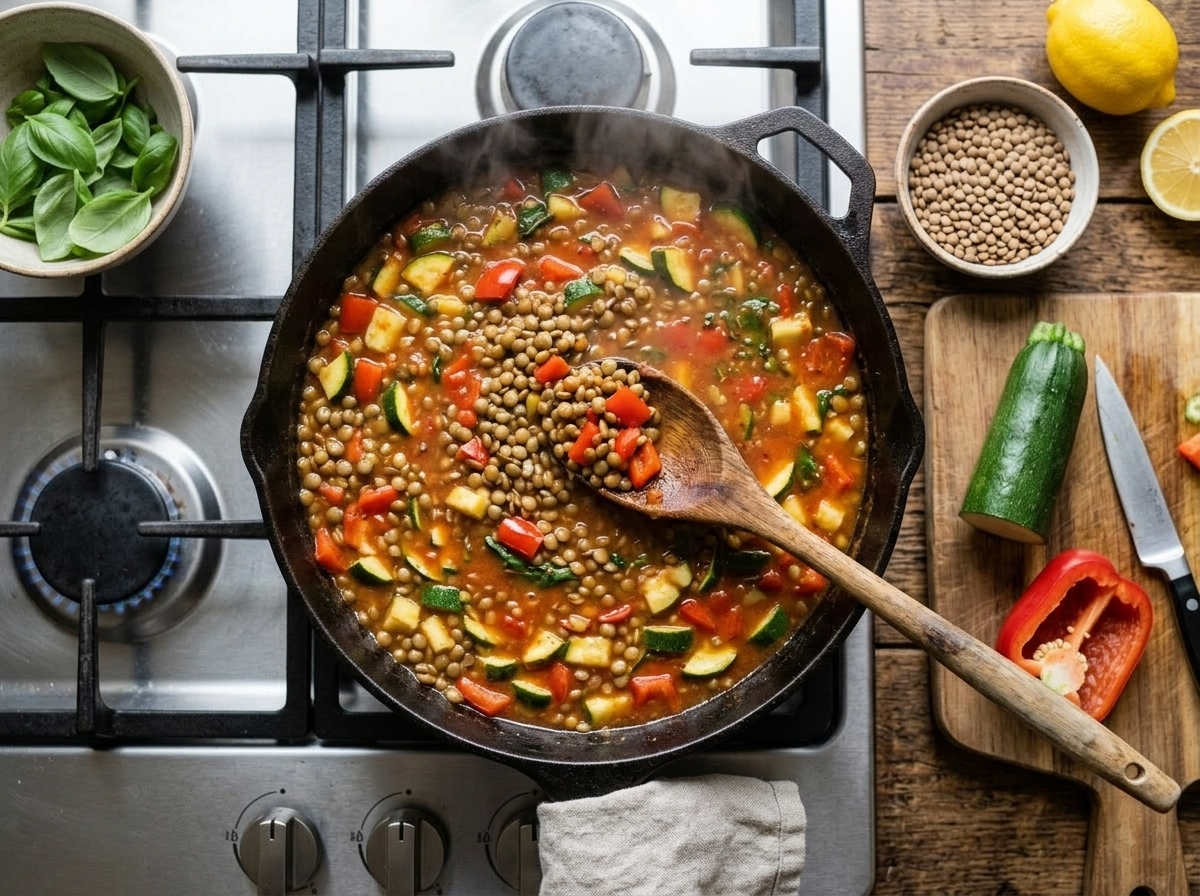
- Pour in the canned diced tomatoes, rinsed green lentils, and vegetable broth. Stir everything together and bring to a boil.
- Reduce the heat to medium-low, cover with a lid slightly ajar, and simmer for 20 to 22 minutes until the lentils are tender but still holding their shape. Stir once halfway through and check for liquid – add a splash of broth if the pan looks dry.
- Remove the skillet from heat. Stir in the baby spinach and fresh basil until the spinach wilts from the residual heat, about 90 seconds.
- Add the lemon juice, salt, and black pepper. Taste and adjust seasoning, then serve immediately.
Notes
Tips for Success
- Rinse lentils under cold water for 30 seconds to remove any dusty residue before adding to the skillet.
- Sweat the onion and garlic over medium-low heat until soft and translucent before adding any other vegetables.
- Add the spinach and fresh basil only after removing the skillet from heat so both stay bright and not bitter.
- Taste the lentils at 20 minutes of simmering – they should be tender but still hold their shape, not split.
- If the skillet looks dry before the lentils are cooked through, add broth 60 ml at a time to maintain a loose, saucy consistency.
Variations
- Add 1 can of drained chickpeas with the lentils for extra protein and a satisfying bite.
- Stir in 1 tsp harissa paste with the tomatoes for a North African-style heat and depth.
- Swap zucchini for diced sweet potato, adding it 5 minutes before the other vegetables to soften.
Storage and Reheating
Store leftovers in an airtight container in the fridge for up to 4 days. The lentils absorb liquid as they sit, so the texture thickens overnight – that’s normal and still tastes great.
To reheat, warm in a skillet over medium heat with a splash of broth or water, stirring occasionally until hot, about 3 to 4 minutes. Microwaving works too – cover loosely and heat in 90-second intervals, stirring between each.
This skillet also freezes well for up to 2 months. Thaw overnight in the fridge, then reheat as above. Add a fresh pinch of basil after reheating to bring back some of that bright flavor.
Serving Suggestions
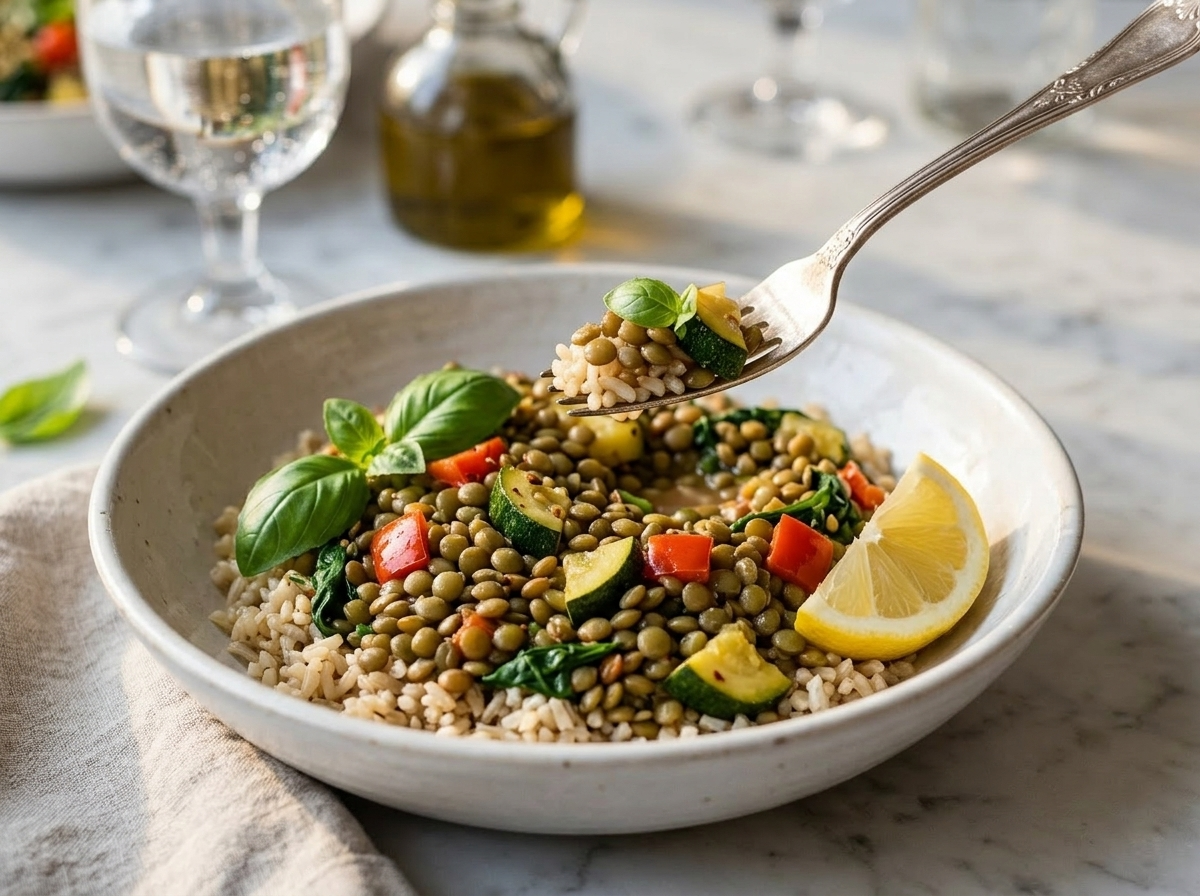
Spoon it over cooked brown rice or farro for a complete, filling meal. A wedge of crusty sourdough on the side is the other easy move – it catches all the broth at the bottom of the bowl.
For a lighter plate, serve the skillet alongside a simple arugula salad dressed with lemon juice and olive oil. The peppery greens cut through the earthiness of the lentils well.
A dollop of plain Greek yogurt — like the kind used in a savory yogurt cucumber dip — or a drizzle of tahini on top adds creaminess without much effort. If you’re feeding people who eat meat, it also works as a side dish next to roasted chicken thighs.
FAQ
Why are my lentils still hard after 25 minutes of simmering in the skillet?
Old lentils take longer to cook – lentils that have been sitting in your pantry for over a year can be stubborn. Make sure your broth is at a steady simmer, not just a gentle steam, and add more liquid if the pan looks dry.
Can I use red lentils instead of green lentils in this veggie skillet?
You can, but red lentils break down completely and turn the dish into more of a thick dal. If that texture works for you, reduce the simmering time to around 12 to 15 minutes and expect a softer, creamier result.
Can I freeze this basil lentil skillet with the fresh basil already stirred in?
It’s better to freeze the skillet before adding the basil, since basil turns dark and loses its flavor after freezing. Stir in fresh basil only when you reheat and serve.
What protein or grain goes well alongside this lentil and basil skillet?
Brown rice, farro, or a thick slice of sourdough are the most natural fits, though it also pairs well alongside a creamy leek mushroom skillet for a more substantial spread. For extra protein, serve it with soft-boiled eggs on top or stir in a can of white beans during the last 5 minutes of cooking.
Is this basil lentil veggie skillet gluten free?
Yes, every ingredient in the base recipe is naturally gluten free. Just double-check your vegetable broth label, since some store-bought broths contain gluten-based additives.
How is this lentil veggie skillet different from a lentil soup or lentil stew?
A skillet version uses far less liquid, so the lentils are more saucy and coated rather than swimming in broth. It cooks faster and holds its shape better, making it easier to serve over grains or scoop onto bread.