Jump to Recipe
I’ll be honest, tartines intimidated me for a while. They look like something from a cafe menu, not something you pull together on a Tuesday.
But this one is straightforward. Roast the beets. Toast the bread. Spread and layer. Done.
What makes it work is the balance. The beets go sweet and a little jammy in the oven. The goat cheese stays cool and tangy against them. A drizzle of honey and a handful of walnuts add just enough contrast.
It works as a light lunch, a starter, or an open-faced snack when you want something that feels put-together without a lot of effort.
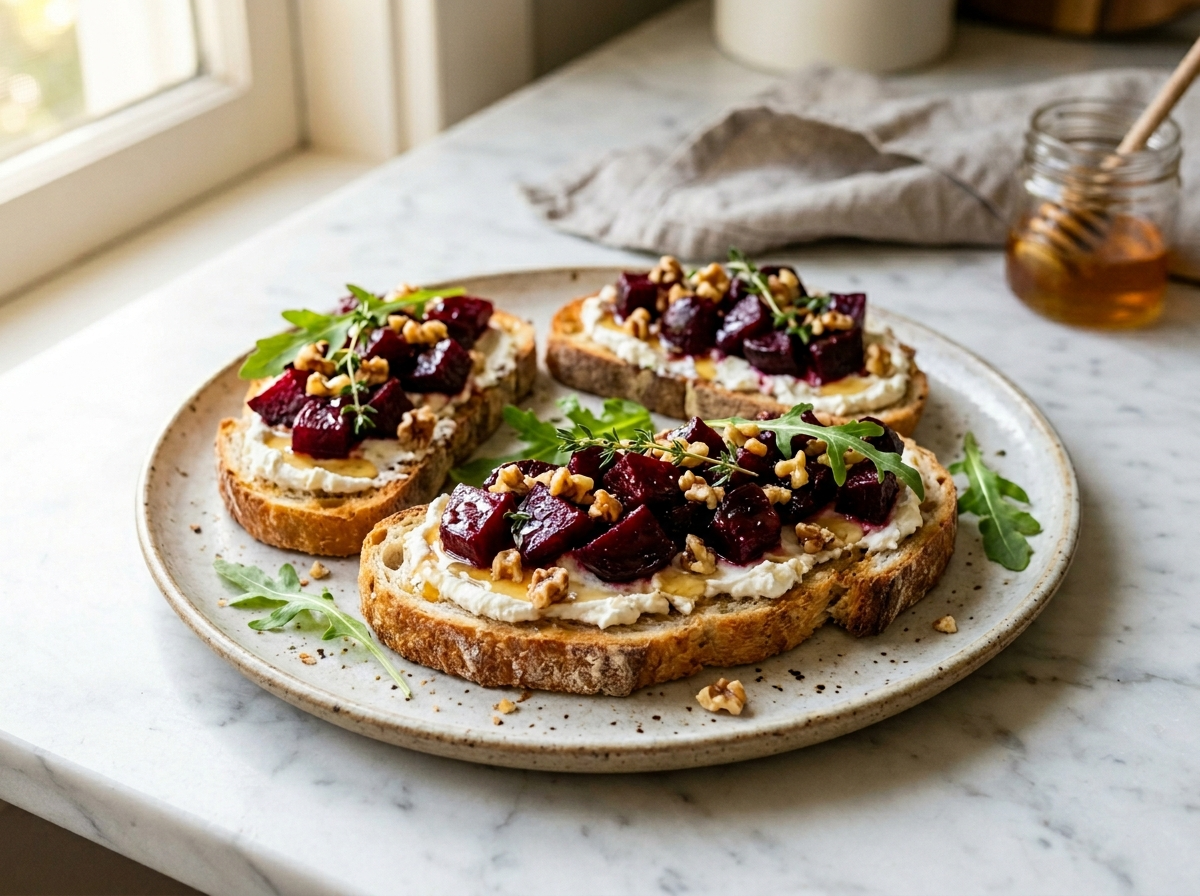
Why You’ll Love This Recipe
- Beets roast hands-off while you prep everything else
- Tangy goat cheese balances the sweetness naturally
- Ready in 40 minutes with minimal active cooking
- Works as a starter, light lunch, or easy weeknight snack
Ingredient Notes
- Beetroot: Fresh raw beets give the best caramelized flavor after roasting. Pre-cooked vacuum-packed beets work as a shortcut, but skip the oven roasting and just slice and warm them in a pan.
- Goat cheese: Use a soft, fresh log-style chevre for easy spreading. If you don’t like goat cheese, ricotta or whipped feta are both good swaps.
- Sourdough bread: A thick-cut country sourdough holds up to the toppings without going soggy. Rye bread or a dense whole-grain loaf works just as well.
- Walnuts: Toast them in a dry pan for 3 to 4 minutes before using, it deepens the flavor noticeably. Pecans or hazelnuts are solid alternatives.
- Honey: A light wildflower honey keeps things delicate. If you want a sharper finish, balsamic glaze works in its place.
- Fresh thyme: Strip the leaves from the stems before scattering. Dried thyme is fine in a pinch, use about half the amount.
Roasted Beetroot and Goat Cheese Tartine
Ingredients
Method
- Heat the oven to 200 C / 390 F. Line a rimmed sheet pan with parchment paper.
- Toss the beet cubes with 2 tbsp olive oil, fine sea salt, black pepper, and thyme leaves until evenly coated.
- Spread the beets in a single layer on the prepared sheet pan, leaving space between each piece.
- Roast for 25 to 30 minutes, flipping once halfway through, until the beets are fork-tender and the edges are caramelized. Remove from the oven and rest for 5 minutes.
- While the beets roast, place the chopped walnuts in a dry skillet over medium heat.
- Cook for 3 to 4 minutes, stirring often, until golden and fragrant. Transfer to a small bowl and set aside.
- Brush each sourdough slice lightly with olive oil on both sides.
- Place on a baking rack and broil for 2 minutes per side until golden and crisp. Watch closely so the edges don’t burn.
- Spread a generous layer of soft goat cheese over each toasted sourdough slice, going almost to the edges.
- Spoon the roasted beet cubes evenly over the goat cheese.
- Scatter the toasted walnuts over the top.
- Drizzle each tartine with honey and finish with fresh thyme leaves and a pinch of flaky sea salt.
- Add a small handful of microgreens or arugula alongside if using. Serve immediately.
Notes
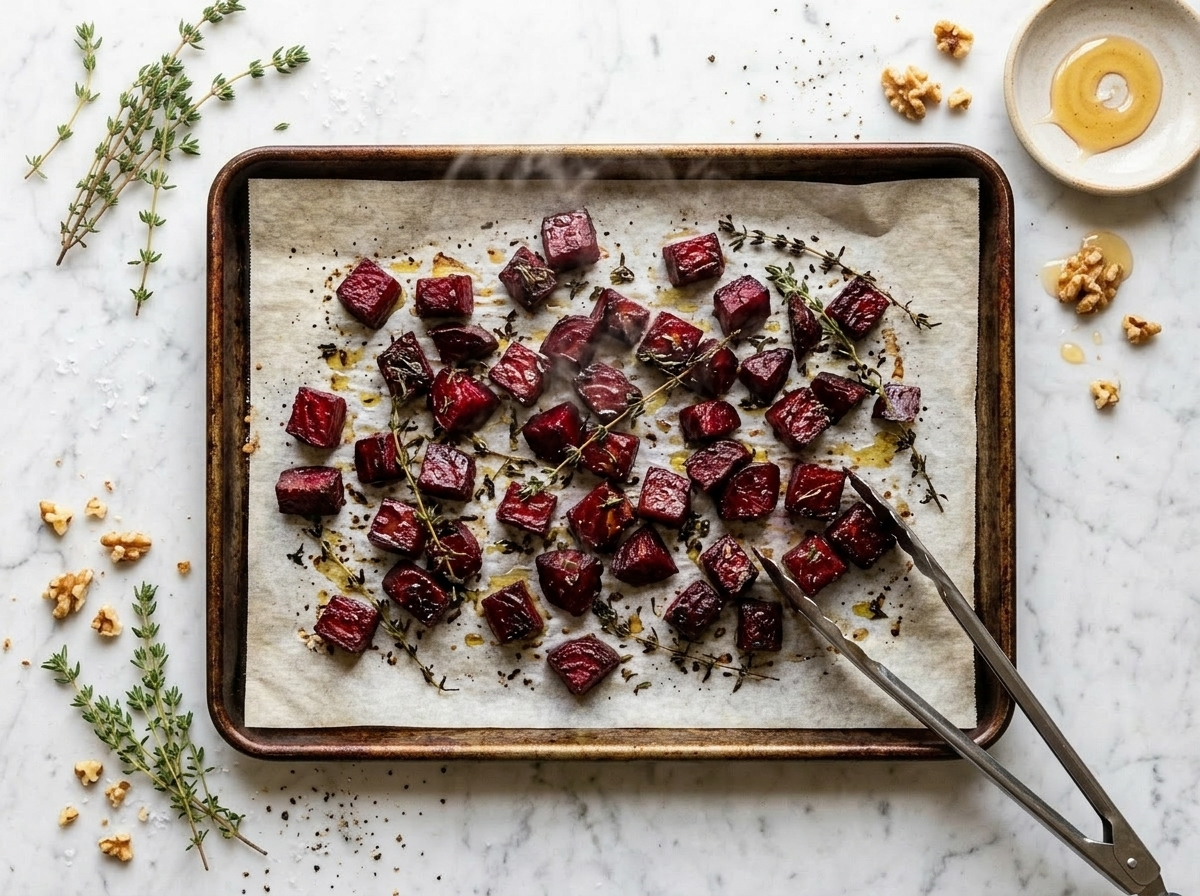
Tips for Success
- Cut beets into even 2 cm cubes so they roast at the same rate without some pieces burning.
- Rub the beet pieces with olive oil and a pinch of salt before roasting for better caramelization.
- Toast the sourdough slices under the broiler for 2 minutes per side for a crunchier base that holds toppings.
- Let the roasted beets cool for 5 minutes before layering so the goat cheese doesn’t melt into a puddle.
- Add the honey right before serving, not during assembly, so it stays as a visible drizzle rather than soaking in.
Variations
- Swap goat cheese for whipped feta and add a pinch of chili flakes for a sharper, spicier version.
- Use roasted golden beets instead of red for a milder sweetness and a cleaner look on the plate.
- Add thin slices of prosciutto on top of the beets for a version that works as a heartier lunch.
Storage and Reheating
The roasted beets keep in an airtight container in the fridge for up to 4 days. Store them separately from the bread and cheese.
Assembled tartines don’t store well, the bread softens fast. Build them fresh just before eating using your pre-roasted beets.
To reheat the beets, warm them in a skillet over medium heat for 2 to 3 minutes, or in the oven at 180 C / 355 F for about 8 minutes until they’re heated through.
Serving Suggestions
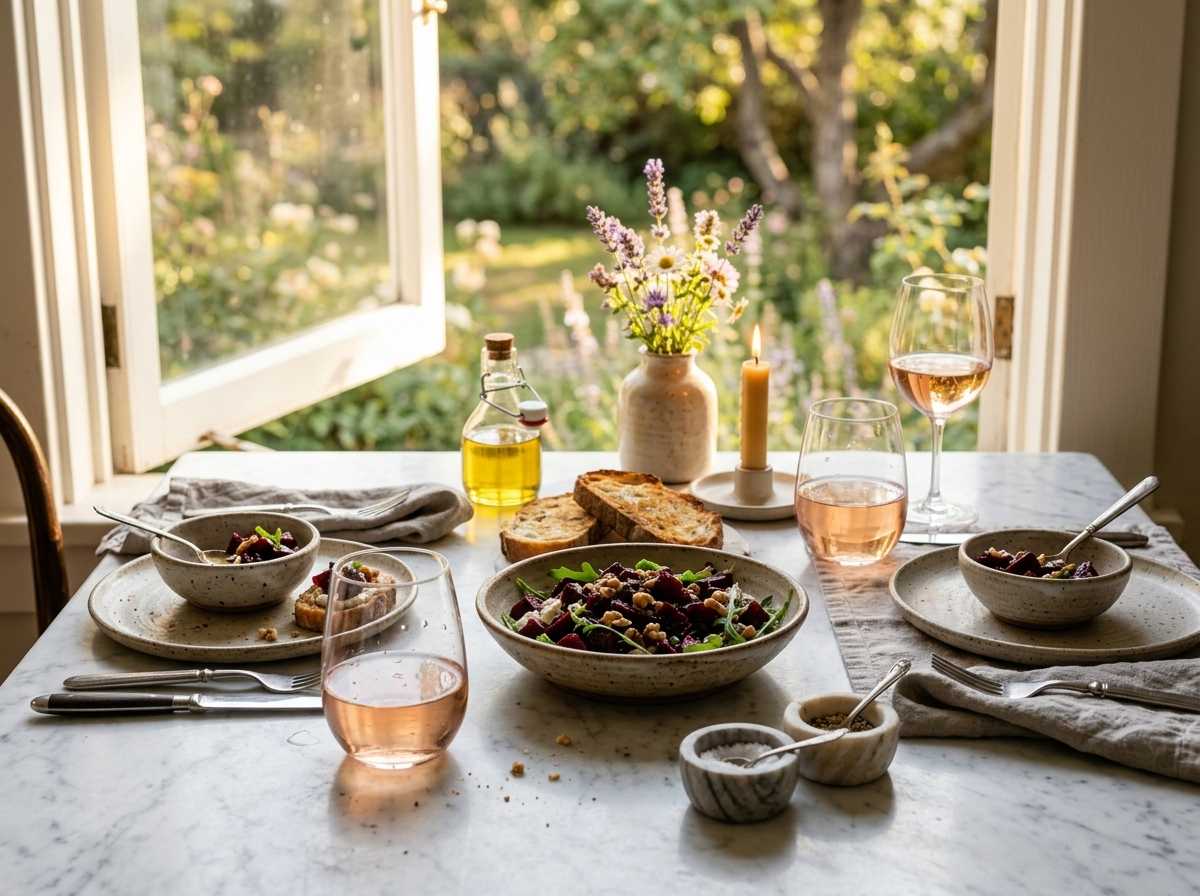
This tartine is good alongside a simple green salad dressed with lemon and olive oil. A beet orange arugula salad bowl works especially well because the peppery bite plays off the sweet beets.
For a starter spread, cut each slice into thirds and serve on a wooden board with a glass of crisp white wine or a light red like Pinot Noir.
If you’re serving it as a main lunch, add a soft-boiled egg on top. The runny yolk adds richness and turns it into a more filling plate.
FAQ
Why is my roasted beetroot releasing too much liquid and not caramelizing?
The beets are likely overcrowded on the baking sheet. Give them space so steam can escape, otherwise they stew instead of roast. Use two sheet pans if needed and roast at 200 C / 390 F.
Can I use ricotta instead of goat cheese on this tartine?
Yes, ricotta works well and gives a milder, creamier base. Season it with a little salt and lemon zest before spreading so it doesn’t taste flat next to the beets.
Can I roast the beets the day before and assemble the tartines later?
Roasted beets hold up well in the fridge for up to 4 days, so prepping them ahead is a smart move. Just store them separately and assemble the tartines fresh right before serving.
What drinks pair well with a roasted beetroot and goat cheese tartine?
A crisp Sauvignon Blanc or a dry rose cuts through the richness of the goat cheese nicely. If you prefer non-alcoholic, sparkling water with a slice of lemon keeps the palate fresh.
Is roasted beetroot and goat cheese tartine gluten-free?
Not as written, since it uses sourdough bread. To make it gluten-free, swap the sourdough for a gluten-free rosemary flatbread or thick rice cakes. Everything else in the recipe is naturally gluten-free.
What is the difference between a tartine and a bruschetta?
Bruschetta is Italian, traditionally grilled bread rubbed with garlic and topped simply, often just with tomato. A tartine is French in style, usually a thicker slice of bread with more layered, composed toppings like this beetroot and goat cheese version.