Jump to Recipe
A kimchi brown rice veggie bowl is a warm bowl of chewy brown rice topped with tangy kimchi, raw crunchy vegetables, and a fried egg, all tied together with a spicy gochujang drizzle.
I started making these on Sundays after I got tired of soggy meal-prep containers. Brown rice holds up in the fridge without turning gluey, and kimchi only gets better as it sits.
This isn’t a stir-fry. The rice cooks plain, the veggies stay raw and crisp, and the egg goes in fresh right before you eat. That contrast, warm rice against cold crunchy carrots, is what makes the bowl work.
Kimchi Brown Rice Veggie Bowl comes together in under an hour, most of that hands-off while the rice simmers. Good for lunch, dinner, or a fridge-ready meal that carries you through a busy week.
Why You’ll Love This Recipe
- Meal-prep friendly, rice and dressing keep 3-4 days
- Raw veggies stay crisp against the warm rice
- One skillet and one pot, minimal cleanup
- Easy to make vegan, gluten free, or higher protein
Ingredient Notes
- brown rice: Short or medium grain holds its shape in the fridge better than long grain, which matters for meal prep.
- kimchi: Use a well-fermented, tangy jar, the sourer it is the better it balances the sweet gochujang dressing.
- gochujang: Korean fermented chili paste, found in the Asian aisle or a Korean grocery. Sub sriracha mixed with a little miso if you can’t find it.
- toasted sesame oil: Adds a nutty background note. Don’t sub regular vegetable oil, the toasted flavor is the point here.
- eggs: Use the freshest eggs you have for frying, they hold a rounder shape and the yolk sits higher.
- soy sauce: Swap for tamari or coconut aminos to make the whole bowl gluten free.
- honey: Swap for maple syrup in the dressing to keep the bowl fully vegan.
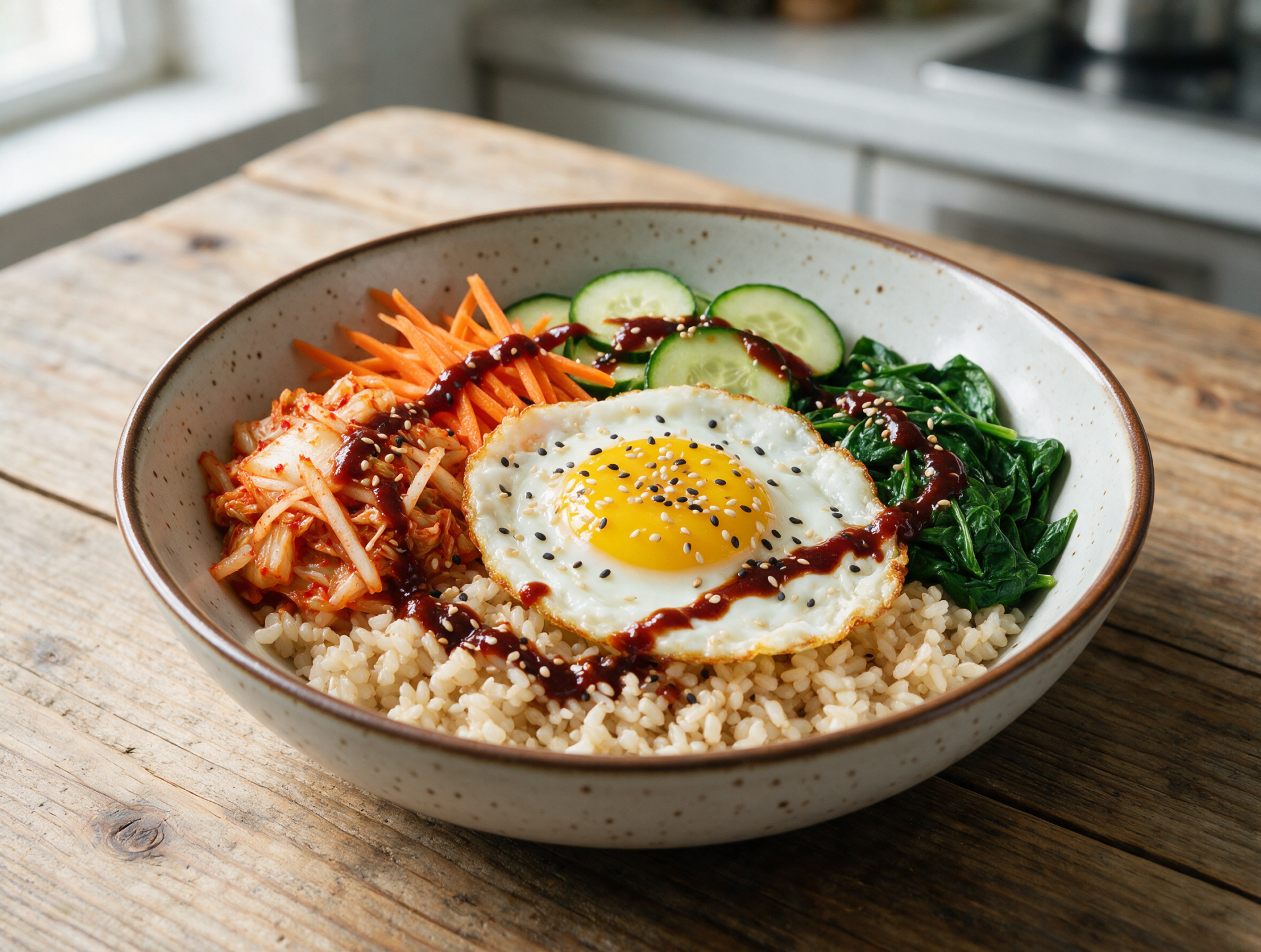
Kimchi Veggie Bowl with Brown Rice and a Fried Egg
Ingredients
Method
- Rinse the brown rice under cold water until the water runs mostly clear. Combine rice, 500 ml water, and salt in a 3-quart saucepan and bring to a boil over high heat.
- Cover, reduce heat to low, and simmer 35 to 40 minutes until the rice is tender and the water is absorbed. Remove from heat, let stand covered 5 minutes, then fluff with a fork.
- While the rice cooks, whisk the gochujang, rice vinegar, honey, 1 tsp sesame oil, and 1-2 tbsp water in a small bowl until smooth and pourable. Set aside.
- Julienne the carrots, thinly slice the cucumber, chop the kimchi, and slice the scallions.
- Heat 1 tsp of the sesame oil in a 10-inch nonstick skillet over medium heat. Add the garlic and cook 30 seconds until fragrant. Add the spinach and soy sauce, toss 1 to 2 minutes until just wilted, then transfer to a plate.
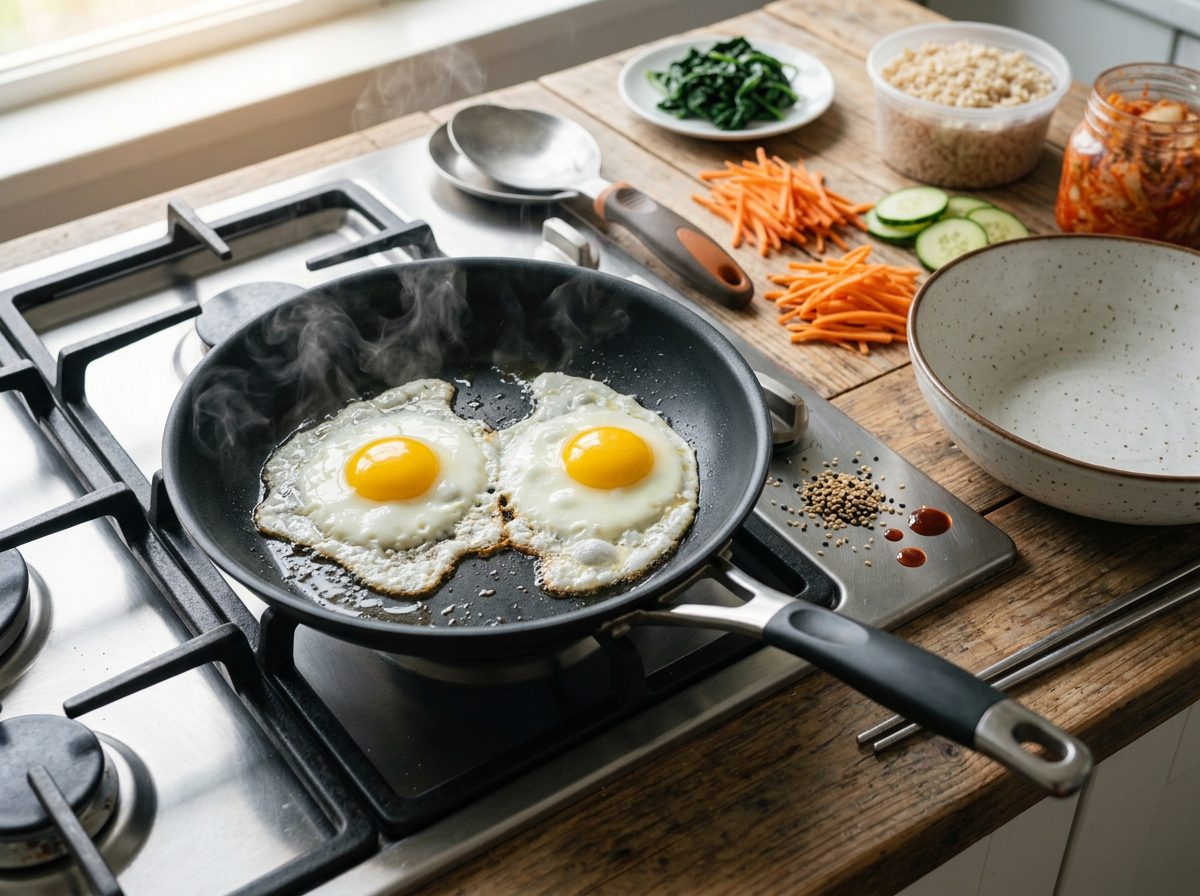
- Wipe the skillet, add the remaining 1 tsp sesame oil, and heat over medium. Fry the eggs in two batches of two so they have room to set, 2 to 3 minutes per batch, until the whites are fully set and the yolks are as firm or soft as you like.
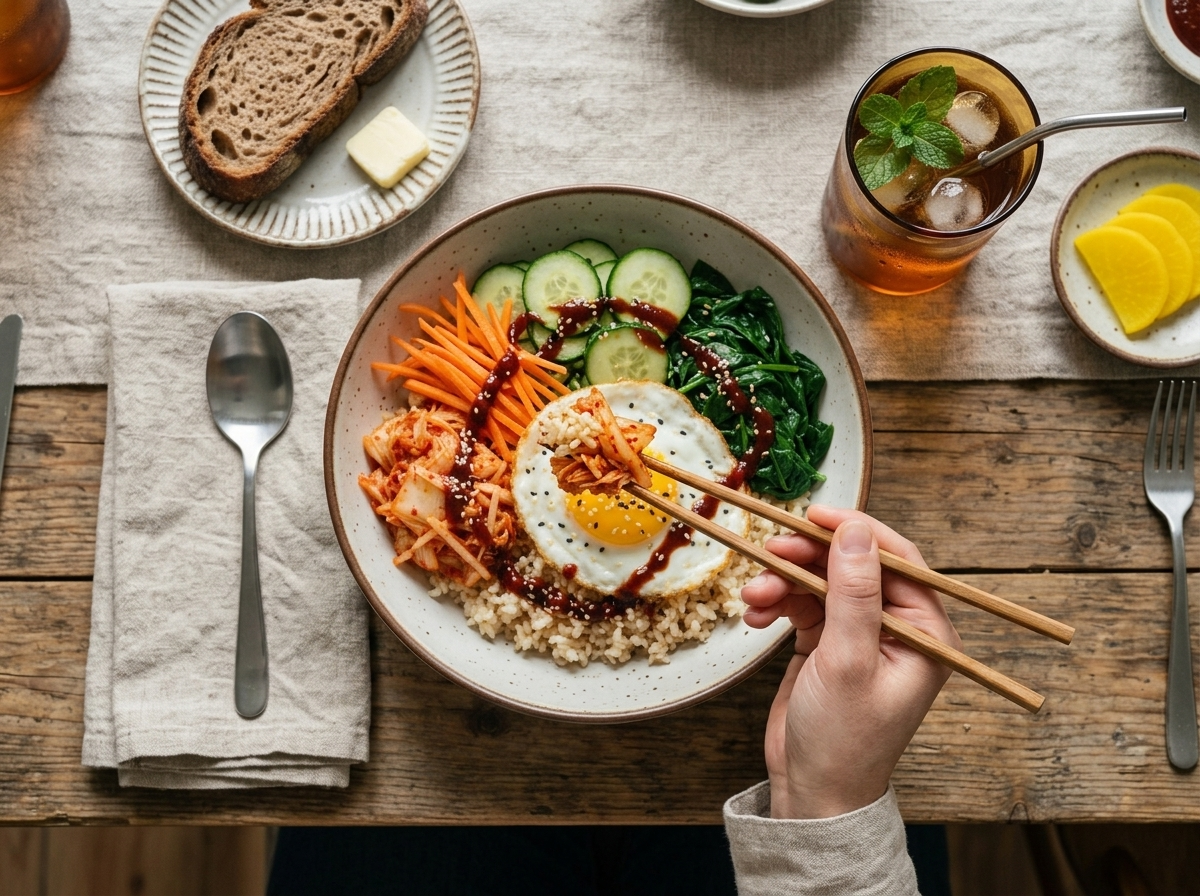
- Divide the fluffed rice among 4 bowls. Top each with wilted spinach, chopped kimchi, julienned carrots, and cucumber slices.
- Slide a fried egg onto each bowl. Drizzle with the gochujang dressing and sprinkle with scallions and sesame seeds. Serve right away.
Notes
- Rinse the rice well or it turns gummy once cooked.
- Drain excess kimchi juice if you like a drier bowl.
- Fry eggs in two batches so whites set evenly.
- Swap honey for maple syrup to keep the dressing vegan.
- Double the dressing, it keeps in the fridge for a week.
Tips for Success
- Rinse the brown rice under cold water until it runs mostly clear so the grains cook up separate instead of clumpy.
- Fry the eggs in two batches of two so the pan doesn’t crowd and every white sets evenly.
- Drain a spoonful of kimchi juice into the dressing instead of tossing it, it adds tang without extra liquid on the plate.
- Julienne the carrots thin so they soften slightly against the warm rice instead of staying hard and raw.
- Make the gochujang dressing while the rice simmers so nothing sits around getting cold before you eat.
Variations
- Swap the fried egg for pan seared tofu cubes to make the bowl fully vegan.
- Stir in shredded rotisserie chicken or leftover grilled chicken for extra protein without more cooking.
- Use quinoa instead of brown rice for a lighter, faster-cooking base that still holds up to kimchi juice.
Storage and Reheating
Store the cooked rice, dressing, and chopped vegetables in separate airtight containers, they keep 3-4 days in the fridge. Keep the kimchi in its own container too so it doesn’t turn the rice pink.
Reheat the rice in the microwave for 60-90 seconds, or in a skillet with a splash of water over medium heat for 2-3 minutes, until warmed through. Add the cold vegetables and dressing after reheating so they stay crisp.
Fry the egg fresh each time you build a bowl. A reheated fried egg turns rubbery and the yolk sets hard, so crack a new one into the skillet right before serving.
Serving Suggestions
Serve the bowl right after assembling so the rice stays warm against the cold, crunchy vegetables. Extra gochujang dressing on the side lets everyone adjust the heat themselves.
Pair it with a small bowl of umami miso mushroom soup or a handful of edamame for a fuller meal. Iced barley tea or a cold glass of water is all you really need alongside the spice from the kimchi.
For a bigger spread, add pan seared tofu, grilled chicken, or a side of quick pickled radish. Leftover dressing works well drizzled over roasted vegetables or grain salads later in the week.
FAQ
Why is my kimchi brown rice bowl soggy instead of crisp?
Usually because the kimchi juice or warm rice sits too long under the raw vegetables before serving. Drain the kimchi a bit before topping, and keep the carrots and cucumber separate until the last minute. Serving right after assembling keeps every layer distinct instead of one wet mush.
Can I use white rice instead of brown rice in this bowl?
Yes, white rice works, it just cooks faster and turns out softer. Use the same 500 ml water for 200 g rice but cut the simmer time to about 15-18 minutes. The bowl will taste slightly sweeter and less chewy than the brown rice version.
Can I meal prep this kimchi rice bowl for the week?
Yes, this bowl is built for meal prep. Cook the rice and dressing up to 4 days ahead, store the chopped kimchi, carrots, and cucumber in separate containers, and fry a fresh egg right before eating so it doesn’t turn rubbery in the fridge.
What goes well with a kimchi brown rice veggie bowl?
A side of quick pickled cucumbers or a tangy fermented beet and cabbage slaw rounds out the bowl. Iced barley tea or a light miso soup work as drinks or starters. If you want more protein, add a few slices of pan seared tofu or grilled chicken alongside the egg.
Is this kimchi brown rice bowl gluten free?
Not as written, because regular soy sauce and some kimchi brands contain wheat. Swap in tamari or coconut aminos for the soy sauce and check the kimchi label, and the whole bowl becomes gluten free. Brown rice, gochujang, and the vegetables are naturally gluten free on their own.
What’s the difference between this bowl and bibimbap?
Bibimbap usually mixes rice with sauteed, seasoned vegetables plus a raw or fried egg, all stirred together with gochujang at the table. This bowl keeps the vegetables raw and crisp instead of sauteed, and layers everything instead of mixing, so it’s quicker to throw together on a weeknight.