Jump to Recipe
Gluten-free rice noodle stir fry is a 28-minute dinner made with flat rice noodles, thin-sliced chicken, crisp vegetables and a tamari-ginger sauce. It takes one wok and one bowl for soaking.
I’ll be honest. My first few batches were gummy. I boiled the noodles like pasta and they fell apart the second they hit the pan.
Soaking fixes it. Hot water, 8 to 10 minutes, then the noodles finish cooking in the sauce. Chewy, not mushy.
The sauce is salty and a little sweet, with a sharp edge from rice vinegar. The chicken is sliced thin and cooked to 165 F / 74 C, so it stays juicy.
It’s weeknight food that also holds up as lunch the next day.
Why You’ll Love This Recipe
- Ready in 28 minutes with just one wok
- Gluten-free sauce built from pantry staples like tamari and maple syrup
- Reheats in a skillet for easy next-day lunches
- Mild enough for kids, easy to spice up at the table
Ingredient Notes
- gluten-free tamari: Regular soy sauce contains wheat, so read the label for a gluten-free statement. Coconut aminos work as a soy-free swap, though the sauce comes out sweeter.
- flat rice noodles: Look for noodles 3 to 5 mm wide, often sold as pad thai or stir-fry noodles. Brown rice noodles work too but need 2 to 3 extra minutes of soaking.
- chicken breast: Boneless skinless thighs work at the same weight. They take about 1 minute longer and stay a bit juicier.
- rice vinegar: Use plain, unseasoned rice vinegar. Seasoned versions add sugar and salt that throw off the sauce.
- maple syrup: Honey works at the same amount. It rounds out the salt in the tamari without making the dish taste sweet.
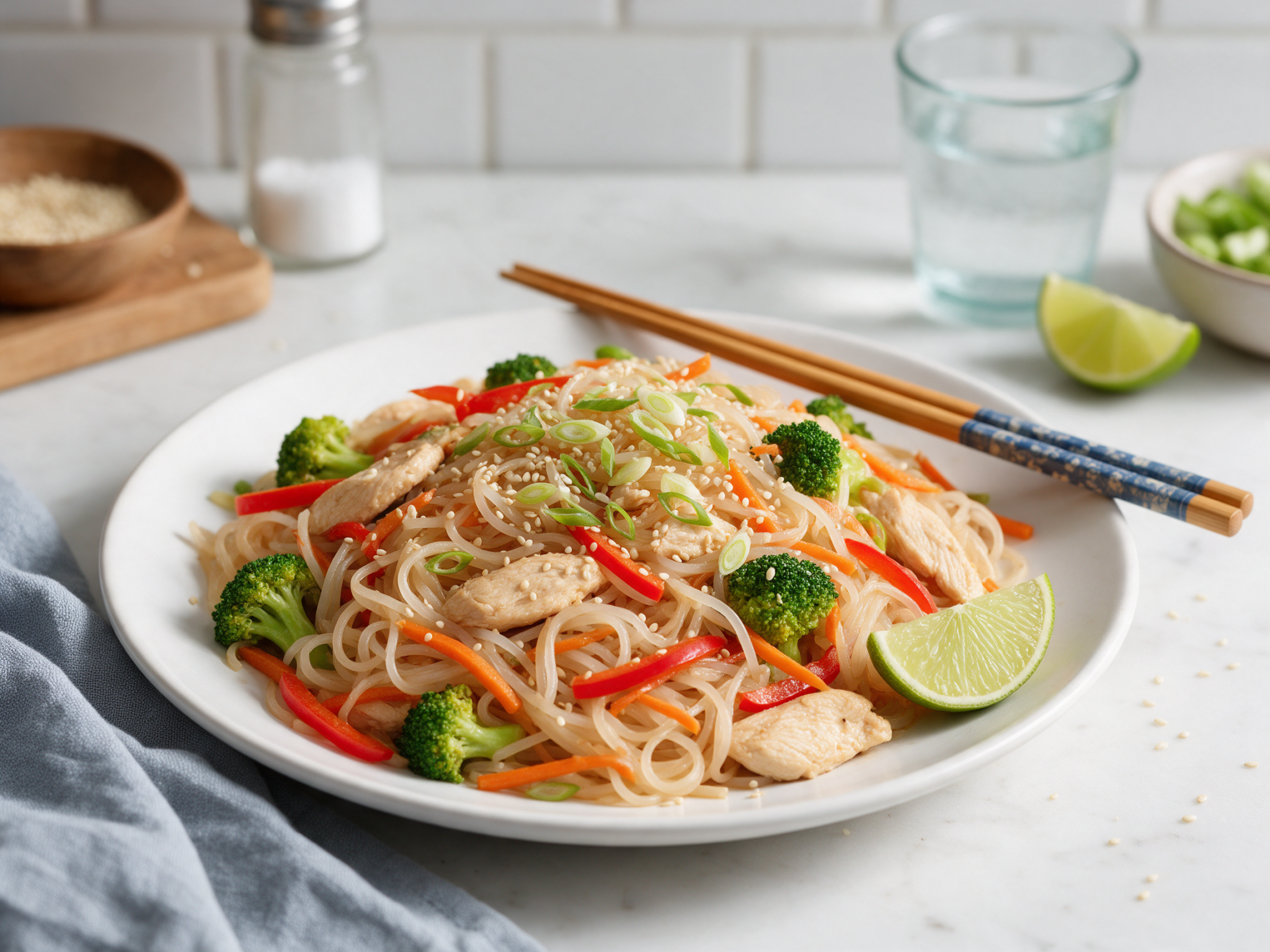
Gluten-Free Rice Noodle Stir Fry with Chicken and Broccoli
Ingredients
Method
- Boil a kettle of water. Put the rice noodles in the 2-quart / 2 L heatproof bowl and cover with the hot water. Soak for 8 to 10 minutes, stirring once, until they bend without snapping but still feel firm in the center. Drain, rinse under cool water and drain again.
- While the noodles soak, slice the chicken, cut the broccoli, carrots, bell pepper and scallions, and mince the garlic and ginger. Whisk the tamari, rice vinegar, maple syrup, sesame oil, water and cornstarch together in a small bowl.
- Heat 1 tablespoon of the oil in the 35 cm / 14-inch wok over medium-high heat until it shimmers. Add the chicken in a single layer and cook for 4 to 5 minutes, stirring now and then, until no pink remains and a thermometer reads 165 F / 74 C. Move the chicken to a plate.
- Add the remaining 1 tablespoon of oil to the wok. Stir-fry the broccoli and carrots for 3 minutes until bright green and just tender. Add the bell pepper and cook 1 minute, then add the garlic, ginger and scallion whites and stir for 30 seconds until fragrant.
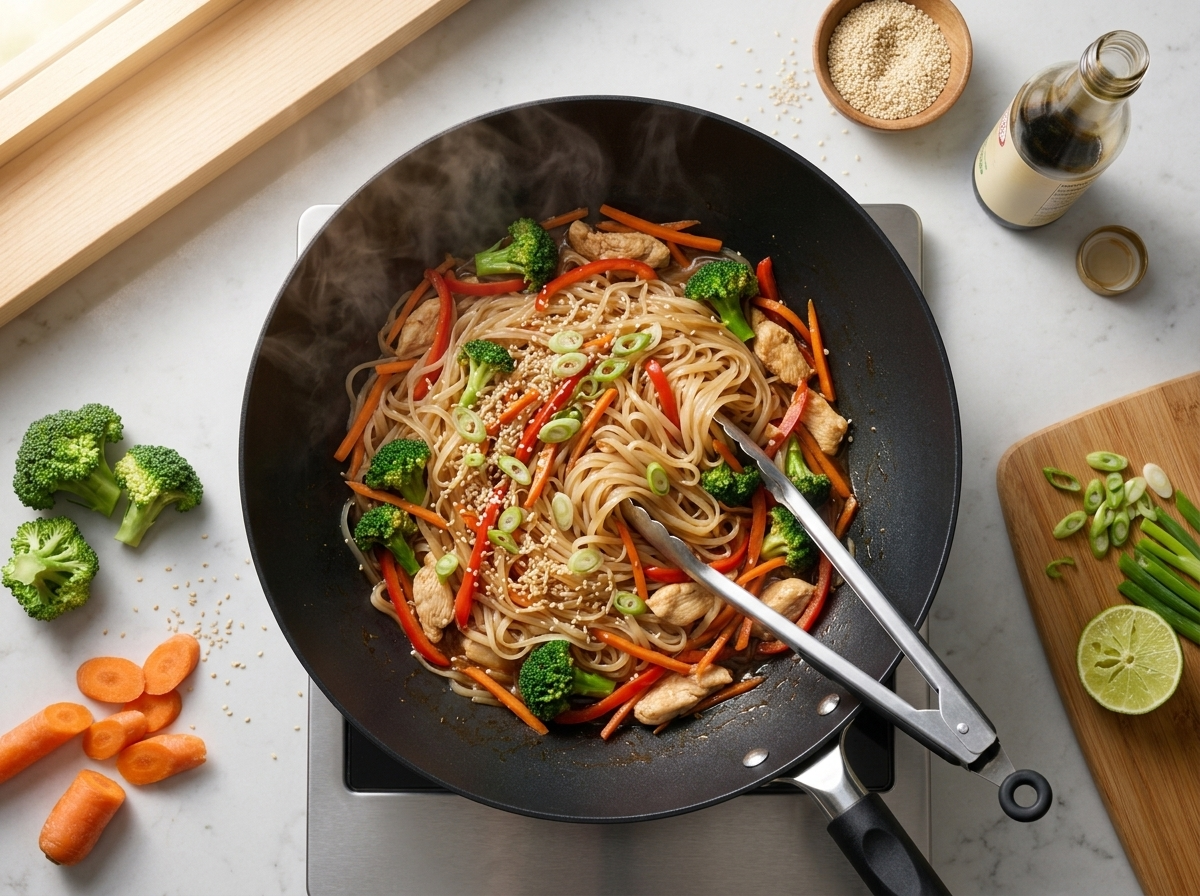
- Return the chicken to the wok and add the drained noodles. Whisk the sauce again, pour it over and toss with tongs for 2 to 3 minutes, lifting from the bottom, until the sauce thickens and coats the noodles and they turn tender and glossy.
- Take the wok off the heat. Top with the scallion greens and sesame seeds and serve right away with lime wedges.
Notes
- Soak the noodles while you chop so everything is ready when the wok gets hot.
- Cut the chicken about 3 mm thick so it cooks through in 4 to 5 minutes.
- Set the sauce, chicken and vegetables within reach before heating the wok. Stir-frying moves fast.
- Check every label: tamari, noodles and any chili sauce should say gluten-free.
Tips for Success
- Read the tamari label, not just the front of the bottle. Regular soy sauce contains wheat, and some bottled stir fry sauces do too.
- Slice the chicken across the grain about 3 mm thick. Freezing it for 15 minutes first makes clean, even slices much easier.
- Pull the noodles from the water when they bend without snapping but still feel firm in the center. They finish cooking in the wok.
- Whisk the sauce again right before you pour it in. The cornstarch settles to the bottom of the bowl within a minute.
- Toss the noodles with tongs rather than a spoon, lifting from the bottom of the wok so the strands separate instead of tearing.
Variations
- Swap the chicken for 400 g pressed extra-firm tofu, cubed and pan-fried until golden on all sides, for a vegetarian version.
- Use 350 g peeled shrimp instead of chicken. Cook them 2 to 3 minutes until pink and curled, then return them with the noodles.
- Add 1 tablespoon of sambal oelek or a pinch of chili flakes to the sauce for heat. Check the label for gluten-free.
Storage and Reheating
Gluten-free rice noodle stir fry keeps in an airtight container in the fridge for 3 to 4 days. Rice noodles stiffen when cold, which is normal.
Reheat in a 30 cm / 12-inch skillet over medium heat with 1 to 2 tablespoons of water. Toss for 3 to 4 minutes until the noodles loosen and the chicken is steaming hot at 165 F / 74 C.
In the microwave, cover the bowl, add a splash of water and heat for 90 seconds, stirring halfway. For meal prep, chop the vegetables and mix the sauce up to 2 days ahead, then soak the noodles the day you cook.
Serving Suggestions
Gluten-free rice noodle stir fry is best served straight from the wok, with lime wedges and a sprinkle of sesame seeds on top. A squeeze of lime brightens the tamari sauce.
Put chili flakes or a gluten-free chili crisp on the table so the spice is up to each person. Kids can have theirs mild.
For sides, try a quick smashed cucumber salad dressed with rice vinegar, a crunchy pineapple ginger slaw, or steamed edamame with flaky salt. Both are cold and crisp against the warm noodles.
FAQ
Why are my rice noodles mushy in the stir fry?
Mushy noodles almost always mean they were boiled or soaked too long. Soak them in hot water for 8 to 10 minutes until they bend but still feel firm in the center, then rinse under cool water and drain well. They finish cooking in the sauce, so slightly under-soaked is the right call.
Can I use coconut aminos instead of tamari in rice noodle stir fry?
Yes, swap coconut aminos for tamari at a 1:1 ratio. It’s sweeter and less salty, so leave out the maple syrup and add a pinch of salt at the end if the sauce tastes flat. It’s also soy-free, which tamari is not.
How do I reheat leftover rice noodle stir fry without it going hard?
Reheat it in a 30 cm / 12-inch skillet over medium heat with 1 to 2 tablespoons of water, tossing for 3 to 4 minutes until steaming. Cold rice noodles stiffen in the fridge, and the water loosens them. Leftovers keep 3 to 4 days, and the chicken should reach 165 F / 74 C again.
What goes with a chicken and broccoli rice noodle stir fry?
Keep the sides light and cold. A smashed cucumber salad with rice vinegar and sesame seeds cools the plate down, and steamed edamame with flaky salt adds extra protein. Rice paper summer rolls are another naturally gluten-free option if you want a bigger spread.
Is rice noodle stir fry always gluten-free?
No. Rice noodles are naturally gluten-free, but regular soy sauce contains wheat, and so do most oyster and hoisin sauces. Use tamari labeled gluten-free, and check the noodle package for a gluten-free statement, since some brands are packed on shared lines. Skip bottled stir fry sauces unless the label says they’re safe.
What’s the difference between this rice noodle stir fry and pad thai?
Pad thai is built on tamarind, fish sauce and palm sugar, with egg, bean sprouts and crushed peanuts. This stir fry uses a tamari, ginger and sesame sauce with no egg or nuts, so it tastes savory rather than sweet-sour. The flat rice noodles are the same.