Jump to Recipe
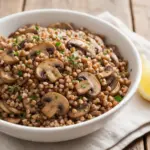
Buckwheat pilaf with mushrooms is a one-skillet side that takes about 45 minutes and uses plain, cheap ingredients. You toast the groats, brown the mushrooms, then simmer everything in broth until the grains are tender but still separate.
I’ll be honest, buckwheat scared me for years. My first batch turned into gray porridge because I kept lifting the lid to check on it. Leave it alone for the full 12 minutes and the grains hold their shape.
The flavor is nutty. Earthy. Savory. A little chewy. It’s vegan and gluten-free, and it reheats well all week, so it sits right in my meal prep rotation.
Serve it next to whatever you’ve got, or top it with an egg and call it dinner.
Why You’ll Love This Recipe
- One skillet, so cleanup takes two minutes
- Vegan and gluten-free without any special products
- Reheats well, which makes it easy meal prep
- Costs about a dollar a serving
Ingredient Notes
- Buckwheat groats: Buy raw (pale green-tan) groats and toast them yourself. Pre-toasted kasha works too, just skip the toasting step.
- Cremini mushrooms: Cremini brown well and taste deeper than white button. Shiitake or oyster mushrooms also work, but trim the tough shiitake stems.
- Low-sodium vegetable broth: Low-sodium lets you control the salt. Chicken broth works if you don’t need it vegan.
- Fresh thyme: Use 1/2 tsp dried thyme if that’s what you have. Add it with the garlic so it blooms in the oil.
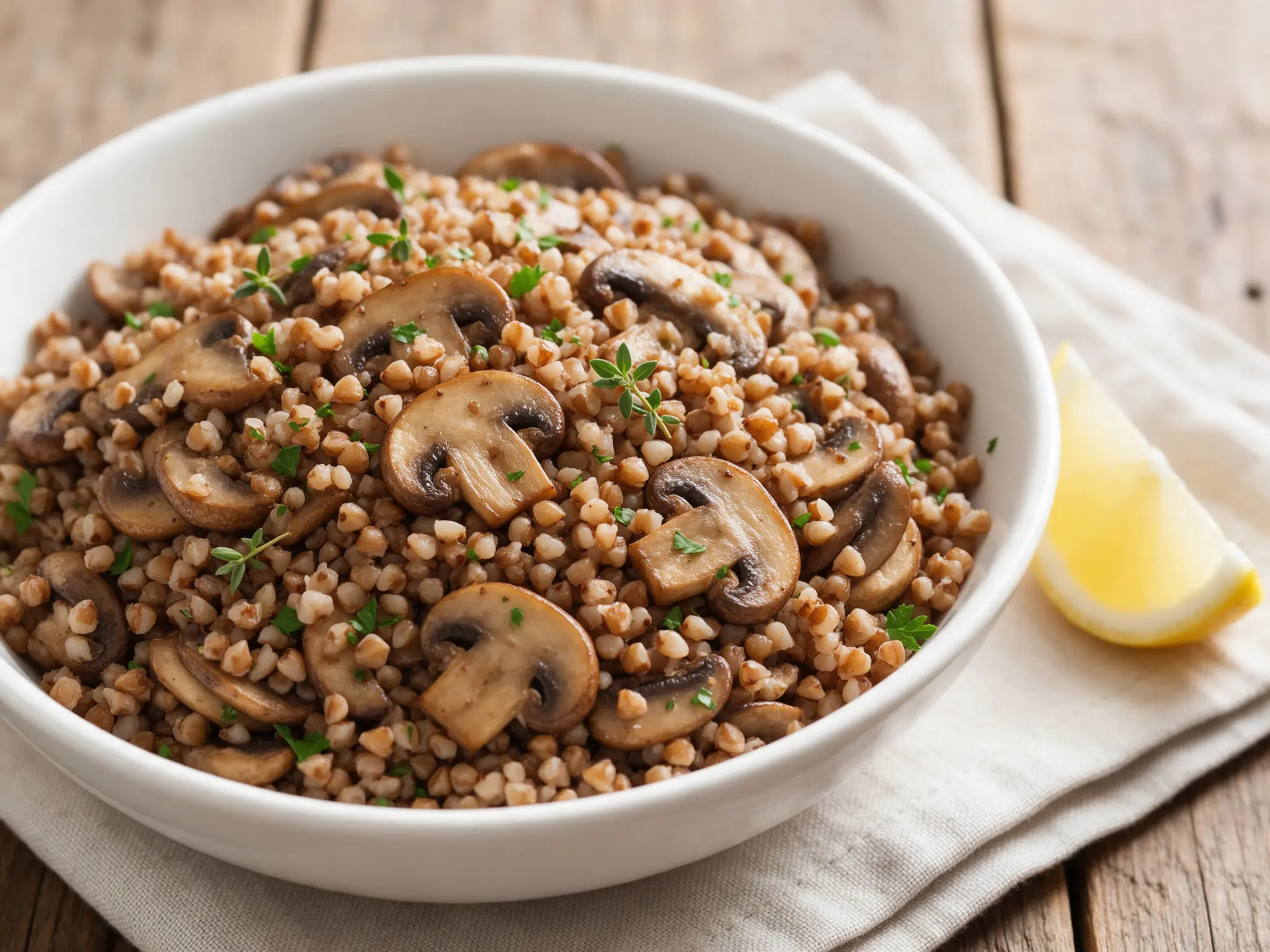
Nutty Toasted Buckwheat and Mushroom Pilaf with Thyme
Ingredients
Method
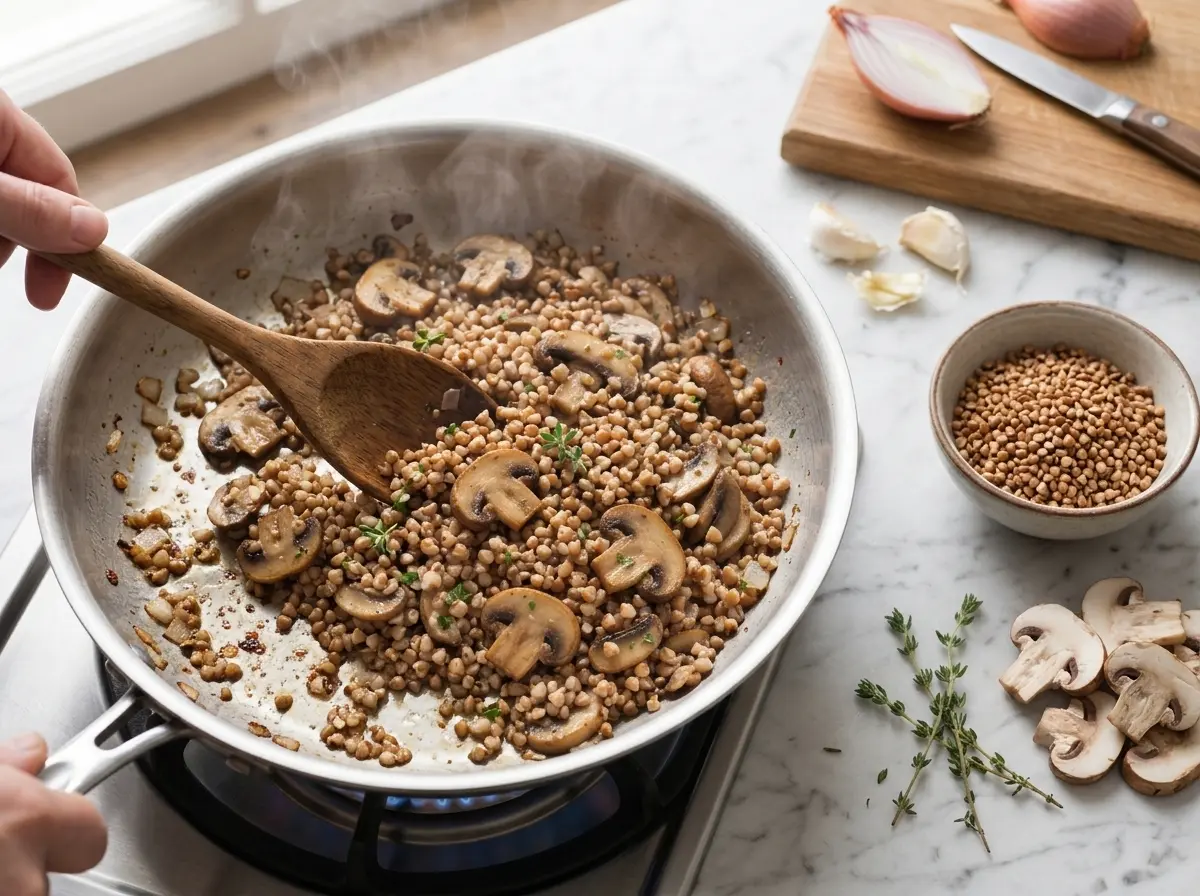
- Set a 28 cm / 11-inch deep skillet over medium heat. Add the rinsed, well-drained groats and toast, stirring often, for 3 to 4 minutes until they darken a shade and smell nutty. Tip them into a bowl.
- Return the skillet to medium-high heat and add 2 tbsp olive oil. Spread in the mushrooms and leave them alone for 2 minutes, then stir. Cook another 5 to 6 minutes until browned and the liquid has cooked off. Season with a pinch of the salt.
- Lower the heat to medium and add the last 1 tbsp oil and the onion. Cook 4 to 5 minutes until soft and translucent. Stir in the garlic and thyme and cook 30 seconds until fragrant.
- Add the toasted groats and stir for 1 minute to coat them in the oil. Pour in the broth, then add the remaining salt and the pepper. Bring to a boil, cover, reduce to low, and simmer for 12 minutes without lifting the lid.
- Turn off the heat and keep the lid on for 5 minutes so the grains finish steaming. Fluff with a fork, stir in the parsley and lemon juice, then taste and add salt if needed. Serve warm.
Notes
- Toast the groats dry first. It’s the step that keeps them from clumping.
- Don’t lift the lid during the 12-minute simmer or the 5-minute rest.
- Taste before adding salt, since broth brands vary a lot.
- Cool leftovers for 20 minutes before sealing to avoid soggy grains.
Tips for Success
- Toast the raw groats in a dry pan until they darken a shade and smell nutty, about 3 to 4 minutes.
- Leave the mushrooms alone for the first 2 minutes so they brown instead of steaming in their own liquid.
- Measure the broth exactly, 480 ml for 170 g of groats, because extra liquid is the fastest route to mush.
- Keep the lid on during the simmer and the 5-minute rest, then fluff gently with a fork, never a spoon.
- Season at the end with lemon juice and taste again, since broth saltiness varies a lot between brands.
Variations
- Swap half the cremini for shiitake or oyster mushrooms for a deeper, meatier flavor and a slightly chewier bite.
- Stir in 2 tablespoons of toasted walnuts and a handful of baby spinach right before fluffing for extra crunch and greens.
- Top each bowl with a fried egg and a pinch of chili flakes to turn the pilaf into a quick weeknight dinner.
Storage and Reheating
Buckwheat pilaf keeps 4 to 5 days in an airtight container in the fridge. Cool it for about 20 minutes before sealing so trapped steam doesn’t soften the grains.
Reheat in a skillet over medium heat with a splash of water for 3 to 4 minutes, stirring now and then. The microwave works too. Cover the bowl and heat a single portion for about 90 seconds, stirring halfway.
To freeze, portion it into containers and freeze for up to 3 months. Thaw overnight in the fridge before reheating.
Serving Suggestions
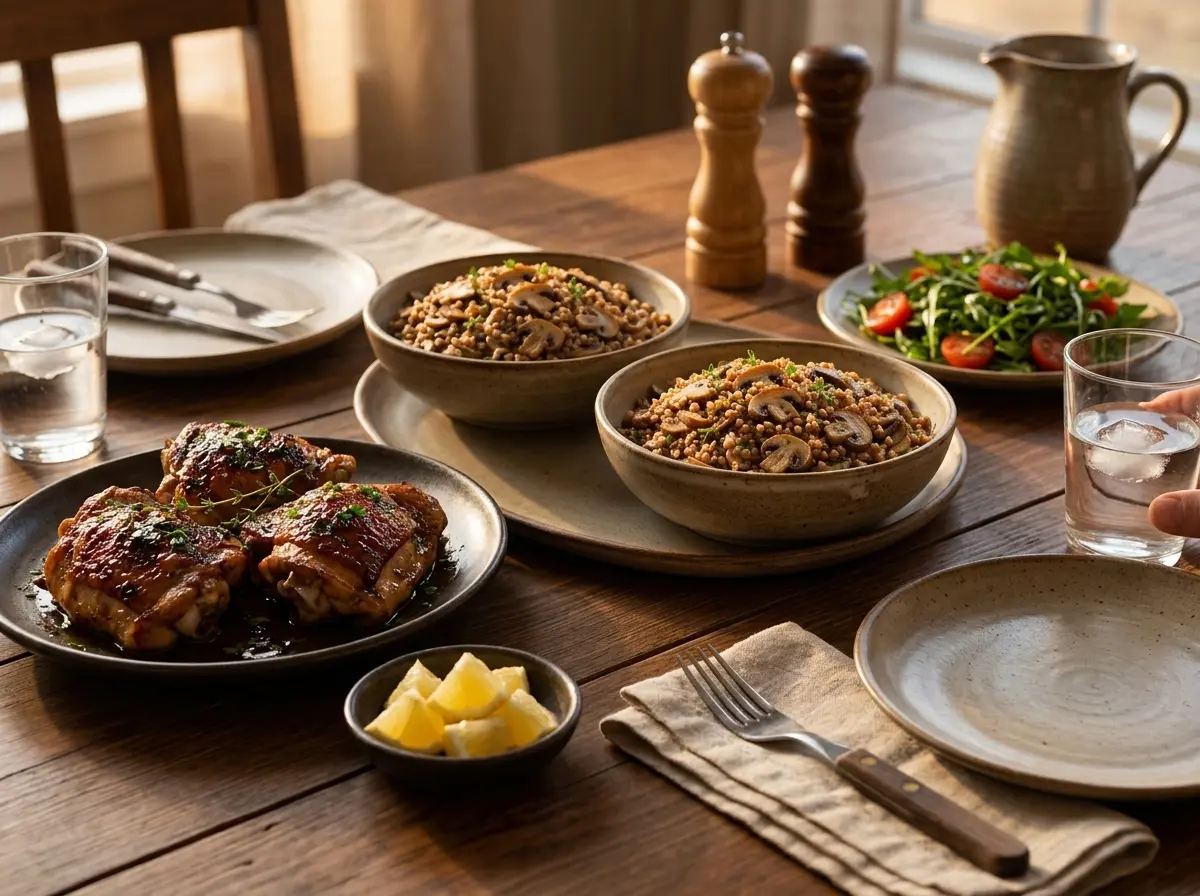
Buckwheat pilaf works as a side for roast chicken thighs, seared salmon or baked sausages. The earthy flavor likes something juicy and a little rich next to it.
For a meatless dinner, top a bowl with a soft-boiled or fried egg, roasted carrots, and a spoonful of plain yogurt or tahini sauce.
A squeeze of lemon and extra parsley at the table keeps each bite bright. I also pack leftovers cold-ready for lunch, then warm them at the office.
FAQ
Why is my buckwheat pilaf mushy and gummy?
Mushy buckwheat usually means too much liquid, skipped toasting, or a lifted lid. Stick to 480 ml broth for 170 g groats, toast them until nutty, and keep the lid on for the full 12 minutes. Toasting firms the outside of each groat, so they hold their shape while steaming.
Can I use kasha instead of raw buckwheat groats in this pilaf?
Yes. Kasha is just buckwheat groats that were already toasted, so skip the dry-toasting step. Add it to the pan after the onions, use the same 480 ml of broth, and simmer for 10 minutes instead of 12, since it usually cooks a bit faster. Rest it covered for the same 5 minutes.
How long does buckwheat pilaf with mushrooms last in the fridge, and can I freeze it?
Buckwheat pilaf keeps 4 to 5 days in an airtight container in the fridge. It also freezes well for up to 3 months because the groats stay separate. Freeze it in single-serving portions, thaw overnight in the fridge, then reheat in a skillet with a splash of water.
What goes well with buckwheat pilaf and mushrooms for dinner?
Roast chicken thighs, seared salmon, or a soft-boiled egg all work, since the earthy pilaf needs something rich or juicy beside it. For a vegetarian plate, add roasted carrots and a spoonful of plain yogurt or tahini sauce. A squeeze of lemon over everything keeps the plate from tasting heavy.
Is buckwheat pilaf gluten-free?
Buckwheat pilaf is naturally gluten-free, because buckwheat is a seed related to rhubarb, not a type of wheat. Check that your broth is labeled gluten-free, and look for certified gluten-free groats if you have celiac disease, since buckwheat is sometimes processed near wheat. Everything else here is plain vegetables and olive oil.
What’s the difference between buckwheat pilaf and rice pilaf?
Buckwheat pilaf uses toasted buckwheat groats instead of rice, so it tastes nuttier, chews more, and simmers in about 12 minutes. Rice pilaf is milder and fluffier and usually needs 15 to 20 minutes. Buckwheat also brings more fiber and no gluten, which matters if you cook for a mixed table.